
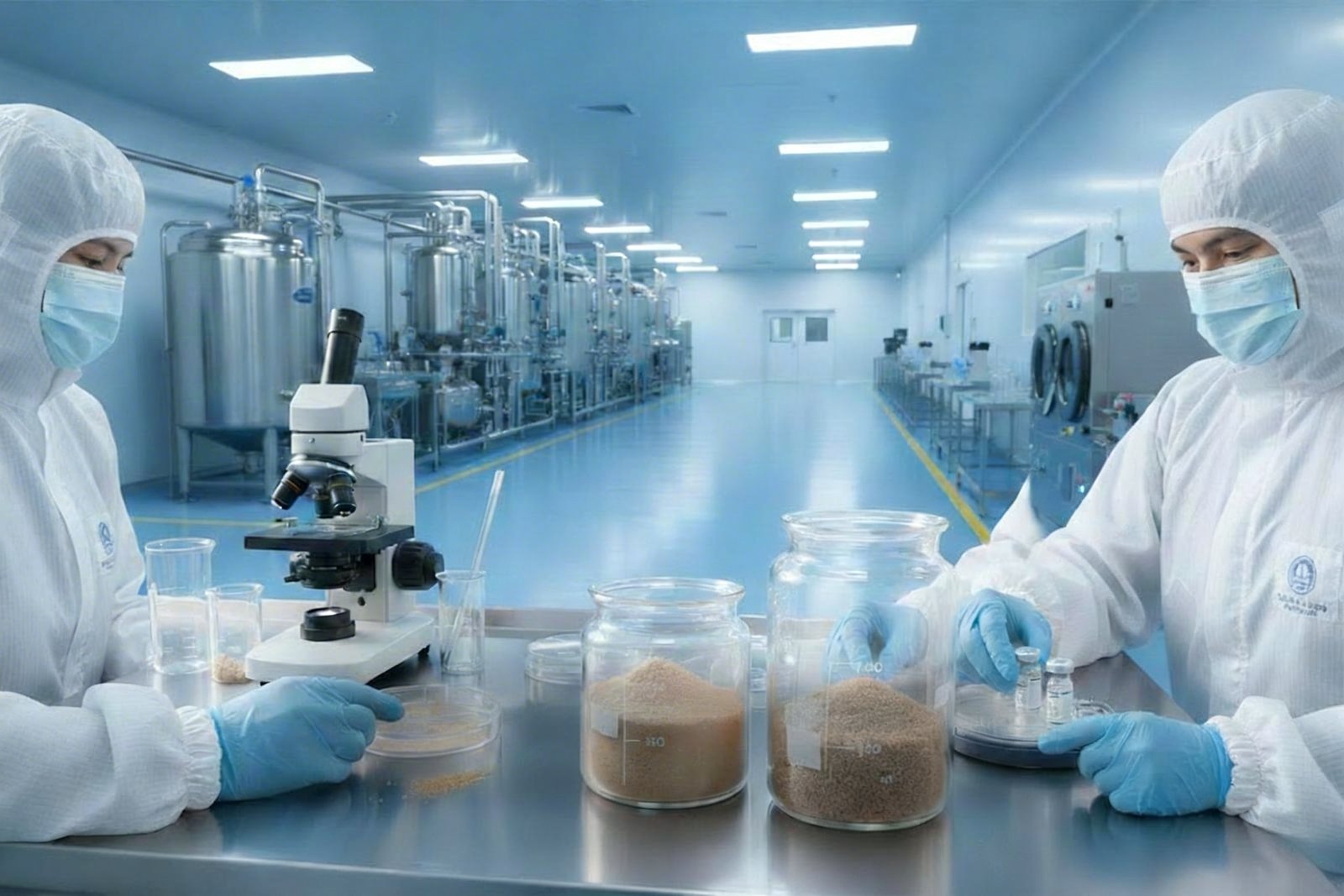
Lumbrokinase is an earthworm-derived fibrinolytic enzyme ingredient widely used in the dietary supplement and nutraceutical industry as a functional enzyme component in formulation development. In B2B ingredient markets, its primary value is not positioned as a pharmaceutical or therapeutic agent, but as a standardized enzyme raw material used in supplement formulations, enzyme blends, and functional nutrition products.
For supplement brands, distributors, and formulation developers, understanding what lumbrokinase is used for requires focusing on ingredient functionality, activity specification, COA consistency, and assay methodology rather than clinical or medical outcomes. As a manufacturer, Allworms Bio-Tech Co., Ltd. supplies lumbrokinase as a controlled earthworm-derived enzyme ingredient with defined activity grades and batch-based quality documentation.
Quick Answer: What Is Lumbrokinase Used For?
Lumbrokinase is used as a fibrinolytic enzyme ingredient in dietary supplement and nutraceutical formulations. It is incorporated into enzyme blends and functional products where standardized enzyme activity is required.
In B2B supply chains, its main use is ingredient formulation, not medical treatment. Buyers evaluate it based on COA, assay method, and activity units for consistent product manufacturing.
Why This Matters for B2B Buyers
For nutraceutical companies and supplement brands, the value of lumbrokinase is determined by:
- Batch-to-batch activity consistency
- Assay method reliability (e.g., fibrin plate assay)
- Specification alignment (IU/mg or alternative systems)
- Raw material traceability
- Stability during processing and storage
Unlike generic protein ingredients, enzyme ingredients require strict control of activity expression. Even small differences in assay conditions can lead to significantly different reported values.
This is why professional buyers prioritize supplier transparency, COA clarity, and standardized testing methods.
What Is Lumbrokinase (Ingredient Definition)
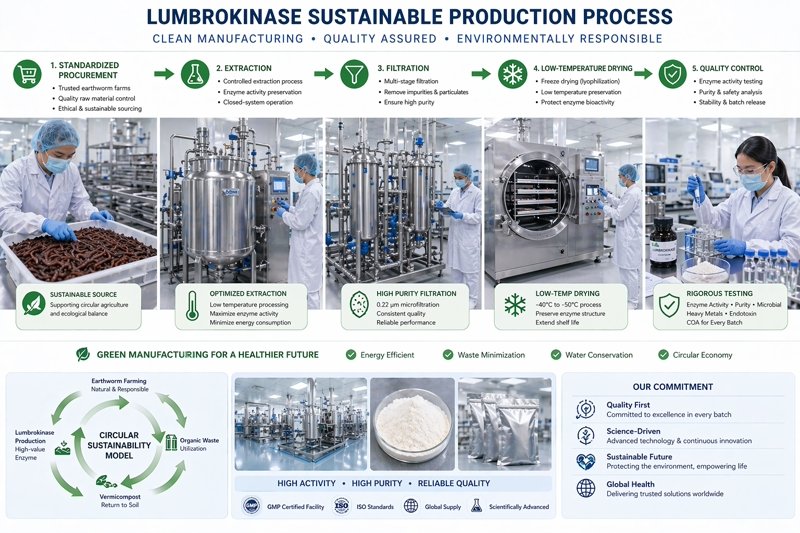
Lumbrokinase is a group of fibrinolytic enzymes derived from earthworms such as Eisenia fetida. It is extracted through controlled enzymatic processing and purification.
In industrial manufacturing, it is typically produced through:
- Earthworm cultivation and selection
- Enzymatic hydrolysis extraction
- Filtration and purification
- Freeze-drying and powder processing
- Final packaging and QC testing
Related reading:
How Lumbrokinase Is Used in Dietary Supplement Formulations
In the dietary supplement and nutraceutical industry, lumbrokinase is typically used as:
1. Enzyme Blending Ingredient
Used in combination with other enzyme ingredients to build multi-enzyme formulations.
2. Functional Nutrition Ingredient
Incorporated into capsules, tablets, or powder blends as an enzyme functional component.
3. R&D Formulation Ingredient
Used by formulation developers to study enzyme compatibility and stability in finished products.
4. Standardized Activity Ingredient
Applied in formulations requiring defined enzymatic activity levels for consistent product design.
Important: Final product claims, dosage design, and regulatory positioning must be determined by the finished product brand according to local regulations.
Why COA, Activity, and Assay Method Matter
Lumbrokinase is highly dependent on how activity is measured.
Key evaluation parameters include:
- Activity units (IU/mg or alternative systems)
- Assay method (fibrin plate assay commonly used)
- Protein-specific activity vs total activity
- Moisture, ash, and purity levels
- Microbial and heavy metal limits
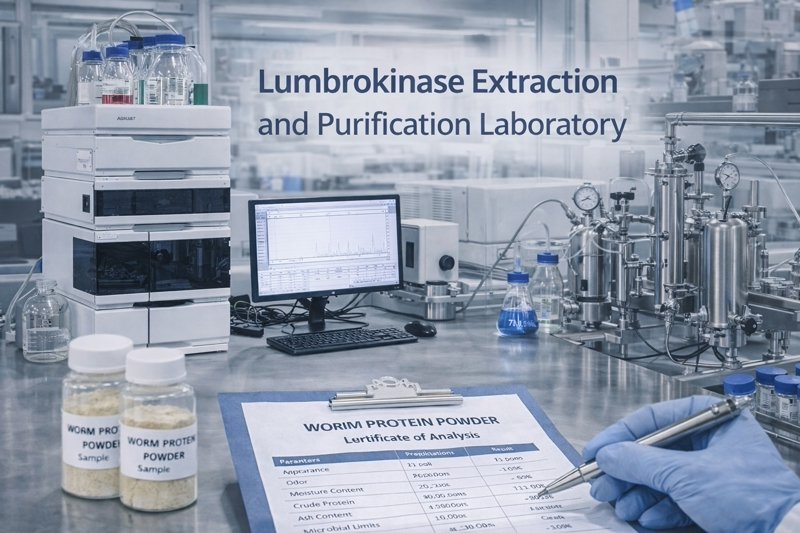
As shown in standardized manufacturing documentation, activity results may vary depending on the assay system used, meaning cross-supplier comparison requires caution.
Example specification reference:
Activity Units in Lumbrokinase (Important for Buyers)
Lumbrokinase activity may be expressed differently depending on testing systems:
- IU/mg (International Units per mg)
- FU/g (Fibrinolytic Units per gram)
- LKU and other regional systems
Because different laboratories use different substrates, incubation conditions, and calculation methods, numerical values are not always directly comparable.
This is a key reason B2B buyers must confirm:
- Assay method alignment
- Standard reference system
- Conversion assumptions (if any)
Related reading:
Lumbrokinase as an Ingredient (Not a Drug Positioning)
In ingredient markets, lumbrokinase is positioned as:
- A fibrinolytic enzyme raw material
- A dietary supplement ingredient
- A nutraceutical formulation component
- A research-grade enzyme material
It is not positioned as a pharmaceutical drug or medical treatment substance.
Final application and regulatory compliance depend on:
- Finished product formulation
- Target market regulations (US, EU, Asia, etc.)
- Labeling and claims compliance
Allworms Supply Notes for Lumbrokinase
Allworms Bio-Tech Co., Ltd. is a manufacturer of earthworm-derived enzyme ingredients with controlled cultivation and production systems.
Supply Capabilities
- Earthworm-derived lumbrokinase (Eisenia fetida source)
- Own breeding base and production facility in Conghua, Guangzhou
- Batch-controlled manufacturing system
Quality Documentation
- COA available per batch
- Specification sheet available
- Assay method based on fibrin plate system
Commercial Terms
- Sample support available (typically 100 g)
- MOQ usually around 1.5 kg depending on specification
- Lead time: 7–15 days after payment
- DDP shipping may be available for selected destinations
- Bulk and long-term supply supported
Related pages:
Buyer Checklist: Evaluating Lumbrokinase for Formulation Use
| Evaluation Area | What Buyers Should Check | Why It Matters |
|---|---|---|
| Activity Level | IU/mg or equivalent | Defines formulation strength |
| Assay Method | Fibrin plate assay or other | Ensures comparability |
| COA Consistency | Batch-to-batch stability | Affects production reliability |
| Moisture & Stability | Storage sensitivity | Impacts shelf life |
| Purity | Protein/impurity ratio | Affects formulation performance |
| Microbiology | Safety limits | Regulatory compliance |
| Heavy Metals | Pb, As, Hg, Cd | International compliance |
| Supplier Capability | MOQ, lead time, DDP | Supply chain stability |
Common Misunderstandings in Lumbrokinase Use
1. Confusing activity numbers across suppliers
Different assay systems can produce non-comparable values.
2. Treating it like a standard protein ingredient
It is an enzyme, not a conventional nutritional protein.
3. Ignoring assay method differences
Fibrin plate assay vs other methods can significantly affect results.
4. Overlooking formulation stability
Enzymes are sensitive to temperature, moisture, and processing conditions.
FAQ
1. What is lumbrokinase used for in supplements?
It is used as an enzyme ingredient in dietary supplement and nutraceutical formulations.
2. Is lumbrokinase a pharmaceutical ingredient?
No. It is supplied as a dietary supplement enzyme raw material for formulation use.
3. Why do activity values differ between suppliers?
Because different assay methods and testing conditions are used.
4. How is lumbrokinase evaluated?
Through COA review, fibrin plate assay results, and specification comparison.
5. Can lumbrokinase be used in all markets?
Usage depends on local dietary supplement regulations and finished product compliance.

Looking for a Stable Lumbrokinase Ingredient for Your Formulation?
Request COA, specification sheet, or sample evaluation today. Supports bulk supply, technical documentation, and global B2B shipping.