
A Quiet Enzyme with a Loud Future

For decades, enzymes have shaped entire industries—food processing, pharmaceuticals, nutraceuticals, even cosmetics. Proteases tenderize meat. Amylases break down starch. Lipases refine oils.
And then there’s lumbrokinase—less flashy, but increasingly relevant.
If you work in dietary supplements, pharmaceutical ingredients, or functional raw materials, you’ve probably noticed something: enzyme-based formulations are no longer niche. They’re becoming foundational. And lumbrokinase sits right at that intersection—between traditional bioactive extracts and precision enzyme science.
So where does it actually fit in the future of enzyme-based ingredients?
Let me explain.
First, a Quick Reality Check: What Is Lumbrokinase, Really?
Lumbrokinase is a group of fibrinolytic enzymes derived from earthworms—specifically from species like Eisenia fetida. Unlike many synthetic anticoagulants, it acts by targeting fibrin, the structural framework of blood clots.
It’s not new. In fact, earthworm extracts (known traditionally as “Di Long”) have been used in Eastern medicine for centuries. What’s changed is the science behind it.
Recent peer-reviewed work published in Food Bioscience identified specific bioactive peptides from earthworm protein digestion that exhibit ACE inhibitory activity . That’s significant. It demonstrates that earthworm-derived bioactives aren’t folklore—they’re structurally characterized, activity-verified compounds.
And lumbrokinase? It’s the most clinically studied enzyme fraction among them.
This matters. Because the future of enzyme-based ingredients will belong to molecules with:
- Defined structure
- Clear mechanism of action
- Reproducible activity
- Scalable production
Lumbrokinase checks those boxes more than many realize.
Enzyme-Based Ingredients: Why the Surge?
Honestly, we’re watching a shift.
Consumers are increasingly wary of synthetic drugs with broad systemic effects. At the same time, they’re not satisfied with vague “natural extract” claims either. They want mechanism. They want proof. They want clean labels with measurable activity units.
That’s where enzymes shine.
Enzymes are biological catalysts. They don’t just sit in the body—they do something. Specifically. Efficiently.
The global supplement industry is now leaning heavily into:
- Digestive enzymes
- Proteolytic enzymes
- Systemic enzyme therapy
- Targeted cardiovascular support
Lumbrokinase fits squarely into the systemic proteolytic enzyme category—but with a fibrin-targeting specificity that sets it apart.
And that specificity? That’s the future.
Precision Is the New Standard
Here’s the thing. The enzyme space is evolving from “broad activity” to “targeted biofunction.”
In earlier years, many enzyme supplements were marketed loosely—general protease blends, generic digestive aids. But modern formulation science demands precision:
- Defined molecular weight fractions
- Controlled enzymatic activity
- Verified in vitro and in vivo data
Studies have shown that earthworm protein hydrolysates contain distinct bioactive peptides with clear ACE inhibitory mechanisms . This supports a broader narrative: earthworm-derived bioactives are not random protein fragments—they are structured, functional molecules.
That same logic extends to lumbrokinase. It is not just “earthworm powder.” It is a defined enzyme complex with fibrinolytic capacity.
For manufacturers, this translates into:
- Standardized activity units (FU, IU equivalents depending on assay)
- Predictable stability profiles
- Cleaner regulatory dossiers
In other words—enzyme ingredients are maturing. Lumbrokinase matures with them.
Beyond Fibrinolysis: A Broader Bioactive Platform
Now here’s where it gets interesting.
While lumbrokinase is primarily recognized for fibrinolytic activity, earthworm-derived bioactives go beyond clot modulation.
Research into earthworm protein autolysates demonstrates immunomodulatory potential in CTX-induced immunosuppressed models . That’s not minor. It suggests the protein matrix surrounding lumbrokinase may contain complementary peptides with systemic effects.
And separate antioxidant peptide research further reveals that earthworm protein digestion releases multiple small molecular weight peptides with radical-scavenging activity .
So while lumbrokinase itself is an enzyme, it lives within a broader ecosystem of functional peptides.
For forward-thinking manufacturers, this opens product development pathways:
- Enzyme + peptide synergy formulas
- Cardiovascular + immune support blends
- Functional protein complexes
We’re no longer talking about a single-activity ingredient. We’re talking about a bioactive platform.
Sustainability: The Quiet Advantage
Let’s zoom out for a second.
The enzyme market is also being shaped by sustainability pressure. Animal-derived ingredients face scrutiny. Synthetic manufacturing has environmental costs.
Earthworm cultivation, interestingly, presents a lower greenhouse gas profile compared to traditional livestock protein production. Earthworms are already widely used in agriculture as soil enhancers and organic waste recyclers .
That ecological role matters.
It positions earthworm-derived enzymes as part of a circular bio-economy. Controlled cultivation. Efficient protein conversion. Lower environmental footprint.
For B2B buyers in Europe and North America especially, sustainability narratives influence sourcing decisions.
Lumbrokinase benefits from that shift.
Manufacturing Matters: From Raw Material to Refined Enzyme
Of course, none of this works without controlled processing.
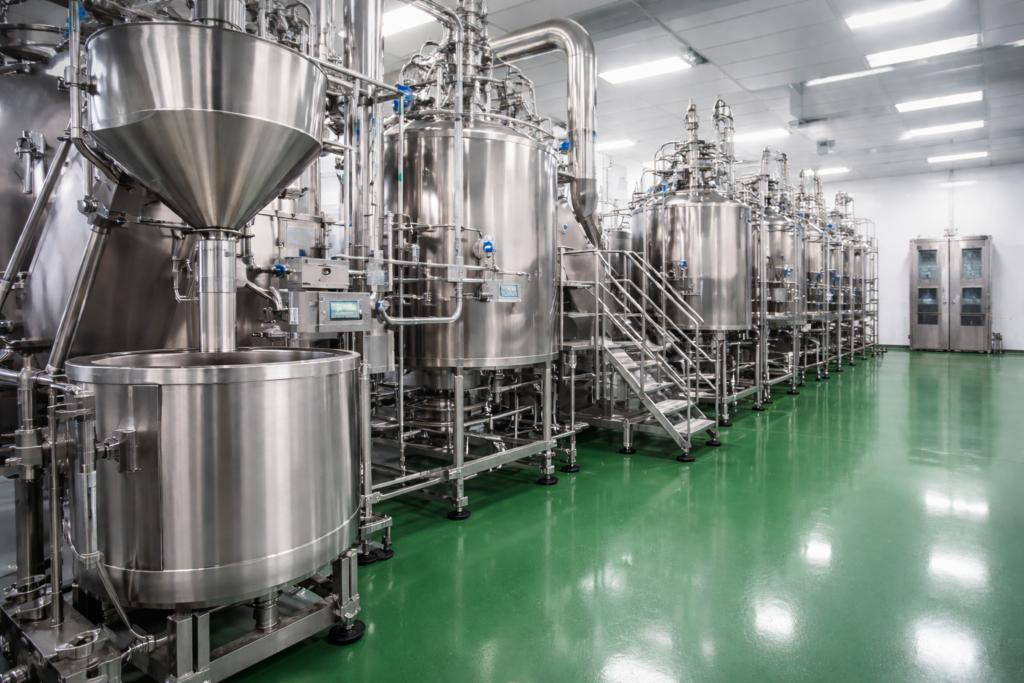
Modern production of earthworm protein powder involves mechanical separation, washing, filtration, low-temperature drying, sterilization, and milling . Enzyme extraction then requires activity preservation—temperature control, moisture control, and contamination management.
This is where the industry must stay disciplined.
The future of enzyme-based ingredients depends on:
- Batch-to-batch activity consistency
- Heavy metal and microbial testing
- Transparent documentation
Regulatory Landscape: Opportunity and Responsibility
Let’s be honest—enzymes that affect fibrin always invite regulatory attention.
Depending on region:
- It may be positioned as a dietary supplement
- It may require novel food evaluation
- It may fall under pharmaceutical-grade raw material regulations
Clear characterization helps here. Defined peptide identification and mechanistic clarity—as shown in published research —strengthen regulatory confidence.
The future isn’t about making louder claims. It’s about making smarter, supported ones.
Functional Formulation Trends: Where Lumbrokinase Is Headed
Over the next 5–10 years, expect to see lumbrokinase appear in:
- Cardiovascular maintenance supplements
- Active aging formulations
- Circulation-focused nutraceutical blends
- High-end professional line supplements
Interestingly, functional food applications are also expanding for earthworm-derived peptides . While lumbrokinase itself may remain capsule-focused due to stability and dosage requirements, surrounding peptide innovations may enter broader food matrices.
And here’s a subtle trend: personalized health.
As diagnostics improve, enzyme-based interventions can become more targeted. Fibrinolytic support isn’t for everyone—but for the right demographic, it’s relevant.
Precision nutrition is aligning with precision enzymes.
The Human Imperfection Factor
Here’s something we don’t talk about enough.
Consumers don’t just buy mechanisms. They buy stories. They buy confidence.
Earthworms have been used medicinally for centuries . That heritage matters—especially in Asian markets. But heritage alone isn’t enough anymore.
The winning formula blends:
- Traditional credibility
- Modern biochemical validation
- Industrial-grade manufacturing
Lumbrokinase sits exactly at that intersection.
It’s old. And new.
Natural. And technical.
Simple. And specific.
That contradiction is actually its strength.
So… Is Lumbrokinase the Future?
Not alone.
But as part of the enzyme-based ingredient evolution? Absolutely.
The future of enzyme ingredients will favor molecules that are:
- Mechanistically defined
- Clinically investigated
- Sustainably sourced
- Technologically refined
Lumbrokinase isn’t a trend. It’s a case study in how traditional bioactives can be refined into modern enzyme solutions.
And for manufacturers, wholesalers, and formulators watching where the enzyme sector is heading—this is one ingredient worth understanding deeply.
FAQ
1. What makes lumbrokinase different from other fibrinolytic enzymes?
Lumbrokinase is a group of earthworm-derived proteolytic enzymes that specifically target fibrin. Compared with broader systemic proteases, it demonstrates targeted fibrinolytic activity and has been studied for its role in circulation support.
2. Is lumbrokinase suitable for dietary supplement formulations?
Yes, lumbrokinase is widely used in dietary supplements for cardiovascular and circulation-focused products. However, regulatory classification varies by region, and manufacturers should verify local compliance requirements.
3. How is lumbrokinase standardized in bulk ingredient supply?
Reputable suppliers standardize lumbrokinase by enzymatic activity units (such as FU or IU equivalents depending on assay method). Batch testing ensures consistent fibrinolytic potency.
4. Can lumbrokinase be combined with other bioactive peptides?
Yes. Earthworm-derived protein hydrolysates contain additional bioactive peptides with ACE inhibitory and antioxidant properties, making enzyme–peptide combination formulations a growing area of interest.
5. What should B2B buyers look for when sourcing pharmaceutical-grade lumbrokinase?
Buyers should request activity assay reports, heavy metal analysis, microbial testing results, and stability data. Controlled manufacturing and documentation are critical for high-end supplement and pharmaceutical applications.