Premium health products are funny things. They rarely win because they are merely expensive. They win because they feel justified.
That’s the real job when you position earthworm peptide powder. You are not simply selling an unusual raw material. You are building a case that this ingredient deserves to sit in a higher-value formula, a more specialized product line, or a more science-led brand story.
And honestly, that takes some care.
Earthworm-derived ingredients already carry scientific interest in areas such as antioxidant activity, ACE inhibition, immunomodulation, and broader bioactive potential, but the premium market does not reward vague “traditional plus modern” messaging anymore. Buyers want a clean bridge between raw material origin, processing, measurable activity, formulation fit, and regulatory reality. The recent literature and technical materials in your file set support that bridge—especially around protein content, peptide generation after digestion or hydrolysis, and specific bioactive peptide findings.
So let’s talk about how to position earthworm peptide powder the smart way—the premium way.
Premium starts with the category story, not the lab result
A lot of ingredient sellers begin with activity claims. Antioxidant. Immune support. Cardiovascular support. Functional peptide source. That matters, sure. But premium positioning usually begins one step earlier.
It begins with this question: why should a formulator, distributor, or brand builder care about this ingredient at all?
Earthworm protein and peptide ingredients have a few built-in advantages for that conversation:
They come from a high-protein biological source. Several of the materials you shared describe earthworm raw material or protein as protein-rich, with reported protein levels around 60% to 70% in dry matter depending on material and processing.
They can yield low-molecular-weight peptides after enzymatic digestion, gastrointestinal simulation, or autolysis. In the research set, those peptide fractions were then linked with antioxidant, ACE-inhibitory, and immunomodulatory activity in test systems.
They also fit a broader market theme: specialized bioactive proteins with technical depth, not just generic nutrition. That matters a lot in premium products, where buyers are often looking for a reason to move beyond commodity whey, soy, collagen, or standard plant extracts.
Here’s the thing: the winning message is not “this is exotic.”
It is “this is a specialized peptide ingredient with a defined function, a defendable process story, and room for differentiated finished products.”
That sounds simple, but it changes everything.
Don’t sell “earthworm.” Sell the peptide platform.
For premium health products, raw identity alone can be a double-edged sword. Earthworm is memorable, yes—but also unusual enough that it can trigger hesitation if you lead with it too bluntly.
A better move is to position earthworm peptide powder as a bioactive peptide platform.
That means your headline message should emphasize:
- hydrolyzed or peptide-rich composition
- low-molecular-weight absorption logic
- targeted function territory
- controlled sourcing and manufacturing
- batch-level quality standards
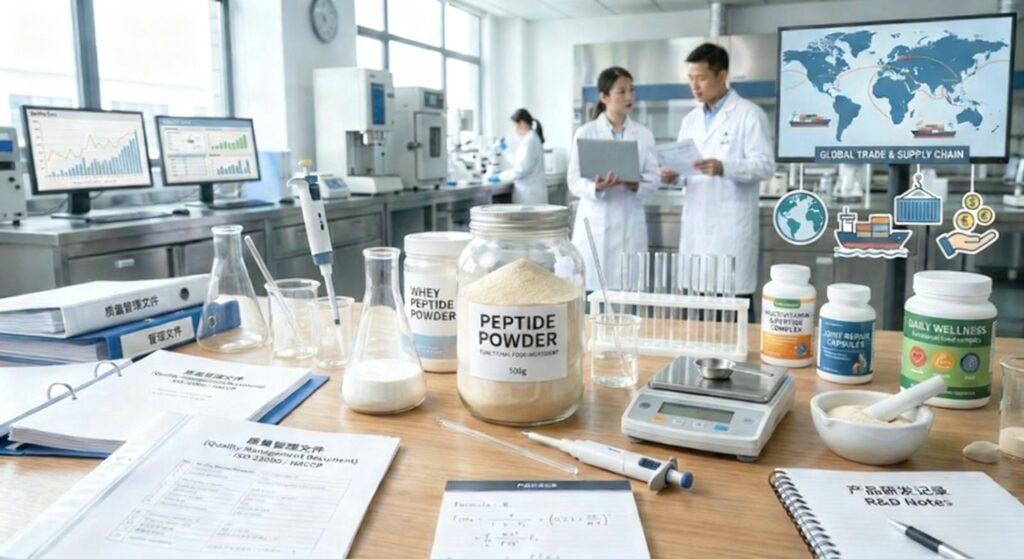
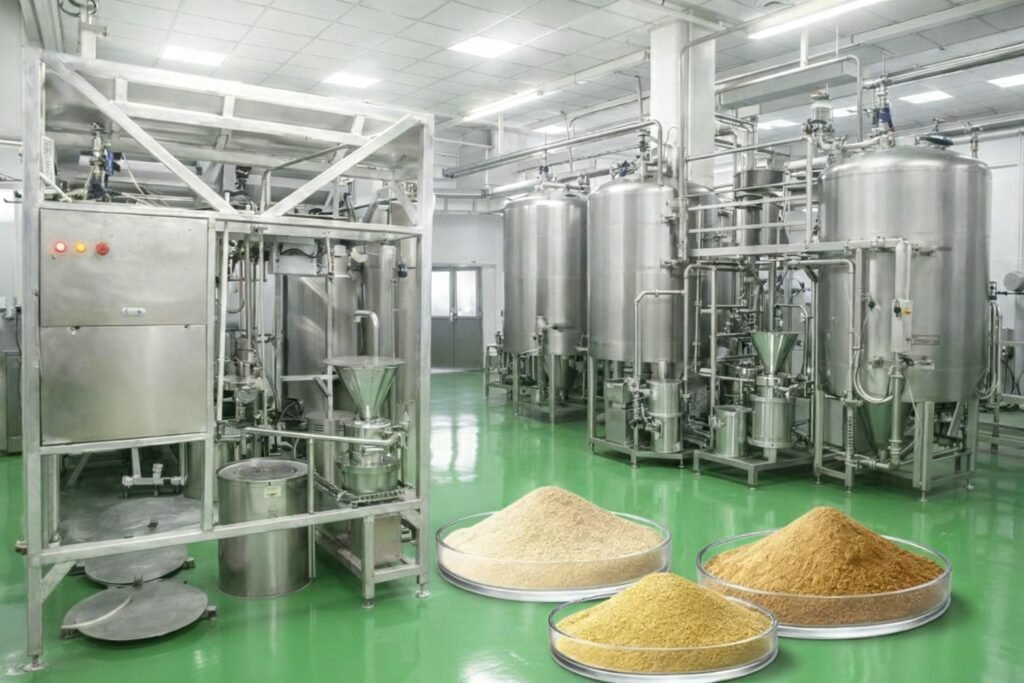
This is where your processing story becomes part of the value. Production flow that includes selection, impurity removal, washing, separation, filtration, low-temperature drying, sterilization, testing, and final batch release. That kind of sequence is exactly the sort of language premium buyers expect, because it signals discipline rather than folklore.
In practice, that lets you shift the conversation from “unusual animal origin” to “carefully processed peptide ingredient with measurable manufacturing controls.”
That’s a much better room to be in.
So what benefit territory makes the most sense?
Not every possible angle is equally strong. Some are interesting in theory, but awkward in the market. Others are much easier to place.
A more natural fit: cardiovascular-support positioning
This is probably the clearest premium route.
One of the strongest pieces reports that in vitro gastrointestinal digestion of earthworm protein yielded seven novel ACE inhibitory peptides, with SSPLWER and RFFGP showing the strongest ACE inhibitory activity among the identified peptides. The paper frames these peptides as part of the explanation for the antihypertensive potential of earthworm protein digestion products.
That does not mean a finished product should jump to disease language. It does mean the ingredient can be positioned credibly for:
- cardiovascular wellness formulas
- blood pressure support concepts, where permitted
- active aging lines
- circulation-focused premium supplement systems
- heart-health combination products
For dietary supplement brands and nutraceutical manufacturers, this is attractive because the market already understands peptide-based cardiovascular support. You are not inventing a category from scratch. You are offering a fresh ingredient story within a known demand zone.
Another strong fit: antioxidant and healthy aging support
A second study identified antioxidant peptides from earthworm proteins after gastrointestinal digestion and highlighted three peptides with especially strong antioxidant activity: AFWYGLPCKL, WPWQMSLY, and GCFRYACGAFY. The authors linked the findings to potential use of earthworm proteins as antioxidants in health foods.
That’s useful. Very useful, actually.
Why? Because antioxidant positioning travels well across categories:
- healthy aging supplements
- recovery blends
- daily wellness powders
- beauty-from-within products
- anti-stress nutrition concepts
- cosmeceutical storytelling around oxidative balance
It gives you more flexibility than a narrow single-benefit product.
A rising but more careful angle: immune support
The immunomodulatory paper found that earthworm protein autolysates improved several outcomes in a cyclophosphamide-induced immunosuppressed mouse model, and also identified candidate immunomodulatory peptides.
For premium positioning, immune support can be valuable—but it needs restraint. Buyers in this space are usually wary of ingredients that sound too sweeping. So the smarter framing is not “immune miracle.” It is something like:
peptide ingredient researched for immune balance and gut-associated immune response
That sounds more credible, and frankly, it sounds more premium too.
The premium buyer wants specificity, not hype
This is where many ingredient stories wobble.
A supplier says the ingredient supports circulation, immunity, antioxidation, vitality, metabolism, detox, skin, and maybe world peace while it’s at it. Nobody believes that. Or rather, nobody serious does.
Premium buyers prefer a narrower, sharper message.
A good positioning structure looks like this:
Core identity
Earthworm peptide powder from controlled earthworm protein processing
Primary value
Bioactive peptide ingredient for premium cardiovascular and healthy-aging formulations
Technical support points
Peptide generation through digestion or hydrolysis, published findings on ACE-inhibitory and antioxidant peptide fractions, protein-rich source material, controlled process steps, and quality testing framework
Commercial use cases
Capsules, tablets, sachets, powder sticks, multi-ingredient premium blends, and selected beauty or functional wellness formats
That’s tight. Buyers can work with that.
Premium positioning also lives or dies on process credibility
Let me explain. In health ingredients, “premium” often really means lower uncertainty.
Not flashy packaging. Not fancy adjectives. Lower uncertainty.
So when positioning earthworm peptide powder, you should emphasize the parts buyers quietly obsess over:
Source transparency
Our production material notes refer to a defined earthworm raw material source and a structured process description. Even a short mention like that helps signal traceability.
Processing method
If the ingredient is produced through enzymatic hydrolysis, simulated digestion-inspired preparation, or autolysis-derived peptide production, say so clearly and consistently. The published research shows that bioactivity discussions are tied closely to how peptide fractions are produced.
Standardization logic
Premium buyers will ask: what is standardized?
Protein content? Peptide content? Molecular weight distribution? Microbiological specifications? Heavy metals? Activity markers?
Even when a product is still early in commercialization, the positioning should imply a path toward reproducible specifications. Without that, “premium” starts sounding flimsy.
Sensory and formulation behavior
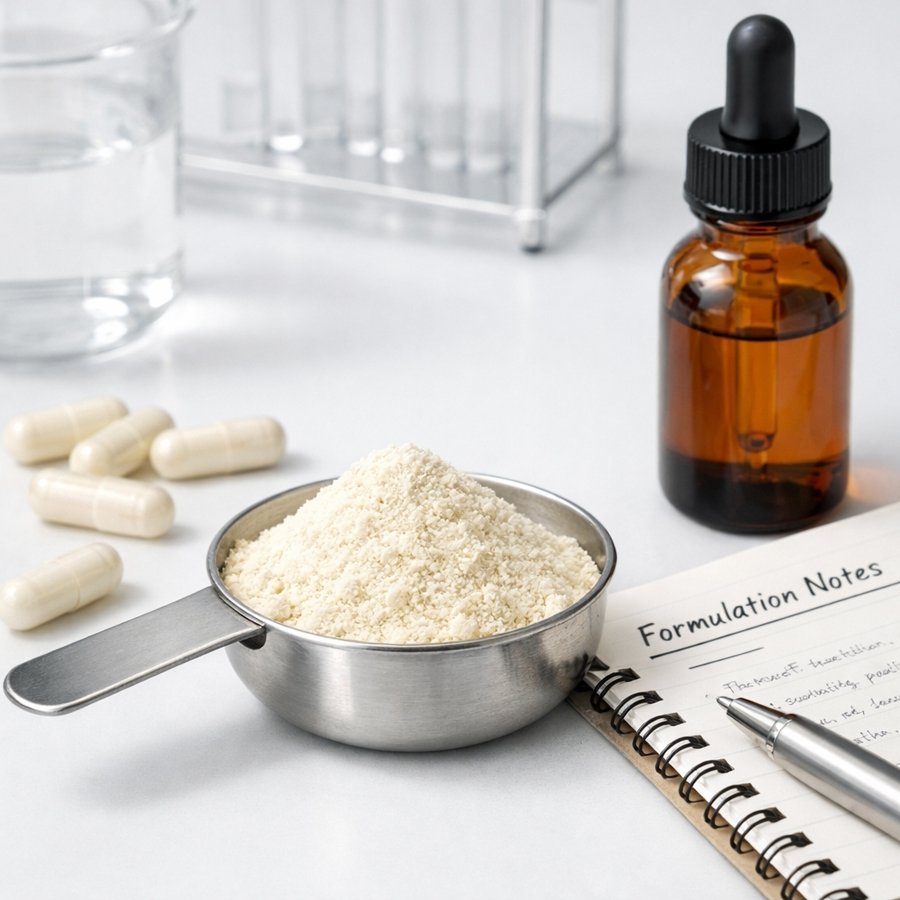
This part gets overlooked, but it matters. A peptide ingredient may have taste, color, solubility, or stability implications. Premium brands hate surprises in pilot batches. So positioning should include formulation friendliness where supportable—especially for capsules, tablets, sachets, and blended powders.
Different buyers need different versions of the same story
One ingredient. Different doors.
For dietary supplement brands
Lead with differentiated science and consumer-facing product concepts.
They care about claims space, product story, margins, and how the ingredient can help them stand out in crowded categories like heart health, healthy aging, and advanced wellness.
Use phrasing like:
science-supported peptide ingredient for next-generation cardiovascular wellness formulas
For nutraceutical ingredient distributors and wholesalers
Lead with marketability and portfolio fit.
They care about whether the ingredient fills a gap, complements existing peptide or enzyme lines, and gives their customers something new but still sellable.
Use phrasing like:
specialty peptide raw material with premium positioning potential in cardiovascular and antioxidant formulas
For pharmaceutical ingredient and research-oriented buyers
Lead with composition, process control, and evidence boundaries.
They will be less impressed by lifestyle language and more interested in peptide identification, mechanism hints, and technical reproducibility. The ACE inhibitory and antioxidant peptide studies are especially useful here because they identify specific peptide sequences and discuss mechanisms in more technical terms.
For cosmetics and nutricosmetics suppliers
This one is a bit more nuanced, but there is real room here. The antioxidant angle and the broader review on earthworm extract’s antioxidant and wound-related bioactive potential make a beauty-from-within or active-aging support story more plausible than a direct topical cosmetic claim.
Use phrasing like:
peptide ingredient for inner beauty and oxidative-stress-support product concepts
Where people get it wrong
You know what? Most positioning problems are not technical. They are emotional.
Teams get excited and overstate. Or they get nervous and understate.
Here are the common mistakes:
Mistake one: leaning too hard on tradition alone
Traditional use can add texture. It cannot carry a premium ingredient by itself. Buyers want modern evidence and process language.
Mistake two: making drug-like promises
The research is promising, but much of it is still preclinical, digestion-model based, or mechanism-oriented. If you speak beyond that, the positioning starts to wobble. Better to sound precise than grand.
Mistake three: trying to be for everyone
Premium products need sharper edges. Pick one main benefit territory and one secondary territory. That’s enough.
Mistake four: ignoring the “ick factor”
Let’s be real. Some markets will hesitate at the source material. Hiding that is a bad move. Reframing it through purity, peptide science, controlled production, and formulation purpose is the better move.
Mistake five: failing to support the premium price
If the price is above a generic protein or common botanical, the dossier has to work harder. Testing, origin story, processing controls, specification sheets, and application guidance all help justify that price.
The smartest premium message? Specialized, researched, controlled.
If I had to condense the whole positioning strategy into one sentence, it would be this:
Position earthworm peptide powder as a specialized bioactive peptide ingredient for premium cardiovascular, antioxidant, and healthy-aging health products—supported by emerging peptide research and strengthened by controlled sourcing and manufacturing.
That’s the lane.
Not mass-market protein powder.
Not miracle cure.
Not mysterious traditional secret.
A specialized ingredient. With a technical backbone. For brands that want something more distinctive than the usual shelf fillers.
And that, really, is how premium products are built.
FAQs
1. What is the best way to market earthworm peptide powder in premium supplements?
The best approach is to market it as a specialized bioactive peptide ingredient rather than a generic protein source. Premium supplement brands usually respond better to clear function-led positioning such as cardiovascular support, antioxidant support, or healthy aging support, backed by peptide research and controlled manufacturing.
2. Is earthworm peptide powder suitable for cardiovascular health product development?
Yes, earthworm peptide powder can fit premium cardiovascular health product development, especially when the positioning is based on research around ACE inhibitory peptides from earthworm protein digestion products. The most effective message is support-focused, science-led, and careful about regulatory boundaries.
3. Why do B2B buyers see peptide ingredients as more premium than standard protein powders?
B2B buyers often associate peptide ingredients with better specialization, stronger formulation stories, and more targeted product concepts. In the case of earthworm peptide powder, the premium appeal comes from its peptide-rich profile, emerging bioactive research, and potential use in advanced wellness formulas instead of basic nutrition products.
4. Which product categories fit earthworm peptide powder best?
The best-fit categories are premium dietary supplements, nutraceutical blends, active aging products, cardiovascular wellness formulas, and selected nutricosmetic concepts. These categories are more open to science-backed specialty ingredients with a technical story.
5. What should manufacturers prepare before launching an earthworm peptide powder ingredient?
Manufacturers should prepare a strong technical file with source details, processing description, specification standards, microbiological and heavy metal controls, and application guidance. For premium health ingredient buyers, documentation is part of the product value, not an afterthought.
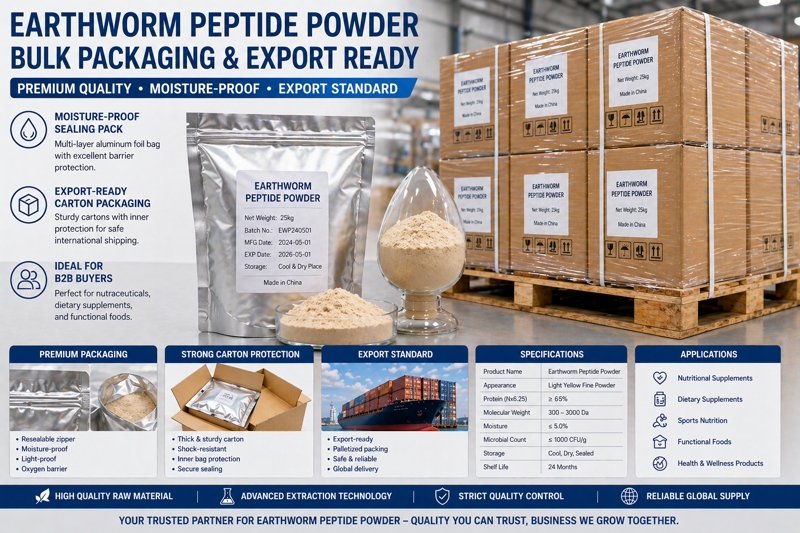
Get High-Absorption Peptide Ingredients Now
Request your earthworm peptide sample today 。