
Quick outline (so the flow feels natural)
- What “earthworm peptide powder” actually is (and what it isn’t)
- Why cardiovascular brands keep circling back to peptides (3 main “product story” angles)
- Angle #1: Blood pressure support — ACE-inhibitory peptides and what studies really show
- Angle #2: Circulation + clotting pathway narratives — where lumbrokinase fits (and where peptides fit)
- Angle #3: Oxidative stress + vascular aging — antioxidant peptides as a formulation theme
- Formulation reality check — solubility, taste, stability, delivery formats
- Quality + compliance — specs, heavy metals, allergens, claims language, documentation
- Go-to-market notes — positioning, label copy tone, and education assets
- FAQs (5)
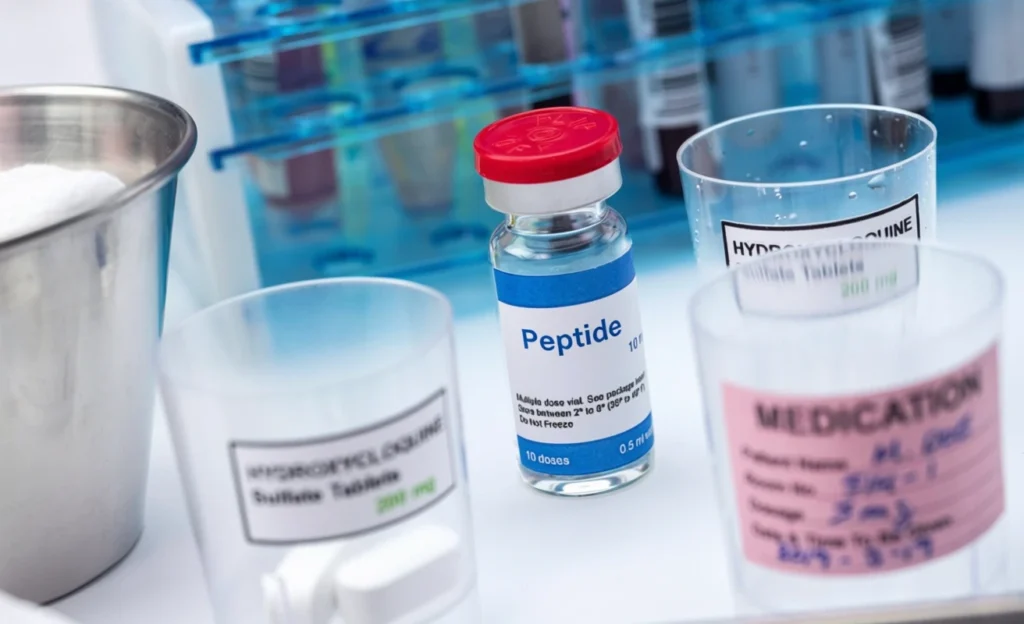

Let’s talk about an ingredient that gets a double-take at first glance.
Earthworm peptide powder sounds unusual—until you zoom out and look at what product developers actually care about: bioactive peptides, predictable specs, and a clean formulation story. Once you frame it that way, it starts to sit in the same conversation as other peptide-based nutraceutical ingredients used in cardiovascular health portfolios.
And yes, your buyers will ask the obvious questions.
“Is it safe?” “Is it stable?” “How do we position this without sounding… weird?”
Fair. All fair.
So here’s a practical overview—written for dietary supplement brands, nutraceutical ingredient buyers, pharmaceutical ingredient teams, and even cosmetics suppliers who sell into wellness-adjacent cardiovascular positioning.
First, what is earthworm peptide powder (in plain terms)?
Earthworm peptide powder is typically a hydrolyzed protein ingredient—meaning larger proteins are broken down into shorter peptide chains. Those peptides are often low molecular weight, more soluble than intact proteins, and easier to work into modern formats like capsules, tablets, sachets, gummies (with masking), and stick packs.
What it is not: a single compound with one “magic” effect.
It’s a mixture—and the business value depends on:
- how it’s produced (enzymatic hydrolysis, digestion simulation, autolysis, etc.)
- what peptide ranges dominate (often <3 kDa is a common target in peptide work)
- what the supplier can prove with specs and documentation
One more thing: in published research, a lot of the “cardio interest” comes from two peptide-related themes:
- ACE inhibition (blood pressure pathway support)
- Antioxidant activity (oxidative stress management tied to vascular function)
Those themes show up repeatedly in earthworm protein digestion studies.
Why cardiovascular formulators care about peptides (even if consumers don’t say “peptides”)
Peptides are a formulator’s friend because they can support three things brands like to say (carefully, of course):
- “Supports healthy blood pressure” (structure/function language)
- “Supports healthy circulation”
- “Helps protect against oxidative stress”
These aren’t the same claim, and they shouldn’t be blended into one sloppy sentence. But together, they form a coherent product narrative—especially for aging populations, metabolic-health stacks, and “healthy longevity” lines.
And in earthworm-derived research, you’ll find evidence that digestion products can contain identified peptide sequences with measurable activities in vitro.
A quick visual: what buyers imagine vs what you should actually sell
You’re not selling “worms.” You’re selling a standardized peptide ingredient with:
- a manufacturing story,
- a spec sheet,
- and a claims-safe positioning plan.
That’s the grown-up version.
The blood pressure angle: ACE-inhibitory peptides (where the science is most specific)
If your target portfolio includes blood pressure support, this is where earthworm peptides get surprisingly concrete.
A Food Bioscience study (2023) reported seven novel ACE inhibitory peptides identified from an in vitro gastrointestinal digestion product of earthworm protein, including sequences like SSPLWER and RFFGP, with measured IC50 values and competitive inhibition behavior described.
Here’s why that matters for product teams:
- ACE inhibition is a well-known target in the renin–angiotensin system discussion
- Food-derived ACE inhibitory peptides are commonly positioned as dietary support, not as drug replacements
- The research focus on sequence-specific activity helps with technical storytelling (white papers, formulation briefs, training decks)
Now, the business reality check:
- In vitro isn’t in vivo.
It’s still useful, but you need to avoid overpromising. - Digestion stability matters.
Some peptides survive better than others; delivery format and matrix can change outcomes. - Your product claim language must stay disciplined.
“Supports healthy blood pressure already within normal range” is safer than anything that sounds like treatment.
If you want a clean internal link to keep readers moving:
Jump to the formulation section
Circulation + clotting narratives: where lumbrokinase fits, and where peptides fit
This part is delicate, because it’s easy to mix up ingredient classes.
- Lumbrokinase is a group of fibrinolytic enzymes associated with earthworms and is widely discussed for thrombolytic/fibrinolytic properties in the literature.
- Earthworm peptide powder is usually not the same thing as a purified enzyme ingredient.
So why mention it in a peptide article?
Because in the cardiovascular category, many buyers don’t shop by chemistry—they shop by use case:
- circulation support
- microcirculation stories
- “healthy blood flow” positioning
The smart move is to keep your internal product line clear:
- Enzyme SKU (lumbrokinase-focused) for enzyme-led positioning
- Peptide SKU for multi-target wellness positioning (BP support + antioxidant angle)
And for buyers who want the “earthworm-derived portfolio” story, you can present it as a family:
- enzyme fraction (activity defined differently)
- peptide fraction (small peptides; different assays, different claims strategy)
A broad review of earthworm extract bioactives also summarizes antithrombotic and antioxidant activities and lists components like lumbrokinase and other proteins/peptides.
Oxidative stress + vascular aging: the antioxidant peptide story feels… modern
Here’s the thing: oxidative stress is a phrase consumers recognize now. It’s everywhere—healthy aging, metabolic health, skin health, heart health.
In a Food Chemistry study (2024), researchers simulated gastrointestinal digestion of earthworm protein, identified thousands of peptide sequences, then screened and validated antioxidant activity for several peptides (for example AFWYGLPCKL, WPWQMSLY, and GCFRYACGAFY) using antioxidant assays and structure–activity analysis.
For cardiovascular product developers, this matters because oxidative stress is tied to:
- endothelial function narratives
- lipid oxidation discussions
- “vascular aging” positioning in healthy longevity lines
But again—how you say it matters.
A claims-safe way to talk about it is:
- “Helps protect cells from oxidative stress”
- “Supports antioxidant defenses”
- “Supports vascular wellness as part of healthy aging”
And if you’re building a toolkit, you can add a technical note: that study used computational approaches to analyze likely active sites related to antioxidant behavior.
Formulation reality check
Okay—lab talk is nice. But you still have to ship product.
1) Taste and odor (yeah, let’s not pretend)
Peptides can be bitter. Earthworm-derived materials can also have a distinct profile depending on processing and carriers.
Common moves:
- microencapsulation
- flavor systems (for powders)
- capsule-first strategies for early market testing
2) Solubility and clarity
Many peptide ingredients dissolve well, but “clear solution” performance depends on:
- molecular weight distribution
- mineral content
- carrier system
If you’re supplying, this is where your COA and application notes win deals.
3) Heat and moisture stability
If your customer is doing:
- tablets (compression heat)
- stick packs (hot fill)
- beverages (pasteurization)
…you’ll want stability data (even simple accelerated tests).
4) Stacking logic (what it pairs with)
In cardiovascular wellness products, peptide powder is commonly positioned alongside:
- magnesium formats
- plant sterols (in lipid-support lines)
- antioxidant vitamins
- fermentation-derived ingredients
You don’t have to say you’re “better” than anything else. Just show compatibility.
Quality and compliance: what serious buyers will ask for
This is where deals are won or lost.
A buyer may love the concept, but procurement will still ask:
- species / raw material traceability
- microbial limits
- heavy metals
- residual solvents (if relevant)
- allergen statement
- peptide/protein assay method
- molecular weight distribution (if you claim “small peptides”)
- batch-to-batch consistency
If your operation also produces earthworm protein powders, you may already have a processing SOP that supports repeatability (cleaning, separation, drying, sterilization, packaging).
And if you’re selling into regulated markets, your marketing team needs pre-approved phrasing. “Supports” beats “treats” every single time.
A second visual: where it sits in a product line
This kind of map helps distributors and contract manufacturers understand your catalog fast—without a 30-minute call.
Positioning tips (without getting yourself in trouble)
You know what? A little restraint sells better here.
Instead of dramatic promises, lean into:
- standardization
- documentation
- application support
- clear intended use
Good positioning phrases:
- “Peptide-rich hydrolysate designed for cardiovascular wellness formulations”
- “Supports healthy blood pressure and antioxidant defense positioning (structure/function)”
- “Suitable for capsules, tablets, and powder blends”
And link internally so your site feels like a real library (not a one-off blog):
See the “Blood Pressure Support” section again
FAQs (for buyers, formulators, and product managers)
1) What is earthworm peptide powder used for in cardiovascular supplements?
Earthworm peptide powder is commonly positioned for cardiovascular wellness support, especially in formulas that emphasize blood pressure support and antioxidant defense based on peptide bioactivity research.
2) Are there specific ACE inhibitory peptides identified from earthworm protein?
Yes. Research has identified multiple novel ACE inhibitory peptides from in vitro gastrointestinal digestion products of earthworm protein, including sequences such as SSPLWER and RFFGP, with reported ACE inhibition metrics.
3) How does earthworm peptide powder differ from lumbrokinase ingredients?
Earthworm peptide powder is typically a peptide mixture from protein hydrolysis, while lumbrokinase refers to fibrinolytic enzymes discussed for clot-related pathway activity. They’re different ingredient categories with different testing, specs, and positioning.
4) Can earthworm peptides be positioned as antioxidant ingredients for vascular aging products?
Some studies report antioxidant peptides derived from earthworm protein digestion and validated via common antioxidant assays, making them relevant for “helps protect against oxidative stress” positioning in healthy aging/vascular wellness lines.
5) What specs should wholesalers request for earthworm peptide powder used in nutraceutical manufacturing?
For nutraceutical supply chains, request COA + micro/heavy metal limits, molecular weight distribution (if claimed), peptide/protein assay method, traceability, and batch consistency documentation. A defined, repeatable processing flow also helps support consistent commercial supply.