When buyers ask about earthworm-derived ingredients, they often use the terms earthworm peptide powder and earthworm protein powder almost interchangeably.
But here’s the thing — they’re not the same. Not in structure. Not in bioactivity. Not in positioning. And certainly not in how you’d formulate them into dietary supplements, nutraceuticals, or pharmaceutical-grade products.
If you’re a manufacturer, ingredient buyer, or health brand developer, understanding this distinction isn’t just academic. It affects your product claims, regulatory pathway, dosage form, cost structure, and even your target market.
Let’s break it down clearly — no fluff, just science explained in plain English.
Earthworms: From Soil Engineers to Bioactive Ingredient Sources
Before we compare peptide vs protein, it helps to zoom out for a moment.
Earthworms (often referred to as Di Long in traditional Chinese medicine) have been used medicinally for centuries. Modern research now confirms that earthworms contain:
- High-quality protein (often 60–70% dry weight)
- Essential amino acids
- Bioactive peptides
- Enzymes such as lumbrokinase
- Antioxidant and immunomodulatory compounds
Studies published in Food Bioscience have shown that enzymatically hydrolyzed earthworm protein can yield ACE-inhibitory peptides with measurable antihypertensive activity .
So yes — earthworms are more than soil recyclers. They are emerging functional protein sources.
But the form matters.
H2: What Is Earthworm Protein Powder?
Let’s start with the more foundational ingredient.
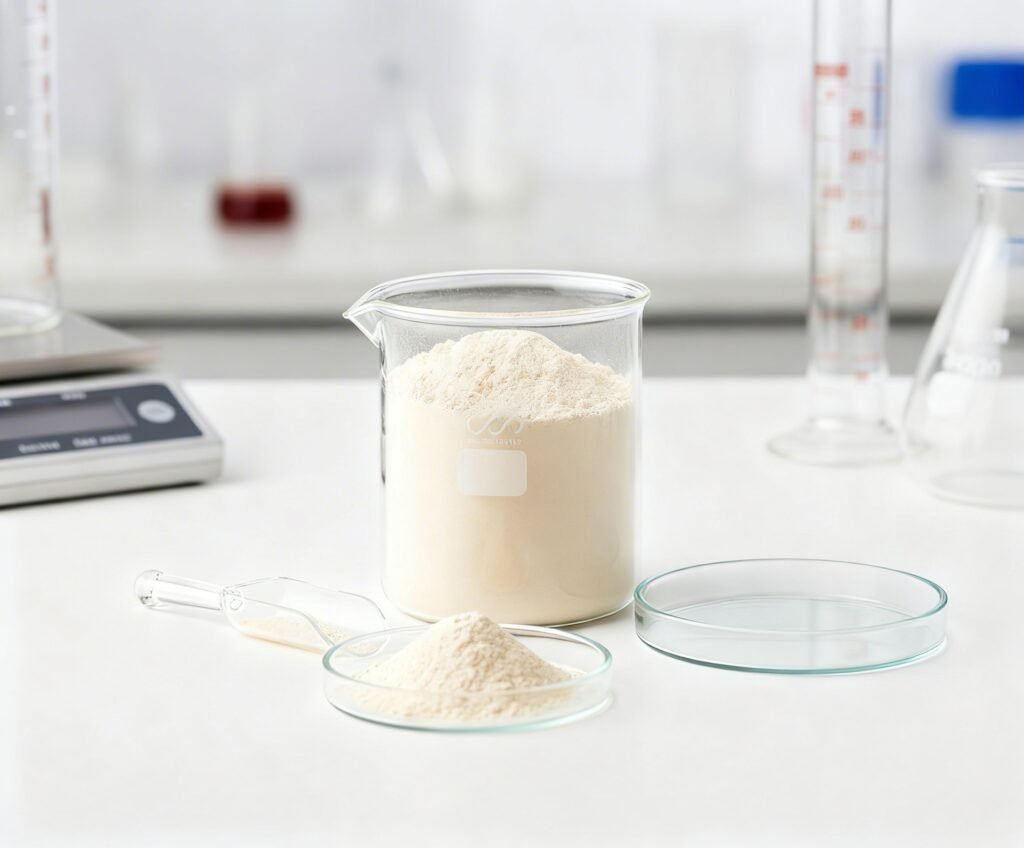
Earthworm protein powder is essentially the whole protein fraction extracted from earthworms. The process generally includes:
- Mechanical separation
- Cleaning and purification
- Low-temperature drying
- Milling and sterilization
As described in standardized production processes , the result is a high-protein powder suitable for food, feed, or supplement applications.
Structurally Speaking
Protein = long chains of amino acids folded into complex 3D structures.
These proteins may contain:
- Structural proteins
- Enzymatic proteins
- Bioactive protein fractions
- Precursors to peptides
However — and this is important — intact proteins must be digested before absorption.
Your body breaks them down into smaller peptides and amino acids during gastrointestinal digestion.
So while earthworm protein powder is nutrient-dense, its bioactivity often depends on digestion efficiency.
H2: What Is Earthworm Peptide Powder?
Now we’re getting into something more refined.
Earthworm peptide powder is produced by enzymatic hydrolysis of earthworm protein. This process breaks large protein molecules into smaller chains — typically dipeptides, tripeptides, and short oligopeptides.
In other words:
Protein → Enzymatic hydrolysis → Peptides
These peptides are:
- Lower molecular weight
- More soluble
- Faster absorbed
- Often directly bioactive
Research has identified specific ACE-inhibitory peptides such as SSPLWER and RFFGP derived from digested earthworm protein .
Additionally, earthworm protein autolysates have demonstrated immunomodulatory activity in CTX-induced immunosuppressed mice models .
So peptide powder isn’t just “smaller protein.” It’s often functionally active by design.
H2: The Core Differences — Let’s Compare Clearly
1. Molecular Size
- Protein powder: Large molecular weight (>10 kDa typical fractions)
- Peptide powder: Small molecular weight (<3 kDa often targeted in purification)
Smaller molecules generally cross intestinal barriers more efficiently.
That’s why peptides are often preferred in functional supplements.
2. Absorption Speed
Here’s something formulators care about.
Small peptides can be absorbed through peptide transporters (like PepT1) without complete breakdown into free amino acids. That means:
- Faster bloodstream entry
- Less competition during absorption
- Potentially higher bioavailability
Compared to free amino acids, certain di- and tripeptides may even show superior absorption efficiency.
Protein powder? It must first undergo enzymatic digestion.
3. Functional Positioning
Earthworm Protein Powder is commonly positioned as:
- High-protein ingredient
- Nutritional supplement base
- Functional food additive
- Feed protein alternative
Earthworm Peptide Powder is more often positioned for:
- Antihypertensive support (ACE inhibition)
- Cardiovascular health
- Antioxidant formulas
- Immunomodulatory products
- Specialized nutraceutical blends
See the difference in marketing language? It reflects biological differences.
4. Bioactivity Evidence
Protein powder contains precursors.
Peptide powder contains identified active sequences.
For example:
- ACE inhibitory peptides identified via UPLC-MS/MS
- Immunomodulatory peptides screened via molecular docking
Peptides allow more targeted research claims — though regulatory compliance always depends on jurisdiction.
5. Production Complexity and Cost
Protein powder production is relatively straightforward.
Peptide production requires:
- Controlled enzymatic hydrolysis
- Molecular weight fractionation
- Ultrafiltration
- Bioactivity screening
Naturally, that increases cost.
So from pricing perspective, peptide powder is usually positioned as a higher-value functional ingredient.
H2: Where Does Lumbrokinase Fit In?
Now this gets interesting.
Lumbrokinase is a specific fibrinolytic enzyme found in earthworms. It belongs neither purely to protein powder nor peptide powder — it is an isolated enzyme fraction.
It has documented thrombolytic properties and is widely studied for cardiovascular applications .
So in the earthworm-derived ingredient ecosystem, you essentially have three tiers:
- Whole Protein Powder
- Hydrolyzed Peptide Powder
- Purified Enzyme (e.g., lumbrokinase)
Each serves a different formulation strategy.
H2: Application Strategy for Manufacturers
Let’s make this practical.
If You’re Developing:
General protein supplements → Earthworm protein powder
Functional cardiovascular product → Earthworm peptide powder or lumbrokinase
Immunity-focused formula → Peptide fraction supported by immunomodulatory data
Functional food innovation → Peptides offer solubility advantages
It’s not about which is “better.”
It’s about which aligns with your product goal.
H2: Sustainability — A Quiet Advantage
There’s another angle here.
Earthworms have high protein conversion efficiency and lower environmental impact compared to traditional livestock.
They are also widely recognized as key contributors to soil ecosystems .
For brands targeting alternative protein markets, earthworm protein powder can be positioned as a novel sustainable protein source.
Peptides, meanwhile, fit into high-value functional ingredient niches.
Different stories. Same origin.
H2: So… Which One Should You Choose?
Honestly?
It depends on your formulation intention.
If you want a nutrient-dense, cost-effective protein ingredient — protein powder makes sense.
If you want targeted bioactivity with faster absorption and functional positioning — peptide powder may be more appropriate.
Some brands even combine them. Mildly contradictory? Maybe. But strategically smart.
Frequently Asked Questions (FAQs)
1. What is the main difference between earthworm peptide powder and earthworm protein powder?
The primary difference lies in molecular size and bioactivity. Earthworm protein powder contains intact large proteins, while earthworm peptide powder consists of smaller hydrolyzed peptides that are more easily absorbed and often exhibit targeted biological activities.
2. Is earthworm peptide powder more effective for cardiovascular supplements?
Earthworm peptide powder may offer advantages for cardiovascular formulations due to identified ACE-inhibitory peptides shown in research . However, final product effectiveness depends on dosage, formulation, and regulatory compliance.
3. Can earthworm protein powder be used in functional foods?
Yes. Earthworm protein powder can be incorporated into protein bars, capsules, powders, and other fortified foods. Its high protein content makes it suitable as a functional protein source .
4. How are earthworm peptides produced industrially?
Earthworm peptides are typically produced through enzymatic hydrolysis followed by ultrafiltration to isolate low-molecular-weight fractions. Research-grade purification methods include UPLC-MS/MS identification .
5. Are earthworm-derived ingredients supported by scientific research?
Yes. Peer-reviewed studies have documented antihypertensive, immunomodulatory, antioxidant, and thrombolytic properties of earthworm-derived peptides and enzymes .
If you’re sourcing earthworm-derived ingredients, the real question isn’t “protein or peptide?”
It’s this:
What functional story are you trying to tell — and which molecular form supports that story best?
That’s where strategy meets science.