Outline
- Why “quality” is more than just protein percentage
- Raw material matters first: species, sourcing, cleaning, and process control
- The core technical indicators buyers should check
- Why molecular weight and hydrolysis data deserve more attention
- Activity evidence: what makes a peptide powder commercially meaningful
- Safety, consistency, and batch-to-batch control
- What documents serious suppliers should provide
- Common red flags buyers should not ignore
- Final buyer checklist
- FAQs
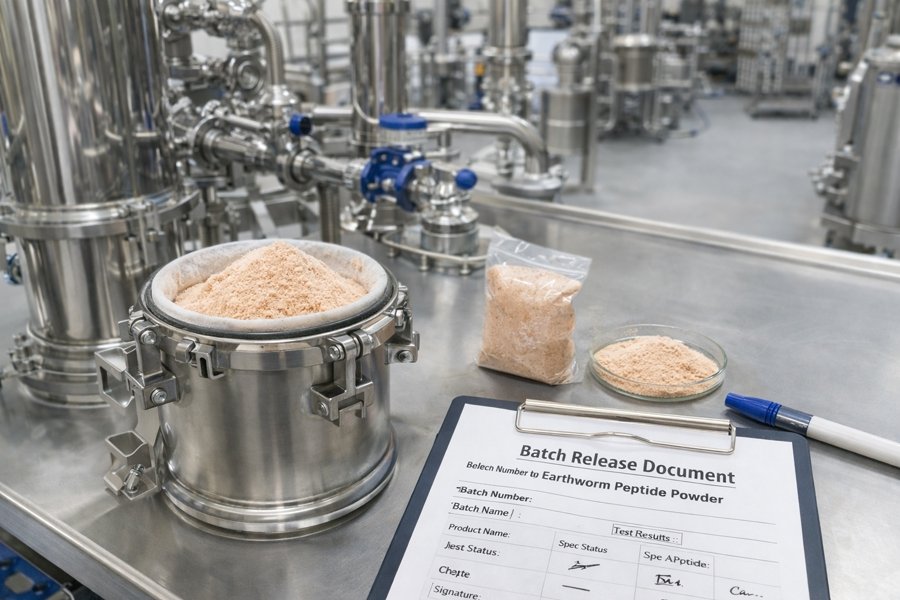
If you’re sourcing earthworm peptide powder for dietary supplements, functional foods, pharma-adjacent formulas, or even premium health products, one question sits above the rest: how do you tell whether the powder is genuinely high quality—or merely dressed up with a nice COA?
That’s the real issue, isn’t it? Because in this category, a pretty spec sheet can look impressive at first glance. Protein: high. Appearance: fine powder. Color: light yellow. Great. But none of that, by itself, tells you whether the material is well processed, peptide-rich, consistent from batch to batch, or suitable for serious product development.
Here’s the thing: high-quality earthworm peptide powder is not defined by one number. It’s defined by a chain of evidence. Raw material quality, controlled hydrolysis, peptide profile, safety testing, processing conditions, and functional relevance all have to line up.
So let’s break it down in a practical B2B way.
What quality really means here — and why it’s a little more complicated
Earthworm-derived materials can contain proteins, peptides, enzymes, minerals, fats, and other bioactive components. Research shows earthworm raw material itself is protein-rich, often around 60% to over 70% on a dry basis, while purified earthworm protein fractions can reach much higher purity after extraction. In one study, dried earthworm raw material contained 60.34% protein, and the extracted earthworm protein reached 96.03% protein with fat reduced to 0.98%.
That sounds excellent—and it is—but peptide powder is not the same as crude earthworm powder, and it is not the same as isolated protein either.
A good earthworm peptide powder should show that the original proteins were broken down into smaller, more bioavailable peptide fractions through a controlled process. In published work on earthworm protein hydrolysates, researchers measured degree of hydrolysis, soluble peptide content, molecular weight distribution, and bioactivity after simulated digestion. Those are the kinds of indicators a serious buyer should pay attention to, not just crude protein alone.
In other words, quality is part chemistry, part process discipline, and part proof.
Start at the beginning: raw material quality still rules the game
Honestly, if the raw material is weak, the finished peptide powder rarely becomes excellent by magic.
One uploaded production document describes a process beginning with earthworm raw material selection, mechanical separation of soil and impurities, secondary sorting and cleaning, hydrolysis, centrifugation/filtration, low-temperature drying, sterilization, and packaging. That matters a lot. It tells you something simple but important: quality starts long before the final powder is packed.
When evaluating a supplier, ask:
- What earthworm species is used?
- Is the farming environment controlled?
- How are soil residues and foreign matter removed?
- Is the raw material processed fresh or after uncontrolled storage?
- Is there traceability back to breeding lots?
That may sound basic, but it’s not trivial. Earthworms live in soil-rich environments, so contamination risk—microbial, physical, even heavy metal-related—must be taken seriously. A supplier that cannot clearly explain cleaning, separation, and source control is already giving you a signal.
And yes, source consistency matters for commercial reasons too. If your formulation team loves one pilot lot but the next three batches drift in taste, odor, solubility, or activity, that “good price” suddenly gets expensive.
Protein content is important — just not enough
A lot of buyers still ask first: “What’s the protein percentage?”
Fair question. It’s still one of the first markers to check. Research on earthworm materials confirms that earthworms are protein-dense and nutritionally valuable. Earthworm proteins also contain essential amino acids, with lysine, leucine, and arginine reported among the abundant amino acids.
But for peptide powder, protein percentage is only the entry ticket.
Why? Because a high protein number does not tell you:
- how much of that protein is actually hydrolyzed into peptides,
- how small the peptide fractions are,
- whether the powder disperses well,
- whether the batch carries meaningful bioactivity,
- or whether the process damaged sensitive components.
So yes, ask for protein content. But don’t stop there.
Degree of hydrolysis: one of the most useful quality clues
This is where the conversation gets more interesting.
In studies on earthworm protein hydrolysates, degree of hydrolysis was measured using TNBS-based methods, and soluble peptide yield was also quantified. One antioxidant-focused study reported a degree of hydrolysis of 22.91% and soluble peptide content of 79.19% for gastrointestinal digestion products. Another earthworm protein autolysate study reported a degree of hydrolysis of 22.38% and soluble peptide content of 77.92%.
Why should a buyer care?
Because degree of hydrolysis tells you how far the protein has been broken down. Not perfectly, not completely, but enough to give you a solid sense of whether you are buying a true peptide material or just a partially processed protein powder with a fashionable name.
A controlled hydrolysis level often affects:
- solubility,
- taste profile,
- digestibility,
- peptide release,
- and downstream formulation behavior.
Too little hydrolysis, and you may get poor functionality. Too much, and you can run into bitterness, instability, or a product that loses the balance buyers want. That’s the mild contradiction in this category: more hydrolysis can be better—until it isn’t.
So when a supplier says “peptide powder,” ask for actual hydrolysis data, not just marketing language.
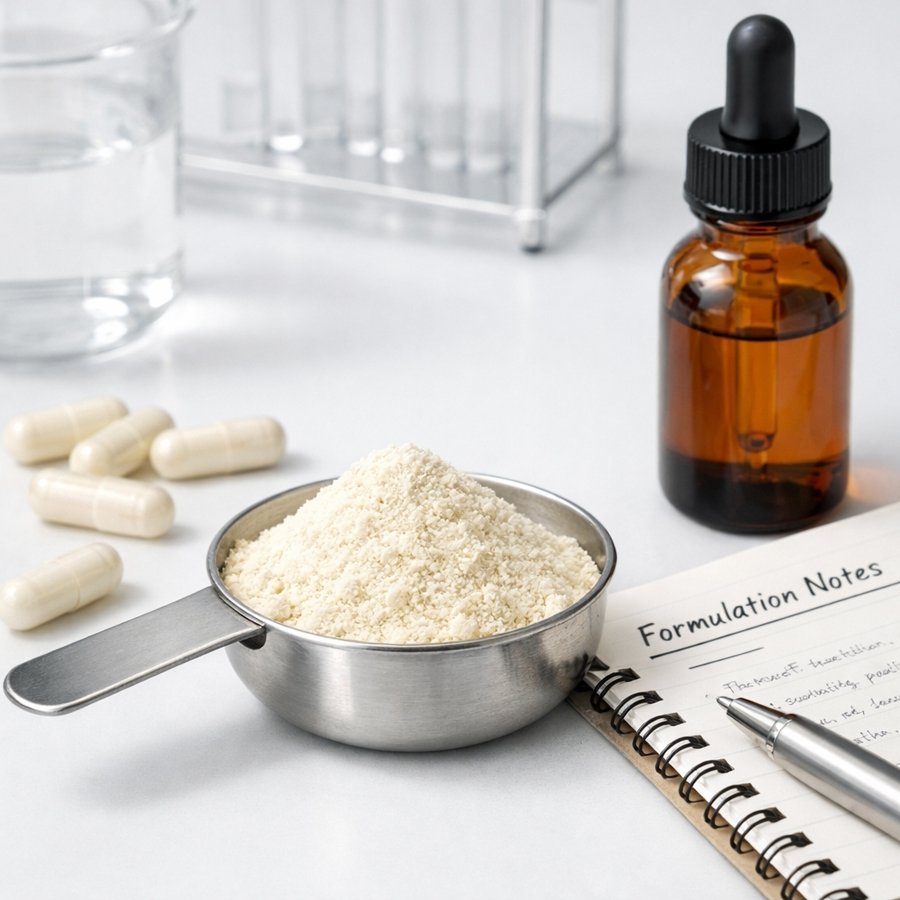
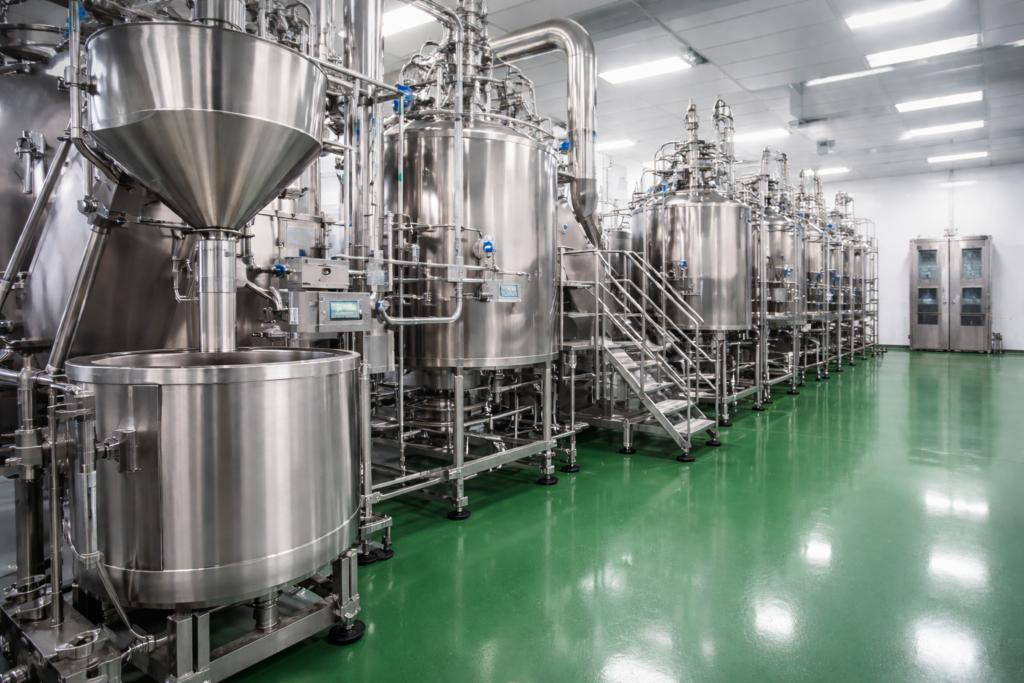
Molecular weight profile: this is where many buyers separate the real suppliers from the noisy ones
You know what? Molecular weight distribution is often one of the most revealing pieces of data in peptide sourcing.
Research on earthworm protein gastrointestinal digestion products showed that low-molecular-weight fractions were particularly important. In one ACE inhibitory study, the fraction below 3 kDa had the strongest activity, with an ACE inhibition rate of 87.85% and an IC50 of 98.34 μg/mL, outperforming the larger fractions.
That does not mean every good earthworm peptide powder must have the exact same profile. But it does mean this: small peptide fractions matter, and suppliers should be able to characterize them.
Ask for:
- molecular weight distribution by HPLC or GPC/HPSEC,
- proportion below 3 kDa,
- proportion below 1 kDa, if available,
- average molecular weight,
- and the test method used.
If a supplier cannot provide molecular weight distribution, that’s a gap. A big one.
Because in peptide business terms, “small peptides” should be measurable, not just claimed.
Bioactivity evidence: not every peptide powder is commercially meaningful
This is where the market gets a bit messy. Some suppliers sell “earthworm peptide powder” as if the mere existence of peptides guarantees performance. That’s not how serious sourcing works.
Published studies have shown that earthworm protein hydrolysates can yield identifiable bioactive peptides with antioxidant, ACE inhibitory, and immunomodulatory potential. For example, researchers identified antioxidant peptides such as AFWYGLPCKL, WPWQMSLY, and GCFRYACGAFY from earthworm proteins after digestion and purification. They also identified ACE inhibitory peptides such as SSPLWER and RFFGP, with SSPLWER showing especially strong ACE inhibitory activity.
Now, let me explain the practical takeaway: buyers do not need a supplier to reproduce every academic result. That would be unrealistic. But they should expect some evidence that the material has been developed with functional relevance in mind.
Depending on your application, that may include:
- antioxidant screening data,
- ACE inhibition data,
- enzymatic activity data, where relevant,
- peptide identification work,
- or application testing in a formulation matrix.
A supplier with zero functional data is selling a commodity. A supplier with structured activity evidence is offering an ingredient.
That’s a meaningful difference.
Safety and purity: the quiet part that smart buyers always check
This part isn’t glamorous, but it decides whether the ingredient is usable.
A credible earthworm peptide powder supplier should provide routine safety data, including at minimum:
- heavy metals,
- total plate count,
- yeast and mold,
- coliforms or E. coli,
- Salmonella, where relevant,
- moisture,
- ash,
- and sometimes residual solvents, depending on process.
The uploaded materials also describe process steps such as low-temperature drying, sterilization, and final packaging, which are not just manufacturing details—they are quality signals tied to microbial control and stability.
Moisture deserves a special mention. Too much moisture can shorten shelf life, worsen flowability, and increase risk during storage and shipping. A peptide powder may look fine when sampled, then clump or drift in quality later if drying and packaging were not properly controlled.
And for export-focused buyers, the documentation standard matters almost as much as the test itself. A result without a method, a date, a batch number, or a lab identity is not much of a result.
Process matters more than many buyers expect
Let’s be blunt: two powders with similar assay values can perform very differently because of process.
The published earthworm studies used controlled extraction, enzymatic digestion, dialysis, ultrafiltration, chromatography, and instrumental identification methods such as HPLC-MS/MS and UPLC-MS/MS. That doesn’t mean your commercial supplier must run full research-grade purification on every batch. But it does show what separates crude processing from intentional peptide development.
In commercial terms, ask about:
- enzymatic hydrolysis versus simple grinding,
- reaction temperature and pH control,
- filtration and concentration steps,
- low-temperature drying,
- sterilization method,
- and batch release testing.
There’s an old manufacturing truth here: process variation becomes product variation. And product variation becomes customer complaints.
So yes, a supplier’s process flow chart is worth reading.
Documents serious suppliers should be ready to share
For procurement, a reliable supplier should usually be ready with a document pack that includes most of the following:
- product specification sheet,
- COA for recent lots,
- microbiological report,
- heavy metals report,
- amino acid or protein assay data,
- molecular weight distribution data,
- process flow overview,
- allergen statement where applicable,
- storage and shelf-life recommendation,
- and packaging details.
If the supplier positions the ingredient for higher-end nutraceutical or pharmaceutical-adjacent use, then consistency documentation becomes even more important. The buyer should be able to compare one lot to another without guesswork.
Red flags that should make you slow down
A few warning signs show up again and again in ingredient sourcing.
First, vague language. If every answer sounds like “high quality,” “natural,” and “premium,” but no one gives numbers, methods, or batch data, that’s a problem.
Second, activity claims without support. Earthworm materials may have promising bioactive properties in research, yes, but a supplier still needs evidence for the commercial material being sold.
Third, no molecular weight information. For peptide powders, that’s like selling coffee without knowing whether it’s whole bean or instant.
Fourth, overpromising on medical outcomes. The uploaded review literature clearly shows earthworm extracts contain multiple bioactive agents with reported pharmacological effects, including lumbrokinase, antimicrobial peptides, and antioxidant-related components. But those findings come from a mix of in vitro, in vivo, and review-level evidence, not a blank check for every commercial powder to make sweeping end-product claims.
And fifth, inconsistent appearance, odor, flowability, or solubility between lots. Buyers sometimes treat those as minor issues. They’re not. They often hint at deeper process inconsistency.
A practical buyer checklist — the version people actually use
When evaluating earthworm peptide powder, ask yourself:
Is the raw material traceable and well cleaned?
Is the product truly hydrolyzed, with degree of hydrolysis or soluble peptide data?
Is there molecular weight distribution data?
Are protein and moisture levels reasonable and consistent?
Is there bioactivity evidence tied to the material type?
Are heavy metals and microbiology properly tested?
Does the supplier have a clear production flow and batch release standard?
Can they provide recent, lot-specific documents without hesitation?
If most answers are yes, you’re probably talking to a serious manufacturer.
If most answers are fuzzy, you’re probably not.
Final thought: quality is what survives scrutiny
Earthworm peptide powder can be a compelling ingredient category. The science behind earthworm-derived proteins and peptides is getting stronger, with published work showing meaningful peptide generation, low-molecular-weight active fractions, and identifiable antioxidant and ACE inhibitory peptides.
But buyers shouldn’t confuse category potential with batch quality.
A good supplier doesn’t merely sell a story about bioactive peptides. They show how the raw material was handled, how the proteins were hydrolyzed, how the peptides were characterized, how safety was checked, and how consistency is maintained.
That’s what quality looks like in the real world. Not flashy. Not mysterious. Just solid, testable, and repeatable.
FAQs
1. What is the most important indicator when evaluating earthworm peptide powder quality?
There isn’t one single indicator. The best evaluation combines protein content, degree of hydrolysis, soluble peptide content, molecular weight distribution, microbiological safety, heavy metals, and batch consistency. For serious buyers, molecular weight profile and process control are often especially revealing.
2. Why is molecular weight important in earthworm peptide powder?
Lower-molecular-weight peptide fractions are often more relevant for absorption and functional performance. Research on earthworm protein hydrolysates found that the fraction below 3 kDa showed the strongest ACE inhibitory activity, which makes molecular weight distribution a key quality marker.
3. How can buyers verify that an earthworm peptide powder is truly hydrolyzed?
Ask for degree of hydrolysis data, soluble peptide content, and the hydrolysis method used. Published earthworm peptide studies reported hydrolysis values around 22% with soluble peptide content around 78% to 79%, giving buyers a useful technical reference point.
4. What documents should a manufacturer provide for earthworm peptide powder?
A reliable manufacturer should usually provide a specification sheet, recent COA, microbiological report, heavy metals report, moisture and protein test data, process flow summary, and ideally molecular weight distribution data for the earthworm peptide powder.
5. Is high protein content enough to prove premium earthworm peptide powder quality?
No. High protein helps, but it does not prove peptide richness, small-molecule distribution, functional relevance, or safety. A premium earthworm peptide powder should also show controlled hydrolysis, peptide characterization, clean processing, and stable batch-to-batch quality.