Outline
- Why premium positioning matters for earthworm peptide powder
- What makes the ingredient commercially interesting
- The strongest premium product territories: cardiovascular, antioxidant, recovery, healthy aging, specialist nutrition
- How to frame value without overselling science
- Formulation and sourcing cues that signal “premium” to buyers
- Packaging, storytelling, and channel fit
- Common mistakes that weaken premium positioning
- Final takeaway
- FAQs
- Image suggestions with alt text
Premium health products are a funny category. They look polished on the shelf, sure, but the real premium signal starts much earlier—at ingredient strategy. Buyers, formulators, and brand teams are all asking the same quiet question: Why does this ingredient deserve a premium place in the formula, and a premium price in the market?
That question matters even more for earthworm peptide powder.
It’s not a mass-market ingredient. It’s not instantly familiar to every consumer, either. But honestly, that can be an advantage. In premium health products, being unusual is not a problem. Being unusual and scientifically grounded is where things get interesting.
Earthworm-derived bioactives already have a meaningful research base around antioxidant, antihypertensive, immunomodulatory, and thrombolytic-related activities. Recent studies have identified specific antioxidant peptides and ACE-inhibitory peptides from earthworm protein digestion products, which gives product developers something stronger than vague “traditional use” language to work with.
So the positioning job is not to make earthworm peptide powder look like a commodity protein. It isn’t. The smarter move is to frame it as a specialized, bioactive, premium functional ingredient with technical depth, formulation flexibility, and a story that feels differentiated without sounding outlandish.
First things first: don’t sell it like ordinary protein
This is where many brands get wobbly.
If you position earthworm peptide powder as “just another protein source,” you flatten its value. That’s a pricing mistake and a branding mistake. Yes, earthworm protein is nutritionally strong, and research notes high protein content plus a favorable amino acid profile. But the premium story is not really about competing with bulk whey, pea, or soy on grams-per-serving.
The better angle is this:
Earthworm peptide powder belongs in the bioactive ingredient conversation, not the commodity protein conversation.
That means your messaging should lean toward:
- small-molecule peptide profile
- digestion-derived bioactivity
- targeted functional positioning
- scientific screening and peptide identification
- higher-value application areas
In other words, you’re not selling “protein.” You’re selling function-led peptide value.
And that shift changes everything—from how you build the formula to how you brief distributors.
What gives earthworm peptide powder premium appeal?
Here’s the thing: premium ingredients usually earn their place through a mix of three factors—scientific credibility, formulation distinctiveness, and commercial storytelling. Earthworm peptide powder can check all three boxes when it’s handled well.
Research has shown that gastrointestinal digestion products of earthworm protein yielded thousands of peptide sequences, with standout antioxidant peptides such as AFWYGLPCKL, WPWQMSLY, and GCFRYACGAFY showing strong activity in the study context. The same research explicitly says these findings support the application of earthworm proteins in health foods and functional foods.
A separate study identified seven novel ACE-inhibitory peptides from earthworm protein digestion products, including SSPLWER and RFFGP, with the two leading peptides showing notable inhibitory activity and acting as competitive inhibitors. The paper concludes that these peptides help explain the hypotensive activity of earthworm and support earthworm protein as a promising functional food resource.
There’s also evidence that earthworm protein autolysates may be a source of immunomodulatory peptides, with one study reporting improvement in a cyclophosphamide-induced immunosuppressed mouse model and identifying WNWLLPLMLG as a leading immunomodulatory peptide candidate.
Put simply, this ingredient has something premium buyers like to hear: identified actives, not just general claims.
So where should you place it? Think “specialist premium,” not broad wellness
Trying to put earthworm peptide powder into every health category is tempting. It’s also sloppy.
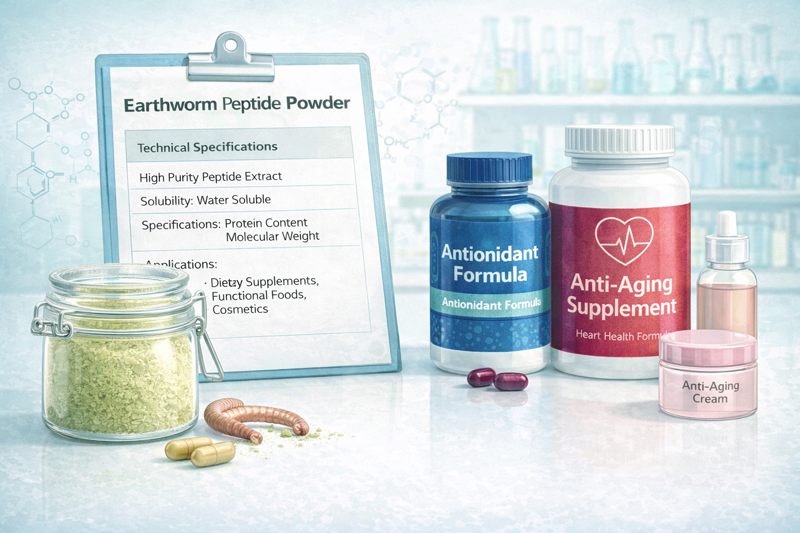
Premium products work best when the positioning is focused. For earthworm peptide powder, a few product territories stand out more naturally than others.
1. Cardiovascular support products
This is probably the clearest premium lane.
Why? Because the science base around earthworm-derived ACE-inhibitory peptides gives formulators a more concrete rationale for cardiovascular-oriented positioning. The identified peptides SSPLWER and RFFGP were highlighted as the most active in the cited study, and the researchers explicitly connect these findings to antihypertensive potential.
That doesn’t mean brands should drift into drug-like messaging. They shouldn’t. But it does mean earthworm peptide powder can be positioned in premium supplement lines aimed at:
- vascular wellness
- healthy circulation support
- blood pressure management support
- heart-focused active aging formulas
This is especially compelling in markets where consumers already understand peptide-based or enzyme-based cardiovascular support products.
2. Antioxidant and healthy aging formulas
This is another strong fit, and maybe the easier consumer story.
Oxidative stress is linked to chronic disease pathways, and the 2024 study on earthworm antioxidant peptides gives a credible base for positioning in antioxidant-centered premium products. The paper specifically notes that antioxidant peptides from earthworm proteins after gastrointestinal digestion contribute to the application of earthworm proteins as antioxidants in health foods.
That makes earthworm peptide powder a sensible candidate for:
- healthy aging capsules
- antioxidant sachets
- daily cellular defense blends
- beauty-from-within concepts
- recovery-focused premium powders
For premium brands, this route may feel more commercially comfortable than a pure cardiovascular story, because antioxidant language often fits better across wellness, beauty, and active lifestyle channels.
3. Immune resilience and recovery support
Now, this area needs a careful hand. The science is promising, but you don’t want to overstate it.
The immunomodulation study on earthworm protein autolysates reported that EPA helped improve immunosuppression and intestinal inflammation in the mouse model, and suggested it may be a potential resource for immunomodulatory peptides.
That supports premium positioning in:
- seasonal wellness formulas
- recovery nutrition
- gut-immune support combinations
- specialist nutrition products for high-stress lifestyles
Still, the right commercial tone is “emerging bioactive potential” rather than “proven immune solution.” Premium buyers usually respect that kind of restraint. It sounds more credible because it is more credible.
Premium positioning needs a language shift—subtle, but important
A lot of ingredient marketing gets ruined by loud claims.
Earthworm peptide powder should not be presented like a miracle. It should be presented like a high-value, research-backed specialty ingredient. That’s a much stronger long-term play.
Good premium wording sounds like this:
- bioactive peptide ingredient
- function-focused peptide powder
- targeted support for cardiovascular and antioxidant product concepts
- suitable for advanced nutraceutical and functional health formulations
- differentiated ingredient for premium wellness lines
Weaker wording sounds like this:
- cures clots
- reverses disease
- miracle peptide
- guaranteed anti-aging
- instant cardiovascular fix
You can feel the difference, right? One belongs in a serious export catalog. The other belongs nowhere near a compliance review.
What buyers want to see before they call it premium
Premium isn’t just about the science paper. It’s also about execution.
B2B buyers usually need a more complete picture:
- raw material origin
- processing method
- peptide consistency
- specification clarity
- contaminant and microbiological testing
- formulation behavior
- application support
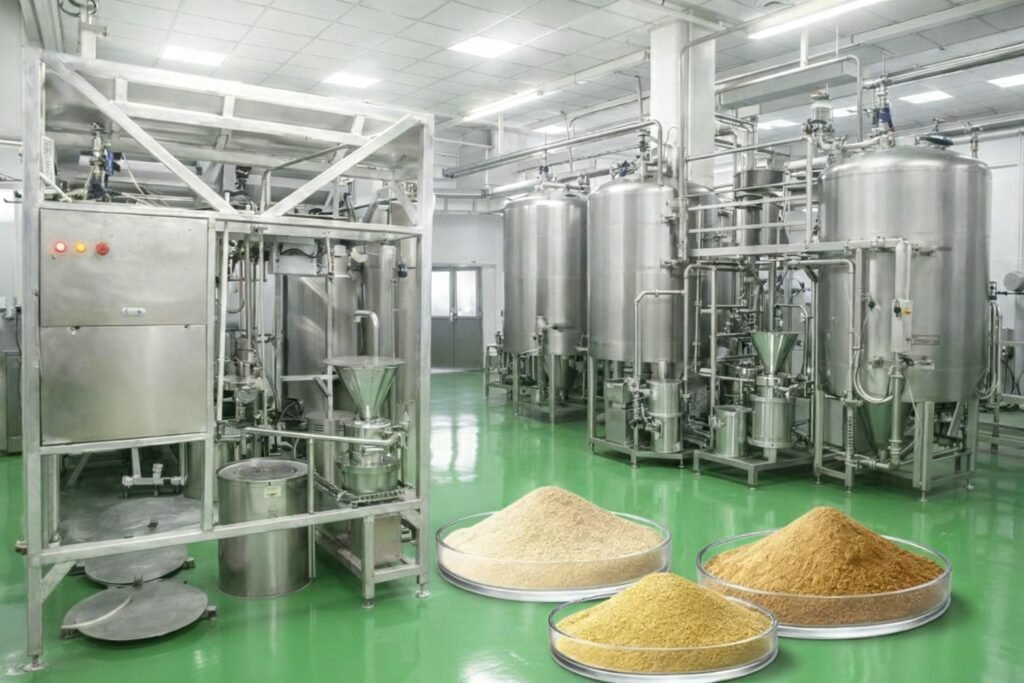
Your production material matters here. One uploaded process document describes earthworm protein powder made from Eisenia fetida through sorting, cleaning, hydrolysis, centrifugation/filtration, low-temperature drying, pulverizing, sterilization, and packaging. That kind of process language helps buyers understand manufacturability and gives them confidence that the ingredient can sit inside a premium supply chain.
So when positioning earthworm peptide powder, make the premium case with three layers:
Layer one: science
Talk about identified antioxidant peptides, ACE-inhibitory peptides, and emerging immunomodulatory peptides. Keep the claims disciplined. Cite the mechanisms and the peptide sequences when appropriate for technical audiences.
Layer two: process
Show controlled processing, low-temperature handling where relevant, hydrolysis or autolysis expertise, and batch consistency. Premium buyers do not like mystery powders.
Layer three: market fit
Explain exactly where the ingredient belongs:
- premium dietary supplements
- advanced nutraceuticals
- specialist functional nutrition
- selected pharmaceutical development projects
- premium cosmeceutical concepts, where regulations allow and product strategy makes sense
A quick word on cosmetics and cross-category premium lines
This part is easy to overlook.
Earthworm-derived bioactives are often discussed mainly in supplement or traditional medicine contexts, but the broader literature around earthworm extracts includes antioxidant, wound-healing, anti-inflammatory, and anti-fibrotic potential. That opens the door to a different premium conversation: cross-category innovation.
For cosmetics suppliers or brand owners, earthworm peptide powder may not always go straight into topical use as-is. But the broader peptide story can still support:
- ingestible beauty concepts
- skin-aging support supplements
- inner-beauty sachets
- premium nutricosmetic positioning
That’s useful because premium consumers increasingly like products that blur old category lines a bit—beauty, aging, resilience, recovery. Not in a messy way. In a modern way.
How to package the story without making it feel strange
Let me explain. Earthworm as a source can trigger curiosity, but also hesitation. So the premium positioning should lead with function and science, not novelty for novelty’s sake.
A better sequence is:
- peptide science
- functional target
- quality manufacturing
- sustainable or alternative protein angle
- source story
Not the other way around.
If you lead with “earthworm” too aggressively, some buyers will stop there. If you lead with “bioactive peptide ingredient for advanced cardiovascular and antioxidant product concepts,” they keep reading.
That’s not hiding the source. It’s framing it intelligently.
Suggested premium product concepts
Here are a few positioning directions that make commercial sense:
Premium cardiovascular support capsules
Pair earthworm peptide powder with co-factors commonly used in heart-health formulas, while keeping the peptide as the hero ingredient.
Healthy aging peptide sachets
Focus on antioxidant support, daily resilience, and higher-end preventive wellness.
Recovery and vitality blends
Good for specialist nutrition lines where premium users already expect peptide-based ingredients.
Nutricosmetic daily sticks
Position around internal wellness, oxidative balance, and age-supportive routines.
Practitioner-grade formulations
This is a big one. Earthworm peptide powder may fit best in practitioner, clinic, or specialist-distribution channels before broad retail, simply because premium education is easier there.
Common positioning mistakes
A few to avoid:
Mistake one: treating it like bulk protein
That cuts perceived value immediately.
Mistake two: sounding too medicinal in general retail channels
It raises compliance issues and can make the product feel risky.
Mistake three: relying only on traditional-use storytelling
Traditional background helps, but premium buyers now want identified peptides and mechanism-linked research too.
Mistake four: skipping technical documentation
Premium buyers want specs, not adjectives.
Mistake five: trying to be for everyone
This ingredient works better in focused, high-value niches.
Where the real premium opportunity sits
You know what? The biggest opportunity is not convincing the whole market at once.
It’s building earthworm peptide powder into high-margin, science-forward, specialist health products first—especially in cardiovascular support, antioxidant health, active aging, and immune-recovery concepts. The research base already points in those directions, with identified peptide fractions tied to antioxidant, ACE-inhibitory, and immunomodulatory activity.
That is how premium positioning gets traction: not by shouting louder, but by being more precise.
And for ingredient suppliers, manufacturers, and wholesalers, that precision can do a lot of heavy lifting. It helps the sales team. It helps regulatory review. It helps formulation strategy. Most of all, it helps buyers understand why this is not just another powder in another drum.
It’s a specialist ingredient with a stronger story than it first appears to have.
FAQs
1. Why is earthworm peptide powder suitable for premium health products?
Because it offers more than basic nutrition. Research has identified specific earthworm-derived peptides linked to antioxidant, ACE-inhibitory, and immunomodulatory activity, which supports its use as a premium bioactive peptide ingredient for health products rather than a standard protein additive.
2. What is the best market position for earthworm peptide powder?
The strongest fit is usually in premium cardiovascular supplements, antioxidant health products, healthy aging formulas, and specialist recovery nutrition. These categories match the current evidence base better than broad commodity wellness products.
3. Can earthworm peptide powder be used in functional food and nutraceutical development?
Yes. The uploaded research explicitly discusses earthworm protein and its peptides as a foundation for functional foods and health-food applications, especially where bioactive support is part of the concept.
4. What makes buyers view an earthworm peptide ingredient as premium?
Buyers usually look for identified peptide activity, controlled production, stable specifications, safety testing, and a clear application story. In short, scientific evidence plus manufacturing discipline is what creates premium value.
5. How should suppliers avoid overclaiming when marketing earthworm peptide powder?
Keep the messaging centered on structure, bioactivity research, and formulation potential. Use phrases like research-backed earthworm peptide powder for premium nutraceutical applications rather than disease-treatment promises. That protects credibility and supports long-term commercial use.