
The phrase “natural bioactive ingredient” gets tossed around a lot in the nutraceutical and functional food industry. But when we talk about earthworm peptide powder, are we just leaning on marketing language — or are we describing something scientifically grounded?
If you’re a dietary supplement brand, a pharmaceutical ingredient distributor, or a cosmetic raw material supplier, this isn’t just a semantic question. It’s about positioning, regulatory clarity, and technical credibility.
So let’s unpack it carefully.
H1: Is Earthworm Peptide Powder a Natural Bioactive Ingredient?
Short answer? Yes — but only if we define both natural and bioactive correctly.
And that’s where things get interesting.
H2: First Things First — What Do We Mean by “Natural”?
“Natural” doesn’t mean unprocessed. That’s a common misconception.
Vitamin C extracted from acerola cherries is natural. So is whey protein hydrolysate. Both undergo processing. The key is origin.
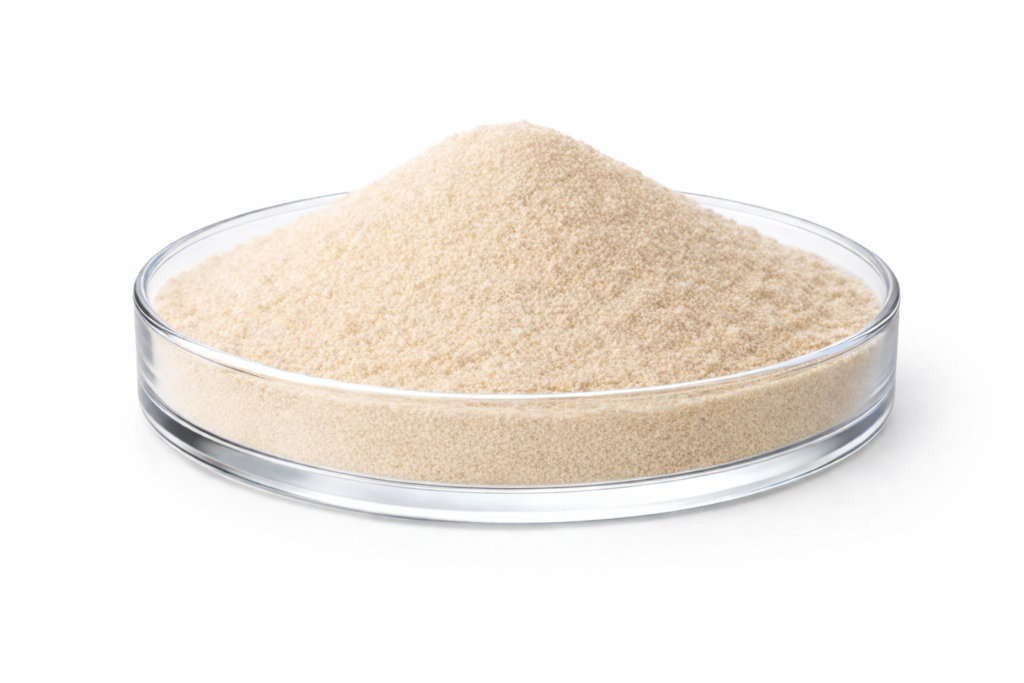
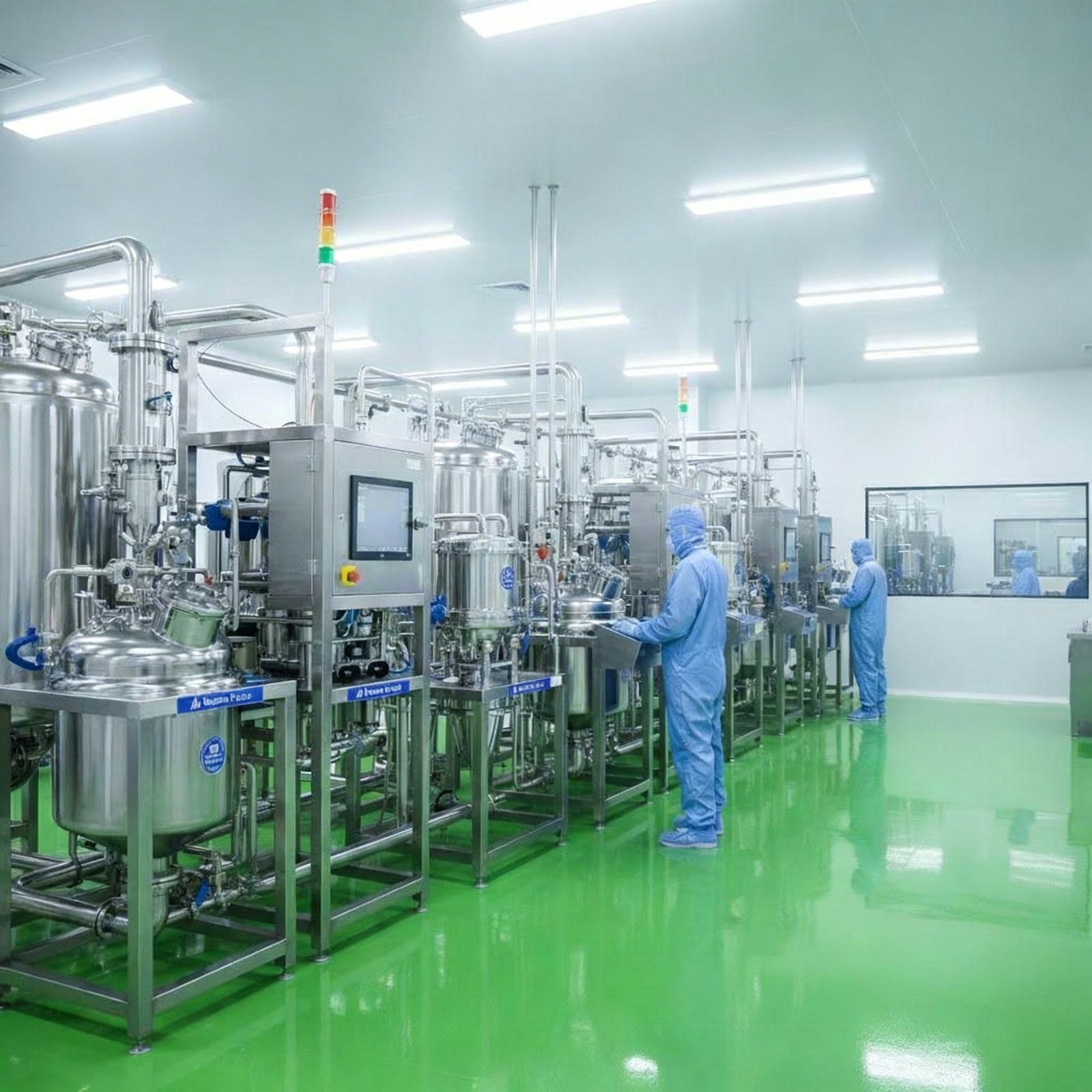
Earthworm peptide powder is derived from earthworm protein — typically from species such as Eisenia foetida or related cultivated varieties. According to recent production documentation , the process generally includes:
- Mechanical separation from soil
- Washing and purification
- Enzymatic hydrolysis or autolysis
- Filtration and centrifugation
- Low-temperature drying / Spray drying
- Milling and sterilization
No synthetic peptide assembly. No chemical restructuring. The peptides originate from naturally occurring earthworm proteins.
So yes — by raw material definition, the source is biological and natural.
But origin alone doesn’t justify the term bioactive.
H2: Now the Real Question — Is It Truly Bioactive?
A bioactive ingredient exerts measurable biological effects beyond basic nutrition.
Protein provides amino acids.
Bioactive peptides regulate physiological pathways.
That’s the difference.
And earthworm peptides? Research suggests they’re more than just protein fragments.
H2: ACE Inhibitory Peptides — A Case Study in Antihypertensive Activity
One of the most compelling pieces of evidence comes from a 2023 study published in Food Bioscience .
Researchers isolated and identified novel ACE (angiotensin-converting enzyme) inhibitory peptides from in vitro gastrointestinal digestion of earthworm protein. Several peptide sequences showed significant ACE inhibition activity, including:
- SSPLWER
- RFFGP
- LERWP
Some demonstrated competitive inhibition patterns against ACE — meaning they bind to the active site and interfere with angiotensin conversion, a key regulator of blood pressure.
In simpler terms:
These peptides didn’t just exist. They interacted with a physiological target.
That’s classic bioactivity.
For nutraceutical formulators working in cardiovascular health, this matters. It means earthworm peptide powder isn’t just a protein supplement — it may serve as a functional antihypertensive peptide source.
H2: Immunomodulatory Effects — Beyond Cardiovascular Health
Another 2023 study in Food Bioscience explored earthworm protein autolysates in a cyclophosphamide-induced immunosuppressed mouse model.
Results showed:
- Increased thymus and spleen indices
- Improved cytokine profiles (TNF-α, IL-6 modulation)
- Enhanced immune organ recovery
Peptide sequence WNWLLPLMLG demonstrated strong immunomodulatory potential in macrophage assays.
For supplement developers targeting immune support categories, this is significant. Especially post-pandemic, immune health remains a strong commercial driver.
Earthworm peptides are not merely nutritional — they interact with immune pathways.
That’s bioactive territory.
H2: What About Antioxidant and Anti-Inflammatory Properties?
Traditional literature and contemporary reviews both mention antioxidant and anti-inflammatory potential .
Mechanisms discussed include:
- Free radical scavenging
- Modulation of inflammatory cytokines
- Regulation of oxidative stress markers
Antioxidant peptides are particularly relevant for:
- Functional beverages
- Anti-aging nutraceuticals
- Cosmetic formulations targeting oxidative skin damage
In fact, some peptide fractions contain aromatic amino acids — often associated with radical scavenging potential.
So again, the word “bioactive” isn’t speculative. It’s supported by mechanistic insights.
H2: And Then There’s Lumbrokinase — The Enzymatic Dimension
We can’t talk about earthworm bioactivity without mentioning lumbrokinase.
Lumbrokinase is a fibrinolytic enzyme complex derived from earthworms. It has been studied for thrombolytic applications and is referenced extensively in clinical contexts .
Now here’s the nuance:
- Earthworm peptide powder ≠ purified lumbrokinase
- But peptide hydrolysates may contain enzymatic fragments or activity-associated sequences
For pharmaceutical ingredient suppliers, this distinction matters.
If you’re positioning peptide powder in a cardiovascular support formula, you must differentiate between:
- Enzyme-standardized lumbrokinase products
- Peptide-based functional ingredients
Different regulatory pathways. Different claims.
H2: Are Earthworm Peptides Easily Absorbed?
Here’s something often overlooked.
Peptides — especially dipeptides and tripeptides — are absorbed differently than free amino acids.
Traditional protein must be broken down before absorption. Peptides, however, can utilize specific peptide transporters in the intestinal wall, often with higher efficiency .
This means:
- Faster uptake
- Less competitive absorption compared to individual amino acids
- Potentially better bioavailability
For formulators designing rapid-acting functional products, that’s not trivial.
H2: From Soil Engineer to Functional Ingredient — A Broader Perspective
It’s fascinating, really.
Earthworms are often called the “engineers of the soil.” They improve nutrient cycling and ecological balance .
But when cultivated under controlled conditions and processed hygienically, they also become a sustainable protein source.
Compared to traditional livestock:
- Lower greenhouse gas emissions
- Higher protein conversion efficiency
- Less land demand
Sustainability is increasingly important in global ingredient sourcing — especially in Europe and parts of Southeast Asia.
So yes, earthworm peptide powder is natural.
But it’s also aligned with emerging sustainable protein trends.
H2: Production Integrity — Does Processing Compromise “Natural”?
Let’s be honest — buyers ask this question.
Processing includes enzymatic hydrolysis, filtration, and drying. But enzymatic hydrolysis mimics gastrointestinal digestion.
In fact, some studies intentionally simulate digestive processes to identify bioactive sequences .
So rather than altering nature, processing often reveals functional fragments that would form during digestion anyway.
It’s refinement, not synthesis.
That’s an important distinction when preparing regulatory documentation.
H2: So… Is It a Natural Bioactive Ingredient?
If we apply industry definitions:
✔ Natural origin
✔ Biologically derived
✔ Demonstrated physiological activity
✔ Identified peptide sequences with measurable effects
✔ Sustainable protein source
Then yes.
Earthworm peptide powder qualifies as a natural bioactive ingredient.
But — and this is important — positioning must be responsible.
It is:
- A source of ACE inhibitory peptides
- A potential immunomodulatory peptide source
- A protein-derived functional ingredient
It is not:
- A drug
- A guaranteed therapeutic agent
- A substitute for regulated pharmaceuticals
Precision builds credibility.
H2: Commercial Applications Across Industries
For B2B stakeholders, practical applications matter more than theory.
Dietary Supplements
- Cardiovascular support formulas
- Immune health blends
- Anti-inflammatory complexes
Nutraceutical Ingredients
- Functional protein fortification
- Peptide-based health beverages
- Senior health nutrition
Pharmaceutical Ingredient Sector
- Research-stage peptide isolation
- Enzyme-related cardiovascular adjunct formulations
Cosmetics
- Anti-aging antioxidant complexes
- Skin barrier support formulations
Innovation in food systems has already begun exploring peptide fortification strategies .
The market direction is clear: peptides are no longer niche.
FAQs About Earthworm Peptide Powder
1. Is earthworm peptide powder considered a natural supplement ingredient?
Yes. It is derived from biological earthworm protein through enzymatic hydrolysis without synthetic peptide construction.
2. What makes earthworm peptide powder bioactive?
Research has identified ACE inhibitory peptides and immunomodulatory peptide sequences that interact with physiological pathways .
3. Is earthworm peptide powder the same as lumbrokinase?
No. Lumbrokinase is a purified fibrinolytic enzyme complex . Peptide powder contains broader hydrolyzed protein fractions.
4. Are earthworm peptides easily absorbed?
Small peptides can utilize dedicated intestinal peptide transporters, often improving bioavailability compared to intact protein .
5. Can earthworm peptide powder be used in functional foods?
Yes. It has potential applications in cardiovascular support products, immune formulations, and antioxidant functional foods .
If you’re evaluating earthworm peptide powder for your product portfolio, the conversation shouldn’t be “Is it natural?”
The better question is:
How strategically can we position it — and in which market category does it create the strongest value?
That’s where real differentiation begins.