
Quick outline (so the flow stays tight)
- What lumbrokinase is (and why the category keeps growing)
- Where it fits: supplements vs. pharma vs. functional foods (and why that matters)
- Mechanisms marketers talk about (and what science actually supports)
- Sourcing & manufacturing reality: raw material, extraction, activity units, stability
- Quality, specs, and testing: potency, identity, contaminants, enzymes-as-proteins problems
- Formulation playbook: capsules, enteric tech, combinations, and label language
- Regulatory & compliance: the “structure/function” lane, global friction points
- Commercial trends: buyer expectations, audit questions, and where the supply chain is headed
- FAQs (5)
Jump to: What is lumbrokinase? | Jump to: Formulation & dosage forms | Jump to: Quality & specs | Jump to: Regulatory | Jump to: FAQs
What’s going on with the “circulation support” aisle lately?
If you sell into cardiovascular health—supplements, nutraceutical ingredients, even pharma raw materials—you’ve probably noticed the same thing: “circulation,” “healthy fibrin balance,” and “microvascular support” are no longer niche phrases. They’re almost… routine.
Part of that is demographics. Part is lifestyle. And part is that the industry loves an ingredient with a clean, story-friendly mechanism.
That’s where lumbrokinase keeps showing up.
But the lumbrokinase story isn’t just consumer marketing. It’s also manufacturing, assay headaches, regulatory tightropes, and procurement teams asking awkward questions like: “How do we prove enzyme activity after 24 months?” Fair question, honestly.
Let me explain the landscape in plain language, with the technical bits where they matter.
What is lumbrokinase?
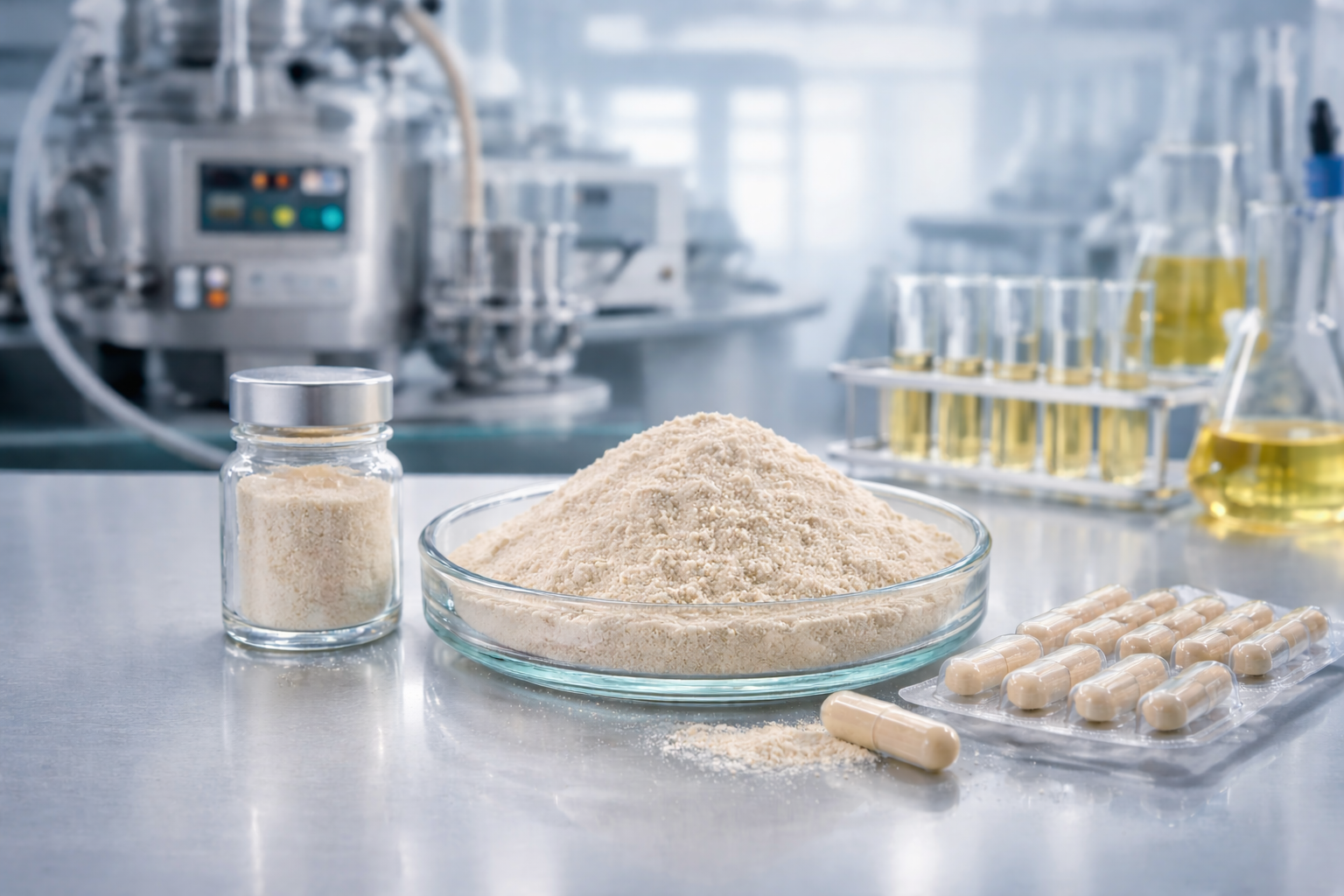
Lumbrokinase is not a single molecule. It’s a group of fibrinolytic enzymes originally identified from earthworms (commonly referenced species include Lumbricus rubellus in the literature). In practical industry terms, you’re dealing with an enzyme complex whose commercial value depends on measurable activity and consistent performance batch to batch.
Academic reviews describe lumbrokinase as a bioactive component in earthworm extracts with antithrombotic/thrombolytic relevance, and they also highlight why the “bleeding risk” discussion is part of the category conversation.
And if you’re wondering why lumbrokinase is often discussed alongside broader earthworm bioactives (peptides, proteins, other fractions), it’s because the same raw material base supports multiple product lines—ACE-inhibitory peptides, antioxidant peptides, immune-related peptides, and so on.
Why cardiovascular brands care (and why buyers keep asking for it)
Most cardiovascular supplement platforms are built around a few familiar pillars:
- Lipids (cholesterol, triglycerides)
- Blood pressure support
- Endothelial function / nitric oxide pathways
- Inflammation and oxidative stress
- “Healthy clotting balance” language (careful wording, always)
Lumbrokinase sits closest to that last pillar—because it’s framed around fibrin and circulation. From a commercial viewpoint, that’s attractive because it sounds specific without sounding pharmaceutical (even when the science conversation is fairly technical).
A 2025 meta-analysis discussing lumbrokinase in acute ischemic stroke contexts concludes evidence is still limited and calls for higher-quality trials, which is basically the industry’s current reality: promising, used in some regions, still not a slam-dunk universal claim. (PMC)
So brands often position it as:
- “supports healthy circulation”
- “supports healthy fibrin metabolism”
- “helps maintain healthy blood flow”
Those phrases feel familiar because they map to the U.S. dietary supplement structure/function lane (more on compliance later). (U.S. Food and Drug Administration)
Mechanisms: the clean story vs. the real story
1) The “fibrin focus” (the headline)
Lumbrokinase is widely discussed for fibrinolytic activity—the ability to break down fibrin, a structural protein involved in clot formation. Review literature describes fibrin-related pathways and positions lumbrokinase as a fibrinolytic enzyme complex.
2) The “system support” angle (what formulators like)
What formulators like is not just the direct mechanism. It’s the fact that enzyme ingredients can be framed as supporting the body’less “drug-like,” more “physiology-friendly.”
But here’s the mild contradiction you’ll see in real life:
- Some marketing makes it sound like lumbrokinase is laser-guided and always selective.
- Manufacturing reality is you’re working with an enzyme mixture, and performance depends on assay method, stability, and formulation choices.
Both statements can be kind of true, depending on how carefully you define them.
3) Adjacent science that influences cardiovascular positioning
A lot of cardiovascular products bundle multiple “risk factor” narratives:
- Oxidative stress is one of them, because it’s easy to connect to vascular aging.
Earthworm-derived peptides have been isolated and evaluated for antioxidant activity after simulated digestion, with peptide identification work showing specific sequences that perform well in common antioxidant assays. - Blood pressure support is another.
Research has identified ACE inhibitory peptides from earthworm protein digestion products (competitive inhibition patterns, docking work, peptide sequmake lumbrokinase an ACE inhibitor—but it does explain why some suppliers market an “earthworm cardiovascular platform,” not a single-ingredient story.
Sourcing & manufacturing: where the industry actually wins or loses
This is where B2B buyers get serious. Because lumbrokinase is an enzyme, the supply chain isndlike: source → extract → standardize → protect activity → prove it.
Raw material: not all earthworms (or lots) behave the same
- Species selection, feed substrate, and farming controls matter.
- Buyers will ask about traceability, regional sourcing, and whether farming is scaled reliably.
If you’re also producing earthworm protein powders, some manufacturers describe workflows that include separation, cleaning, hydrolysis steps, filtration/centrifugation, low-temperature drying, sterilization, and packaging. That same operational discipline is what enzyme buyers look for—especially around contamination control and batch consistency.
Extraction and standardization: activity is the product
With enzymes, “purity” is not the whole story. Activity per gram is the commercial heartbeat.
That leads to predictable procurat is your activity unit definition?
- Which assay method?
- What’s the acceptable activity loss over shelf life?
- Do you provide COAs with activity, micro, heavy metals, and residual solvent testing?
And then the awkward one:
- “Can we verify the activity ourselves with a third-party lab?”
The best suppliers are the ones who say “yes” without flinching—because they’ve already aligned method and specification windows.
Stability: enzymes are moody (and buyers know it)
Heat, moisture, pH extremes, and compression force can reduce activity. That’s why you’ll see lumbrokinase frequently sold in capsules rather than aggressive tablet compression—unless the manufacturer has a strong stabilization strategy.
Quality & specs (because buyers will ask)
If you’re selling to supplement brands, wholesalers, or pharma ingredient buyers, your “spec sheet story” is often more important than your brochure.
Here’s what tends to matter most:
Identity & potency
- Verified enzyme identity (protein profiling approaches vary by supplier)
- Activity units (IU or method-specific units, depending on local norms)
- Batch-to-batch variation limits
Microbiology & contaminants
Because the raw material is biological, the scrutiny is higher:
- Total plate count, yeast/mold, pathogens
- Heavy metals (especially if farming substrate could accumulate contaminants)
Allergen and residue logic
Even when allergen risk is low, buyers want a statement and a rationale:
- No common food allergens introduced during processing
- Solvent/residue controls (if solvents are used)
- Clear excipient disclosures for finished premixes
Documentation buyers expect
- COA with activity and micro
- Traceability statement
- Stability data (real-time if available, accelerated at minimum)
- Process overview (not proprietary, just credible)
Formulation & dosage forms
Capsules (the default for a reason)
For cardiovascular enzyme products, capsules are popular because they:
- Reduce mechanical stress (vs. high-force tablets)
- Support moisture barriers with the right packaging
- Make room for enteric strategies when needed
Enteric positioning (the “make it through the stomach” logic)
Enzymes can be sensitive to gastric conditions. So many brands use delayed-release/enteric designs to support delivery.
Just keep the copy clean: delivery language is safer than treatment language.
Blends: when brands want a “platform,” not a solo act
Buyers often request combined formulas, but you have to be careful about rationale. The most common blend logic is “multi-pathway cardiovascular support,” for example:
- circulation + oxidative stress narrative
- circulation + blood pressure support narrative (via peptides in broader earthworm platforms)
If you’re supplying ingredients, your job is to offer:
- compatibilitysensitivity)
- assay interference warnings (some botanicals can complicate testing)
- packaging reants, blister formats)
Regulatory & claims: where brands get nervous
United States: structure/function, with the disclaimer
In the U.S., most lumbrokinase products are sold as dietary supplements, so structure/function claims must follow DSHEA conventions and include the standard disclaimer rules for dietary supplement labeling. The FDA has reiterated details around DSHEA disclaimer placement in recent guidance updates. (U.S. Food and Drug Administration)
In practical terms:
- Avoid disease claims (“treats thrombosis,” “prevents stroke,” etc.)
- Use support language (“supports healthy circulation,” “supports normal fibrin metabolism”)
European Union: novel food questions can appear
For EU market planning, teams often consult the European Commission’s Novel Food tools as part of a broader regulatory assessment (it’s non-binding but commonly referenced during early feasibility checks). (Food Safety)
Because earthworm-derived materials can trigger “novel” considerations depending on use history and format, serious distributors typically want a regulatory pathway discussion before they commit.
Canada and other regions: expect friction
Some regions apply more restrictive frameworks for enzyme supplements or earthworm-derived ingredients, so sellers should prepare country-by-country positioning and documentation.
Industry trends that matter to suppliers (the “procurement reality” section)
Here’s what’s shifting, quietly but clearly:
1) Buyers care more about reproducibility than storytelling
A beautiful narrative won’t save a supplier who can’t control:
- activity variance
- microbial specs
- stability performance
2) “Evidence packages” are becoming normal
Brands increasingly ask for:
- published research summaries
- assay method references
- stability data
- safety positioning documents
The good news is: earthworm extract literature has expanded into multiple pharmacological directions, and credible reviews summarize bioactive components and mechanistic themes.
3) Platform strategy is growing
Suppliers who can provide:
- lumbrokinase (enzyme)
- earthworm protein/peptides (nutrition + bioactive angles)
…can support a full cardiovascular line architecture (capsule, sachet, functional blends), rather than a single SKU.
Suggested images for the post (with alt text)
- Image idea (hero visual): A clean, clinical-style illustration of a blood vessel cross-section, with a suphic fading, plus an enzyme icon.
- Alt text: “Illustration of a blood vessel showing fibrin network concept used in cardiovascular health product education.”
- Image idea (manufacturing/QA visual): A photo-style scene of a quality lab bench—HPLC screen, COA clipboard, and sealed ingredient containers (no brand labels).
- Alt text: “Quality control lab setup representing enzyme activity testing and documentation for lumbrokinase ingredients.”
FAQs
1) What is lumbrokinase used for in cardiovascular dietary supplements?
Lumbrokinase is commonly used in circulation support supplements to help position “healthy blood flow” and “healthy fibrin metabolism” benefits, using structure/function language consistent with dietary supplement rules. (U.S. Food and Drug Administration)
2) How do manufacturers standardize lumbrokinase enzyme activity for buyers?
Most suppliers standardize around activity units per gram, supported by defined assay methods, COAs, and stability data—because for enzyme ingredients, activity is the main value.
3) Is lumbrokinase the same as earthworm peptides?
No. Lumbrokinase is an enzyme complex, while earthworm peptides are smaller protein fragments that may have different bioactivities (like antioxidant or ACE-inhibitory activity in research contexts).
4) What dosage form is most common for lumbrokinase supplements, and why?
Capsules are most common because enzymes can be sensitive to heat, moisture, and mechanical compression. Capsules also make delayed-release strategies easier when brands want delivery-focused positioning.
5) What long-tail keyword claims are safest for lumbrokinase cardiovascular products?
Safer long-tail phrases usually stay in the support lane, such as: “lumbrokinase supplement for healthy circulation support” or **“lumbrokinase enzyme to support nor”treatment language. (U.S. Food and Drug Administration)