
On a U.S. lumbrokinase Supplement Facts label, a milligram amount on an individually declared lumbrokinase line gives the weight of that ingredient per labeled serving. Read the serving size first to determine how many capsules that amount covers. Enzyme activity answers a separate question about the response measured in an assay. For supplement brands and contract manufacturers, a complete review connects the label amount to the formulation and manufacturing records, then checks what evidence supports any activity statement for the finished product.
What Does a Lumbrokinase Supplement Facts Label Show?
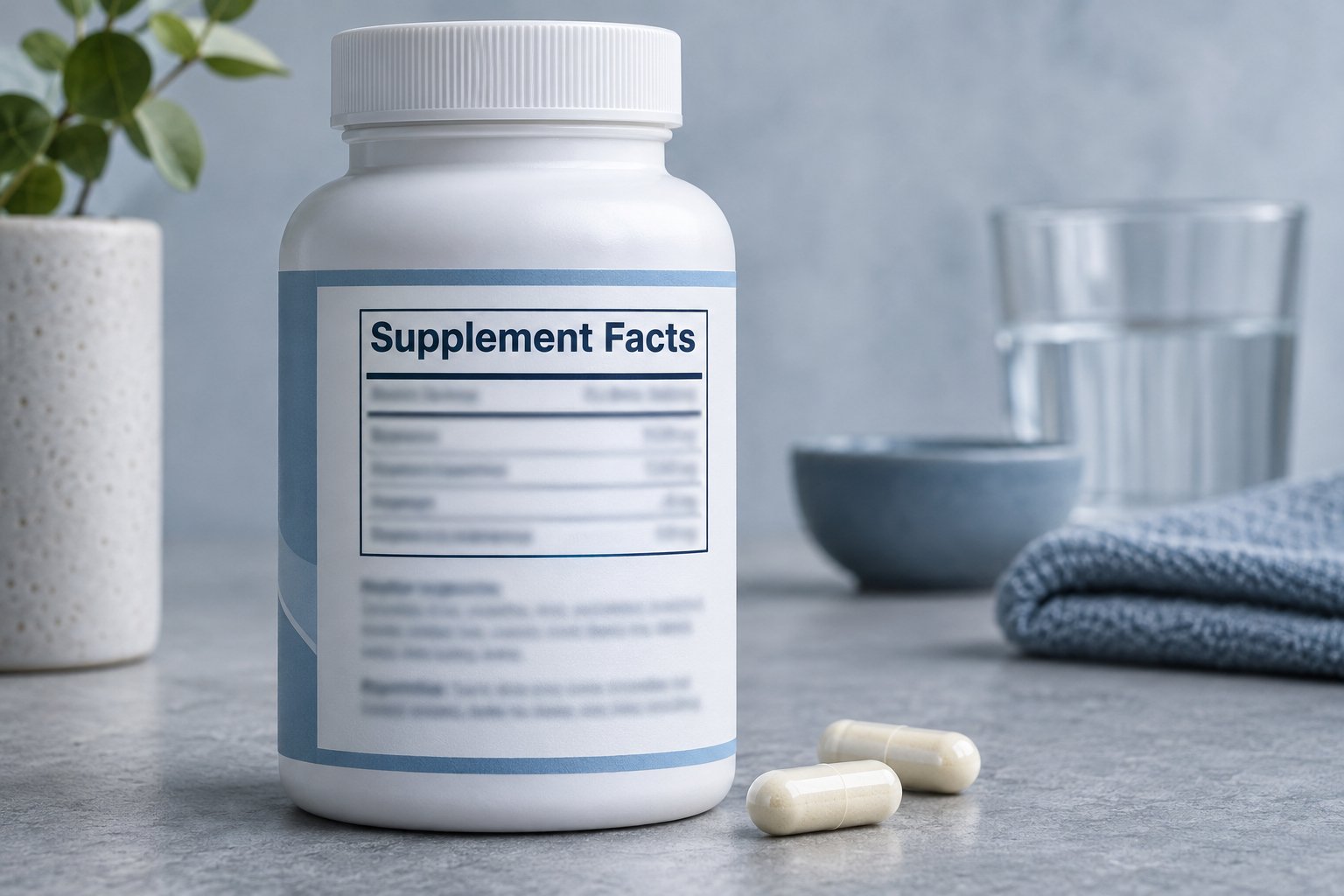
The U.S. Supplement Facts panel presents dietary ingredient information on a per-serving basis. Under 21 CFR 101.36, dietary ingredients without an established Daily Value are generally declared by common or usual name and quantitative amount by weight per serving, subject to provisions such as those for proprietary blends. Start with the Serving Size line, then read the Amount Per Serving column and identify exactly which ingredient or blend each amount describes.
When lumbrokinase appears within a proprietary blend, the panel can show the total weight of the blend without disclosing the weight of lumbrokinase individually. A reviewer who needs the individual quantity for formulation approval should consult the controlled formula. For broader ingredient background, see the Lumbrokinase B2B Supply Guide.
Understanding mg per Capsule and mg per Serving
Consider an illustrative label with a serving size of two capsules and an individually declared lumbrokinase amount of 80 mg per serving. If both capsules use the same formula, that corresponds to a nominal 40 mg of the declared ingredient per capsule. If another label declares 80 mg per serving with a serving size of one capsule, the nominal amount is 80 mg per capsule. These figures illustrate label arithmetic for hypothetical products.
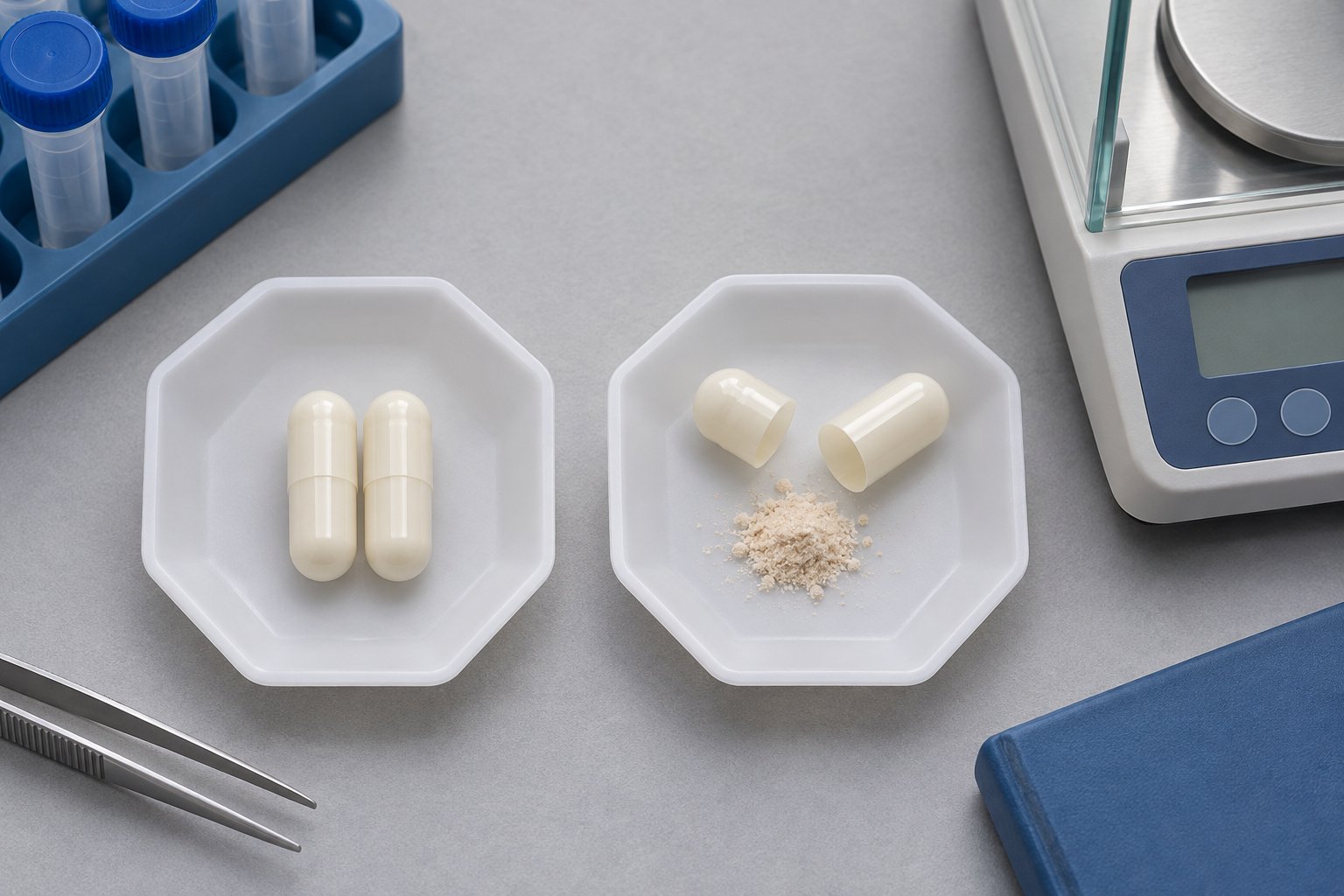
The lumbrokinase amount also differs from total capsule fill weight. The fill may contain other dietary ingredients or excipients, and a measurement of the whole capsule includes the shell. When a draft label and a manufacturing worksheet show different weights, identify what each figure covers before treating the difference as a discrepancy. A worksheet may track the complete blend per capsule while the label reports lumbrokinase per serving.
The same per-serving mass can also appear on products made with different lumbrokinase preparations. An 80 mg declaration establishes a common basis for comparing ingredient weight. Comparing activity requires separate evidence tied to each preparation or finished product.
Why Milligrams and Enzyme Activity Are Different
Milligrams measure the mass of the declared ingredient. Enzyme activity describes a response measured under defined assay conditions. Two raw materials can contribute the same mass to a formula and have different activity specifications. Understanding that difference helps buyers check whether a supplier change affects the technical basis for draft label wording even when the declared weight stays the same.
Allworms’ current commercial raw-material specification is ≥10,000 IU/mg fibrinolytic activity, measured by the Fibrin Plate Assay. This is a minimum specification for the supplied ingredient under the stated test method. The milligram in IU/mg is the mass basis for reporting the raw-material activity result. The milligram on a Supplement Facts panel expresses the weight of the declared ingredient per serving.
If a report or proposed label uses a different activity unit, ask for the method and reporting basis before comparing the figures. Direct conversion across differently defined activity systems requires a validated comparable basis. The Lumbrokinase Activity Units guide covers those technical comparisons.
How Raw-Material Activity Relates to Finished Supplements
A raw-material specification sets the acceptance requirement for the incoming ingredient. A batch certificate of analysis, or COA, reports results or conformity information for an identified raw-material lot. Manufacturing records then connect the lot used to the finished batch. Together, these records help a QA team establish what material entered production and what evidence supported its acceptance.

Multiplying a formulation’s planned ingredient mass by a raw-material activity figure gives a theoretical input estimate on that assay basis. Using the specification minimum in that calculation makes it a planning estimate based on the minimum requirement. Using a lot-specific test result makes it an estimate based on that lot’s reported activity. Both calculations describe the ingredient entering the formula.
Measurable activity in the finished capsule is a separate question. Processing and storage conditions may affect activity, and the finished blend may affect how readily a laboratory can recover or measure the enzyme response. If the proposed wording depends on a finished-product activity value, check whether the evidence addresses the finished formula, the unit and reporting basis, and the point in time represented by the statement.
What a Supplement Facts Label Cannot Tell You
A finished-product panel can tell you how much of an individually listed ingredient is declared per serving. It typically leaves the supplier grade, raw-material lot and assay details to technical records. If artwork also carries an activity number, review the exact wording and placement. The number may refer to the incoming ingredient, a calculated input per serving, or an activity result measured on the finished product. Each interpretation needs a different source of evidence.
Make the scope explicit in the approval record. For example, a laboratory report may cover capsule contents from one pilot batch at the time of testing. If the intended statement applies to commercial batches or extends through a stated shelf life, review whether the available evidence covers that scope. For comparisons across finished products, establish that the figures describe comparable samples and use a comparable analytical basis before drawing conclusions.
Comparing Label Information With Supplier Specifications
Put the draft artwork next to the current formula and supplier documents. For each figure, record the material described, the reporting basis and the document that supports it. This makes differences such as per capsule versus per serving, or raw powder versus finished capsule contents, visible during review.
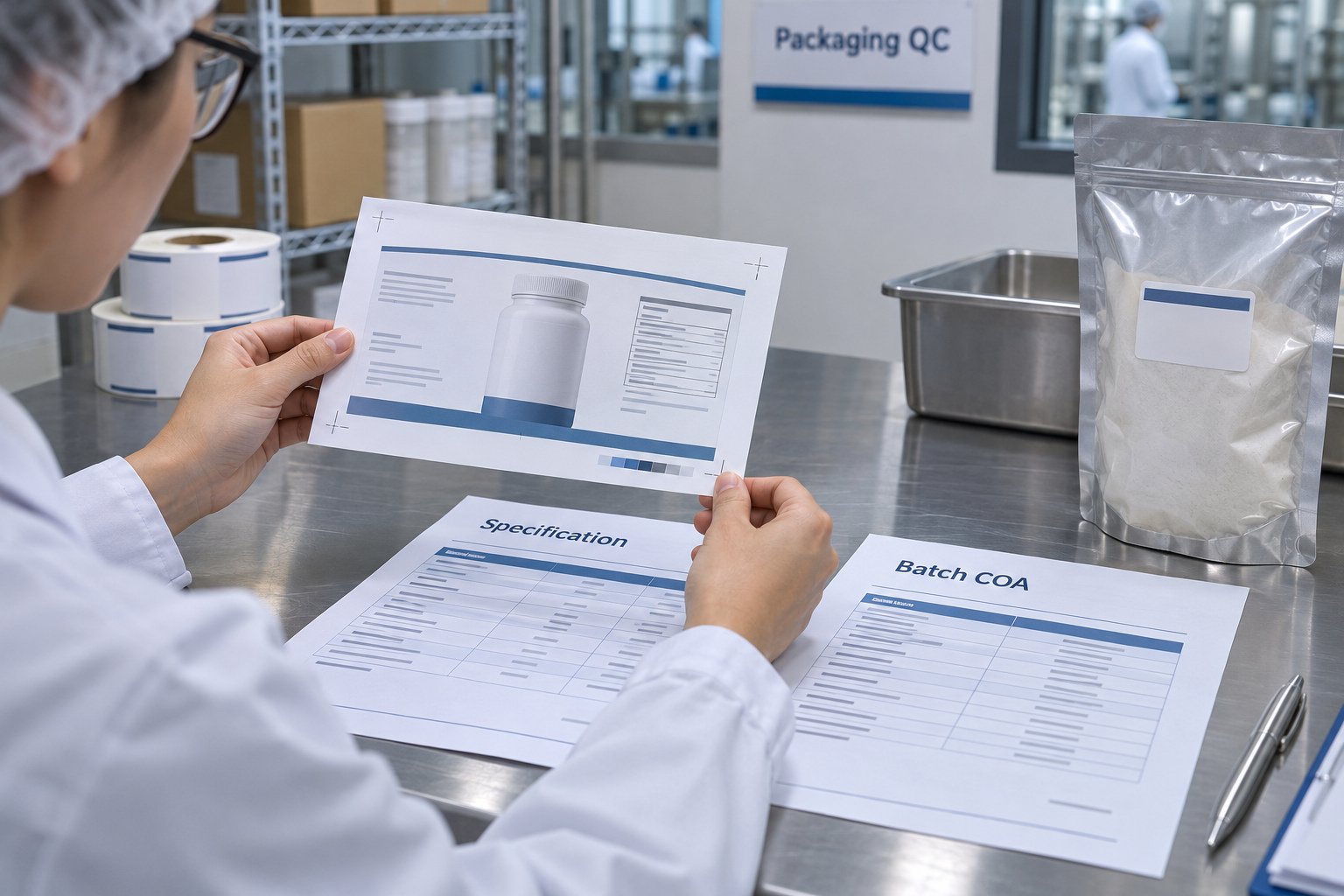
| Information source | What it establishes | What to verify separately |
|---|---|---|
| Supplement Facts panel and controlled formula | The stated ingredient weight per serving and the formulation basis for that declaration | Capsule count per serving, identity of the declared ingredient or blend, and alignment with the current formula revision |
| Raw-material specification and assay information | The ingredient’s activity acceptance requirement, method and reporting basis | The result for the specific lot and whether the method is suitable for the finished formulation |
| Batch COA | The reported results or conformity information for the identified incoming lot | Whether manufacturing records link that lot to the finished batch |
| Manufacturing records | The formula revision, raw-material lots used and quantities recorded for production | The finished product’s measured enzyme activity, where relevant |
| Applicable finished-product activity report | A measured result for the submitted sample under the documented conditions | Whether the sample, time point and reporting basis support the full scope of the proposed wording |
If your team is setting an incoming material requirement, see How Supplement Formulators Should Define a Lumbrokinase Ingredient Specification.
Allworms can provide its current specification sheet, available-batch COA and assay information for ingredient evaluation. Confirm availability and scope when requesting additional identity documentation or a third-party activity report. Obtain the controlled formula, manufacturing records and any applicable finished-product testing through the brand, manufacturer or laboratory responsible for those records.
What Supplement Manufacturers Should Verify Before Label Approval
Review ingredient identity against the supplier documentation and controlled formula. If the purchased preparation includes a carrier or forms part of a premix, establish exactly what the recorded weight represents before copying it into a label declaration. Have the regulatory reviewer confirm how the material should be identified and declared for the intended U.S. product.
Check the serving size against the proposed artwork and reconcile the amount per serving with the quantity entered in the formula. Where a contract manufacturer works in amounts per capsule, document how those figures map to the label. An artwork revision that changes the serving size should trigger a fresh check of each affected per-serving amount and any related activity wording.
For an activity statement, agree on the evidence before approving the copy. QA can verify the ingredient specification, assay and batch records. If finished-product testing is relevant, ask the laboratory what sample it can evaluate and how it will report the result. The regulatory reviewer should assess the final wording and placement against applicable U.S. requirements. Products intended for other markets require review under the applicable local rules.
A Practical Lumbrokinase Label Evaluation Checklist
- Match the declared ingredient name to the approved formula and the supplier’s identity information.
- Confirm the number of capsules per serving and the weight attributable to the declared ingredient.
- Check whether a listed quantity covers lumbrokinase individually or a proprietary blend.
- Record the current raw-material activity specification and the assay used to evaluate it.
- Match the COA lot identifier to the ingredient lot recorded in production.
- Identify whether each activity figure describes the incoming powder, a calculated input or a measured finished-product result.
- Verify that the supporting evidence covers the sample type, reporting basis and time point implied by the proposed wording.
- Have QA and regulatory reviewers approve the same version of the artwork.
FAQ
Can a buyer compare two lumbrokinase labels that both list 40 mg?
Yes, for declared weight, once the buyer verifies that the ingredient descriptions and serving sizes are comparable. To compare enzyme activity, request supporting information for both figures and confirm whether it describes incoming ingredients or finished products.
Can a label reviewer use a pilot-batch activity result for a commercial product?
A pilot result can inform development and test planning. Before relying on it for commercial label wording, check whether the formula, manufacturing process, packaging and test time point represent the product and conditions covered by the statement.
Next Steps for Supplement Ingredient Buyers
Request the current specification and available batch COA for Allworms Lumbrokinase Powder.
Share your draft ingredient declaration and activity questions with Allworms.