
Outline
- Why wholesale lumbrokinase pricing feels uneven at first glance
- The core cost drivers: enzyme activity, raw material quality, extraction method, and purity
- Why specification details change the quote more than buyers expect
- Manufacturing realities: batch size, lead time, testing, and packaging format
- Compliance, documents, and export readiness as hidden price layers
- How smart buyers compare offers without falling for the lowest number
- A practical closing section for brands, manufacturers, and ingredient buyers
- FAQs
When buyers first request lumbrokinase quotes, the range can look oddly wide. One supplier comes in low. Another is much higher. A third asks a dozen technical questions before even naming a price. So what’s going on?
Here’s the thing: lumbrokinase is not a simple commodity powder. It sits in that tricky space between bioactive enzyme ingredient, functional health raw material, and process-sensitive protein extract. That means wholesale pricing is shaped by much more than kilograms on a purchase order.
For buyers in dietary supplements, nutraceuticals, pharmaceutical ingredients, and even specialized wellness formulations, the smartest question is not “Who is cheapest?” It’s “What exactly am I paying for?”
That distinction matters. A lot.
Lumbrokinase comes from earthworm-derived protein systems, and the broader earthworm extract category is studied for fibrinolytic, antioxidant, antihypertensive, and other bioactive effects. Research and review literature also show that earthworm-derived materials are protein-rich and process-sensitive, which helps explain why upstream production choices affect downstream cost so heavily.
Why the quote gap happens in the first place
At a glance, two samples may both be labeled “lumbrokinase powder.” But commercially, they may be very different products.
One may be closer to a basic crude extract. Another may be standardized for enzyme activity, backed by tighter impurity control, export documents, and batch-level testing. One may suit a mid-tier supplement line. Another may be intended for stricter applications where consistency matters more than headline price.
That’s why wholesale pricing often reflects risk control as much as production cost. The more predictable the ingredient, the more work went into making it predictable.
And honestly, that’s where many sourcing conversations go sideways. Buyers compare quotations line by line, but the true comparison should be spec by spec.
Activity level is often the biggest pricing lever
If there’s one factor that moves lumbrokinase pricing fast, it’s enzyme activity.
Buyers don’t just purchase a powder. They purchase functional potency. Higher activity usually means more careful extraction, concentration, stabilization, and testing. Those steps add cost. Sometimes a lot of it.
A supplier offering a lower quote may not be giving you the same activity strength, even when the product name looks similar. That lower-priced offer may require a higher inclusion rate in your finished formulation, which can erase the apparent savings.
This is why activity-based buying tends to be more useful than price-per-kilo buying. A cheaper raw material can become the more expensive option once formulation load, capsule fill weight, and label claim requirements are factored in.
The wider earthworm protein research base reinforces this point. Earthworm-derived ingredients are rich in bioactive proteins and peptides, and studies show that digestion, hydrolysis, purification, and fraction selection all affect the final activity profile.
Raw material quality quietly shapes the whole cost structure
Let me explain. Lumbrokinase pricing starts long before extraction.
Raw earthworm quality matters because species selection, farming conditions, cleanliness, and raw material handling all influence processing efficiency and consistency. Even at the earthworm protein level, the production flow includes screening, separation, cleaning, hydrolysis, filtration, low-temperature drying, sterilization, and packaging. Each one adds control points, labor, equipment use, and yield implications.
And yield matters more than buyers sometimes realize.
If a manufacturer starts with better raw material, removes more impurities, and protects enzyme integrity more carefully, they may end up with a more reliable ingredient but a lower overall yield. Lower yield usually means higher cost per kilogram. It sounds contradictory, but it makes perfect sense in enzyme manufacturing: the cleaner and more controlled the process, the less room there is for “cheap volume.”
That is part of why wholesale lumbrokinase pricing can’t be judged fairly from appearance alone.
Extraction and processing method change both cost and market position
Not all processing routes create the same commercial product.
Some manufacturers focus on higher recovery. Others focus on higher activity retention. Others build around stability, low microbial load, or cleaner sensory properties for formulation. Those priorities push cost in different directions.
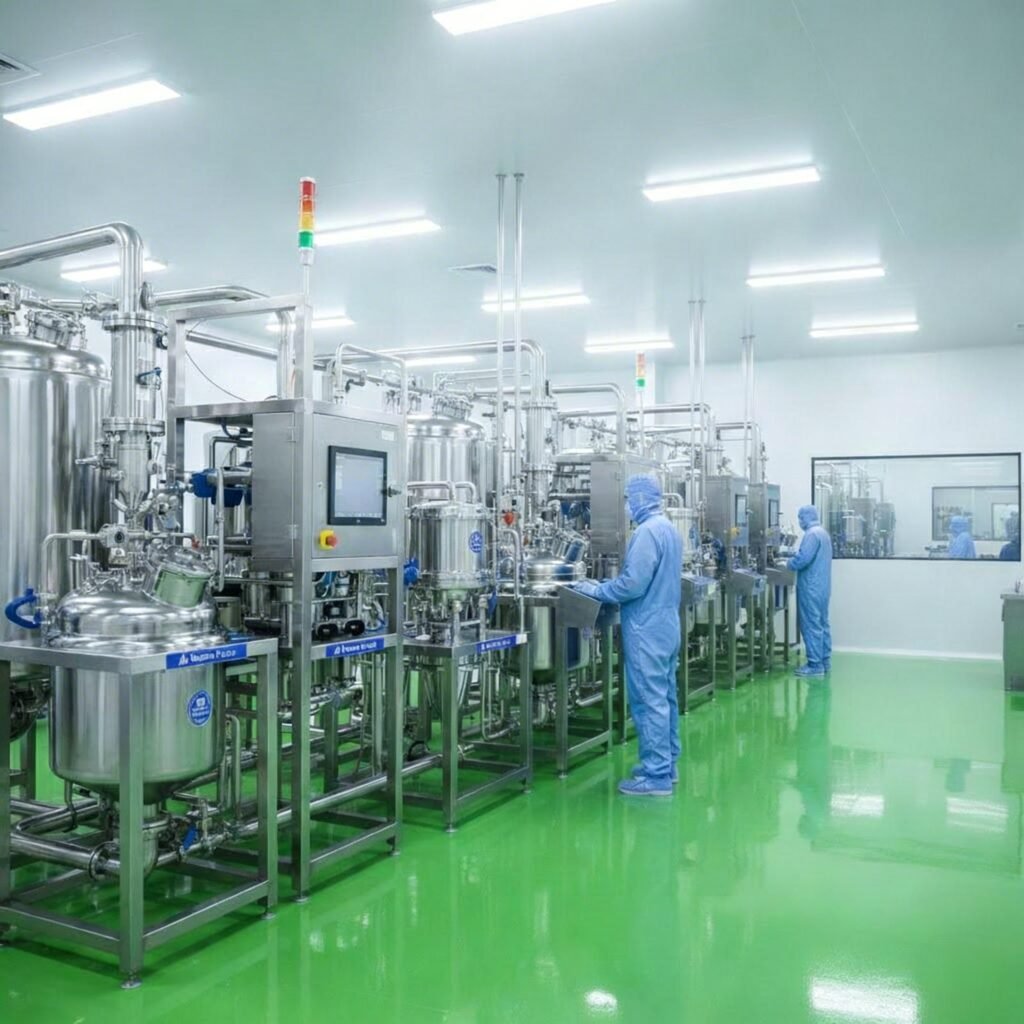
Earthworm protein manufacturing materials and process notes in your files show how much handling is involved even before a refined protein ingredient is obtained. The production description includes mechanical separation, repeated cleaning, hydrolysis, centrifugation and filtration, low-temperature drying, grinding, sterilization, and packaging.
That kind of sequence tells a familiar story: every extra step designed to protect quality, reduce contamination, or improve uniformity has a cost.
In practice, buyers tend to see pricing change when suppliers emphasize:
- activity preservation during processing
- low-temperature or gentler drying
- better filtration and impurity removal
- tighter microbial control
- stronger batch-to-batch consistency
That last one is worth pausing on. Batch consistency is expensive to build, but it is often what global brands are really buying.
Purity is never just a lab number
A lumbrokinase quote may look high because the supplier is selling a more refined material, not just more expensive material.
Purity affects formulation behavior, label positioning, capsule fill, and customer perception. It also affects how comfortable a buyer feels scaling from pilot to commercial production.
Research in your uploaded files shows that earthworm protein can be highly enriched through extraction and purification steps. One study reported earthworm protein prepared by alkali-soluble acid precipitation at about 96% protein content, with significantly reduced fat, before further digestion and peptide work.
That doesn’t mean every lumbrokinase lot should be judged by crude protein alone, of course. But it does highlight a broader truth: purification costs money, and better purification usually produces a more usable industrial ingredient.
So when a quote is higher, it may reflect lower non-active burden, stronger standardization, or more demanding internal release criteria.
MOQ changes pricing more than many buyers expect
Minimum order quantity has a direct effect on unit cost. That part is obvious. The less obvious part is why.
Small orders are inefficient. They still require scheduling, cleaning, QC review, paperwork, sampling, and packaging setup. Those fixed costs get spread over fewer kilograms, so the unit price rises.
Larger orders usually bring better pricing because they improve production planning and reduce per-unit overhead. They may also give the supplier room to reserve raw material, coordinate packaging, or run a larger standardized batch.
But there’s a catch. Big orders only help if the specification is stable.
If a buyer keeps changing activity level, packaging format, testing requests, or label requirements, the volume advantage starts to shrink. In real manufacturing, order simplicity often saves nearly as much as order size.
Testing requirements can add a real premium
This is one of the most overlooked pricing factors in lumbrokinase wholesale orders.
A basic batch may come with a standard COA. A more demanding project may require added microbiology, heavy metals, pesticide screening, solvent review if relevant, allergen statements, stability support, species-related documentation, or method-specific enzyme activity confirmation.
Every added document or test has a cost, either direct or indirect.
For export-oriented buyers, this becomes even more important. A supplier serving global supplement and ingredient markets is often not only selling powder. They are selling release confidence.
And in this category, confidence is not cheap.
Packaging format also affects the final quote
It sounds minor, but it isn’t.
Bulk drum packing is one thing. Small private-label-ready lots are another. Double PE lining, vacuum handling, nitrogen protection, moisture-sensitive packing, customer-specific labels, and pallet requirements all add cost.
Sometimes the powder price itself barely changes, but the delivered landed cost does.
This matters most when buyers request relatively small quantities split across multiple SKUs or warehouses. The ingredient may be identical, yet total cost rises because handling got more complicated.
Lead time pressure can increase pricing too
Rush orders are rarely cheap, especially for bioactive ingredients.
When a buyer needs expedited production, priority testing, or fast dispatch, the supplier may need to reshuffle raw material, lab time, packaging schedules, or export preparation. That disruption gets priced in.
So yes, lead time is a pricing factor. Not always dramatically, but enough to matter.
The better approach is usually forecast-based purchasing. Brands that share a rolling demand outlook often get smoother pricing because suppliers can plan capacity more efficiently.
A little visibility goes a long way.
Regulatory and market destination add hidden cost layers
A lumbrokinase order intended for one market may not be commercially equivalent to an order intended for another.
Different destinations can require different document sets, statement formats, language support, and technical readiness. Even when the core ingredient is the same, the commercial package around it changes.
That’s especially true for buyers selling into stricter channels, where document completeness becomes part of the product itself. If your team needs a supplier who can support audits, customer questionnaires, and repeated technical follow-up, expect that value to be reflected in the quote.
Not dramatically every time. But often enough.
The cheapest offer can become the most expensive problem
You know what? This is the part buyers remember after a bad sourcing cycle.
A low quote can look great until one of these happens: the activity doesn’t hold, the powder behaves inconsistently, the paperwork is incomplete, the lead time slips, or the second batch doesn’t match the first.
Then suddenly the cheap source is not cheap at all.
That’s why professional buyers usually compare five things together: activity, consistency, documentation, delivery reliability, and true formulation cost. Not just the invoice number.
It’s a bit like buying industrial pumps or stainless valves. They may all look fine in a photo, but the real difference shows up when the line starts running.
Lumbrokinase is the same way.
How serious buyers should compare lumbrokinase wholesale quotations
The most useful comparison framework is surprisingly simple.
First, compare activity and standardization. Then compare batch documents and release testing. Then check MOQ, lead time, and packaging assumptions. After that, calculate how much active performance you are getting per unit of spend, not just how many kilos sit in a warehouse.
That approach usually reveals which quote is actually competitive.
A supplier with a slightly higher number may still be the better commercial fit if they reduce formulation uncertainty, shorten approval cycles, and protect continuity.
For global brands, that stability is often worth paying for.
A practical takeaway for brands, manufacturers, and ingredient importers
Pricing factors for lumbrokinase wholesale orders come down to one big truth: you are not only buying material. You are buying process control.
Activity level, raw material quality, extraction route, purity, batch size, testing scope, packaging, documents, and delivery timing all shape the final quotation. Some factors are visible. Others sit quietly in the background until the first commercial run.
The best buyers understand that a good price is not merely low. It is sustainable, repeatable, and matched to the market they serve.
And that’s really the heart of smart lumbrokinase sourcing.
FAQs
1. What affects lumbrokinase bulk price the most?
The biggest drivers are usually enzyme activity level, purification level, testing requirements, and MOQ. For many buyers, the strongest long-tail pricing factor is the required lumbrokinase activity specification for wholesale supply.
2. Why do lumbrokinase wholesale quotes vary so much between suppliers?
Quotes vary because suppliers may be offering different grades, activity strengths, testing packages, and document support. A low lumbrokinase wholesale quote may reflect a simpler or less standardized material.
3. Does higher MOQ reduce lumbrokinase ingredient cost?
Yes, in many cases. Larger orders spread fixed production, QC, and packaging costs across more units, which can lower the lumbrokinase bulk ingredient price for B2B buyers.
4. Do custom documents and export support raise lumbrokinase pricing?
They often do. Extra testing, statements, certificates, and customer-specific technical files can increase the final price of lumbrokinase wholesale orders, especially for global markets.
5. How should buyers compare lumbrokinase suppliers on price?
Compare activity, purity, testing, packaging, lead time, and formulation efficiency together. The best way to evaluate lumbrokinase wholesale pricing for supplement brands is to look at total commercial value, not just price per kilogram.