When buyers first hear earthworm peptide powder, the conversation often starts with bioactivity. Fair enough. People want to know about peptides, absorption, functionality, and the science behind the ingredient.
But once the discussion moves from curiosity to sourcing, another question shows up fast: what makes one earthworm peptide powder “pharmaceutical-grade,” while another is only suitable for general nutrition or lower-spec functional products?
That difference matters. A lot.
For a dietary supplement brand, a functional food developer, or a pharmaceutical ingredient buyer, “pharmaceutical-grade” is not a fancy label. It signals a different standard of control—over raw materials, production, testing, consistency, and risk. In other words, it is less about marketing language and more about whether the ingredient can survive serious technical review.
Let me explain.
A simple outline before we get into it
This article covers:
- what earthworm peptide powder actually is
- how it differs from ordinary earthworm protein powder and from lumbrokinase
- what “pharmaceutical-grade” usually means in practical purchasing terms
- the core quality markers buyers should check
- why documentation, traceability, and consistency matter so much in regulated or high-end applications
- how to evaluate a supplier without getting lost in vague claims
What is earthworm peptide powder, exactly?
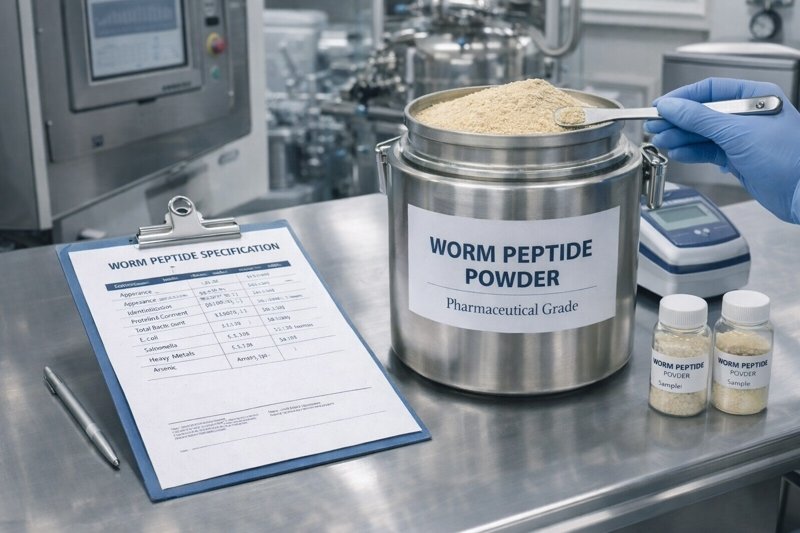
Earthworm peptide powder is made by breaking down earthworm-derived proteins into smaller peptide fractions. Compared with intact protein, these smaller peptides are generally easier to absorb and can show different functional properties depending on their molecular structure and production route. The source material itself is rich in protein, and modern research has explored earthworm-derived peptides for antioxidant, ACE-inhibitory, and immunomodulatory potential.
That said, not all earthworm-derived powders are the same.
A basic earthworm protein powder is typically a broader protein ingredient. A peptide powder goes one step further by using enzymatic hydrolysis, gastrointestinal simulation, autolysis, or related processing to generate lower-molecular-weight fractions with more specific functional characteristics. The supporting documents in your files describe this shift clearly: earthworm proteins can be processed into peptide-rich materials, and studies identified thousands of peptide sequences after digestion and purification steps.
So yes, peptide powder is more refined than crude protein powder. But that still does not automatically make it pharmaceutical-grade.
And that’s the heart of the issue.
Pharmaceutical-grade is not just “higher quality”
Honestly, this is where many suppliers blur the line.
A good commercial earthworm peptide powder may work well in health products. It may have acceptable protein content, decent appearance, and a basic COA. That is one thing.
Pharmaceutical-grade earthworm peptide powder is another thing entirely. It usually implies tighter control in areas such as:
1. Raw material identity and traceability
The raw earthworms cannot be treated like anonymous commodity biomass. The better research papers and production documents in your files specify species, origin, and processing details, which is a good sign of scientific discipline. One study identified the earthworm source as Pheretima aspergillum from Guangxi, China, while another production document identifies the raw material used for earthworm protein powder as the “Taiping No. 2” strain.
For pharmaceutical-grade positioning, buyers will usually expect:
- defined species or raw material standard
- controlled breeding or approved sourcing channels
- traceable batch records
- screening for contaminants from the source stage
- stable upstream supply, not spot-market randomness
That last point is not glamorous, but it matters. A peptide ingredient is only as reliable as the raw biological material behind it.
2. A controlled hydrolysis process, not a rough digestion story
Here’s the thing: peptide quality is shaped by the process.
Research in your files shows earthworm proteins were processed through simulated gastrointestinal digestion, alkaline extraction plus acid precipitation, or autolysis, followed by purification steps such as ultrafiltration, ion-exchange chromatography, and gel filtration. These methods changed peptide size distribution, soluble peptide content, and downstream activity. For example, one study reported earthworm protein hydrolysate with a degree of hydrolysis of 22.91% and soluble peptide content of 79.19%, while another autolysate study reported 22.38% hydrolysis and 77.92% soluble peptide content.
That tells us something important: process conditions directly affect the final ingredient.
A pharmaceutical-grade standard usually means the hydrolysis route is not improvised. It is validated, repeatable, and monitored. Buyers should want to know:
- which enzymes or endogenous systems are used
- target molecular weight range
- hydrolysis degree target range
- how the process is stopped and stabilized
- how filtration and drying are controlled
- how batch-to-batch drift is managed
If a supplier cannot explain those basics clearly, the “pharmaceutical-grade” label starts sounding thin.
3. Purity and composition matter more than headline marketing
Some suppliers love broad claims like “rich in active factors” or “contains multiple natural enzymes.” That may sound attractive, but buyers in higher-value sectors usually need more discipline than that.
One Food Chemistry paper in your files reported that after alkaline-soluble acid precipitation, the prepared earthworm protein reached 96.03% protein content and the fat content dropped to 0.98%, showing how upstream purification can greatly change the ingredient profile.
That does not mean every peptide powder should show the same numbers. It does mean that composition should be measurable, not guessed.
For pharmaceutical-grade earthworm peptide powder, the focus often shifts toward:
- peptide content or protein content
- low fat and controlled ash/moisture
- defined molecular weight distribution
- minimized insoluble residues
- controlled excipient use, if any
- absence of undeclared fillers
This is where some products quietly fail. A powder can look fine in a jar and still be messy on paper.
4. Molecular weight profile becomes a real purchasing criterion
In peptide ingredients, size is not a side issue. It often affects solubility, absorption behavior, formulation fit, and perceived functional value.
The ACE-inhibitory research in your files showed that after simulated digestion, the proportion of small molecular weight fractions increased sharply, and low-molecular-weight fractions showed the strongest activity. Specifically, the study highlighted the <3 kDa fraction as the most active for ACE inhibition.
That does not mean every pharmaceutical-grade peptide powder needs the same cutoff. But it does mean a serious ingredient should ideally have:
- molecular weight data
- a target peptide size distribution
- evidence that the profile is repeatable across lots
Without that, buyers are left with vague phrases like “small molecule peptides,” which, frankly, tell them almost nothing.
5. Pharmaceutical-grade usually requires tighter contaminant control
Because earthworm-derived ingredients come from a biological source, contaminant control is a big deal. Not optional. Not later. Right up front.
Your source materials mention that earthworm composition can include inorganic elements, and that earthworms interact heavily with their environment. That makes upstream control especially important. The review article also lists heavy metals among measurable inorganic elements in earthworm extracts.
So for pharmaceutical-grade positioning, buyers often expect stricter limits and testing around:
- heavy metals
- microbial counts
- pathogens
- pesticide or environmental residues, where relevant
- solvent residues, if applicable
- foreign matter
A lower-end food ingredient may pass broad screening. A pharma-oriented buyer usually wants narrower control windows and stronger documentation.
6. Drying and post-processing can make or break the ingredient
This part is often ignored because it sounds like factory talk. But it matters.
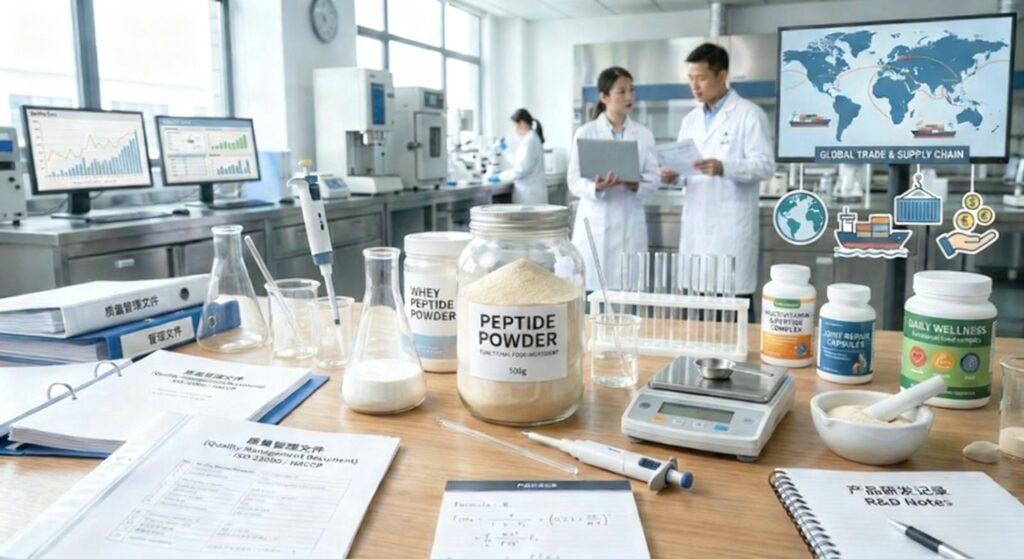
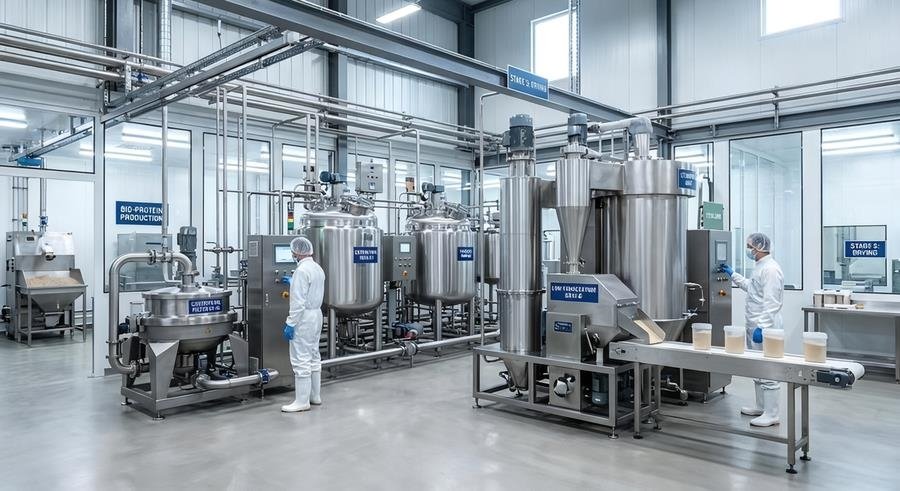
Your production file describes a process flow that includes selection, cleaning, hydrolysis, centrifugal filtration, low-temperature drying, milling, sterilization, and packaging.
That sequence gives a clue about what buyers should care about. Peptides are not only about being produced; they must also be preserved.
For a pharmaceutical-grade earthworm peptide powder, post-hydrolysis handling should usually protect:
- peptide stability
- microbiological safety
- color and odor consistency
- moisture level
- flowability and packaging integrity
Low-temperature drying, in particular, can be important when the goal is to preserve product quality while limiting unnecessary degradation. It’s not flashy, but it’s the sort of manufacturing detail serious buyers look for.
Earthworm peptide powder is not the same as lumbrokinase
This point is worth stressing because the market often mixes them together.
Earthworm peptide powder is generally a broader hydrolyzed peptide ingredient.
Lumbrokinase is a fibrinolytic enzyme complex isolated from earthworm and studied for antithrombotic and thrombolytic activity. The review in your files describes lumbrokinase as a fibrinolytic enzyme group with strong anticoagulant and thrombolytic properties, and notes its specificity advantages compared with some conventional approaches.
So when a supplier markets earthworm peptide powder as if it were simply lumbrokinase in another form, that should raise questions.
They are related, yes. But they are not interchangeable.
Pharmaceutical-grade peptide powder is usually evaluated on peptide composition, process control, impurity management, and intended application. Lumbrokinase is evaluated much more heavily around enzyme activity, fibrinolytic performance, and related assay methods.
That distinction matters for formulation, regulatory positioning, and buyer expectations.
What makes a pharmaceutical-grade product feel different in real sourcing work?
Sometimes the easiest answer is the practical one.
A pharmaceutical-grade supplier usually sounds different because the conversation is different.
Instead of just saying “high purity” or “premium quality,” they can usually provide:
1. Clear manufacturing logic
They can explain how raw material becomes peptide powder, step by step, without getting slippery.
2. Complete documentation
Not just a one-page COA, but often specification sheets, batch records, testing methods, and compliance support materials.
3. Better batch consistency
Not perfect—biological materials rarely are—but managed within tighter ranges.
4. More cautious claims
Oddly enough, the better suppliers often sound less dramatic. They rely more on data and less on miracle language.
5. Greater readiness for audit-style questions
A pharmaceutical or high-end nutraceutical buyer will ask uncomfortable questions. A serious supplier can answer them.
That difference is hard to fake for long.
Bioactivity research helps—but it does not replace grade control
The earthworm peptide literature in your files is promising. One study identified antioxidant peptides such as AFWYGLPCKL, WPWQMSLY, and GCFRYACGAFY, while another identified novel ACE-inhibitory peptides including SSPLWER and RFFGP, with SSPLWER showing strong ACE inhibitory activity. An additional study explored immunomodulatory peptides from earthworm protein autolysate, with WNWLLPLMLG showing notable activity in macrophage validation.
That research is useful. It supports the idea that earthworm-derived peptides are not random nutrition fragments.
Still, pharmaceutical-grade status is not awarded just because interesting peptides exist.
That status depends on how the ingredient is manufactured, standardized, tested, and documented. Science gives the material relevance; quality systems give it credibility.
Both matter. One without the other is incomplete.
So, what should buyers ask before approving a supplier?
Here’s where procurement gets practical.
When evaluating a pharmaceutical-grade earthworm peptide powder supplier, ask for:
- raw material species and sourcing information
- production flowchart
- hydrolysis method and control points
- peptide content and molecular weight distribution
- microbiological and heavy metal testing
- batch-to-batch consistency data
- drying and sterilization method
- residual excipient or carrier information
- packaging and storage conditions
- supporting technical documents
And one more thing—ask how they separate peptide products from enzyme products such as lumbrokinase in both manufacturing and positioning. If the answer is fuzzy, that tells you something.
Why premium brands and pharma-oriented buyers care more
Because the cost of inconsistency is high.
A general wellness product may tolerate a broader ingredient band. A pharmaceutical pipeline, clinical-adjacent formula, or premium nutraceutical brand usually cannot. They need:
- predictable formulation behavior
- reliable compliance support
- fewer surprises during registration or technical review
- lower recall and complaint risk
- stronger confidence when scaling up
You know what? That’s really what “pharmaceutical-grade” means in the market. Not perfection. Not magic. Just a much lower tolerance for uncontrolled variables.
Final thought
Earthworm peptide powder is already a more specialized ingredient than ordinary protein powder. But pharmaceutical-grade earthworm peptide powder sits in a different category because the bar is higher across the whole chain—raw material control, peptide generation, impurity management, testing rigor, and documentation depth.
That difference may not be obvious in a product photo. It becomes obvious in procurement meetings, technical reviews, and quality audits.
And that is exactly where serious buyers make their decision.
If interested please continue reading:
- Earthworm Peptide Powder Production Methods and Their Impact on Quality
- How to Evaluate the Quality of Earthworm Peptide Powder
- Key Specifications to Check When Sourcing Earthworm Peptide Powder
- What Makes Pharmaceutical-Grade Lumbrokinase Different
- Earthworm Peptide Powder vs Lumbrokinase: What Are the Differences?
FAQs
1. What is pharmaceutical-grade earthworm peptide powder?
Pharmaceutical-grade earthworm peptide powder is a more tightly controlled peptide ingredient made from earthworm-derived protein, with stronger standards for raw material traceability, hydrolysis control, contaminant testing, batch consistency, and technical documentation than ordinary commercial grades.
2. How is pharmaceutical-grade earthworm peptide powder different from standard earthworm peptide powder?
The main difference is not just peptide content. Pharmaceutical-grade earthworm peptide powder usually has stricter limits for impurities, better batch uniformity, clearer molecular weight control, and more complete documentation for serious nutraceutical or pharmaceutical supply chains.
3. Is earthworm peptide powder the same as lumbrokinase?
No. Earthworm peptide powder is a broader hydrolyzed peptide ingredient, while lumbrokinase is a fibrinolytic enzyme complex from earthworm studied mainly for thrombolytic and antithrombotic applications. They come from the same biological source but are not the same ingredient.
4. What specifications should buyers request for pharmaceutical-grade earthworm peptide powder?
Buyers should request protein or peptide content, molecular weight distribution, microbiological data, heavy metal testing, moisture, ash, processing method, source traceability, storage conditions, and batch-level COA support for pharmaceutical-grade earthworm peptide powder.
5. Why do supplement and pharmaceutical buyers prefer pharmaceutical-grade earthworm peptide powder?
Because it reduces technical and commercial risk. Pharmaceutical-grade earthworm peptide powder offers better consistency, stronger quality assurance, and more dependable documentation for high-value formulations, regulated markets, and long-term supply partnerships.
A Stable, High-Value Peptide Ingredient For Next-Generation Health Products.
Contact us now to discuss your project requirements.