

In the world of functional ingredients, some materials whisper. Others make noise.
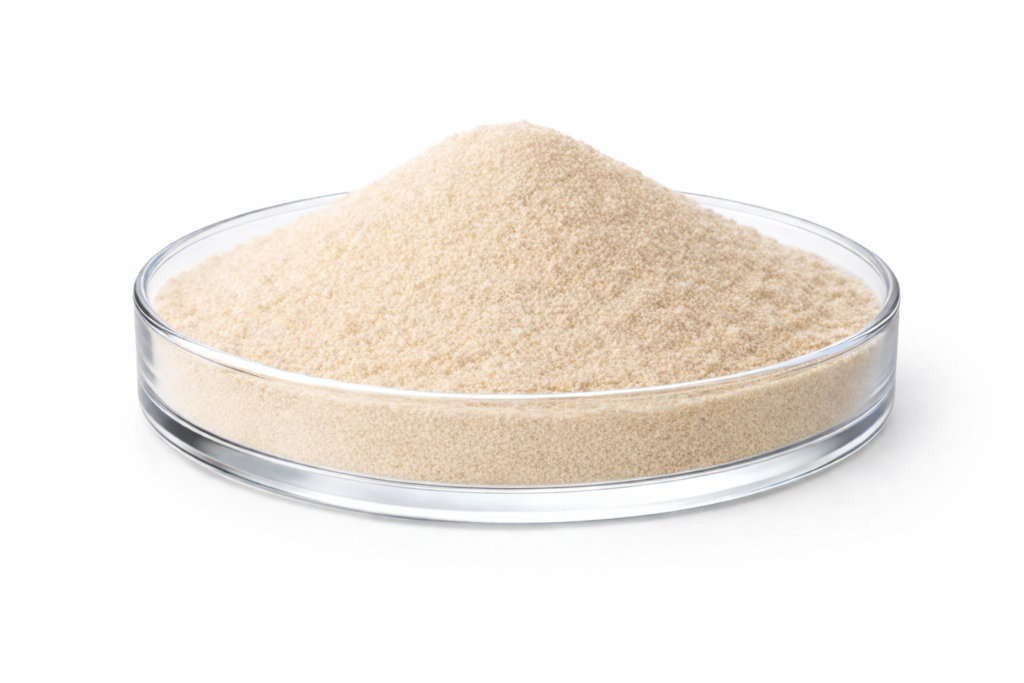
Earthworm peptide powder? It’s quietly building a reputation as a high-value ingredient across dietary supplements, pharmaceutical research, and even advanced functional food applications.
If you’re a supplier, manufacturer, or product formulator, you’ve probably noticed the shift. Buyers aren’t just asking for “protein” anymore. They want bioactive peptides. They want mechanism-backed ingredients. They want sustainability. And yes — they want differentiation.
So why exactly is earthworm peptide powder gaining this premium status?
Let’s break it down — not with hype, but with science, production logic, and market reality.
What Makes Earthworm Peptide Powder Different from Regular Protein?
Before we talk about value, we need to clarify something.
Protein and peptide are not interchangeable.
According to the detailed explanation in , proteins are long chains of amino acids folded into complex structures. Peptides, by contrast, are shorter chains — smaller, more absorbable, often more biologically active.
Here’s the thing:
Smaller molecules don’t just absorb faster. They behave differently in the body. Dipeptides and tripeptides, for example, are transported via peptide-specific transport systems, avoiding the competitive inhibition seen with free amino acids.
For formulators, this means:
- Faster absorption kinetics
- Higher bioavailability potential
- More predictable functionality
And that alone raises the ingredient’s strategic value.
But earthworm peptide powder goes further.
Scientifically Identified Bioactive Peptides (Not Just Theory)
Let’s talk evidence.
A 2023 study published in Food Bioscience identified several novel ACE inhibitory peptides derived from earthworm protein after gastrointestinal digestion .
Peptides such as:
- SSPLWER
- RFFGP
- LERWP
- MFPGIADR
showed measurable ACE inhibitory activity, meaning they interact with the renin-angiotensin system — a key pathway involved in blood pressure regulation.
Now pause for a second.
In the nutraceutical and pharmaceutical ingredient space, anything tied to cardiovascular modulation instantly becomes high-interest. Hypertension is a global health burden. Synthetic ACE inhibitors exist, yes — but they come with side effects.
Food-derived ACE inhibitory peptides? That’s a softer positioning. Cleaner label. Strong consumer acceptance.
That’s value driver number one: mechanism-backed functionality.
Multifunctionality: Antioxidant, Immunomodulatory, and More
High-value ingredients rarely do just one thing.
Earthworm peptide powder has demonstrated multiple bioactivities in research contexts.
In another 2023 study, earthworm protein autolysates showed immunomodulatory effects in cyclophosphamide-induced immunosuppressed mice .
Key findings included:
- Recovery of immune organ indices
- Improvement in cytokine balance
- Enhanced macrophage activity
This points toward immune-support applications — a category that continues to grow, especially post-pandemic.
And beyond immunity?
According to the comprehensive review , earthworm-derived products show:
- Anti-inflammatory potential
- Antimicrobial properties
- Anti-tumor research interest
- Fibrinolytic enzyme activity
Now, let’s be clear. Ingredient positioning must align with regulatory frameworks. But from a raw bioactivity standpoint, this multifunctional profile is powerful.
An ingredient that supports cardiovascular health, immune modulation, antioxidant pathways, and potentially anti-inflammatory functions? That’s not a commodity protein. That’s a functional platform.
The Enzyme Advantage: Lumbrokinase Connection
You can’t talk about earthworm-derived ingredients without mentioning lumbrokinase.
As outlined in and expanded in , lumbrokinase is a fibrinolytic enzyme capable of targeting fibrin — the structural mesh in blood clots.
Now here’s where differentiation matters.
Earthworm peptide powder is not the same as purified lumbrokinase. But it originates from the same biological resource and shares the same bioactive ecosystem.
From a product development perspective, that creates synergy opportunities:
- Combination cardiovascular formulations
- Multi-pathway circulatory support products
- Enzyme + peptide co-formulations
When one raw material supports multiple SKU strategies, procurement teams start paying attention.
High Protein Density + Sustainable Source
Let’s zoom out for a moment.
Earthworms contain between 60%–70% protein in dry matter , and they are recognized as an emerging alternative protein resource in China and other regions.
Compared to traditional livestock:
- Higher protein conversion efficiency
- Lower greenhouse gas emission
- Smaller land footprint
And environmentally? Earthworms are literally ecosystem engineers.
As described in and , they:
- Improve soil aeration
- Enhance nutrient cycling
- Support agricultural sustainability
For brands positioning around sustainability narratives, this matters. The origin story becomes part of the marketing value.
An ingredient that is:
✔ High-protein
✔ Bioactive
✔ Sustainably sourced
— that combination commands premium positioning.
Controlled Production Process = Industrial Reliability
High value isn’t just biology. It’s manufacturing consistency.
According to the documented production process , earthworm protein powder undergoes:
- Mechanical separation
- Cleaning and hydrolysis
- Centrifugal filtration
- Low-temperature drying / spray drying
- Sterilization
This standardized flow matters for buyers.
Why?
Because pharmaceutical-grade or nutraceutical-grade ingredients require:
- Batch-to-batch stability
- Microbial control
- Heavy metal compliance
- Traceability
When an ingredient can meet industrial standards — not just academic curiosity — it becomes commercially viable at scale.
And scale is what turns “interesting” into “high-value.”
Innovation in Functional Food Applications
Earthworm peptide powder is also expanding into food innovation.
As highlighted in , applications include:
- Functional beverages
- Lipid-lowering nutrition products
- High-protein snack formulations
- Circulatory health cereals
This cross-category flexibility increases total addressable market size.
An ingredient that works in:
- Capsules
- Tablets
- Sachets
- Protein blends
- Functional drinks
— offers broader ROI potential for wholesalers and distributors.
Bioavailability: Small Molecule Edge
Let’s circle back to absorption — because honestly, this is where many protein ingredients fail.
Peptides bypass some of the digestive breakdown steps required for intact proteins. As discussed in :
- Small peptides are absorbed via dedicated peptide transporters.
- They avoid amino acid competition.
- They may enter systemic circulation faster.
For formulators working on “fast-acting” positioning or enhanced absorption claims (where compliant), this property matters.
Not all proteins are created equal.
Smaller often means smarter.
Traditional Use + Modern Validation
There’s also cultural credibility.
Earthworm (known as “Di Long” in traditional Chinese medicine) has been recorded historically in classical texts for centuries .
While traditional use alone doesn’t justify modern claims, it strengthens narrative positioning when combined with contemporary research validation.
Consumers trust heritage.
Scientists trust data.
Earthworm peptide powder sits at that intersection.
So… Is It Really “High-Value”?
Here’s the paradox.
At first glance, earthworm peptide powder sounds niche. Even unusual.
But once you examine:
- Verified ACE inhibitory peptides
- Immunomodulatory data
- Fibrinolytic enzyme ecosystem
- Sustainable sourcing model
- Structured production systems
It stops being niche.
It becomes strategic.
High-value ingredients typically share five characteristics:
- Scientifically supported mechanisms
- Multi-functional applications
- Sustainable sourcing
- Scalable production
- Market differentiation potential
Earthworm peptide powder checks all five.
FAQs
1. Why is earthworm peptide powder considered more bioactive than regular protein powder?
Earthworm peptide powder contains small-chain peptides identified with ACE inhibitory and immunomodulatory activity. Unlike intact protein, these peptides are more easily absorbed and can interact directly with specific biological pathways.
2. Is earthworm peptide powder suitable for cardiovascular health formulations?
Research has identified ACE inhibitory peptides derived from earthworm protein, suggesting potential application in cardiovascular-support nutraceutical products. However, final product claims must align with regional regulatory frameworks.
3. How is earthworm peptide powder produced industrially?
The process typically includes mechanical separation, cleaning, enzymatic hydrolysis, centrifugation, low-temperature drying / spray drying, and sterilization to ensure safety, purity, and consistent quality.
4. What makes earthworm peptide powder a sustainable functional ingredient?
Earthworms have high protein conversion efficiency, low greenhouse gas output, and contribute positively to soil ecosystems, making them a resource-efficient alternative protein source.
5. Can earthworm peptide powder be used in functional food applications?
Yes. It has potential applications in functional beverages, high-protein snacks, circulatory-support cereals, and dietary supplements, depending on formulation and regulatory positioning.
If you’re in the nutraceutical, pharmaceutical, or functional ingredient supply chain, earthworm peptide powder isn’t just another protein option.
It’s a platform ingredient.
And platforms — not commodities — are where long-term value lives.