
Using a Lumbrokinase Pilot Batch to Evaluate Readiness for Commercial Supplement Production
A lumbrokinase sample may meet the buyer’s initial requirements, and a proposed formula may work in bench development. Neither result shows how that formula will perform during a manufacturing run. A pilot batch gives product-development, manufacturing and QA teams a way to observe the approved ingredient in the intended process before committing to routine commercial production.
The purpose is to answer specific questions: Can the team handle and add the material as planned? Does the process produce a batch that meets predefined product requirements? Which observations need investigation, adjustment or another trial? The answers depend on the dosage form, equipment, process and quality system. A pilot should therefore have a written evaluation plan, rather than being treated as a small commercial order.

Define what the pilot must prove
Begin with the decisions the pilot batch is meant to support. Formulation development should already be advanced enough to identify the proposed composition, dosage form, process route and packaging concept. The pilot can then test whether those choices remain workable under manufacturing conditions.
Before the run, the product developer, manufacturer and QA team should agree on:
- The formulation and process version being evaluated.
- The raw-material lot and documents authorized for use.
- The manufacturing steps and equipment that the pilot will represent.
- The process observations and in-process checks to record.
- The finished pilot-batch attributes and tests needed for the decision.
- Who will review deviations and authorize the next stage.
Define how findings will be classified. Some observations may be acceptable within the approved plan; others may require a documented process adjustment, additional testing or a repeat pilot. Agreeing on this approach before production helps the team interpret results consistently.
Broader ingredient and bench-development questions belong in Lumbrokinase formulation guidance. At the pilot stage, the task is to test the developed formula in a representative manufacturing setting.
Confirm the material entering the pilot
The pilot record should identify the actual lumbrokinase lot, not merely the product name used during earlier development. Compare its label, lot number, specification version and batch COA with the material approved for the trial. If the pilot uses a different lot from the one assessed in bench work, document that difference and decide whether any additional verification is needed.
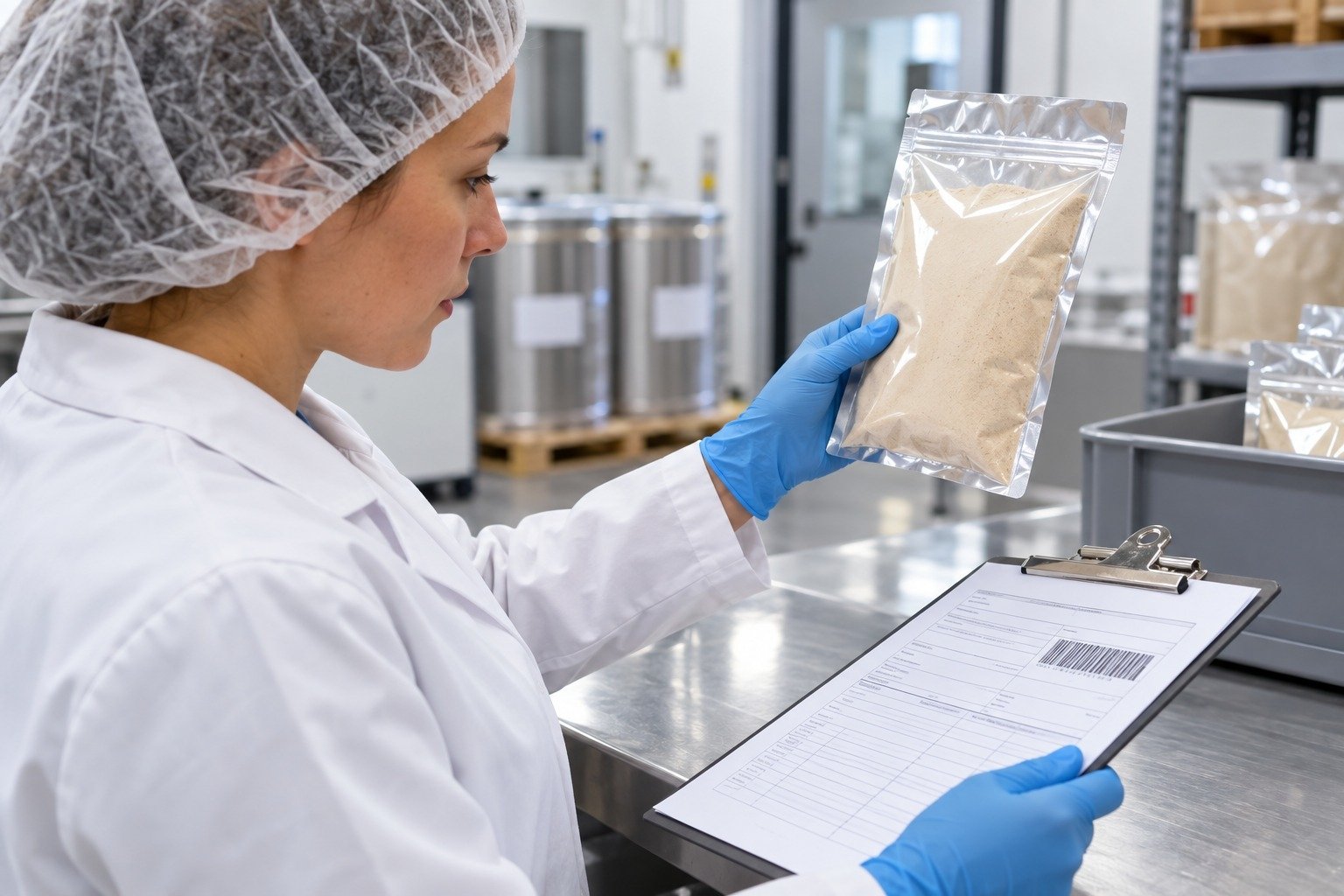
For Allworms’ current commercial raw material, the stated fibrinolytic activity specification is ≥1,000,000 U/g, measured by Fibrin Plate Assay. That is a raw-material specification. It does not, by itself, establish the activity of a finished supplement or the outcome of a pilot process. The buyer must define any finished-product evaluation in the context of its own formula, testing method and requirements. Review the current Allworms Lumbrokinase product information and the COA for the lot proposed for the trial. COA, MOQ, Sample & Bulk Orders
Also confirm the status of other materials that could affect the pilot result: excipients, capsule shells or other dosage-form components, and the proposed package. Record substitutions. If several elements change together, it becomes harder to determine why the pilot differs from bench development.
Make the manufacturing trial representative
A useful pilot resembles the intended commercial process closely enough to expose meaningful handling and production issues. That does not mean the pilot and commercial runs must use identical equipment or batch sizes. It means the team should identify differences and assess whether they limit what can be concluded.
Record the equipment, sequence of operations, material additions, transfers, holds and packaging steps used in the trial. Note where commercial production is expected to differ. For example, a change in equipment scale or transfer route may alter how the team handles or samples a blend. The pilot report should state which findings can reasonably inform scale-up and which questions remain open.
Manufacturing staff should document what happens when lumbrokinase moves through the actual process. Relevant observations may include weighing and transfer, powder handling, visible segregation, material remaining in equipment, and the behavior of the formula during the intended filling or forming step. Which observations matter will depend on the product and process; there is no single operating setting that applies to every lumbrokinase formulation.
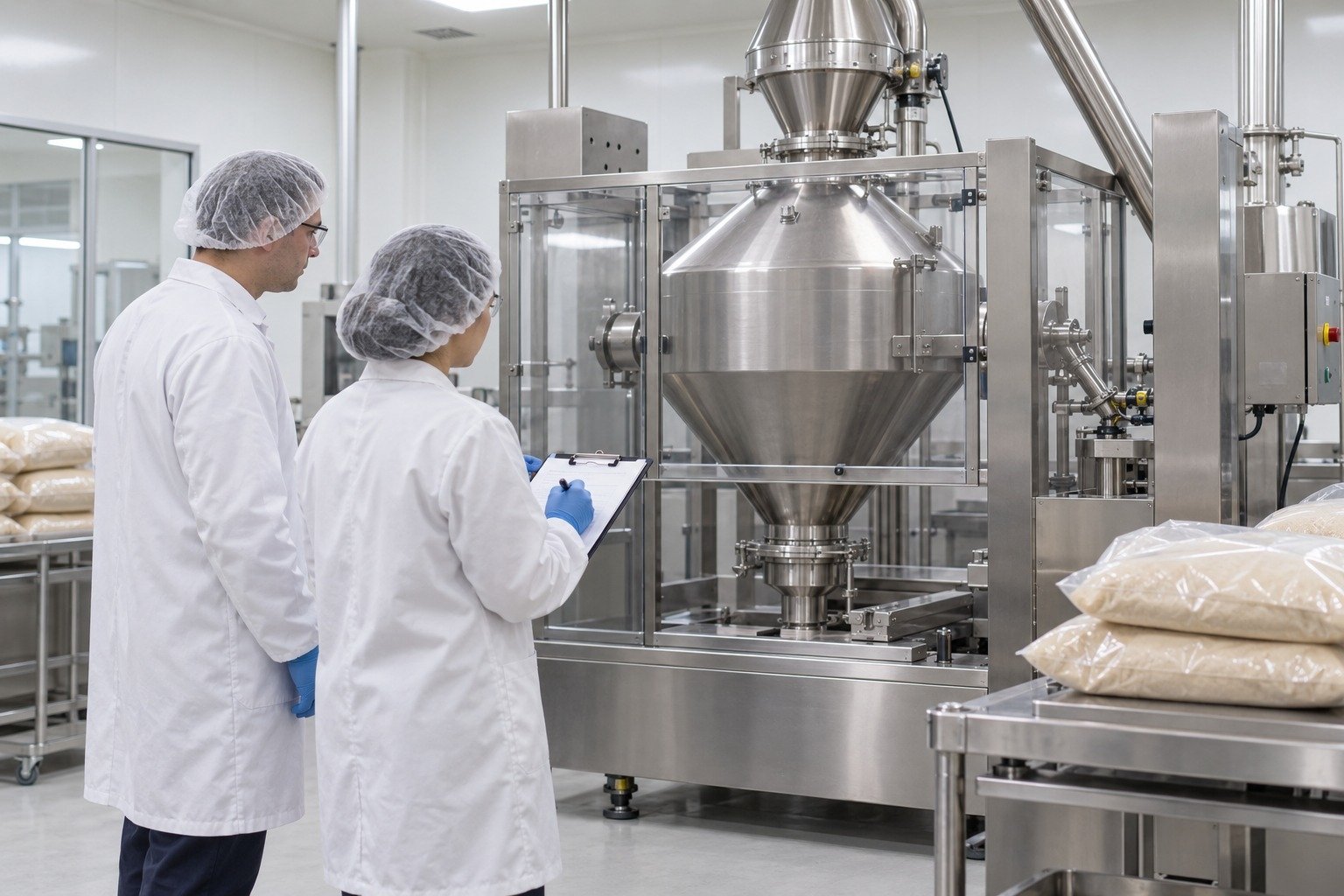
If the proposed process includes a step or exposure that has not been evaluated during development, include it explicitly in the pilot plan. Record the conditions actually used and evaluate the outcome against the team’s predefined requirements. A pilot is most useful when it tests the proposed process, rather than quietly changing that process to make the run appear successful.
Observe distribution and in-process behavior where relevant
The pilot should show whether the intended addition method and manufacturing sequence can produce a usable intermediate and finished batch. For a blended product, the team may need to evaluate whether lumbrokinase is distributed as intended. The appropriate sampling locations, methods and acceptance criteria must come from the buyer’s own validation and quality plan; a visual impression alone cannot establish uniformity.
In-process observations should be tied to decisions. If a material feeds inconsistently, where did the issue occur and what product attribute could it affect? If material accumulates at a transfer point, was the amount recorded and investigated? If a fill or unit-weight check varies, does the evidence point to the formulation, process setup, equipment or sampling method?
Document both satisfactory and unexpected observations. A trial record that states only “pilot passed” gives the commercial team little guidance when it needs to repeat the process.
| Pilot stage | What to confirm or record | Decision supported |
|---|---|---|
| Before production | Approved formula and process versions; lumbrokinase lot, specification and COA; planned checks | Is the trial using the intended inputs and an agreed evaluation plan? |
| Material addition | Weighing, addition and transfer observations; substitutions or losses | Can the ingredient enter the process as planned? |
| Processing | Actual process conditions, relevant in-process findings and deviations | Does the proposed process operate acceptably at pilot scale? |
| Finished pilot batch | Appearance and other defined product attributes; applicable test results; packaging observations | Does the output meet the team’s predefined requirements? |
| Review and handoff | Investigations, approved changes, unresolved risks and repeat-trial needs | Is commercial production justified, or is more work required? |
Evaluate the finished pilot batch against the plan
After production, review the finished pilot batch as a product made by the proposed process, not simply as raw material that has been repackaged. Compare results with the requirements set before the run. Depending on the product, these may include relevant physical attributes, unit or fill consistency, microbiological or other quality tests, and a technically appropriate activity assessment if the team has established one.

Avoid carrying the supplier’s raw-material U/g result into a finished-product specification without a defined basis. Finished-product testing can involve a different matrix, sampling approach and method suitability considerations. If the team intends to assess activity in the finished dosage form, QA and the laboratory should agree in advance on the method, reporting basis, interpretation and decision criteria.
Review packaging observations as well. Confirm that the proposed package can be used in the intended packing operation and that the trial produces records sufficient to identify the finished pilot lot and the raw-material lots used. Longer-term stability conclusions require an appropriate study; a successful pilot run alone cannot establish shelf life.
The finished-batch review should bring manufacturing records and test results together. A result that meets a numerical criterion may still need investigation if the run included an unexplained deviation. Likewise, an unexpected test result should be assessed alongside the lot identity, process record, sample handling and laboratory method before the team decides what failed.
Investigate issues before changing the scale
When the pilot reveals a problem, record it precisely: where it appeared, which material or operation was involved, what was measured or observed, and which product requirement may be affected. The team can then determine whether the issue relates to the raw-material lot, formula, process, equipment, environment, sampling or test method.
Choose a corrective action that addresses the evidence. A change to the addition sequence, formulation or process may require fresh evaluation because the next run is no longer testing exactly the same setup. Document who approved the change and which earlier pilot findings still apply.
Another pilot may be warranted when a material change is made, an important result remains unexplained, or the first run did not represent a critical commercial step. The decision should follow the buyer’s quality process and the significance of the finding. Repeating a trial without a clear question to answer will produce more material, but little additional assurance.
Make a documented commercial-production decision
At the end of the pilot, bring formulation, manufacturing and QA reviewers together to compare the evidence with the original objectives. The decision may be to approve the proposed setup, approve it subject to defined follow-up work, revise and repeat the pilot, or stop development while a major issue is resolved.
The handoff to commercial production should identify the approved formula and process versions, raw-material requirements, relevant operating controls, in-process checks, finished-product criteria, packaging configuration and open actions. It should also identify which pilot assumptions must be checked again when equipment or batch size changes.
Raw-material approval for future deliveries is a related decision. The team should define how commercial lots will be assessed against its lumbrokinase batch acceptance criteria. Once the pilot supports a manufacturing decision, procurement and QA can also address the documentation, batch expectations and supply planning discussed in commercial-scale lumbrokinase sourcing.
One successful pilot provides evidence for the conditions tested. It does not guarantee the outcome of every later commercial batch. A useful approval states both what the pilot established and which controls will carry that learning into routine production.
FAQs
What is the main purpose of a lumbrokinase pilot batch?
It tests a developed formulation and approved raw material under representative manufacturing conditions. The resulting records help the team decide whether the proposed process and finished product justify commercial scale-up.
Should the pilot use the same lumbrokinase lot as the initial sample evaluation?
Using the same lot can simplify comparison, but it may not always be available. If a different lot is used, identify it, review its batch documents and determine whether it meets the approved raw-material requirements before the pilot.
Does passing raw-material testing mean the finished pilot batch will pass?
No. Raw-material results describe the tested ingredient lot. The finished pilot batch must be evaluated against requirements appropriate to the actual formula, process and finished product.
What should manufacturing staff record during the run?
Record the materials and lot numbers used, actual processing steps and conditions, relevant handling and in-process observations, deviations, adjustments and traceability information. The records should allow reviewers to understand how the finished batch was made.
How should activity be evaluated in the finished pilot product?
The buyer’s QA and laboratory teams should define an appropriate method, sampling approach, reporting basis and acceptance criteria for the finished-product matrix before testing. The raw-material activity specification should not be assumed to be a finished-product result.
What happens if a process issue appears?
Document the issue, assess its possible effect on product quality, investigate likely causes and approve any proposed change. Determine whether further testing or another pilot is needed before commercial production.
Is one successful pilot always enough?
No. The answer depends on how representative the trial was, whether its objectives were met, the significance of any changes or deviations, and the buyer’s approval process.
What should be approved before commercial manufacturing starts?
The team should document its decision on the formula, process, raw-material requirements, relevant checks, finished-product criteria and unresolved actions. For general document and supply questions, see the Allworms FAQ.
Review the lumbrokinase specification and assay information before your pilot run?
Discuss your proposed manufacturing evaluation with Allworms.