Let’s be honest—when someone first hears earthworm protein powder, the reaction is rarely neutral. There’s curiosity. A raised eyebrow. Sometimes a flat-out “You’re kidding, right?”
But here’s the thing: for buyers in dietary supplements, nutraceuticals, pharma ingredients, and even cosmetics, curiosity quickly turns into evaluation. Is it viable? Is it safe? Is it scientifically supported? Is it scalable?
And more importantly—what’s myth, and what’s fact?
In this article, we’ll clear the air. Because while earthworms have long been known as soil engineers, their protein derivatives are stepping into a very different spotlight.
🌱 From Soil to Science: Understanding the Source
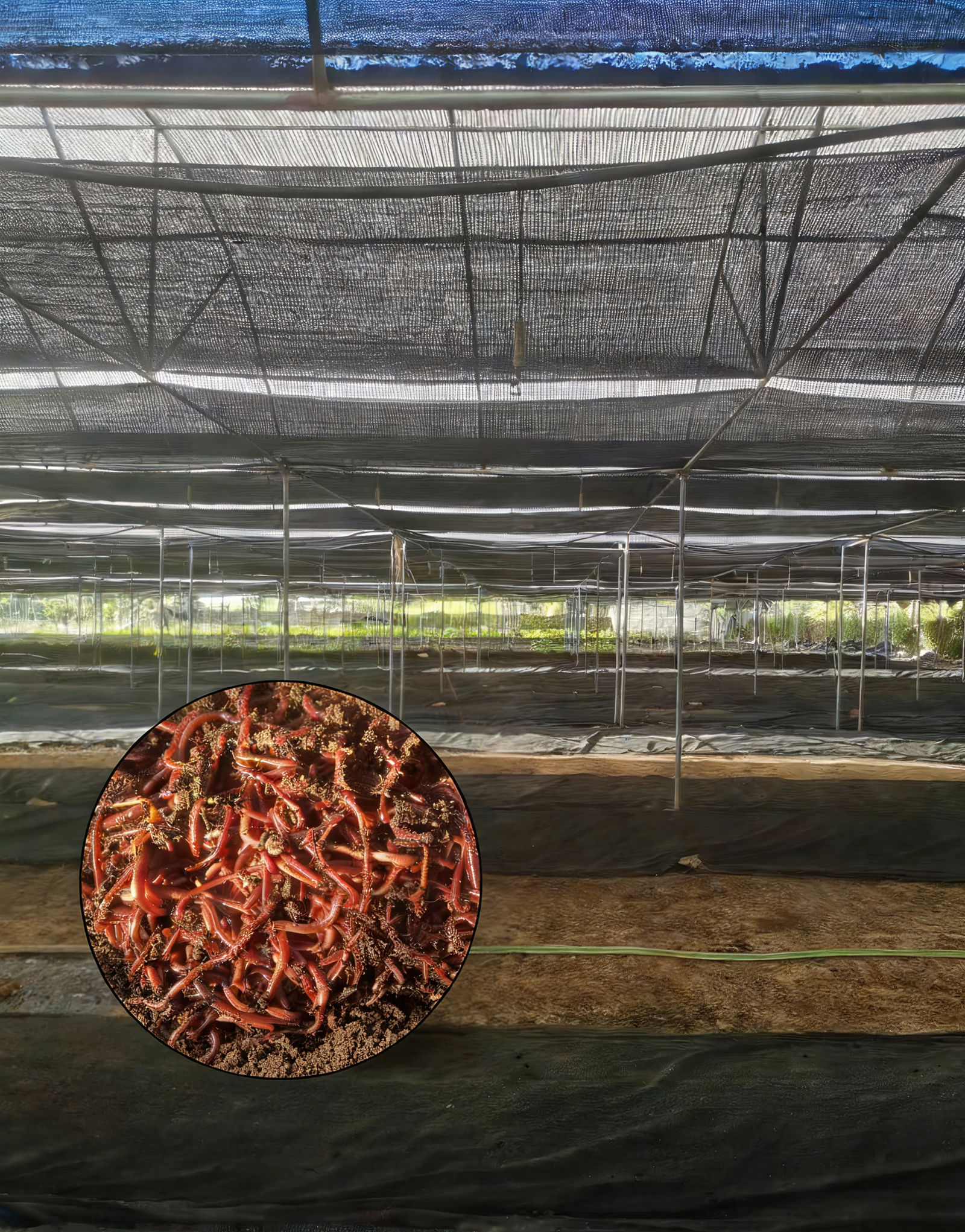
Before we tackle misconceptions, let’s ground ourselves—literally.
Earthworms belong to the phylum Annelida and are widely distributed across agricultural ecosystems. Beyond their ecological role, they’ve been documented in traditional medicinal systems for centuries .
Modern food science research now positions earthworm protein as a promising alternative protein source, particularly due to:
- High protein content (often 60–70% dry weight)
- Favorable amino acid profile
- Bioactive peptide potential
- Efficient feed conversion and low environmental footprint
And yet, misconceptions persist.
Let’s unpack them.
Misconception #1: “Earthworm Protein Powder Is Just Ground Worms.”
This one pops up a lot.
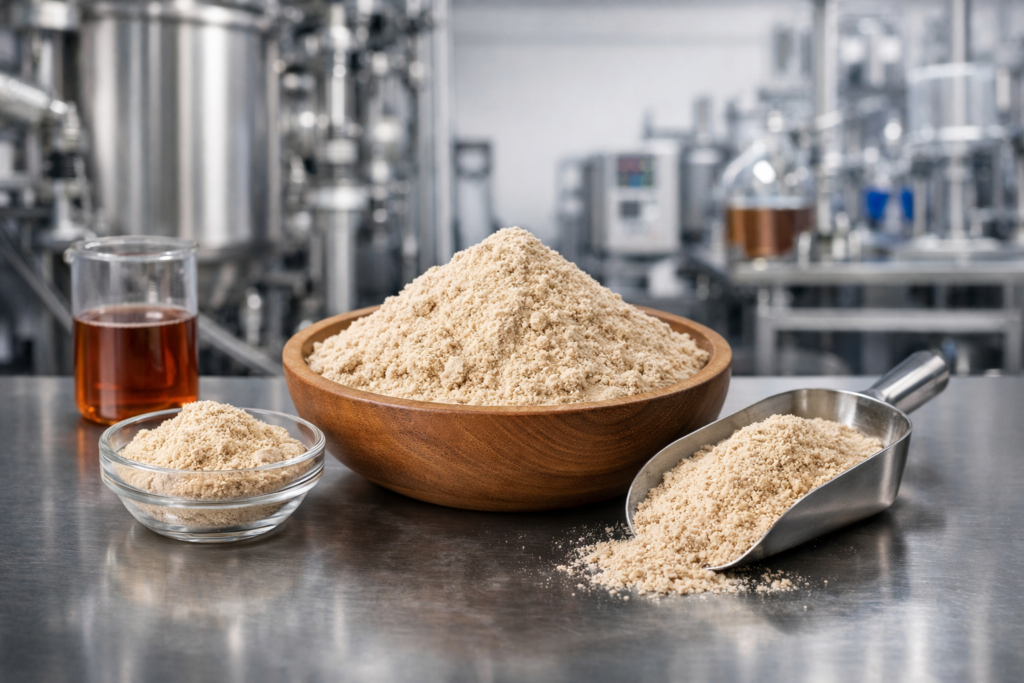
No, high-quality earthworm protein powder is not simply dried and pulverized worms thrown into a blender.
Commercial production involves:
- Careful selection and cleaning of raw material
- Mechanical separation and washing
- Enzymatic hydrolysis (for peptide production)
- Filtration and centrifugation
- Low-temperature drying
- Sterilization and standardized packaging
For peptide applications, enzymatic digestion or controlled autolysis is used to generate bioactive fractions. Research shows that gastrointestinal simulation can yield low-molecular-weight peptides with functional activity .
So no—it’s not crude. It’s processed under defined biochemical parameters.
Misconception #2: “There’s No Real Science Behind It.”
Honestly? This might be the most outdated assumption.
Multiple peer-reviewed studies published in Food Bioscience have explored earthworm-derived peptides with antihypertensive, antioxidant, and immunomodulatory potential.
For example:
🧪 ACE Inhibitory Peptides
Seven novel ACE inhibitory peptides were isolated from earthworm protein hydrolysates . Two peptides—SSPLWER and RFFGP—demonstrated competitive inhibition activity against ACE.
That matters because ACE inhibitors are widely used in blood pressure regulation.
🧬 Immunomodulatory Activity
Earthworm protein autolysates have shown measurable immune-support effects in CTX-induced immunosuppressed mice models .
Degree of hydrolysis: 22.38%
Soluble peptide content: 77.92%
Those are quantifiable metrics—not folklore.
And beyond antihypertensive and immune aspects, research also highlights antioxidant peptide potential .
So yes, there is science. And it’s growing.
Misconception #3: “It’s Unsafe or Unregulated.”
Let’s slow down here.
Safety depends on processing quality, raw material sourcing, and regulatory compliance—not the novelty of the ingredient.
Earthworm protein has been recognized in certain regions as a new food resource, and its production includes sterilization and quality control steps .
Like any protein ingredient (whey, soy, insect protein), safety requires:
- Heavy metal testing
- Microbial control
- Residual solvent verification
- Stability analysis
Professional manufacturers conduct batch testing and issue inspection reports.
Is regulatory status uniform globally? No. That’s where due diligence comes in. For buyers, the conversation isn’t “Is it weird?” but rather “Is it compliant in my target market?”
That’s a different discussion entirely.
Misconception #4: “Consumers Will Never Accept It.”
Here’s where things get interesting.
A decade ago, insect protein sounded impossible in Western markets. Now? Cricket flour is sold online. Mealworm snacks are retailing in Europe.
Acceptance shifts with education and positioning.
And here’s the nuance: in many markets, earthworm derivatives are positioned not as “worm powder,” but as:
- Earthworm protein peptide
- Lumbricus extract
- Lumbrokinase enzyme complex
Branding matters. So does formulation.
In ingredient supply chains, end consumers often never see the raw source—they see:
- A cardiovascular support capsule
- An antioxidant functional beverage
- A peptide-based nutraceutical blend
Formulators know this already. Ingredient naming and regulatory labeling play a strategic role.
Misconception #5: “It’s Only About Lumbrokinase.”
True, lumbrokinase receives a lot of attention due to its fibrinolytic activity .
But earthworm protein powder isn’t limited to enzyme extraction.
Research has identified:
- ACE inhibitory peptides
- Immunomodulatory peptides
- Antioxidant peptides
Plus broader pharmacological potential discussed in medical literature .
So when buyers ask, “Is this just about blood flow?” the answer is no.
It’s a protein matrix capable of yielding multiple bioactive fractions, depending on processing.
Misconception #6: “It’s Environmentally Questionable.”
Ironically, earthworm cultivation is often considered environmentally efficient.
Earthworms:
- Convert organic waste into biomass
- Require minimal land
- Produce low greenhouse gas emissions compared to traditional livestock
- Improve soil ecosystems
For alternative protein discussions, sustainability is not a weakness—it’s often a strength.
And as ESG reporting becomes standard for supplement brands, this point matters.
Misconception #7: “Peptides Are Just Marketing Hype.”
Let me explain something subtle.
Peptides are smaller protein fragments—typically 2–20 amino acids long. They’re absorbed differently than whole proteins and may demonstrate targeted biological effects .
That’s not hype. That’s biochemistry.
Small peptides may bypass some competitive amino acid absorption pathways and be absorbed more efficiently .
So when earthworm protein is enzymatically hydrolyzed into peptide fractions, it’s not just for label appeal—it’s functional modification.
Of course, not all peptides are bioactive. Activity depends on sequence, structure, and dose.
But dismissing peptides entirely? That’s outdated thinking.
Misconception #8: “It Has No Place Outside Supplements.”
Actually, functional food innovation is already exploring peptide incorporation .
Potential application areas include:
- Functional beverages
- High-protein bars
- Cardiovascular-support formulations
- Antioxidant blends
Cosmetic ingredient exploration is also underway, especially where bioactive peptides intersect with skin barrier and oxidative stress pathways.
Will it replace whey protein? No.
Will it find a niche in specialized functional markets? Likely yes.
And niche markets, as we know, can scale quickly.
So Where Does That Leave Us?
Earthworm protein powder isn’t a gimmick. It’s not magic either.
It’s a protein source with:
- A long traditional use history
- Emerging peer-reviewed biochemical research
- Defined processing workflows
- Bioactive peptide potential
For stakeholders—manufacturers, wholesalers, formulation scientists—the real question isn’t “Is it strange?”
It’s:
- Does it fit my formulation strategy?
- Does it meet regulatory standards in my region?
- Does the science align with my product claims?
- Can I secure consistent supply and documentation?
That’s a far more productive conversation.
And honestly? It’s already happening in alternative protein and nutraceutical circles.
Frequently Asked Questions (FAQs)
1. Is earthworm protein powder suitable for nutraceutical ingredient development?
Yes. Research supports its potential in antihypertensive, antioxidant, and immunomodulatory peptide development, making it relevant for nutraceutical ingredient applications.
2. How is earthworm protein peptide different from lumbrokinase?
Lumbrokinase is a specific fibrinolytic enzyme complex, while earthworm protein peptides are hydrolyzed protein fragments that may have diverse bioactivities such as ACE inhibition or immune modulation.
3. What processing methods are used in commercial earthworm protein manufacturing?
Typical processes include cleaning, enzymatic hydrolysis, centrifugation, filtration, low-temperature drying, and sterilization under controlled conditions .
4. Are there published studies supporting earthworm-derived ACE inhibitory peptides?
Yes. Peer-reviewed research identified seven novel ACE inhibitory peptides with measurable IC50 values .
5. Can earthworm protein powder be used in functional food formulations?
Potentially yes. Applications explored include functional beverages, health supplements, and fortified foods , subject to regulatory approval in the target market.