A quiet shift in the lab
Not long ago, earthworm-derived ingredients sounded like something confined to traditional medicine shelves. Today? Cosmetic formulators are taking a serious look at earthworm protein powder—and not as a novelty, but as a functional raw material.
If you’re a cosmetic manufacturer, ingredient supplier, or private-label brand owner, you’ve probably noticed the pattern: consumers want high-performance skincare, but they also want “natural,” “bioactive,” and “science-backed.” That’s a tough trio to balance.
So why is earthworm protein powder entering R&D conversations?
Let me explain.
From Soil to Skincare: The Bioactive Story
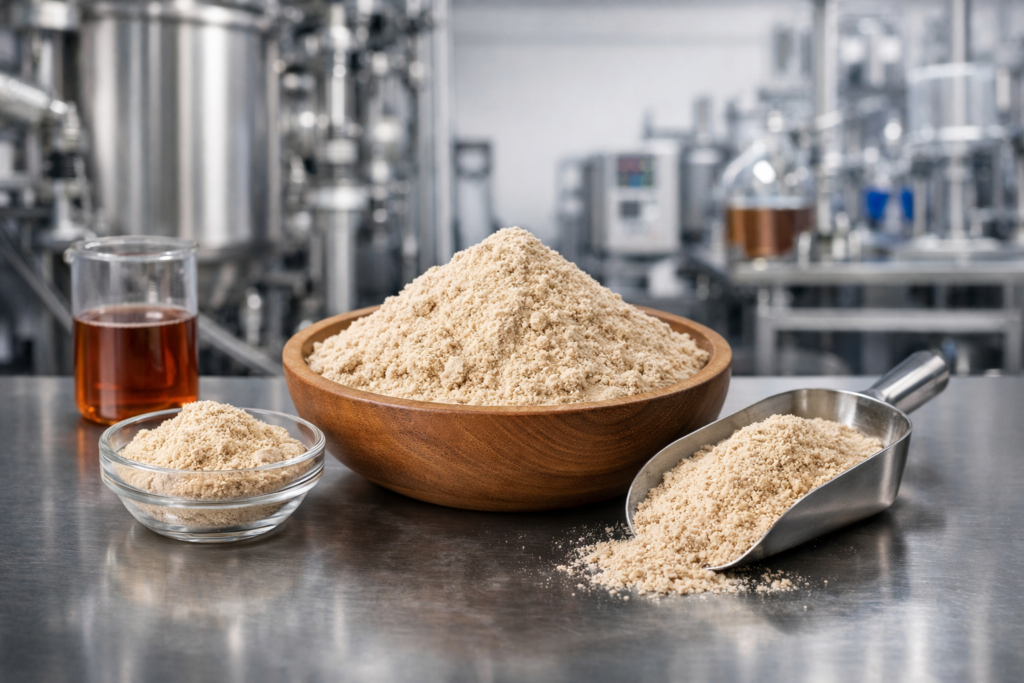


Earthworms aren’t just agricultural heroes. In fact, they’ve been studied extensively for their rich protein content and bioactive compounds. Research shows that earthworm protein can generate small peptides with measurable biological activity, including antioxidant, anti-inflammatory, and enzyme-modulating effects .
That’s not marketing fluff—that’s peer-reviewed science.
Earthworm protein autolysates have also demonstrated immunomodulatory activity in experimental models . While cosmetics don’t make medical claims, this kind of biological relevance matters. It tells formulators one thing: this ingredient is not inert. It interacts.
And in skincare, interaction is everything.
Why Cosmetics? Because Skin Is an Ecosystem
Here’s the thing—skin isn’t just a barrier. It’s a dynamic organ with immune activity, oxidative stress responses, microbiome interactions, and constant repair cycles.
Cosmetic chemists are increasingly borrowing concepts from nutraceutical and pharmaceutical research. If a protein source can yield:
- Antioxidant peptides
- Anti-inflammatory bioactives
- Circulation-supporting components
- Enzyme-active fractions
…then it becomes interesting.
Earthworm protein is particularly rich in amino acids and essential nutrients , which makes it a compelling substrate for peptide production. And as we know from peptide science, smaller peptides often penetrate better and exhibit targeted biological activity.
Sound familiar? That’s the same logic behind collagen peptides, silk peptides, and marine peptides.
1. Antioxidant Potential: A Skincare Staple
Let’s start with oxidative stress.
Free radicals accelerate visible aging—fine lines, dullness, uneven tone. Cosmetic brands are always looking for new antioxidant systems that go beyond vitamin C and E.
Earthworm-derived peptides have been studied for antioxidative activity . In functional ingredient development, antioxidant peptides are particularly valuable because they:
- Neutralize reactive oxygen species
- Support skin barrier resilience
- Enhance overall formulation synergy
For manufacturers, this opens doors to:
- Anti-aging serums
- Barrier-repair creams
- Urban defense skincare lines
And let’s be honest—“bioactive peptide complex” sounds a lot more innovative than “standard antioxidant blend.”
2. Skin Repair and Regenerative Appeal
There’s an interesting narrative around earthworms: their regenerative capacity. While that doesn’t automatically translate to human skin, it has driven scientific curiosity.
Some studies highlight wound-healing and tissue-supporting properties in earthworm extracts . From a cosmetic positioning standpoint, this supports claims such as:
- Skin renewal support
- Post-procedure care formulations
- Recovery-focused skincare
Of course, regulatory compliance matters. But the biological plausibility is there—and brands love ingredients with a strong scientific backstory.
3. Circulation and Microvascular Support—A Niche but Growing Category

This is where things get even more interesting.
Earthworm-derived enzymes, such as fibrinolytic components, have been researched for circulation-related activity . In clinical contexts, these enzymes are associated with thrombolytic effects .
Now, cosmetics cannot claim to dissolve clots. Obviously.
But the idea of supporting microcirculation is highly relevant in:
- Eye creams for dark circles
- Anti-puffiness formulas
- Leg-care cosmetic products
- Scalp vitality treatments
Manufacturers exploring “microcirculation-inspired skincare” are beginning to evaluate protein hydrolysates with enzyme activity as conceptual support ingredients.
It’s subtle. But it’s forward-thinking.
4. Clean Label, High-Protein, Sustainable Narrative
You know what else is driving this exploration? Sustainability.
Earthworms are recognized as efficient biomass converters with high protein content, often ranging above 50% in dry matter . Compared to traditional livestock protein sources, earthworm cultivation requires:
- Less land
- Lower greenhouse gas emissions
- High feed conversion efficiency
And while cosmetics aren’t food, sustainability storytelling crosses categories. Brands increasingly want ingredients that align with:
- Circular agriculture
- Eco-conscious sourcing
- Low environmental footprint
Earthworm protein checks those boxes.
And yes, consumers are more open than you might think—especially when the ingredient is positioned as a purified peptide or bioactive protein complex.
5. Functional Ingredient Innovation in Food and Beyond
Interestingly, earthworm protein peptides are already being explored in food innovation . When an ingredient transitions successfully into food applications, it often signals safety evaluation and process standardization progress.
For cosmetic manufacturers, this means:
- Improved extraction technology
- Refined purification methods
- More stable powder formats
In fact, standardized production processes involve mechanical separation, filtration, low-temperature drying, and sterilization steps —all critical for cosmetic-grade raw materials.
And here’s something practical: a stable, spray-dried or low-temperature dried protein powder integrates far more easily into emulsions and serums than crude extracts.
6. The Peptide Advantage: Small Is Powerful
If you’ve worked with peptides before, you know the appeal.
Small peptides:
- Absorb efficiently
- Exhibit targeted biological activity
- Often require lower inclusion levels
- Support premium positioning
Scientific screening of earthworm protein digestion products has identified multiple short ACE-inhibitory peptides . Again, cosmetics won’t reference ACE inhibition—but the takeaway is this:
These proteins generate functionally active short-chain peptides.
And short peptides are gold in cosmetic formulation.
7. Product Positioning Opportunities for Cosmetic Brands
Let’s get practical.
Where could earthworm protein powder realistically fit in your portfolio?
Potential application formats:
- Anti-aging serums
- Repair creams
- Sensitive skin recovery lines
- Eye contour gels
- Scalp and hair vitality tonics
- Post-treatment soothing masks
It works particularly well in:
- Peptide complexes
- Bioactive blends
- Fermented skincare systems
Honestly, it’s not about replacing collagen or hyaluronic acid. It’s about differentiation.
When everyone uses the same five trending actives, brands need something scientifically grounded—but still novel.
Earthworm protein powder fits that space.
Regulatory and Safety Considerations
Of course, this isn’t a plug-and-play ingredient.
Manufacturers must consider:
- Allergen screening
- Heavy metal compliance
- Microbiological safety
- Regional regulatory frameworks
Standardized sourcing and documented production steps are essential . Suppliers with validated processes and testing reports are non-negotiable for international cosmetic distribution.
But that’s true for any emerging bioactive.
So… Is This Just a Trend?
Maybe. Or maybe it’s early-stage innovation.
Remember when snail mucin sounded strange? Or when marine collagen felt niche? Now they’re mainstream.
Earthworm protein powder sits at that same crossroads:
- Scientifically interesting
- Functionally promising
- Sustainable
- Differentiated
For cosmetic manufacturers willing to explore beyond the obvious, it offers both a technical and marketing edge.
And in a saturated market, that’s valuable.
FAQs About Earthworm Protein Powder in Cosmetics
1. Is earthworm protein powder safe for cosmetic formulations?
When sourced from controlled cultivation and processed through validated production methods , earthworm protein powder can meet cosmetic safety standards. Manufacturers should ensure compliance with microbiological, heavy metal, and allergen regulations in their target markets.
2. What are the cosmetic benefits of earthworm-derived peptides?
Research suggests antioxidant and bioactive peptide activity , which supports potential applications in anti-aging, skin repair, and barrier-support skincare formulations.
3. Can earthworm protein powder be used in anti-aging products?
Yes. Due to its peptide-generating capacity and antioxidant potential , earthworm protein powder can be positioned within advanced anti-aging peptide complexes.
4. How is cosmetic-grade earthworm protein powder produced?
Typical production includes mechanical separation, filtration, low-temperature drying, sterilization, and powder processing , ensuring stability and safety for formulation.
5. Is earthworm protein a sustainable cosmetic ingredient?
Earthworms are high-protein biomass converters with efficient cultivation characteristics , making earthworm-derived protein an attractive option for eco-conscious cosmetic brands seeking sustainable bioactive ingredients.
If you’re a cosmetic supplier or manufacturer exploring next-generation peptide ingredients, earthworm protein powder isn’t just unconventional—it’s quietly compelling.