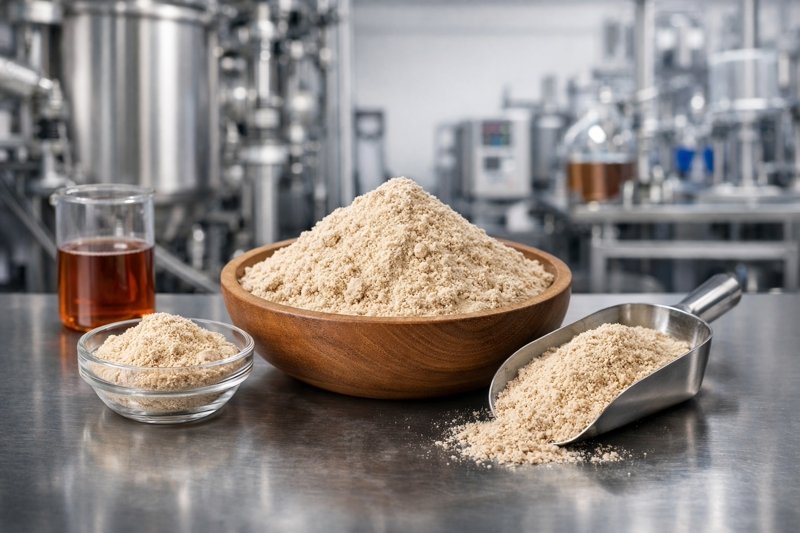
Walk through any ingredient expo, and you’ll notice something pretty fast: everyone says they’re “innovative,” but a lot of products still look the same. Another protein powder. Another capsules-plus-claims formula. Another white-label concept dressed up in new packaging.
That’s exactly why product differentiation matters so much now.
For brands, manufacturers, and wholesalers, the real question isn’t only whether an ingredient works. It’s whether it helps a finished product stand apart in a crowded market. And that’s where earthworm protein powder gets interesting—genuinely interesting, not just brochure-interesting.
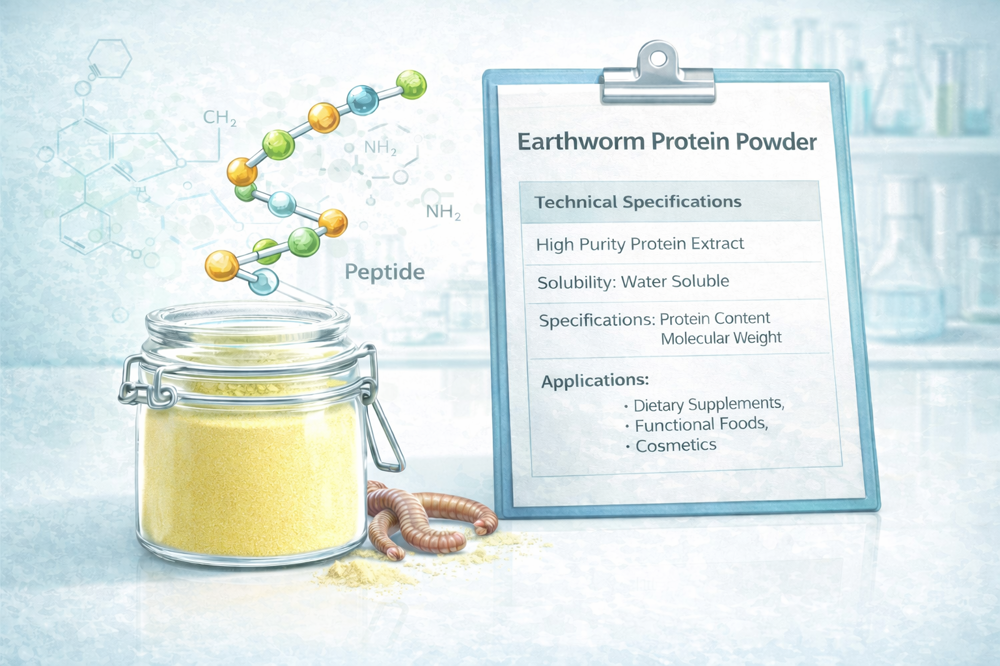
Earthworm protein isn’t simply another protein input. Research and product materials in the files you shared position it as a high-protein raw material with emerging bioactive value, especially after digestion or hydrolysis, where distinct peptide fractions linked with antioxidant, ACE-inhibitory, and immunomodulatory activity have been identified.
That changes the conversation.
Instead of selling “protein,” brands can start selling a more layered proposition: protein plus functional peptide potential, protein plus formulation story, protein plus market novelty. In B2B terms, that gives your product line more room to breathe.
Why ordinary protein positioning often falls flat
Let me explain.
Most protein-based products compete on the usual checklist: protein percentage, flavor, texture, digestibility, price, maybe source. That works in mainstream sports nutrition. It works in mass-market meal replacement. But when you’re trying to build a premium niche in dietary supplements, health ingredients, functional foods, or even adjacent cosmetic concepts, sameness becomes a problem.
Buyers don’t only want “another source of protein.” They want a reason to create a new SKU.
Earthworm protein powder offers that reason because it sits at the intersection of several attractive themes:
novel animal-derived protein, functional peptide potential, traditional-use heritage, and application flexibility. Research in the uploaded papers notes that earthworm protein contains substantial protein content, generally reported around 56–66% dry weight in one study and 60% to above 70% in another, with a favorable essential amino acid profile.
That alone is useful. But honestly, protein content by itself won’t create much differentiation anymore.
The stronger edge comes from what happens next.
The peptide story is where differentiation really starts
Here’s the thing: ingredients get more valuable when they can support more than one product story.
The research shows that earthworm proteins can yield bioactive peptides after gastrointestinal digestion or hydrolysis. That matters because brands can position an ingredient not merely as a nutrient source, but as a precursor to targeted functional compounds.
In the ACE-inhibitory study, seven novel peptides were identified from earthworm protein digestion products: SSPLWER, RFFGP, LERWP, MFPGIADR, FPGIADR, SADRISHGF, and ADRYSSWP. Two of them, SSPLWER and RFFGP, showed the strongest ACE inhibitory activity, with IC50 values of 14.30 ± 0.81 μM and 117.63 ± 0.36 μM respectively. The authors concluded that these peptides were active ingredients behind the hypotensive potential of earthworm-derived protein fractions.
That’s not a generic protein story. That’s a platform story.
In the antioxidant study, researchers identified 6,030 peptide sequences after separation and screened 11 promising candidates. Three peptides—AFWYGLPCKL, WPWQMSLY, and GCFRYACGAFY—showed the best antioxidant activity, with the paper stating that these findings support the use of earthworm proteins as antioxidants in health foods.
And then there’s immune positioning. In the immunomodulatory study, earthworm protein autolysates showed activity in a cyclophosphamide-induced immunosuppressed mouse model, and WNWLLPLMLG emerged as the best immunomodulatory peptide among the tested candidates. The authors specifically stated that this work lays a foundation for applying earthworm protein in functional foods.
So yes, one raw material—but several product routes.
That’s differentiation.
It helps brands build more than one claim direction
A differentiated ingredient gives product developers options. Earthworm protein powder can support several concept territories at once, provided claims stay aligned with local regulations and finished-product evidence.
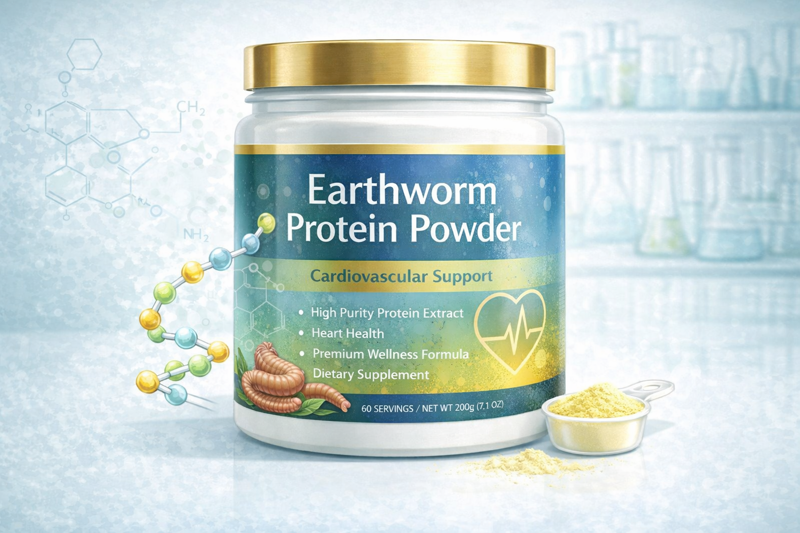
One route is cardiovascular support. The ACE-inhibitory findings make this angle especially relevant for brands working on heart-health positioning, healthy aging formulations, or daily wellness blends designed around blood-pressure-friendly nutrition language rather than drug-style claims.
Another route is antioxidant support. That plays well in functional nutrition, recovery concepts, cell-protection narratives, and beauty-from-within positioning. The antioxidant paper ties earthworm-derived peptides to free-radical scavenging activity and positions earthworm protein as a possible food resource in functional foods.
Then there’s immune-support potential. Post-pandemic, buyers still respond to immune-health ideas, but they want fresh ingredients, not the same old formula stack. Earthworm protein autolysates create room for a more original immune-support ingredient story.
And, maybe a little unexpectedly, that multi-angle potential is exactly what makes an ingredient easier to commercialize across regions. A manufacturer can adapt the same raw material into different positioning frameworks depending on market demand.
That’s efficient. It’s also smart SKU planning.
Novelty matters—when it’s backed by science
Novelty alone can be risky. Sometimes “novel” is just another word for “hard to sell.”
But novelty backed by data? That’s different.
Earthworm protein has a built-in curiosity factor. Buyers notice it because it’s unusual. Formulators remember it because it isn’t the tenth whey alternative they saw that day. And marketing teams can build a stronger narrative around it because there’s an actual scientific trail behind antioxidant, ACE-related, and immunomodulatory peptide research.
That said, this is where good differentiation beats flashy differentiation.
The strongest commercial approach is not to overstate what earthworm protein powder can do. It’s to present it as a high-potential, science-led specialty ingredient with emerging functionality and room for targeted formulation development. That sounds more credible because it is more credible.
And credibility sells better in B2B than hype ever will.
Processing and format flexibility add another layer of value
Differentiation doesn’t happen in marketing alone. It also happens in manufacturing.
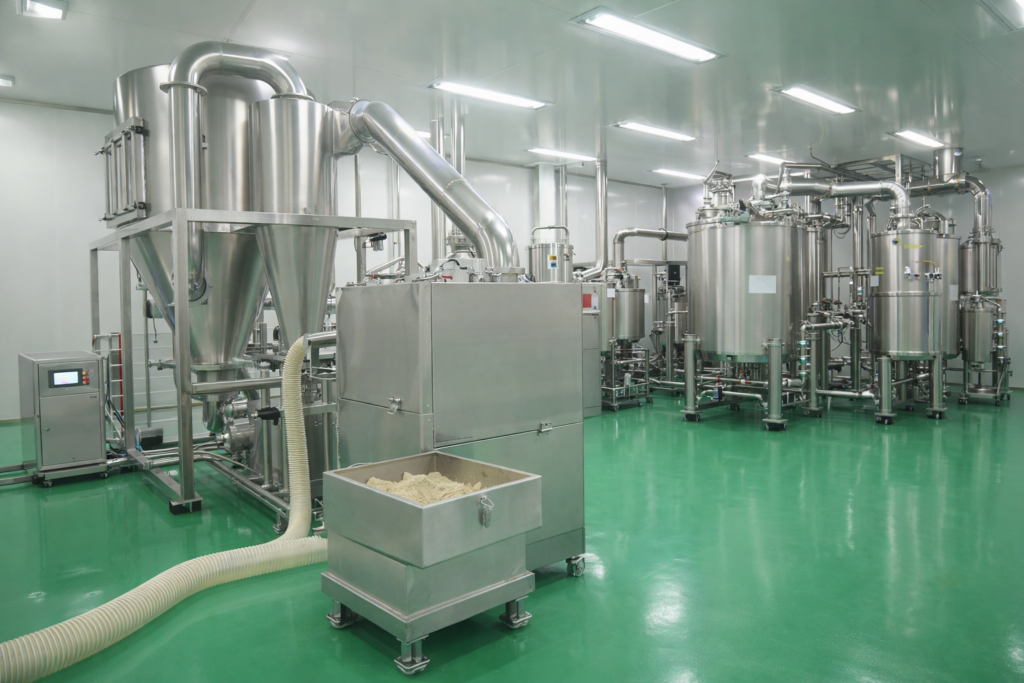
Your uploaded production file describes earthworm protein powder as being made through a process that includes selection, mechanical separation and cleaning, hydrolysis, centrifugation and filtration, low-temperature drying, milling, sterilization, and packaging.
Why does that matter?
Because buyers care about process story. Low-temperature drying sounds different from rough commodity handling. Hydrolysis creates a bridge to peptide positioning. Sterilization and filtration speak to quality control. Even before a customer sees the spec sheet, the production narrative already starts shaping perceived value.
And the product formats look flexible too. One research paper notes that earthworm health foods, earthworm protein powder, pressed tablets, and even oral liquid products have already been developed.
That means the ingredient is not boxed into one dosage form. Capsules, tablets, sachets, powdered blends, functional beverages, or specialty food concepts all become easier to imagine. For a manufacturer or dealer, that opens more sales doors.
It can support premium positioning in several industries
For dietary supplement brands, earthworm protein powder can help create premium formulas that feel less generic and more science-forward.
For nutraceutical ingredient suppliers, it offers a story built around bioactive peptide discovery rather than raw protein alone.
For pharmaceutical ingredient developers, it may be useful as an exploratory functional raw material, especially where peptide research and mechanism-based ingredient selection matter. The review article in your files also summarizes broad pharmacological interest around earthworm extracts and bioactive agents, including antithrombotic, antioxidant, anti-inflammatory, wound-healing, and other effects. Still, those broader pharmacological findings should be used carefully and not treated as direct finished-product proof for every earthworm protein powder application.
For cosmetics suppliers, the antioxidant and healthy-aging angle can be commercially attractive, especially in nutricosmetic concepts where internal wellness and visible vitality are packaged together. Again, positioning should stay evidence-led and compliant—but the conceptual fit is there.
That’s the beauty of a differentiated raw material. It doesn’t force one story. It supports several, without becoming meaningless.
But let’s be honest: differentiation also needs restraint
There’s a small contradiction here.
Earthworm protein powder is distinctive because it’s unusual. But that same unusualness can create buyer hesitation.
Some markets will love the novelty. Others will need more education. Some regulatory environments will be straightforward. Others will ask more questions about source, processing, labeling, and intended use.
So the winning strategy is not to make the ingredient sound exotic for the sake of it. It’s to reduce friction.
Use clean technical documentation. Lead with protein quality and peptide research. Explain the production process clearly. Match product concepts to market expectations. Avoid turning early-stage findings into oversized promises. And where possible, support the ingredient with application-specific testing in your own finished matrix.
That’s how differentiation becomes commercial, not just conceptual.
The real advantage: it helps buyers say, “This isn’t like the others”
You know what buyers really want? Something they can explain quickly.
Earthworm protein powder gives them that.
It is a protein ingredient, yes—but not a plain commodity protein. It has a distinctive source identity, promising peptide-based research, potential relevance across cardiovascular, antioxidant, and immune-support product concepts, and a manufacturing story that can be framed around hydrolysis, purification, and specialty processing.
That combination is exactly what enhances product differentiation.
Not because it’s trendy. Not because it’s shocking. But because it gives formulators, marketers, and sourcing teams more ways to build a product that feels specific, targeted, and hard to copy.
And in a market full of lookalikes, that’s a big deal.
FAQs
1. Why is earthworm protein powder considered a differentiated functional ingredient?
Earthworm protein powder stands out because it combines high protein content with research-backed peptide potential. Studies in the uploaded materials identified antioxidant, ACE-inhibitory, and immunomodulatory peptides derived from earthworm protein, which gives brands more than a basic protein story.
2. Can earthworm protein powder be used in cardiovascular health product development?
It may be relevant for cardiovascular-focused product concepts because researchers identified novel ACE inhibitory peptides from earthworm protein digestion products, including SSPLWER and RFFGP. That said, finished-product positioning should still match local regulatory requirements and formulation evidence.
3. Is earthworm protein powder suitable for antioxidant supplement formulations?
It has promising potential in antioxidant supplement formulations. One study found that earthworm protein digestion products showed antioxidant activity, and peptides such as AFWYGLPCKL, WPWQMSLY, and GCFRYACGAFY were highlighted as strong candidates.
4. What makes earthworm protein powder appealing to nutraceutical manufacturers?
For nutraceutical manufacturers, the appeal lies in its combination of novelty, multi-function research, and flexible product storytelling. It can support premium concepts in functional foods, capsules, tablets, powder blends, and other specialty formats.
5. What should buyers check before sourcing earthworm protein powder for commercial use?
Buyers should review source species, processing method, microbial control, drying method, excipients, target market regulations, and the difference between raw material research and finished-product claims. A strong supplier should be ready with technical documentation and application guidance, not just marketing language.