
Earthworm Peptide Powder for Capsule and Powder Formulations: What Developers Should Evaluate
Earthworm Peptide Powder can be considered for capsule and powder-based dietary supplements, but suitability cannot be determined from the ingredient name alone. Developers must connect supplier information with the intended dosage form and confirm performance using the actual material.
A capsule project may emphasize powder handling, filling behavior, ingredient compatibility, and target quantity. A powder product may place more weight on blend uniformity, sensory properties, and—when mixed with liquid—dispersibility. Developers reviewing Earthworm Peptide Powder should therefore define the finished-product concept first.
Quick Answer: Evaluate the Ingredient Against the Intended Dosage Form
Before approving Earthworm Peptide Powder, review the product specification and available batch COA, inspect a representative sample, and conduct bench testing under the intended formulation conditions. For capsules, focus on handling and filling behavior, compatibility with the other dry ingredients, and reproducibility. For powder blends, also consider mixing behavior, visual uniformity, sensory effects, and dispersibility when the directions for use involve liquid.
Complete water solubility is not a universal requirement. The relevant question is whether the ingredient behaves acceptably in the intended product.
Start With the Ingredient Specification Before Formulation Testing
A supplier specification establishes the framework for sample selection and formulation trials. Developers should identify the parameters that could affect the formula.

Peptide content and protein content help define the material and support comparison between the sample, proposed commercial specification, and later batches. Appearance, odor, moisture, and verified physical information may reveal differences relevant to handling or the finished product. Review parameters with their methods, reporting bases, and acceptance criteria where provided.
Confirm that the sample represents the grade and specification proposed for purchase. A successful trial has limited value if commercial material will differ. For the broader review, use Key Specifications to Check When Sourcing Earthworm Peptide Powder.
Physical Characteristics That Can Affect Development
Before formulation, record color, odor, powder condition, caking, and agglomeration. Note behavior during weighing, transfer, and any planned screening. Particle characteristics and handling may affect blending or filling, but they should be observed or measured rather than assumed.
Use consistent photographs, handling notes, and retained samples to compare development lots. Visible differences do not automatically make a batch unsuitable, but may justify closer review. Physical inspection should be connected to documents and dosage-form testing.
What Developers Should Evaluate for Capsule Formulations
For a capsule project, first define the intended amount of Earthworm Peptide Powder per serving and the other ingredients in the fill blend. This allows the formulator to evaluate the ingredient at a realistic inclusion level rather than as an isolated powder.
During bench work, observe transfer losses, equipment adherence, segregation, and blend consistency. If flow or density affects filling, generate relevant data instead of relying on assumptions. Results may influence excipient selection, blending order, or process settings; capsule size and fill limits require project-specific data.
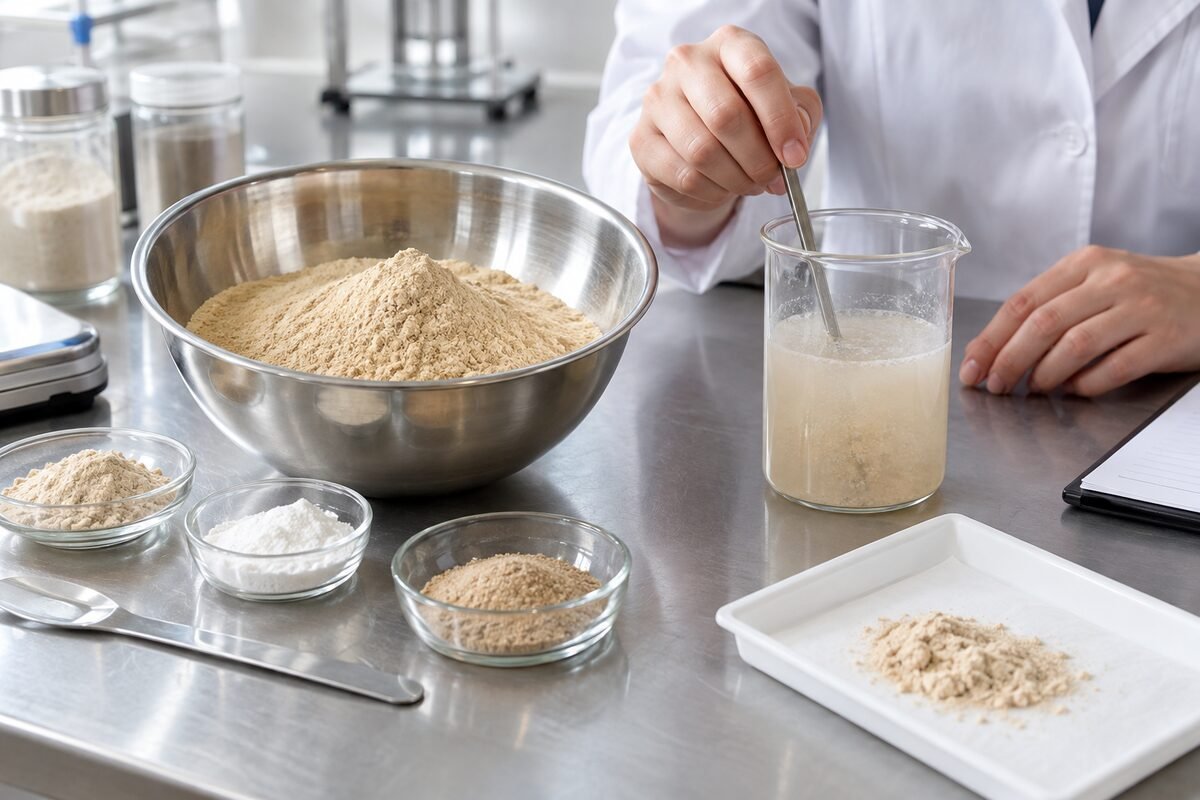
Combine the sample with intended carriers, flow aids, or other actives and assess whether the blend remains manageable. During pilot encapsulation, review fill consistency, handling problems, capsule appearance, and material remaining in the hopper or transfer path.
Solubility may be secondary for a swallowed capsule unless the finished-product design or internal development objectives make it relevant. Capsule approval should not be based on an instant-beverage standard that the product was never intended to meet.
What Developers Should Evaluate for Powder Blends
“Powder formulation” can describe several different products: a dry blend consumed directly, a sachet mixed into food, or a powder intended for water or another liquid. Each format creates a different evaluation target.
For dry blending, assess distribution among ingredients with different characteristics or inclusion levels. Observe streaking, agglomerates, dusting, adhesion, and segregation. Where uniformity is important, use an appropriate sampling and analytical approach.
Evaluate sensory and visual effects at the intended inclusion level. Color or odor may interact with flavors, colors, sweeteners, proteins, minerals, or botanicals.
For liquid preparation, examine wetting, clumping, suspension, sediment, appearance, and sensory profile. Otherwise, those observations may be irrelevant. Use instructions—not the word “powder”—should determine test conditions.

When Dispersibility Matters—and When It Does Not
Dispersibility matters when the finished product must distribute acceptably in the intended preparation medium. It may be important for drink powders, but it is not automatically the primary criterion for capsules or all dry blends. Nor does acceptable dispersion necessarily mean complete molecular solubility.
Test within the actual formula, at the intended concentration and under realistic preparation conditions. Raw-material screening cannot replace finished-formula evaluation. Detailed test design belongs in Earthworm Peptide Powder Solubility and Dispersibility.
Sensory Properties in Capsule and Powder Products
Sensory review should cover color, odor, and taste where tasting is appropriate under the company’s safety and development procedures. Do not assume the ingredient has a neutral flavor, no odor, or easy masking characteristics.
In capsules, the shell limits direct sensory exposure during normal use, although odor and appearance may still affect manufacturing review and the finished product. In powder blends, sensory effects are often more direct. The formulator may need to evaluate interactions with the full flavor system and the appearance of both the dry product and its prepared form.
Record sensory findings under consistent conditions so formula versions and ingredient batches can be compared.
Moisture Handling During Formulation Development
Moisture can change powder condition during sample work, repeated package opening, weighing, blending, and pilot production. Developers should note whether the material cakes, agglomerates, or becomes harder to transfer after exposure under their working conditions. Reseal the package promptly and avoid treating an improperly handled development sample as representative of normal commercial material.
Keep handling comparable across trials. Record opening, resealing, relevant exposure time, and changes in condition. Include extended staging in pilot assessment where applicable. Long-term topics are covered in Stability and Shelf Life of Earthworm Peptide Powder.
Why Batch Consistency Matters for Formulation Reproducibility
A formula developed with one favorable sample may not remain reproducible if later material varies in ways that affect processing or sensory performance. Compare relevant parameters across the development sample, available batch COAs, and pilot or incoming material.
Depending on the project, this comparison may include peptide content, protein content, moisture, appearance, color, odor, physical powder condition, and behavior observed during filling or blending. The objective is not to demand that every batch look and behave identically. It is to understand whether variation within the agreed specification could change capsule filling, powder uniformity, sensory character, moisture handling, or finished-product consistency.

When a difference appears, review material, method, packaging, and handling before changing the formula. Documented conditions help distinguish raw-material variation from process variation.
What to Test With a Representative Sample
A useful dosage-form sample evaluation may include:
- Verification that the sample identity, lot, and specification are documented
- Inspection of color, odor, powder condition, caking, and agglomeration
- Weighing, transfer, and handling observations
- Compatibility checks with the intended formula ingredients
- Bench blending and a relevant uniformity assessment
- Trial capsule filling or powder packing, as applicable
- Sensory evaluation at the intended inclusion level
- Dispersibility evaluation only when relevant to product use
- Comparison of observations with the supplier documents
Keep the sample under controlled, recorded conditions. It should answer formulation questions, not merely provide a visual reference.
From Bench Evaluation to Pilot Formulation
After bench trials, use a pilot representing proposed equipment, batch size, exposure time, and packaging sequence. Scale can change blending, transfer, hold time, and filling performance.
A useful development sequence is:
Supplier document review → specification review → sample receipt → physical and sensory evaluation → bench formulation → capsule or powder-blend testing → relevant dispersibility evaluation → pilot-scale evaluation → batch consistency review → ingredient approval.
This is a practical framework, not a universal regulatory procedure. Adapt it to the product, quality system, market, and process.
Developer Checklist Before Ingredient Approval
Before approving Earthworm Peptide Powder for a capsule or powder product, confirm that:
- The intended dosage form and use conditions are clearly defined.
- The proposed commercial specification matches the material tested.
- The specification and available batch COA have been reviewed by the appropriate R&D and QA functions.
- Physical and sensory observations are documented.
- Compatibility has been evaluated in the complete formula.
- Capsule filling or powder blending has been tested at a relevant scale.
- Dispersibility has been reviewed only to the degree required by the product concept.
- Moisture exposure and development-sample handling have been controlled.
- Potential batch variation has been considered in the approval decision.
- Pilot results and unresolved risks have been documented before commercial production.
FQA
Can Earthworm Peptide Powder be used in capsules?
It can be evaluated as a capsule ingredient, but suitability depends on the target inclusion level, the complete fill blend, handling and filling behavior, supplier specification, and results from bench and pilot encapsulation.
What should developers evaluate before capsule filling?
Review powder condition, handling, compatibility with other ingredients, potential segregation, the intended ingredient quantity, and relevant supplier documents. Then conduct a filling trial rather than assuming performance.
What matters when using it in a powder blend?
Important considerations may include mixing behavior, uniformity, appearance, odor, taste where relevant, moisture sensitivity, compatibility with other powders, and dispersibility if the product will be prepared in liquid.
Does Earthworm Peptide Powder need to be fully soluble?
Not for every application. A capsule or dry powder blend may not require complete water solubility. Developers should define acceptance criteria according to the intended product and directions for use.
Why do sensory properties matter more in powder formulations?
Powder products may expose users directly to the ingredient’s color, odor, and taste. These characteristics can also interact with flavor and color systems in the complete formula.
How can moisture affect formulation handling?
Moisture exposure during weighing, blending, or repeated package opening may contribute to caking, agglomeration, or changes in transfer behavior. Development trials should use controlled and documented handling.
Why should developers review batch consistency?
Variation in composition, moisture, appearance, odor, or physical behavior may affect filling, blending, sensory results, and finished-product reproducibility. Relevant batch information should be connected to formulation observations.
Should developers test a sample before commercial formulation?
Yes. A representative sample allows the team to assess the material within the intended formula and process before a pilot or commercial commitment. Additional common document and product questions are addressed in Allworms FAQs.
Conclusion
Earthworm Peptide Powder should be approved for the dosage form in which it will actually be used. A capsule project and a powder blend may begin with the same supplier documents, but they require different practical tests. By linking specification review, sample observations, bench formulation, pilot performance, and batch comparison, developers can make a more defensible ingredient decision without imposing irrelevant universal standards.

Evaluate Earthworm Peptide Powder for Your Next Formulation?
Contact Allworms to Request Technical Information or a Sample for Development Testing.