Alternative protein isn’t a buzzword anymore. It’s a pressure valve.
Between climate targets, volatile raw material prices, and consumers quietly reading labels more carefully than they admit, the protein conversation has changed. Plant proteins, fermentation-derived proteins, insect proteins—everyone knows the usual cast. But there’s another category that keeps resurfacing in scientific journals and formulation meetings, often spoken about a little more softly.
Yes, that one. And honestly? It deserves a seat at the table.
Before the reflexive eyebrow raise, let’s slow down and look at where this ingredient actually fits, especially for dietary supplement, nutraceutical, pharmaceutical, and cosmetic manufacturers who care less about novelty and more about performance, supply stability, and regulatory logic.
First, the alternative protein market is maturing—and that changes everything
Early-stage alternative proteins were about replacement.
“Can this replace whey?”
“Can this replace soy?”
Now the smarter question is: What does this protein do better than others?
That shift matters.
Organizations like Food and Agriculture Organization have repeatedly highlighted that future protein systems won’t rely on a single source. Instead, we’re moving toward multi-source, function-specific proteins—ingredients chosen not just for nutrition, but for bioactivity, sustainability, and application fit.
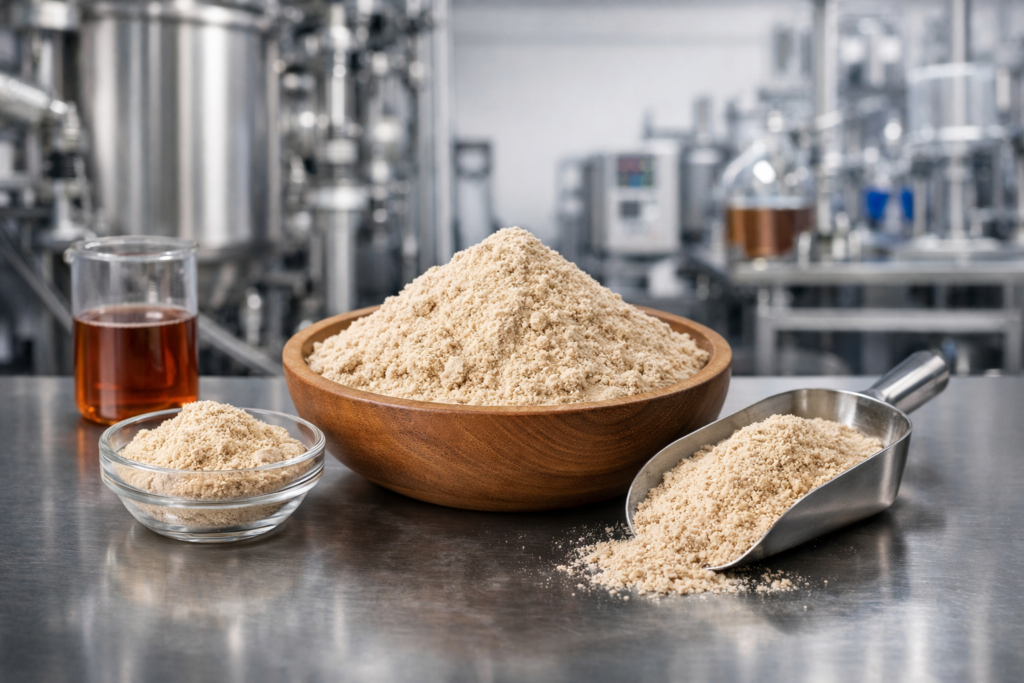
This is where earthworm protein powder quietly becomes interesting.
Earthworm protein isn’t new—it’s just been hiding in plain sight
Here’s the thing people often miss: earthworms have been used in traditional medicine and functional preparations for centuries in parts of Asia. What’s changed is processing technology.
Modern extraction, enzymatic hydrolysis, low-temperature drying, and microbial control have turned what was once a crude raw material into a standardized protein ingredient suitable for industrial use.
From a composition standpoint, earthworm protein typically shows:
- High protein content (often 60–70%+ on a dry basis)
- A complete essential amino acid profile
- Naturally occurring bioactive peptide precursors
- Low fat levels compared with many animal proteins
That combination already separates it from many plant-based alternatives that require heavy fortification or blending.
Why formulators are paying attention (even if marketing teams hesitate)
Let me explain.
For buyers—especially those supplying capsules, tablets, powders, creams, or injectables—the question is rarely “Will consumers love this story?” It’s more like:
- Does it work at low dosages?
- Is it stable across processing conditions?
- Can we get consistent batches year-round?
- Does it support specific health positioning without aggressive claims?
Earthworm protein powder checks more boxes than people expect.
1. A natural bridge between protein and bioactive peptides
Unlike many proteins that are nutritionally complete but functionally passive, earthworm protein breaks down into peptides associated with:
- Cardiovascular support pathways
- Antioxidant activity
- Immune modulation
- Circulation-related mechanisms
That’s why you’ll often see earthworm-derived ingredients discussed alongside enzymes like lumbrokinase—different molecules, same biological neighborhood.
For nutraceutical and pharmaceutical ingredient buyers, this matters. It means one raw material can feed multiple downstream products.
2. Processing efficiency beats perception issues
You know what’s ironic?
Earthworms convert organic matter into protein far more efficiently than cattle, poultry, or even many insects. Their feed conversion ratio is impressive, water use is low, and greenhouse gas output is minimal.
From a sustainability reporting standpoint, this aligns neatly with ESG metrics increasingly demanded by multinational buyers.
And because earthworm farming can be vertically integrated and geographically flexible, supply chains tend to be less exposed to global feed price shocks.
That’s not sexy copy. But it’s music to a procurement director’s ears.
Cosmetics and topical formulations: an underrated use case
Here’s a small digression—stay with me.
In cosmetics, proteins aren’t about macros. They’re about skin feel, signaling, and protection.
Hydrolyzed earthworm protein and peptide fractions have been explored for:
- Skin barrier support
- Antioxidant defense against environmental stress
- Conditioning effects in serums and creams
The amino acid composition—rich in glycine, alanine, and proline—fits surprisingly well with skin-related formulations. And because usage levels are low, sourcing concerns become even less of an obstacle.
In short, the cosmetics industry doesn’t care where a protein comes from—only what it does once it’s there.
Regulatory reality: less dramatic than you’d think
One common misconception is that earthworm protein sits in a regulatory gray zone everywhere. That’s not entirely true.
- In parts of Asia, earthworm-derived ingredients are already recognized within food or traditional-use frameworks
- In Western markets, classification often depends on processing method, purity, and intended use, not the source alone
- For supplements and cosmetics, ingredient documentation and safety data matter more than consumer familiarity
In practice, earthworm protein powder behaves more like any other novel protein ingredient navigating regional approval pathways.
No shortcuts. But no brick walls either.
How it fits into the future—not as a replacement, but as a specialist
Let’s be clear: earthworm protein powder isn’t here to replace whey, soy, or pea protein in mass-market shakes.
That’s not the point.
Its future role looks more like this:
- Functional protein source for targeted health applications
- Precursor material for bioactive peptide and enzyme extraction
- Sustainable protein option for brands under environmental pressure
- Formulation enhancer in supplements, pharma, and cosmetics
Think of it less as a headline ingredient and more as a quiet workhorse—the kind formulators rely on while marketing teams talk about something else.
And honestly? That’s often where the best margins live.
A quick note on perception—because it always comes up
Yes, consumer acceptance varies by region. No argument there.
But ingredients don’t live on Instagram. They live in spec sheets, COAs, and long-term supply contracts.
What happens at the ingredient level today often shapes what becomes “normal” five or ten years from now. Insects followed this path. Fermentation proteins did too.
Earthworm protein powder is simply earlier in that curve.
Final thoughts: the future of protein is plural
The alternative protein conversation has outgrown binary thinking. It’s no longer plant or animal, natural or engineered, familiar or novel.
It’s all of it. Purpose-built.
Earthworm protein powder fits into that future not because it’s strange—but because it’s efficient, functional, and quietly versatile. For manufacturers who care about performance first and storytelling second, that’s a compelling place to be.
And if you’re already sourcing enzymes, peptides, or specialized proteins?
You’re probably closer to this ingredient than you think.
FAQs: Earthworm Protein Powder and Alternative Proteins
1. Is earthworm protein powder suitable for dietary supplements?
Yes. When properly processed and standardized, earthworm protein powder is used as a functional protein ingredient and peptide precursor in dietary supplement formulations.
2. How does earthworm protein compare nutritionally to plant proteins?
Earthworm protein offers a complete amino acid profile and higher digestibility than many single-source plant proteins, often without requiring blending.
3. Is earthworm protein considered a sustainable protein source?
From a production standpoint, earthworm farming shows high feed efficiency, low water use, and minimal greenhouse gas emissions compared with conventional livestock.
4. Can earthworm protein be used in cosmetic formulations?
Hydrolyzed earthworm protein and peptide fractions are explored in cosmetics for skin-conditioning and antioxidant-related functions at low inclusion levels.
5. What industries are currently using earthworm protein powder?
It is mainly used in nutraceuticals, dietary supplements, pharmaceutical research, functional foods, and cosmetic ingredient development rather than mass-market food products.