
Before you compare quotes, request samples, or talk about MOQs, it helps to know what you’re really buying. Lumbrokinase is not a generic commodity ingredient. It sits in that awkward, high-stakes middle ground—part bioactive enzyme, part processing challenge, part regulatory puzzle. And that means a supplier can look polished on paper while still leaving you with formulation headaches, documentation gaps, or a product that simply doesn’t perform the way you expected.
So let’s set the table first.
Quick outline
- Why supplier questions matter more with lumbrokinase than with ordinary protein ingredients
- The core technical questions around source, activity, purity, and manufacturing
- The practical B2B questions on testing, traceability, specs, and supply continuity
- The regulatory and application questions buyers often forget to ask
- A short FAQ for sourcing teams and brand owners
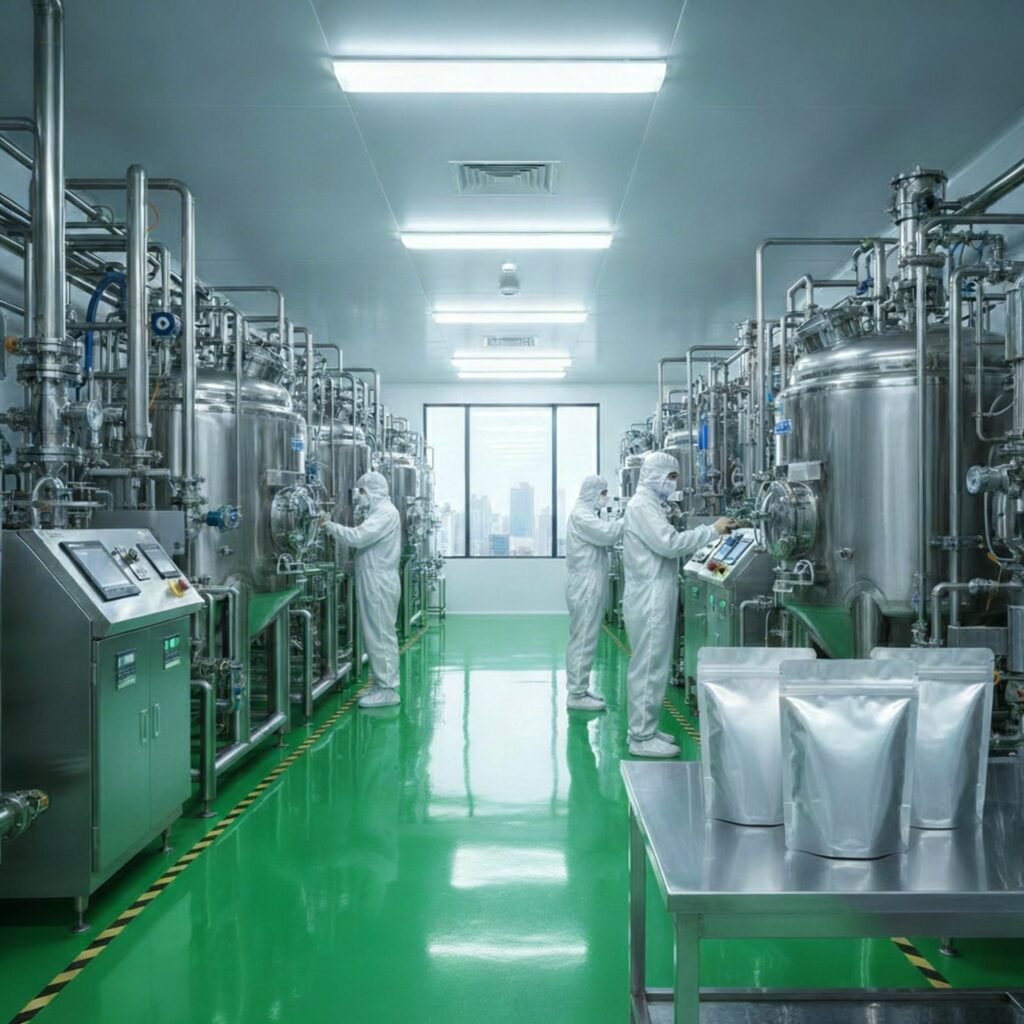
Why this ingredient needs tougher questions
Here’s the thing: lumbrokinase is usually discussed for its fibrinolytic activity, and that immediately changes the buying conversation. You are not only sourcing a powder. You are sourcing biological activity, process consistency, documentation quality, and risk control.
That’s why the right supplier discussion should feel less like buying starch or collagen, and more like auditing a sensitive fermentation or enzyme project. A good lumbrokinase supplier should be able to explain the source material, activity assay, purification logic, contaminant controls, and batch release standards in a calm, specific way—not with vague marketing phrases.
The literature around earthworm-derived bioactives also shows why buyers need to separate promising science from sales overreach. Reviews describe lumbrokinase as one of the key fibrinolytic bioactive components in earthworm extract, with antithrombotic and thrombolytic interest, while also stressing the importance of mechanism, extraction, safety, and clinical translation rather than broad claims alone. Research on earthworm protein has also identified other peptide fractions with antioxidant, ACE-inhibitory, and immunomodulatory potential, which is interesting—but it also reminds buyers that not every earthworm-derived product is the same thing as lumbrokinase.
And honestly, that distinction matters a lot.
Start with the obvious one: What exactly is your lumbrokinase?
This sounds basic, but it’s where many sourcing mistakes begin.
Ask the supplier to define the ingredient plainly:
Is it purified lumbrokinase, a broader earthworm enzyme complex, an earthworm protein powder, or an earthworm peptide product? These are not interchangeable.
Some supplier materials blur the line between earthworm protein, earthworm peptides, and lumbrokinase because they all come from related raw material streams. But the manufacturing flow, expected activity, application range, and documentation profile can differ sharply. One production document in your materials, for example, describes a general earthworm protein powder process involving selection, cleaning, separation, washing, centrifugation, low-temperature drying, sterilization, and packaging. That is useful background, but it is not by itself proof of lumbrokinase standardization.
So ask:
What is the exact product category?
What is the standardized active component?
What percentage of the finished powder is enzyme-active fraction?
Is the product positioned for dietary supplements, nutraceuticals, or some other channel?
If the answer wanders, that’s your signal.
What is the source species, and how do you control raw material variation?
Not all earthworm-derived materials are created equal. Species, breeding conditions, feed environment, and harvesting practices can affect composition, contamination risk, and downstream reproducibility.
The research files show multiple species discussed across the earthworm literature, and that alone should tell buyers not to assume “earthworm extract” is a uniform raw material class. You already have one production file specifying raw material as “太平2号”赤子爱胜蚓 for earthworm protein powder. That kind of detail is useful. A serious supplier should be able to provide the same level of specificity for lumbrokinase.
Ask:
Which earthworm species do you use?
Is your raw material farmed or wild-collected?
How do you control feed, soil exposure, and environmental contaminants?
Do you have a written raw material acceptance standard?
Can you provide traceability from finished batch back to source lots?
This is not just paperwork theater. Earthworms are biological concentrators in messy environments. If the upstream controls are weak, you may inherit heavy metal, microbial, or residue issues later.
How do you measure activity, and which unit should I care about?
Now we get to the heart of it.
For lumbrokinase, activity matters more than headline purity alone. A bright-looking powder with weak or inconsistent enzyme activity is not much help in a finished product. At the same time, activity numbers are only meaningful when the assay method is clear.
So ask:
Which assay method do you use for activity testing?
Is the method validated internally or by a third party?
What unit do you report—U/mg, FU, or another activity unit?
Are your CoA values based on finished powder or an intermediate?
What is your acceptable batch-to-batch variance?
This question is especially important because earthworm-derived products in the broader category are tested with very different frameworks depending on whether the target is fibrinolytic activity, ACE inhibition, antioxidant behavior, or immunomodulatory performance. If a supplier cannot explain why their chosen lumbrokinase assay reflects the intended application, you may be comparing apples to socket wrenches.
And yes, that happens more than buyers like to admit.
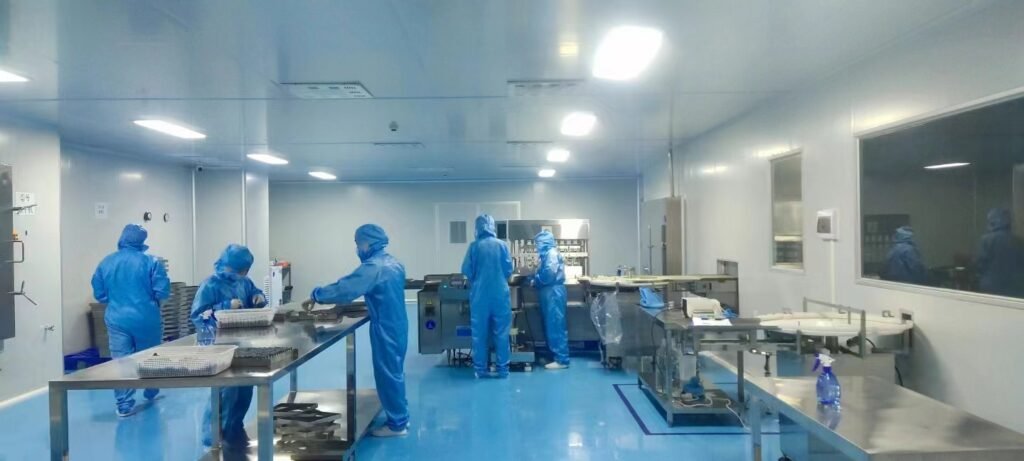
Can you explain your manufacturing process without hiding behind buzzwords?
You do not need every trade secret. You do need process clarity.
A capable supplier should at least explain the process stages at a high level: raw material preparation, extraction, separation, purification, concentration, drying, microcontrol, and batch release. The manufacturing notes in your files show how much process conditions can shape the final material. Even for non-lumbrokinase earthworm proteins, extraction conditions, digestion steps, separation columns, and drying choices were central to the final bioactive profile.
Ask:
Is the material extracted by water, buffer, enzymatic hydrolysis, or another system?
What purification steps are used?
How do you protect enzyme activity during processing and drying?
Do you use carriers such as maltodextrin or starch?
What is your control strategy for temperature and moisture?
This matters because an enzyme ingredient can lose value quietly. Maybe the assay still passes at release, but stability falls off in storage. Maybe the powder looks fine, but formulation compatibility gets worse because of hidden carriers or residual non-active protein.
What does your specification sheet include beyond the marketing highlights?
A real spec sheet should be boring in the best possible way. Clear. Tight. Complete.
At minimum, ask for:
activity specification, appearance, odor, solubility or dispersibility notes where relevant, loss on drying, ash, protein if applicable, microbial limits, heavy metals, carrier declaration, allergen statement, solvent statement, irradiation status, GMO status, and storage conditions.
This is where many buyers catch gaps. Some suppliers spotlight activity, then go strangely quiet on moisture, total plate count, yeast and mold, lead, arsenic, cadmium, mercury, or residual process aids. That is not a small omission.
Your uploaded materials note that earthworm-derived ingredients are rich in protein and bioactives, but also that inorganic elements and multiple bioactive classes may be present in extracts depending on process and fraction. That is another reason the spec should show what has been controlled out, not only what has been kept in.
What contaminant testing do you perform on every batch?
This question should be direct and non-negotiable.
Ask for batch-level testing on:
heavy metals, microbial contamination, pathogens, and any other region-specific risk markers relevant to your market. Depending on the positioning and geography, you may also ask about pesticide residues, veterinary drug residues, PAHs, dioxins, or other environmental contaminants.
Why so strict? Because earthworm-based raw materials sit close to the interface between biology and environment. If the supplier’s contaminant control is weak, the risk profile can escalate fast.
Ask:
Which contaminants are tested every batch, and which are tested periodically?
Do you use ISO 17025-accredited labs?
Can you share recent batch CoAs and full reports, not just a summary table?
What are your action limits and rejection criteria?
A polished PDF with one green checkmark is not enough.
How stable is the ingredient in real storage and real formulations?
This one gets overlooked all the time.
A lumbrokinase supplier may give you a shelf life, but you need to know what that shelf life really means. Does the activity remain within spec for the full claimed period? Under what packaging? At what temperature and humidity? Is the claim based on real-time data, accelerated data, or both?
Ask:
What stability data do you have for unopened bulk material?
How much activity loss occurs over time?
What packaging system do you recommend?
How does the ingredient perform in capsules, tablets, sachets, or blended powders?
Are there known incompatibilities with excipients, minerals, acids, or heat-intensive processing?
This is especially important for brands planning tablets or complex blends. Enzymes do not love abuse. Compression force, moisture pickup, and thermal exposure can all turn a promising ingredient into a frustrating launch delay.
What documentation can you provide for quality and compliance?
You want a supplier who can send documentation quickly, consistently, and without drama.
Ask for:
CoA template, specification sheet, TDS, SDS, allergen statement, non-GMO statement where relevant, irradiation statement, residual solvent statement where relevant, heavy metals report, microbiological report, manufacturing flow chart, shelf-life statement, packaging spec, and quality certifications.
Also ask:
Do you manufacture under GMP?
Which audits or certifications do you hold?
Can you support customer questionnaires and vendor qualification packages?
Do you have change control procedures?
Here’s the practical truth: sometimes the ingredient itself is decent, but the documentation support is weak. For B2B buyers, that is still a problem. A lot of a problem, actually.
Have you generated application data, or only raw ingredient data?
A supplier who understands downstream use is usually easier to work with.
Ask:
Do you have guidance for capsule filling, tablet compression, or powder blending?
Can you recommend target loading ranges?
Have you tested flowability, bulk density, or hygroscopicity?
Can you share pilot data or customer-side application experience in anonymous form?
Research in your files shows earthworm-derived protein fractions have been examined through digestion models, chromatography, activity screening, and structure-activity analysis. That kind of scientific depth should translate, at least partly, into supplier literacy about formulation behavior. If a supplier only repeats “high activity, high purity, wide application,” press further.
Because wide application is not a data point.
What claims do you support, and what claims do you avoid?
This question can save a lot of future pain.
A responsible supplier should distinguish between ingredient characterization, published research, and finished-product claims. The review literature on earthworm extract discusses antithrombotic, antioxidant, antimicrobial, anti-inflammatory, and other pharmacological interests, while also emphasizing ongoing research and clinical translation questions. That is not the same as a free pass for aggressive market claims.
Ask:
How do you position the ingredient in supplement markets?
What technical structure-function language do you support?
Which claims do you explicitly avoid?
Can you provide claim substantiation packets based on published literature and product identity?
If the supplier casually promises disease outcomes in export markets, take a step back. A big step.
What is your batch size, lead time, and continuity plan?
Now we leave the lab and enter the real world.
Ask:
What is your standard batch size?
What is your normal lead time?
Do you keep safety stock?
Can you reserve production capacity for forecasts?
What happens if raw material supply tightens?
How do you manage lot consistency across scale?
A supplier may impress you scientifically and still disappoint you operationally. For growing brands, that mismatch hurts. You do not want to reformulate or relabel because one supplier cannot maintain supply rhythm.
Can you provide samples from multiple lots, not just one “golden batch”?
This question separates serious sourcing from wishful sourcing.
Request:
a current production lot sample, a second lot if available, and matching CoAs. If possible, ask for retained data showing historical variance. One beautiful sample means very little without context.
Consistency is the game. Always has been.
A smart buyer’s short checklist
Before choosing a lumbrokinase supplier, make sure you can answer these questions with evidence, not optimism:
- What exactly is the ingredient identity?
- Which species and raw material controls are used?
- How is fibrinolytic activity measured?
- What purification and drying steps protect activity?
- What does the full spec sheet include?
- Which contaminants are tested every batch?
- What stability data supports the shelf life?
- What compliance documents are available?
- Can the supplier support your actual dosage form?
- How consistent are lots across time?
If even two or three of those answers are fuzzy, pause the deal.
Final thought
Buying lumbrokinase well is not about finding the cheapest kilogram. It is about finding a supplier who can explain the science, prove the quality, support the paperwork, and stay consistent when your purchase orders get bigger.
That may sound demanding. It is demanding. But with an enzyme ingredient like this, demanding is good. Demanding keeps your formulation cleaner, your QA team calmer, and your customers better protected.
And really, that’s the point.
FAQs
1. What is the most important question to ask a lumbrokinase supplier first?
Start with ingredient identity. Ask whether the product is purified lumbrokinase, an earthworm enzyme complex, or a broader earthworm protein ingredient. That one answer shapes how you evaluate activity, purity, compliance, and application fit.
2. How do I compare lumbrokinase suppliers fairly?
Use the same framework for each one: source species, activity assay method, activity unit, contaminant testing, stability data, documentation package, and batch consistency. Comparing only price per kilogram usually leads to poor sourcing decisions.
3. Why does the activity assay matter so much for lumbrokinase sourcing?
Because lumbrokinase is bought for functional enzyme performance, not just protein content. A supplier should clearly explain the fibrinolytic activity method, the reported unit, and acceptable batch variance so buyers can judge real performance.
4. What documents should a professional lumbrokinase supplier provide?
At minimum, ask for a specification sheet, CoA, TDS, SDS, microbiological report, heavy metals report, allergen statement, non-GMO statement where relevant, irradiation statement, shelf-life statement, and manufacturing flow chart.
5. What red flags should buyers watch for when sourcing lumbrokinase powder?
Watch for vague source information, unclear activity units, missing contaminant data, unstable specs, exaggerated health claims, and suppliers who cannot explain their process or provide batch-level quality records. Those are common warning signs in the lumbrokinase supplier evaluation process.