
Putting lumbrokinase and nattokinase together in one supplement raises two questions for a development team. Is there sufficient safety evidence for the exact combination under its proposed conditions of use? Can the manufacturer verify what each enzyme contributes after blending, processing, and storage? Answer both before committing to a commercial formula. Separate ingredient studies and supplier certificates of analysis are starting points. The finished blend needs its own assessment.
This guide is for supplement brands, contract manufacturers, and R&D, QA, and sourcing teams reviewing a dual-enzyme concept. If your team is still deciding which enzyme to source, start with the Lumbrokinase vs Nattokinase comparison guide.
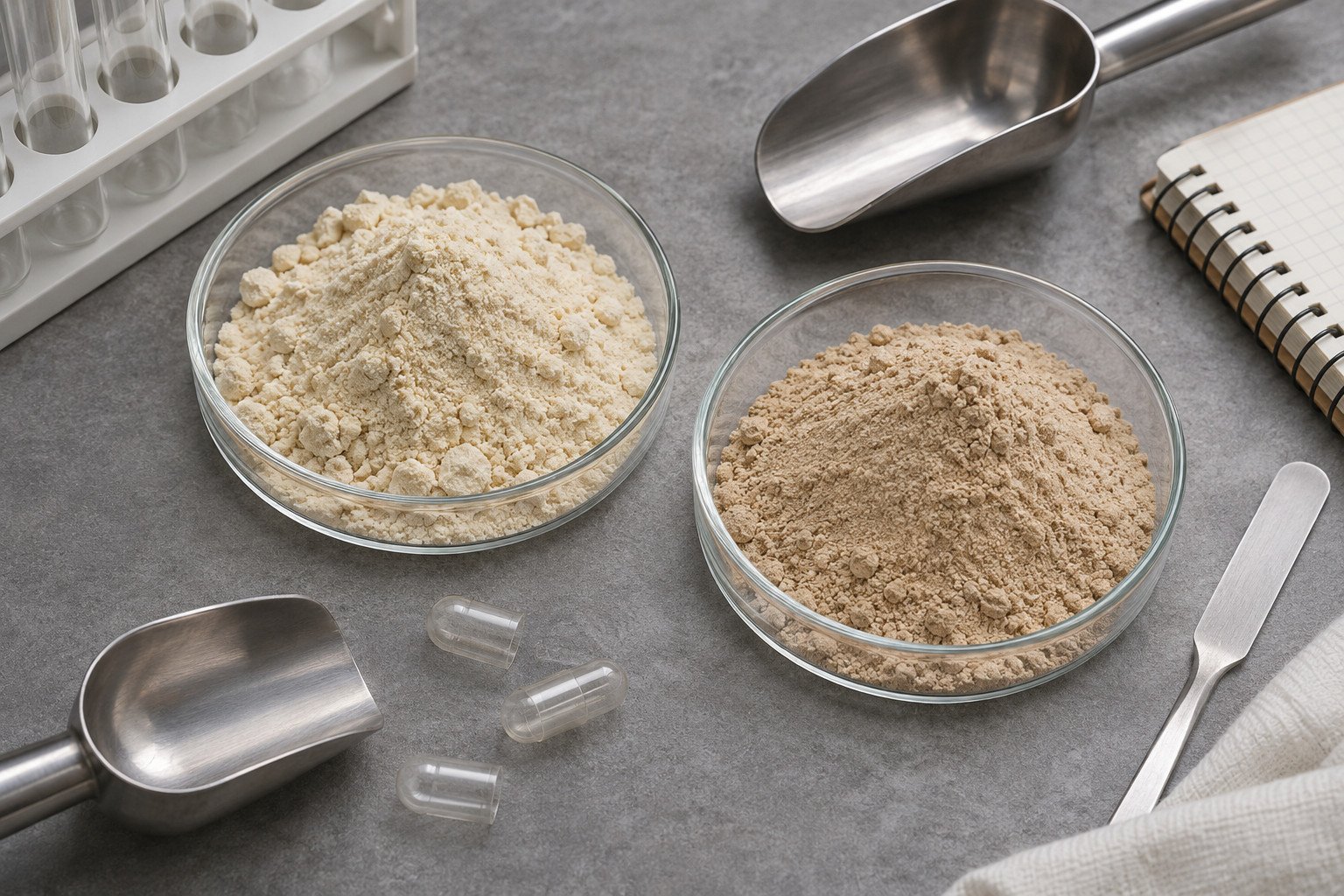
Start With the Exact Product Concept
Define both commercial preparations, the proposed amounts and activity declarations, the dosage form, the intended population, and the intended market. Record the expected conditions of use and any other active ingredients in the formula. The safety reviewer and analytical laboratory should work from the same version of the product brief. Changing a supplier, adding another active ingredient, or moving from a capsule to a powder can change what that review needs to cover.
Lumbrokinase is an earthworm-derived enzyme preparation. Nattokinase is a fermentation-derived enzyme associated with natto. For each preparation, obtain the source, full composition, carrier or diluent information, and relevant allergen documentation from its supplier. If the nattokinase is produced using a soy-derived medium, ask what documentation supports the allergen assessment for the ingredient as supplied. The What Is Lumbrokinase? B2B supply guide provides background on lumbrokinase identity and documentation.
What Does the Safety Evidence Say About Combining Them?
The published sources reviewed for this article include human studies of individual preparations and a case report involving nattokinase and aspirin. The review did not identify a controlled human study establishing the safety of a finished supplement containing both enzymes under the conditions a brand would propose for its product. The incidence or magnitude of any bleeding risk from the two-enzyme combination therefore remains uncertain. pubmed.ncbi.nlm.nih.gov

A safety and tolerability study in healthy adults evaluated DLBS1033, a specific lumbrokinase preparation. A systematic review of randomized nattokinase trials examined cardiovascular risk factors in the populations and preparations studied. To judge whether either source is relevant to your concept, record the tested preparation, exposure, study duration, eligibility criteria, and how adverse events were assessed. Those details determine how far the findings can inform a different ingredient or a combined formula. pubmed.ncbi.nlm.nih.gov
One published case report describes a cerebellar hemorrhage after nattokinase use in a patient taking aspirin who had cerebral microbleeds. The case provides a reason to examine medication interactions and bleeding risk during product review. A single report cannot establish causation or estimate how often an event might occur, and the exposure described did not include lumbrokinase. pubmed.ncbi.nlm.nih.gov
Have a qualified safety reviewer document the relevance of bleeding history, anticoagulant or antiplatelet use, and planned procedures to the intended population. Record whether available evidence covers those situations, which populations were excluded from relevant studies, and what gaps remain. Any proposed warning or restriction should follow from that review. If a material gap remains, hold the concept at evaluation or revise it and reassess the new version. pubmed.ncbi.nlm.nih.gov
Keep the Two Activity Specifications Separate
Allworms’ current commercial lumbrokinase specification is fibrinolytic activity ≥10,000 IU/mg by Fibrin Plate Assay. This is a raw-material acceptance specification. Keep the nattokinase supplier’s activity value, unit, and test method on a separate line, alongside its batch result. For both ingredients, retain the reporting basis and ask how the laboratory defines the unit, which substrate and reference it uses, and how it calculates the result.
A lumbrokinase value reported in IU/mg and a nattokinase value reported in FU belong to their respective test systems. Adding the numbers gives the formulation team no defensible total potency. A conversion also requires a validated comparable basis that accounts for method, substrate, reference standard, reporting basis, and test conditions. See the Lumbrokinase Activity Units guide for the distinctions among IU/mg, FU/g, LKU, and U. A measurable response in a laboratory blend likewise cannot establish a synergistic effect in people.
Ask the Laboratory What It Can Measure in the Blend
Give the laboratory the full formula and both supplier methods before the pilot batch. Ask whether either method responds to the other enzyme and whether the capsule fill, coating, carrier, or other ingredients interfere with sample extraction or the assay readout. A method suitable for a raw material can behave differently when both enzymes and the rest of the formulation are present.
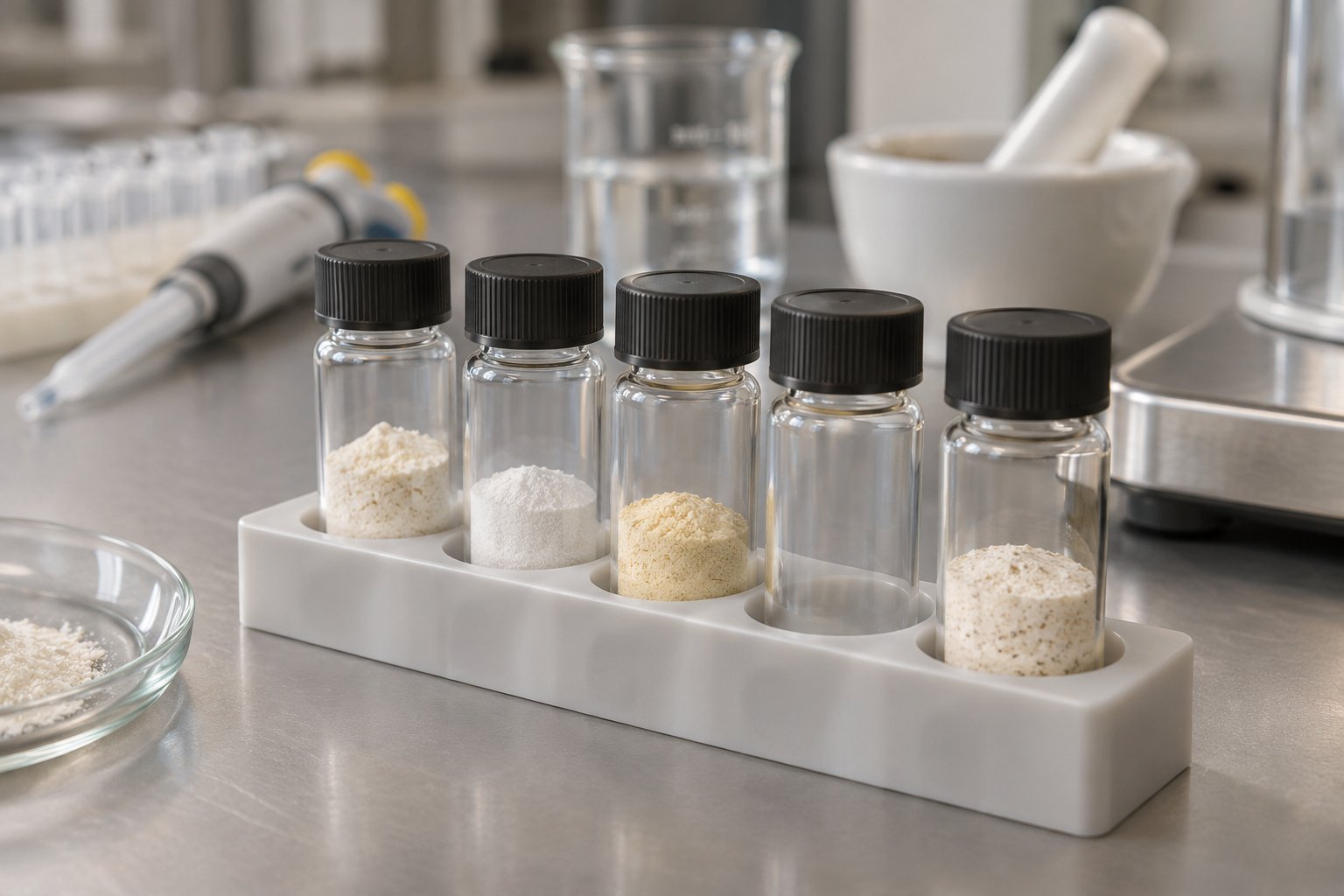
| Test material | Question it helps answer |
|---|---|
| Each enzyme preparation on its own | What response does each ingredient give under each proposed method? |
| Formula base containing neither enzyme | Do excipients or other active ingredients contribute a background response? |
| Formula base with one enzyme at a time | Can the laboratory recover the expected signal in the presence of the other formula ingredients? |
| Complete blend and finished dosage form | Can the laboratory distinguish and measure each activity after blending and processing? |
| Stored finished units in intended packaging | Can the method track activity over the proposed shelf life? |
Agree on the acceptance criteria and reporting format before sending samples. For example, if the full blend gives a strong fibrin-based signal but the method cannot distinguish the enzymes, the result leaves open whether one enzyme lost activity while the other continued to drive the response. Resolve that limitation before using the result to support two separate activity declarations. QA and the laboratory should document what the chosen test can verify and how the rest of the finished-product specifications will be assessed. govinfo.gov
Verify the Formula Through Manufacturing and Storage
Use the intended commercial ingredient grades and a representative manufacturing process for the pilot. Map where either enzyme may encounter heat, moisture, extended hold times, or contact with other ingredients. Pull samples where they can tell you whether an activity change appeared during blending, after filling or compression, or during storage. The Allworms guide to lumbrokinase formulation considerations covers general dosage-form and handling questions.
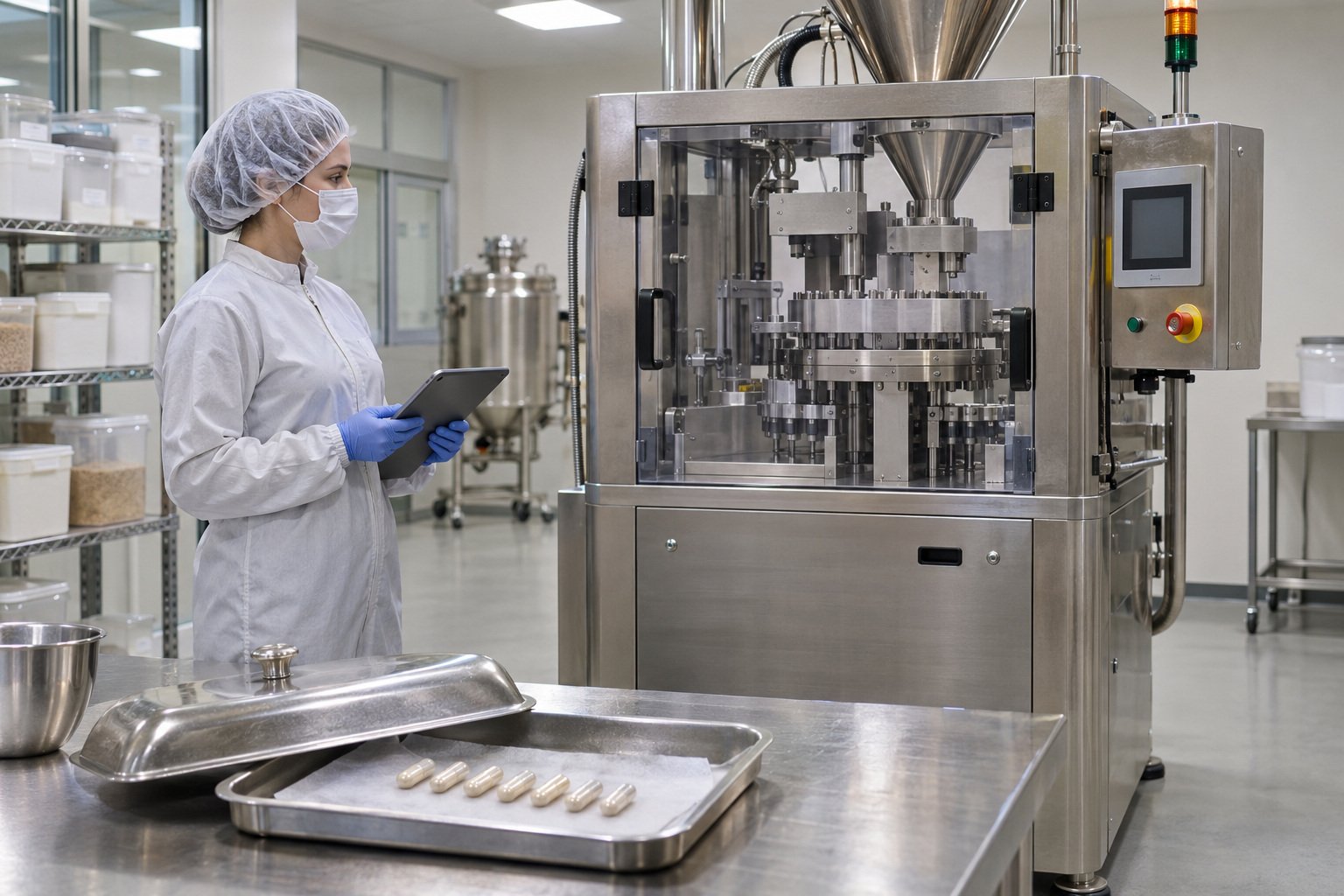
Plan sampling around the production run. A composite sample can help estimate average activity while masking uneven distribution across individual units. Where distribution is a concern, determine which locations or stages to sample, what to measure, and how results will be interpreted. Record the raw-material lots, processing conditions, packaging, and sample locations so a follow-up run can investigate an unexpected result.
Set stability criteria for the packaged product and specify when each attribute will be tested. A passing result immediately after manufacture covers that time point. Storage results in the intended packaging are what support an activity declaration across the proposed shelf life. Revisit the evidence if the bottle, closure, desiccant, dosage form, or storage conditions change.
Review the U.S. Label and Release Criteria Together
Ask regulatory and QA teams to review the formula, draft Supplement Facts panel, and proposed marketing language side by side. Confirm ingredient identity, applicable labeling requirements, and the documentation behind any activity statements. Have the regulatory team assess whether a new dietary ingredient notification is required for the exact preparation and intended conditions of use. A separate review is needed for each market where the brand plans to sell. LII / Legal Information Institute
Keep three records distinct during approval. The raw-material specification defines what the supplier is expected to deliver. The batch COA records the supplier’s results for a particular lot. The finished-product specification defines what the manufactured supplement must meet. For U.S. dietary supplement manufacturing, that last specification covers identity, purity, strength, composition, and relevant contaminant limits. Assign responsibility for approving results and investigating failures before the contract manufacturer receives a production order. govinfo.gov
Decide Whether the Concept Is Ready to Advance
Before authorizing commercial production, confirm that the safety reviewer has assessed the exact proposed combination and intended population, and that regulatory review covers the intended market. Check that QA can trace both raw-material lots, the lab can support the activity statements the brand plans to make, and the pilot and stability data support the approved product specifications. Define which supplier, process, or packaging changes would trigger a new review. This gives procurement a concrete basis for deciding whether a replacement ingredient or material change needs requalification.
Frequently Asked Questions
Can separate safety studies support a supplement containing both enzymes?
They can help identify which preparations and populations have been studied and which risks deserve review. Their relevance depends on how closely the materials and conditions match the proposed product. The published evidence reviewed here leaves the safety of the specific two-enzyme combination unresolved. pubmed.ncbi.nlm.nih.gov
Can one finished-blend assay verify both activity declarations?
Only if the method has been shown to distinguish and measure each activity in the finished matrix. If it measures a shared response, describe the result within that method’s limits and resolve the gap before relying on it for two separate declarations.
What lumbrokinase documents should a brand request first?
Request the current specification, a COA for the lot under evaluation, and any available third-party activity report. Check the lot identity and assay basis before using a report to inform pilot testing or purchasing criteria.
Request the Current Lumbrokinase Specification
Contact the Allworms Lumbrokinase Powder team for the current specification, relevant batch documentation, and available third-party activity data for your ingredient review.