
Outline
- Why lumbrokinase keeps showing up in serious ingredient conversations
- What lumbrokinase is, and why buyers treat it as a premium functional enzyme
- The market logic: why global brands care about it now
- What makes it commercially valuable across supplements, nutraceuticals, pharma, and adjacent sectors
- Product development realities: format, sourcing, quality, and positioning
- Regional market fit and what B2B buyers usually evaluate first
- Why the ingredient story matters almost as much as the ingredient itself
- Closing thoughts
- FAQs
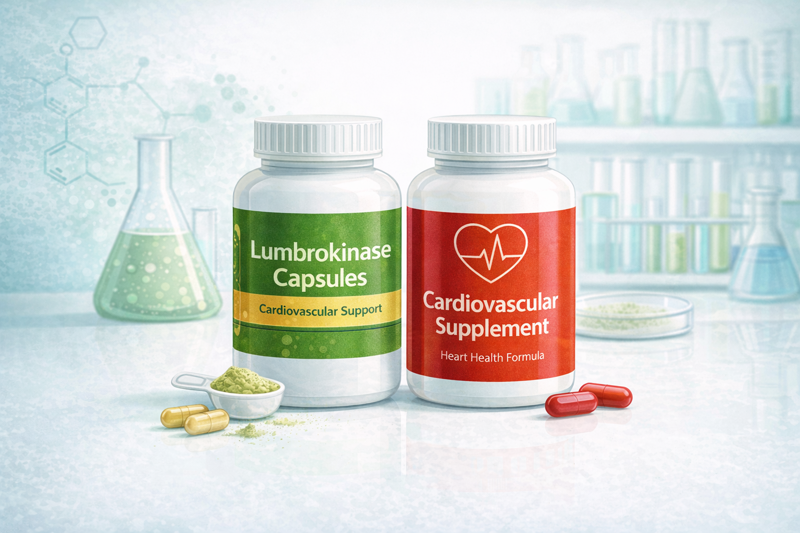
When buyers talk about “high-value ingredients,” they usually mean more than price. They mean ingredients with a strong functional story, a credible science base, room for premium positioning, and enough differentiation to help a finished product stand out in a crowded market. That’s exactly why lumbrokinase keeps coming up.
It’s not a mainstream vitamin. It’s not a commodity botanical either. Lumbrokinase sits in a more interesting lane — specialized, bioactive, and tied to a category that still gets serious attention from formulators focused on cardiovascular support, circulation-focused products, and advanced wellness concepts. Research in your source materials also places lumbrokinase among the better-known bioactive agents identified from earthworm extract, especially for its fibrinolytic and thrombolytic properties.
And that matters in B2B markets. A lot.
Because let’s be honest: buyers are not only asking, “Does this ingredient have a function?” They’re also asking, “Can I build a compelling product around it? Will it travel across markets? Does it support a premium story without sounding vague or overhyped?” Lumbrokinase gives suppliers a real chance to answer yes — provided the science, documentation, and product positioning are handled carefully.
So, what makes lumbrokinase special?
Lumbrokinase is a group of fibrinolytic enzymes derived from earthworms and is widely discussed in the literature as one of the key active components in earthworm extract. In the review you uploaded, it is described as having effective anticoagulant and thrombolytic properties, with discussion around its fibrin-related activity and clinical translation potential.
That functional identity is a big reason it attracts attention. It is not just another protein fraction with a vague “wellness” label attached. It has a much sharper scientific profile.
The broader earthworm protein research in your files also helps explain why the category has commercial depth. Earthworm-derived proteins are reported as high in protein content, rich in amino acids, and capable of yielding bioactive peptides after digestion or hydrolysis. Studies in your source set identified antioxidant peptides, ACE inhibitory peptides, and immunomodulatory peptides from earthworm proteins, which supports the idea that earthworm-derived raw materials are not one-dimensional ingredients.
That’s the wider backdrop. Lumbrokinase benefits from being part of a source category that already has a growing bioactive story.
Not every premium ingredient earns global attention — this one has reasons
Here’s the thing: an ingredient becomes valuable globally when it solves several business problems at once.
Lumbrokinase can help with at least four.
1. It supports premium product differentiation
In mature supplement markets, everyone has fish oil, magnesium, CoQ10, and plant sterols. Those categories still matter, of course, but they are busy. Very busy.
Lumbrokinase gives brands a way to move into a more specialized position. It feels technical. It feels clinically oriented. It sounds like an advanced formula component rather than a shelf-filler. That makes it attractive for brands that want to build practitioner-style products, premium circulation formulas, or niche cardiovascular support lines.
For manufacturers and wholesalers, that changes the sales conversation. Instead of competing only on cost, they can also compete on function, science, and exclusivity.
2. It fits the ongoing interest in cardiovascular and circulatory health
The files you provided repeatedly connect earthworm-derived bioactives to antithrombotic, antihypertensive, and antioxidant activity. The ACE inhibitory peptide paper, for example, frames hypertension as a major global issue and identifies seven novel ACE inhibitory peptides from earthworm protein digestion products, with two showing particularly strong activity in vitro.
Now, that does not mean every earthworm-derived ingredient should be marketed the same way. It shouldn’t. But it does show a wider scientific ecosystem around the source material. That helps ingredient buyers see lumbrokinase as part of a broader cardiovascular-support narrative rather than a stand-alone curiosity.
And in product strategy terms, that’s useful. Very useful.
3. It carries a “functional enzyme” identity that appeals to technical buyers
Some ingredients sell because they are familiar. Others sell because they feel advanced. Lumbrokinase falls into the second camp.
For procurement teams, formulation managers, and nutraceutical developers, enzymes tend to signal specificity. They suggest a targeted mechanism, not just a general health halo. That can raise perceived value, especially in premium capsules, specialist formulas, and clinically styled SKUs.
Honestly, buyers in advanced categories often like ingredients that need a bit of explanation. Not too much, but some. That explanation becomes part of the product’s edge.
4. It benefits from source-level sustainability and alternative protein interest
The ACE inhibitory peptide study notes that earthworms contain high levels of protein and are considered an interesting alternative protein source, with higher protein conversion efficiency and lower greenhouse gas output than traditional animal husbandry.
That point is easy to overlook, but it has quiet commercial value. Global markets are paying more attention to novel resource efficiency, sustainable sourcing narratives, and ingredient systems that look smarter than legacy supply chains. Lumbrokinase is not sold as a protein ingredient in the ordinary sense, but its origin story still matters.
And sometimes that upstream story helps a buyer justify downstream innovation.
Where the commercial value really shows up
A high-value ingredient is only high-value if it can move through actual market channels. So where does lumbrokinase make the most sense?
Dietary supplements and nutraceuticals
This is the clearest fit.
Lumbrokinase works well in premium capsule and tablet concepts aimed at cardiovascular support, circulation awareness, and active-aging consumers. It is particularly relevant for brands that prefer a more technical ingredient roster over mass-market simplicity.
For private-label and contract manufacturing partners, it also offers a chance to build specialist lines rather than generic “heart health” formulas that blend into the crowd.
There’s also a branding advantage here: when an ingredient has a strong functional name and a research-backed identity, it often helps premium packaging and premium pricing feel more justified.
Pharmaceutical ingredient positioning
This needs more care, obviously. Regulatory standards, claims boundaries, and formulation expectations are much tighter. But lumbrokinase still has significance in pharmaceutical discussions because of its long-standing association with fibrinolytic activity and the literature around antithrombotic use. The review in your files explicitly notes oral lumbrokinase formulations being explored or approved in some countries and highlights its clinical translation potential.
That does not mean suppliers should make sweeping drug-like promises in casual marketing copy. Quite the opposite. But from a B2B perspective, the ingredient’s scientific seriousness gives it a different status than many generic wellness raw materials.
Functional health product exports
For exporters, lumbrokinase has another advantage: it can support market-specific product concepts.
One region may prefer circulation support language. Another may lean toward active aging. Another may focus on premium enzyme complexes. The ingredient itself remains the anchor, but the commercial framing can shift with local market expectations.
That flexibility matters when dealing with distributors, importers, and regional brand owners.
Adjacent innovation categories
This one is a softer point, but still relevant.
The wider earthworm bioactive literature in your files touches on antioxidant, wound-healing, anti-inflammatory, and even anti-aging directions for earthworm-derived compounds. The review notes potential relevance for wound healing and skin aging applications, especially at the broader extract level.
That does not automatically make lumbrokinase a cosmetics ingredient. It doesn’t. But for R&D teams exploring multi-category bioactive platforms, the broader source ecosystem can still add strategic interest.
Buyers don’t only buy the ingredient — they buy the package around it
This is where many suppliers get tripped up. They spend all their energy talking about bioactivity and forget the commercial basics.
A buyer evaluating lumbrokinase for global markets usually wants answers to questions like these:
- What is the source species and raw material standard?
- How is the ingredient processed?
- What documentation supports quality and consistency?
- What active specifications are available?
- What contaminant controls are in place?
- How stable is the material in the intended dosage form?
- Can the supplier support regional compliance files and technical dossiers?
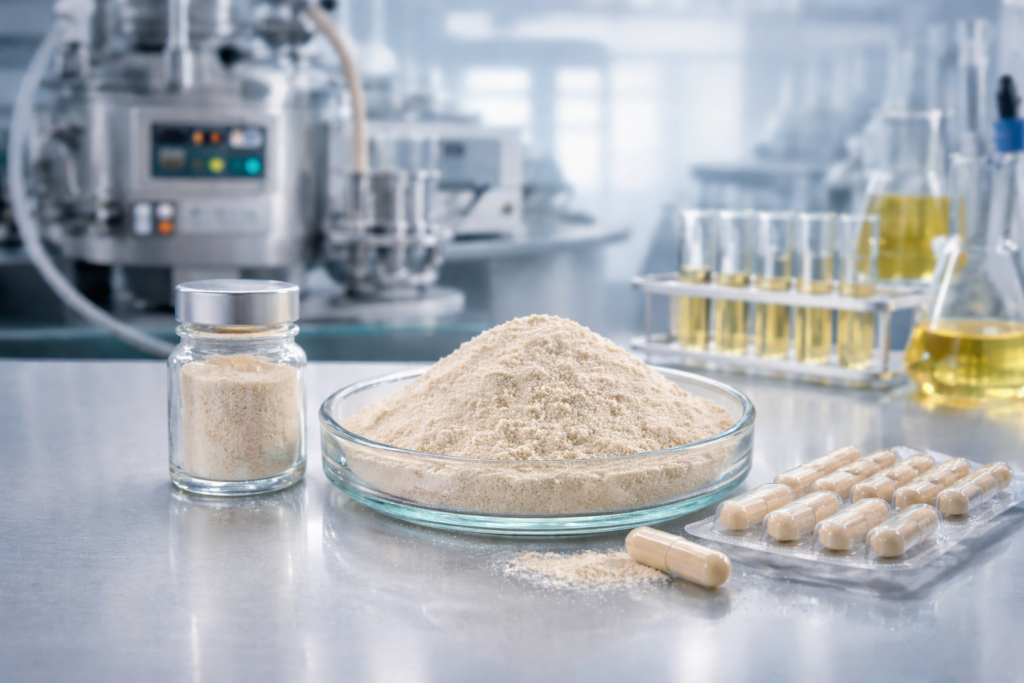
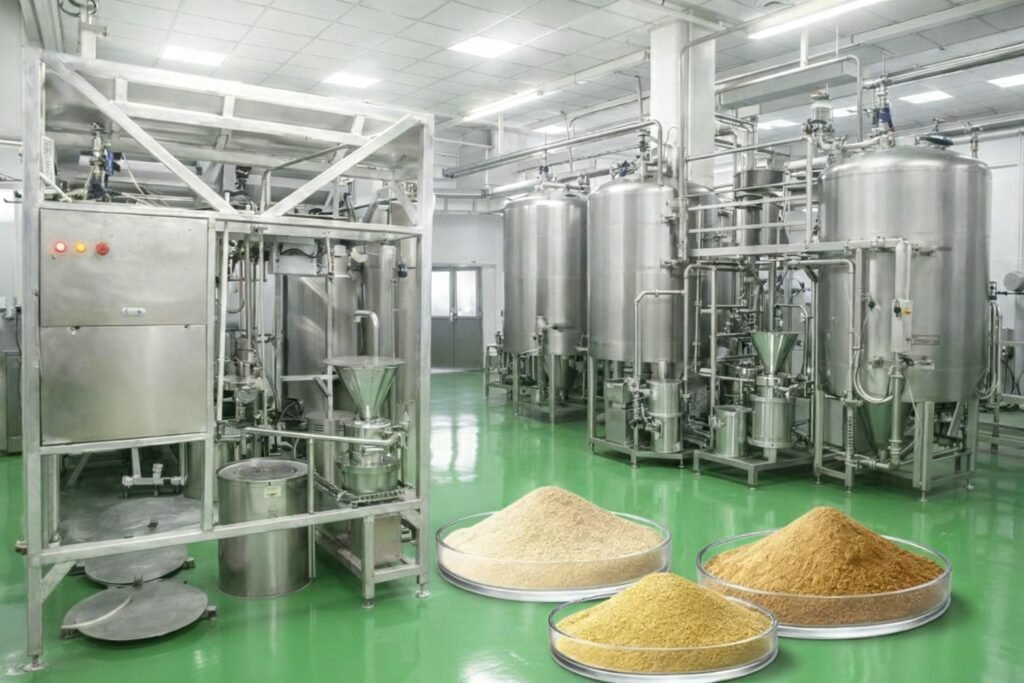
Your uploaded production note gives a simple example of how source and process transparency start to matter. It describes earthworm protein powder production through selection, cleaning, hydrolysis, centrifugal filtration, low-temperature drying, milling, sterilization, and packaging.
Now, lumbrokinase is more specialized than generic earthworm protein powder, of course. But the principle is the same: high-value ingredients need clean process stories. Buyers want to know what they are buying, how it was made, and whether the quality profile is repeatable.
That’s not flashy copy. But in real B2B sales, it closes more conversations than flashy copy ever will.
Quality is where “premium” becomes real
Let me explain.
Anyone can call an ingredient premium. Fewer can prove it.
For lumbrokinase, premium status is supported when suppliers can show consistent activity, batch reliability, traceable sourcing, suitable microbial and heavy metal controls, and a format that works for downstream production. The more technical the ingredient, the less tolerance buyers have for vague paperwork.
And because the ingredient already carries a specialized image, documentation gaps feel even bigger. A commodity herb with average paperwork may still sell. A high-end enzyme with average paperwork? Much harder.
So for manufacturers, wholesalers, and ingredient dealers, the value proposition is not just “we have lumbrokinase.” It is closer to “we have a lumbrokinase ingredient system that serious buyers can actually use.”
That’s a much stronger sentence.
Regional markets: similar interest, different expectations
Global markets do not read ingredients the same way.
Some buyers want clinically framed ingredients with mechanism-led storytelling. Others want natural-origin positioning. Others care most about whether the product can sit inside a compliance-friendly supplement format without raising immediate red flags.
That means lumbrokinase needs localized business language.
In one market, the right message may revolve around premium enzyme technology. In another, it may be the heritage-meets-science angle of earthworm-derived bioactives. In another, it may be the broader movement toward differentiated nutraceutical ingredients with technical backing.
The ingredient can travel, yes — but the message shouldn’t be copy-pasted.
And that’s often where skilled suppliers win. They don’t sell one rigid script. They adapt the commercial story while protecting the science.
The science story matters, but restraint matters too
There’s a mild contradiction here, and it’s worth saying out loud.
Lumbrokinase is valuable partly because it sounds powerful. But the best commercial positioning is usually a little restrained.
Overstated claims make buyers nervous. So do dramatic consumer-style promises. Especially in international trade.
A stronger approach is to emphasize:
- its status as a specialized fibrinolytic enzyme derived from earthworm,
- its relevance in advanced cardiovascular and circulation-focused formulations,
- the broader research interest in earthworm-derived bioactives,
- and the supplier’s ability to provide quality, technical support, and application guidance.
That tone is more believable. It also travels better across markets.
Why lumbrokinase still has room to grow
You know what? The most interesting part may be that lumbrokinase is not trying to become a mass-market ingredient.
That’s probably a good thing.
Its value comes from being selective, science-led, and commercially useful to brands that want something more distinctive than ordinary nutrition ingredients. It fits the premium end of supplements. It attracts attention from specialized health product developers. It connects to a broader body of earthworm protein and peptide research covering antioxidant, antihypertensive, and immunomodulatory activity.
So no, it is not for every buyer. That’s precisely why it can be valuable.
For suppliers, manufacturers, and distributors looking beyond generic ingredient catalogs, lumbrokinase offers something rare: a functional raw material with technical depth, premium positioning potential, and a source story that still feels a bit unexpected. In crowded global markets, unexpected can be very good business.
FAQs
1. Why is lumbrokinase considered a high-value ingredient for global nutraceutical markets?
Lumbrokinase is considered a high-value ingredient for global nutraceutical markets because it combines a specialized functional profile, premium product differentiation potential, and a stronger technical identity than many common wellness ingredients. Its association with fibrinolytic activity also makes it attractive for advanced cardiovascular support formulas.
2. Is lumbrokinase suitable for dietary supplement brands targeting premium cardiovascular products?
Yes, lumbrokinase is well suited to dietary supplement brands targeting premium cardiovascular products, especially brands that prefer clinically styled, enzyme-based, or circulation-focused formulations. Its value is often strongest in capsule or tablet concepts designed for specialized consumer segments.
3. What should importers and wholesalers check before buying lumbrokinase powder or lumbrokinase raw material?
Importers and wholesalers should check source transparency, manufacturing process details, active specification, contaminant controls, batch consistency, and available technical documentation before buying lumbrokinase raw material. For premium ingredient categories, documentation quality is often just as important as the ingredient itself.
4. How does lumbrokinase compare with other earthworm-derived bioactive ingredients?
Lumbrokinase is one of the most commercially recognizable earthworm-derived bioactive ingredients, but it sits within a broader earthworm research space that also includes antioxidant peptides, ACE inhibitory peptides, and immunomodulatory peptides from earthworm proteins. That wider science base can strengthen its market story.
5. Can lumbrokinase be positioned for multiple regional markets?
Yes, lumbrokinase can be positioned for multiple regional markets, but the commercial message should be adjusted to local expectations. Some markets respond better to enzyme science and technical language, while others prefer natural-origin positioning or premium functional ingredient storytelling.