
Outline
- Why lumbrokinase quality is harder to judge than it looks
- The safety standards serious buyers should ask for first
- The quality standards that separate a real supplier from a risky one
- Why activity testing matters more than a pretty COA
- A practical supplier checklist for brands, manufacturers, and importers
- FAQs
Lumbrokinase has a curious place in the market. It is well known, commercially active, and technically promising. But it is also the kind of ingredient that can look excellent on paper while hiding real gaps in identity, activity, contamination control, and batch consistency.
That’s the part buyers sometimes learn the hard way.
For brands, contract manufacturers, nutraceutical formulators, and ingredient distributors, lumbrokinase is not a “buy the spec sheet and move on” raw material. It sits in a higher-risk category because it is an enzyme complex from earthworm, it is often marketed around circulation and fibrinolytic support, and it can drift into disease-claim territory fast if the quality system is weak or the marketing team gets too enthusiastic. FDA’s dietary supplement CGMP framework under 21 CFR Part 111 requires firms to establish specifications for identity, purity, strength, and composition, and to ensure contaminants are controlled. FDA also requires serious adverse event reporting for dietary supplements sold in the U.S.
Here’s the thing: when buyers ask about lumbrokinase quality, they often focus on one number only—activity units. That number matters, yes. A lot. But it is only one piece of the story. Real quality sits on a wider frame: authenticated raw material, controlled manufacturing, validated activity assay, microbial safety, heavy metal risk control, stability, traceability, and claim discipline. Miss one of those, and the whole commercial case starts wobbling.

Why lumbrokinase needs tighter scrutiny than many other ingredients
Lumbrokinase is not a single, simple molecule. It is generally described as a group of fibrinolytic enzymes derived from earthworms, and the literature repeatedly treats it as an enzymatic mixture rather than a neat single-compound ingredient. Research and reviews also point to its fibrinolytic and antithrombotic relevance, which is exactly why buyers need tighter controls around identity and intended use. (PMC)
That complexity creates a basic sourcing problem. Two materials can both be sold as “lumbrokinase,” yet differ in:
- source species,
- extraction route,
- enzyme profile,
- activity expression,
- excipient load,
- residual bioburden,
- and real finished-product stability.
Your purchasing team may see matching labels. Your QC lab may see a very different story.
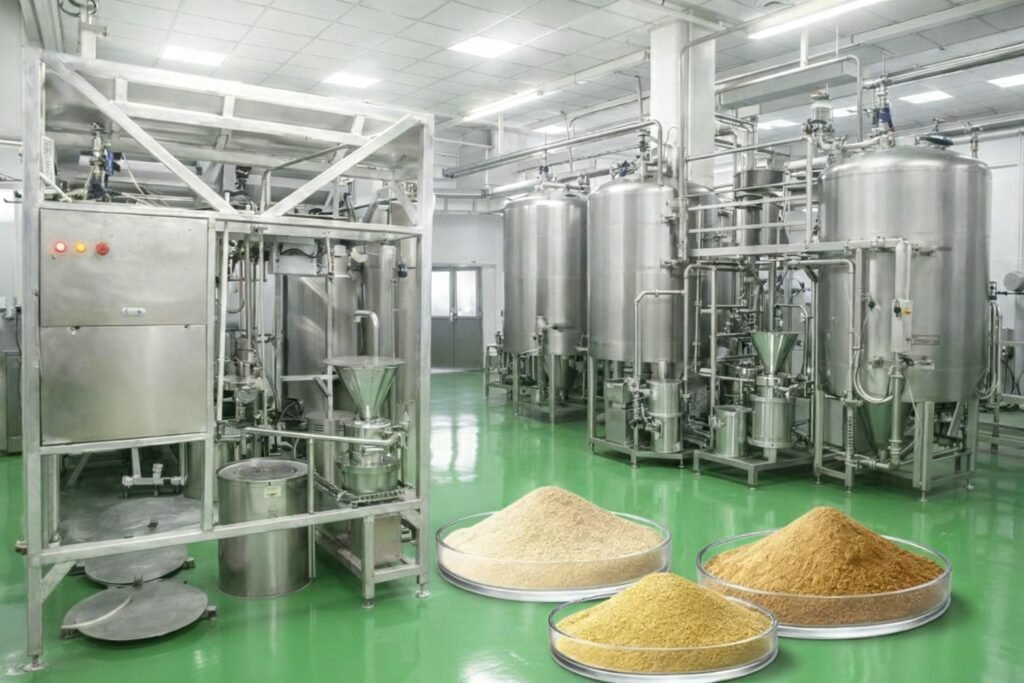
Even supplier-side material in your uploaded files hints at this broader challenge. One production document describes earthworm protein processing through selection, cleaning, hydrolysis, centrifugation, low-temperature drying, sterilization, and packaging—basically a reminder that upstream process control matters long before the final powder hits a drum. Research in the same file set also shows that earthworm-derived actives are often prepared through multi-step digestion, purification, filtration, and chromatography workflows, which reinforces how process variation can affect the final bioactive profile.
So yes, lumbrokinase is promising. But it is also a sourcing category where “close enough” is not good enough.
The first layer: safety standards buyers should treat as non-negotiable
Let me explain. Before you argue about potency, you need to know the material is safe.
1) GMP and documented manufacturing control
For U.S.-bound dietary supplement ingredients and finished products, CGMP expectations under 21 CFR Part 111 are the starting line, not a bonus feature. That means documented procedures, specifications, batch records, quality control oversight, complaint handling, and release criteria. If a supplier cannot clearly explain how each batch is received, tested, quarantined, released, or rejected, the relationship should cool off right there.
And honestly, this is where experienced buyers get a feel for a supplier fast. A real quality system sounds boring—in a good way. It has logs, deviations, CAPAs, and method references. A weak one sounds glossy.
2) Microbiological safety
Because lumbrokinase is animal-derived, microbial control is a serious issue, not a box-tick. Buyers should expect validated microbiological examination methods and clear acceptance criteria for total counts plus specified objectionable organisms as appropriate to the dosage form and market. USP’s microbial examination framework remains a practical reference point for nonsterile products and ingredients. (USP)
In plain English: a clean-looking beige powder tells you almost nothing.
3) Heavy metals and elemental impurity control
Earthworm-derived materials raise a simple sourcing question: what was in the growth environment? Soil exposure makes elemental impurity control especially important. ICH Q3D(R2) gives the globally recognized framework for assessing and limiting elemental impurities in pharmaceutical contexts, and many serious ingredient buyers use its logic as a risk-management benchmark even when the end market is supplement rather than drug.
That does not mean every supplement buyer must apply drug rules word-for-word. It does mean that a supplier who cannot show a rational heavy metal control strategy is asking you to take too much on trust.
4) Adverse event and complaint readiness
A quality supplier should know what happens after launch, not just before shipment. In the U.S., serious adverse event reporting obligations apply to dietary supplements, and complaint systems are part of the broader compliance picture. Suppliers who understand this tend to support customers with traceability, retained samples, and investigation workflows. Suppliers who do not… well, that usually shows up later, when it’s expensive.
The second layer: quality standards that actually protect brand performance
Safety keeps you out of trouble. Quality keeps you in business.
Identity: is it really lumbrokinase?
This sounds obvious, yet it is one of the most under-asked questions. For lumbrokinase, identity should cover more than a marketing name. Buyers should ask for:
- source species or starting material declaration,
- manufacturing description,
- identity method,
- chromatographic or electrophoretic profile where relevant,
- and lot-specific COA data.
Why? Because activity without identity is shaky. A powder may show proteolytic behavior and still not match the expected lumbrokinase profile. Research on earthworm protein and bioactive peptide preparation shows how multiple purification and digestion routes can generate quite different fractions.
Activity: the heart of the ingredient
This is where buyers perk up, and fair enough. Lumbrokinase is bought for enzymatic function. That means the activity assay is central.
But here is the mild contradiction: activity matters most, yet activity alone is not enough.
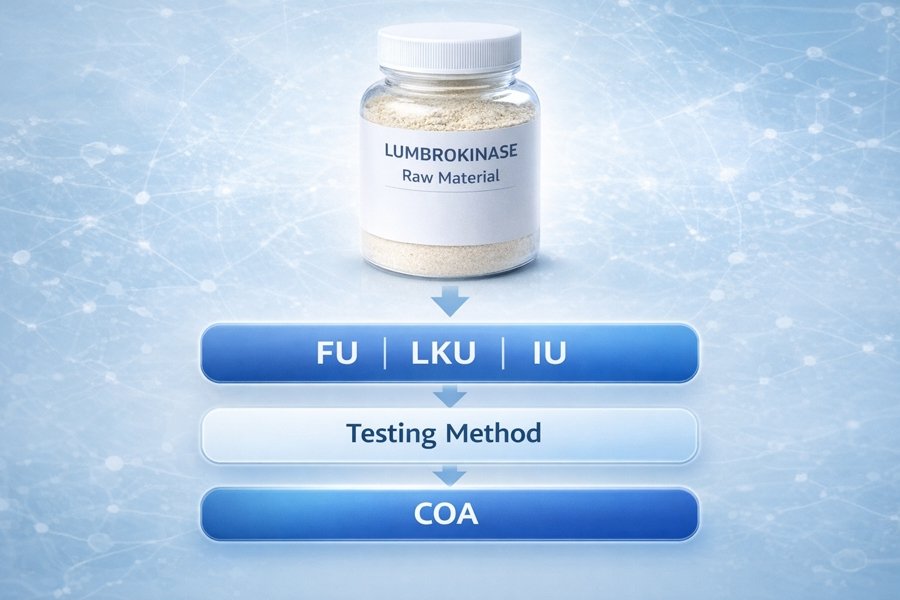
A supplier can give you a big activity number, but if the assay is poorly defined, not validated, or not comparable from lot to lot, that number is more theater than science. Buyers should ask:
- What assay method is used?
- Is it a fibrin-based method, proteolytic method, or another internal method?
- How are units defined?
- What is the reference standard?
- What is the acceptance range?
- What is the lot-to-lot variation?
This matters because lumbrokinase performance in formula development depends on reproducible enzymatic behavior, not on a flashy headline spec. Your earlier project work around fibrin plate assay methods is relevant here too: for fibrinolytic enzyme materials, the method choice shapes how activity is interpreted. A smart buyer asks for the method before celebrating the units.
Purity and composition: how much is active, how much is filler?
Some lumbrokinase materials are standardized with carriers or excipients. That is not automatically bad. Sometimes it is necessary for handling and dose uniformity. The issue is transparency.
Ask for:
- assay basis,
- excipient declaration,
- moisture,
- ash,
- protein content where relevant,
- residual solvent status if used in the process,
- and clear distinction between gross powder weight and active fraction.
Otherwise, you may think you bought a premium enzyme material while actually buying a diluted blending base with a nice label.
Stability: can it survive real commercial life?
Enzymes are fussy. Heat, humidity, oxygen exposure, and formulation partners can all hurt activity over time. ICH stability guidance is formally drug-focused, but its core logic—use stability data to justify shelf life and storage conditions—is exactly the mindset ingredient buyers should want to see.
If a lumbrokinase supplier cannot provide meaningful accelerated and real-time stability data, your launch clock starts with uncertainty built in.
And that uncertainty spreads. It affects:
- label claim confidence,
- finished product overages,
- packaging choices,
- warehouse handling,
- and international shipping risk.
What a strong lumbrokinase specification sheet should include
Not every supplier document needs to be beautiful. It does need to be complete.
A solid lumbrokinase specification usually includes:
- ingredient name and source,
- appearance,
- odor,
- activity units with method reference,
- loss on drying or moisture,
- microbial limits,
- heavy metal limits,
- packaging format,
- storage conditions,
- shelf life,
- batch coding and traceability,
- and statement of applicable manufacturing standards.
You know what else helps? A supplier who can explain why those numbers were chosen.
That tone matters. Serious manufacturers do not just say, “Here is our COA.” They say, “Here is how we built the control strategy.”
The claims problem nobody should ignore
This part is easy to overlook because marketing teams like exciting stories.
Lumbrokinase is often associated with fibrinolytic, thrombolytic, or circulation-related uses in research and in some commercial contexts. But the moment a supplement brand crosses into disease treatment or prevention claims, regulatory exposure rises quickly. FDA warning letter activity around enzyme-based cardiovascular products is a useful reminder that claim language can change the compliance status of a product.
For brands, that means supplier qualification should include marketing discipline. Not just lab discipline.
A supplier that casually promises stroke treatment, clot dissolution, or drug-like outcomes in its sales deck may create risk for every downstream customer. A careful partner talks about quality, standardization, intended market, and evidence boundaries.
That restraint is not weakness. It is professionalism.
A practical buyer checklist for supplier qualification
If you are vetting a lumbrokinase supplier, ask for these six things before pricing becomes the main conversation:
1) Full manufacturing and raw material story
Where does the starting material come from? How is it cleaned, processed, stabilized, and standardized? Your own file set’s processing summary is a good reminder that earthworm-derived materials need strong upstream control.
2) Lot-specific activity data
Not just a “typical value.” Real lot data, with method.
3) Contaminant panel
Microbiology, heavy metals, and any other market-relevant contaminant checks.
4) Stability package
At least enough to justify shelf life, transport conditions, and storage language.
5) Regulatory fit by market
U.S. supplement, functional food, pharma-adjacent, or another route—each has its own pressure points.
6) Claim and documentation discipline
COAs, specs, SDS, allergen statements where needed, traceability, and complaint support.
If even two of those are fuzzy, the price advantage may not be a bargain. It may be a delayed cost.
So, what standard really matters most?
Not one standard. A stack of them.
That is the honest answer.
For lumbrokinase, the best suppliers do not rely on one magic certificate. They combine GMP control, validated activity testing, contaminant limits, stability evidence, and traceable batch documentation into one coherent quality story. FDA CGMP requirements set a legal backbone for supplement manufacturing in the U.S., while USP microbiological methods and ICH quality frameworks help shape practical testing expectations for microbial quality, elemental impurities, and stability.
And that, really, is the difference between a supplier and a partner.
One sells you powder.
The other helps you launch something you can defend.
Related: How to Evaluate the Quality of Lumbrokinase
Related: What Activity Units Matter When Sourcing Lumbrokinase?
FAQs
1) What safety tests should a lumbrokinase supplier provide?
A serious lumbrokinase supplier should provide microbial testing, heavy metal or elemental impurity data, identity confirmation, and batch-specific activity results. For U.S. supplement markets, buyers should also expect manufacturing under dietary supplement CGMP controls.
2) How do buyers verify lumbrokinase activity units?
Buyers should ask for the exact assay method, unit definition, reference standard, and lot-specific results. A lumbrokinase activity specification without a clear analytical method is not enough for serious supplier qualification.
3) Is there a single global quality standard for lumbrokinase ingredients?
In practice, buyers often work with a mix of GMP requirements, contaminant controls, microbiological methods, and stability expectations rather than one universally applied ingredient-specific rulebook. That is why supplier documentation quality matters so much.
4) Why is lumbrokinase stability testing important for nutraceutical brands?
Because lumbrokinase is an enzyme complex, activity can shift with heat, humidity, packaging, and formula composition. Stability testing helps brands set realistic shelf life, storage conditions, and label claims.
5) What makes a high-quality lumbrokinase COA more trustworthy?
A trustworthy lumbrokinase COA is lot-specific, method-based, and tied to a broader quality system. It should show identity, activity, contaminant data, and release criteria—not just a few attractive numbers.