
A Quiet Revolution Beneath Our Feet


Let’s be honest. When someone first hears “earthworm protein powder,” their eyebrows usually go up.
But here’s the thing—innovation rarely starts in comfortable places. It often begins where science notices something others overlook. And earthworms? They’ve been quietly building soil ecosystems for over 500 million years. Now, they’re stepping into the spotlight as a serious source of bioactive protein.
For dietary supplement brands, nutraceutical formulators, pharmaceutical ingredient buyers, and cosmetics manufacturers, the question isn’t whether earthworm protein is novel. It’s whether it’s scientifically credible and commercially viable.
Let me walk you through the science—clearly, without hype, and grounded in research.
Earthworms: More Than Soil Engineers
We tend to think of earthworms as agricultural helpers. And yes, they absolutely are. They improve soil structure, enhance nutrient cycling, and maintain microbial balance .
But from a biochemical perspective, they’re also protein-dense organisms. Research shows earthworm dry matter contains 60–70% protein, with balanced essential amino acids . That’s not a fringe number. That’s competitive with traditional animal protein sources.
More importantly for ingredient developers, earthworm protein isn’t just nutritional—it’s functional.
And that’s where things get interesting.
From Whole Protein to Bioactive Peptides: The Real Story
Protein alone isn’t the innovation. The real value lies in what happens after digestion or enzymatic hydrolysis.
Let’s break it down simply.
Proteins are long chains of amino acids. When these chains are broken down—either through gastrointestinal digestion simulation or controlled enzymatic processing—they release small peptides. These peptides can interact with biological systems in targeted ways.
In fact, one study published in Food Bioscience identified seven novel ACE inhibitory peptides from earthworm protein after in vitro gastrointestinal digestion .
Two peptides—SSPLWER and RFFGP—demonstrated strong angiotensin-converting enzyme (ACE) inhibitory activity, with IC₅₀ values of 14.30 μM and 117.63 μM respectively .
Why does that matter?
Because ACE inhibition is a well-established pathway for managing blood pressure.
And unlike synthetic ACE inhibitors, food-derived peptides are generally viewed as safer and more acceptable in functional food and nutraceutical markets.
The Mechanism: How These Peptides Actually Work
Now let’s get slightly technical—because this is where formulation teams start paying attention.
The identified peptides act as competitive inhibitors of ACE . That means they bind directly to the enzyme’s active site, preventing angiotensin I from converting to angiotensin II.
Molecular docking studies revealed:
- SSPLWER forms multiple hydrogen bonds within the ACE active pocket
- Key amino acid residues—like tryptophan and arginine—play critical roles in binding
In practical terms? These peptides physically block the enzyme.
That’s not vague “supports cardiovascular health” language. That’s mechanism-based functionality.
And that’s the kind of science regulatory teams appreciate.
Beyond Blood Pressure: Antioxidant Capacity
If antihypertensive activity were the only feature, earthworm protein would already be promising.
But there’s more.
Another study identified thousands of peptides generated from digested earthworm protein, screening them for antioxidant potential .
Three standout peptides demonstrated strong free radical scavenging activity:
- AFWYGLPCKL
- WPWQMSLY
- GCFRYACGAFY
Quantum chemical analysis showed their active hydrogen-donating sites were concentrated on aromatic amino acids like tryptophan and tyrosine .
Translation?
These peptides interrupt oxidative chain reactions at a molecular level.
For cosmetic suppliers and anti-aging formulation teams, this matters. Oxidative stress isn’t just a buzzword—it’s directly linked to skin aging, inflammation, and barrier dysfunction.
Immunomodulatory Effects: A Third Functional Axis
Cardiovascular. Antioxidant. And then there’s immune modulation.
An in vivo study using cyclophosphamide-induced immunosuppressed mice showed that earthworm protein autolysates improved immune organ indices, cytokine profiles, and intestinal barrier markers .
The degree of hydrolysis in the autolysate reached 22.38%, with 77.92% soluble peptides .
One peptide sequence—WNWLLPLMLG—showed particularly strong immunomodulatory activity in macrophage models .
This opens doors for:
- Immune support supplements
- Recovery formulations
- Functional beverages
- Even adjunct nutrition in clinical settings
You know what? In a post-pandemic market, immune-focused products aren’t slowing down anytime soon.
Enzymes Inside the Protein: The Case of Lumbrokinase
We can’t talk about earthworm protein science without mentioning lumbrokinase.
Lumbrokinase is a group of fibrinolytic enzymes extracted from earthworms. It directly degrades fibrin—the structural backbone of blood clots .
Clinical applications have explored its role in:
- Coronary heart disease
- Venous thrombosis
- Stroke-related conditions
Unlike many thrombolytic agents, lumbrokinase demonstrates strong fibrin specificity and relatively favorable safety profiles in studied contexts .
For pharmaceutical ingredient manufacturers, this enzyme class represents a well-defined bioactive category with clear mechanisms.
From Raw Earthworm to Finished Powder: The Manufacturing Reality
Science is one thing. Industrial production is another.
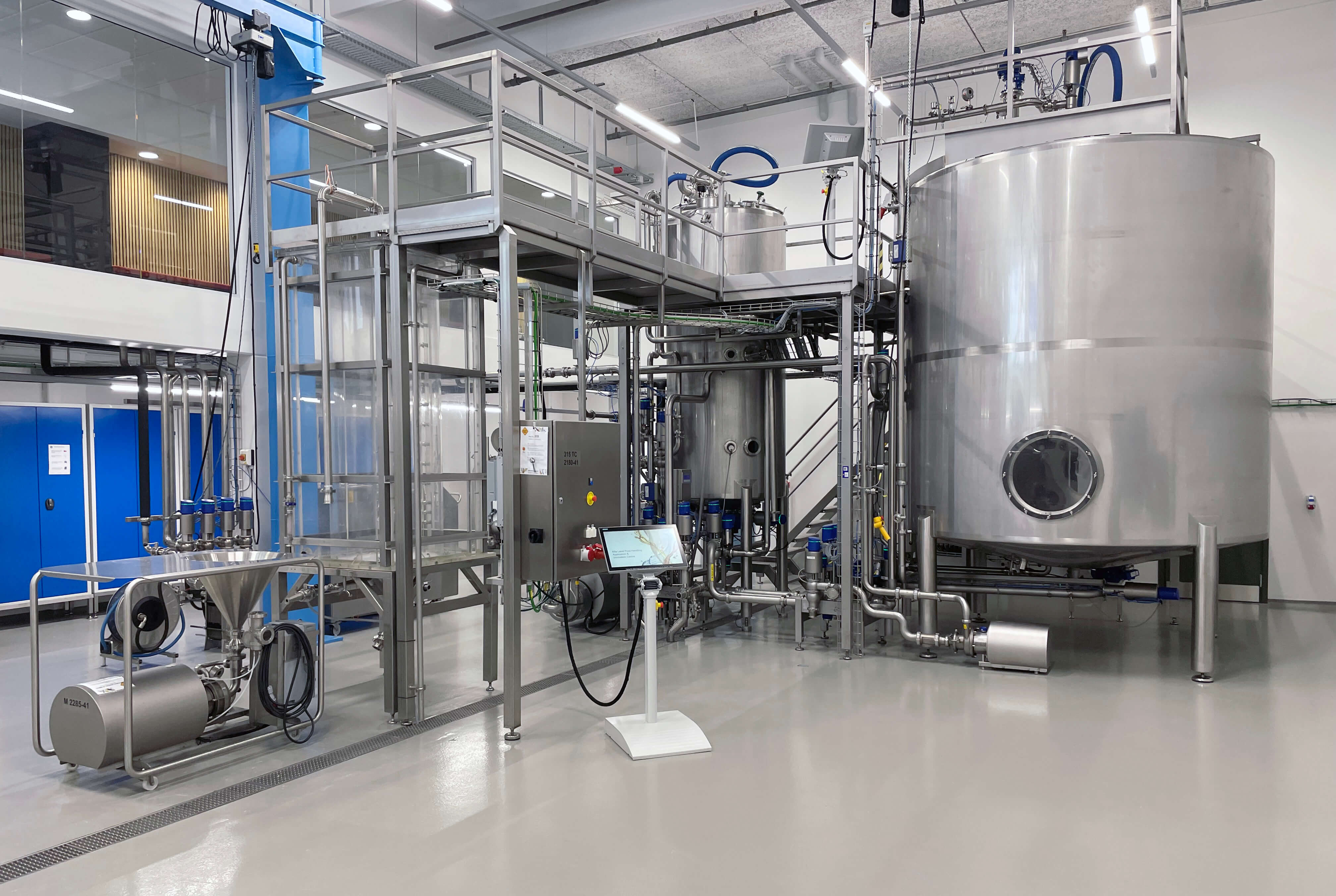
Earthworm protein powder production typically includes:
- Mechanical separation from soil
- Cleaning and hydrolysis
- Centrifugal filtration
- Low-temperature drying
- Pulverization and sterilization
Raw material commonly includes the species Eisenia fetida (“Taiping No.2”) .
Low-temperature drying is particularly important—it preserves enzyme activity and peptide integrity.
For buyers, that means stability, consistency, and predictable bioactivity.
And let’s not ignore the sustainability factor: earthworms convert organic waste into high-protein biomass with relatively low environmental impact .
In an era where procurement teams are asked about carbon footprint in supplier audits, that matters.
Application Pathways: Where Innovation Is Happening


So how does this translate into actual product development?
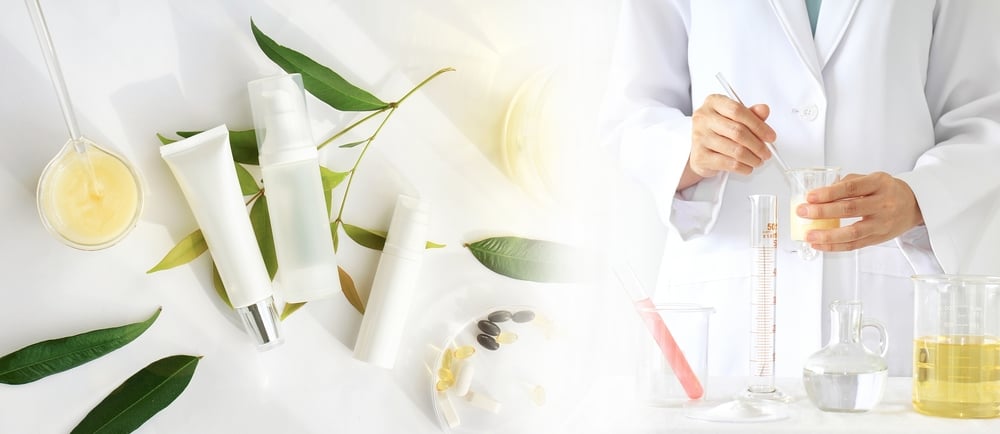
Earthworm protein peptides are already being explored in:
- Functional beverages
- Protein bars and high-protein snacks
- Cardiovascular support capsules
- Immune-focused formulations
- Anti-aging cosmetic actives
Yes, sensory and regulatory challenges remain. Stability optimization, flavor masking, regional compliance—these are real considerations.
But that’s true of any novel protein ingredient.
The difference here? There’s mechanistic research behind it.
Why This Matters for Ingredient Decision-Makers
If you’re a wholesaler or manufacturer, you’re probably asking three questions:
- Is it backed by science?
- Is it scalable?
- Is it commercially differentiated?
On the science front, peer-reviewed research supports antihypertensive, antioxidant, immunomodulatory, and fibrinolytic activities .
On scalability, earthworm cultivation is established in several regions, and protein extraction processes are standardized .
On differentiation? Let’s be honest—there aren’t many protein ingredients with this combination of functionality.
Sometimes innovation doesn’t need flashy marketing. It just needs solid data.
Final Thought: From Soil Biology to Functional Biochemistry
It’s almost poetic, isn’t it?
An organism known primarily for improving soil structure now contributes to cardiovascular science, oxidative balance research, and immune modulation studies.
Earthworm protein powder isn’t a novelty ingredient anymore. It’s a research-backed functional protein platform.
And for companies willing to think slightly beyond the obvious—it’s a serious opportunity.
FAQs: Earthworm Protein Powder and Bioactive Applications
1. What makes earthworm protein powder different from traditional animal protein?
Unlike conventional animal proteins, earthworm protein powder contains bioactive peptides with demonstrated ACE inhibitory, antioxidant, and immunomodulatory properties, not just nutritional amino acids .
2. Are there clinical studies supporting earthworm-derived bioactive peptides?
Preclinical and in vitro studies have demonstrated antihypertensive and immune-modulating effects, including ACE inhibition and cytokine regulation . Further human trials are still needed for broader clinical claims.
3. How does earthworm protein powder support cardiovascular health formulations?
It contains ACE inhibitory peptides and fibrinolytic enzymes such as lumbrokinase, which target blood pressure regulation and clot degradation pathways .
4. Is earthworm protein suitable for functional food and beverage applications?
Yes. Research highlights its use in high-protein foods, functional drinks, and health supplements, though formulation optimization is essential .
5. What processing methods preserve the bioactivity of earthworm protein powder?
Low-temperature drying, controlled enzymatic hydrolysis, and filtration are key to preserving peptide integrity and enzyme activity .
If you’re evaluating emerging functional protein ingredients for 2026 product pipelines, earthworm protein powder deserves a serious look—not because it’s unusual, but because the science says it works.