
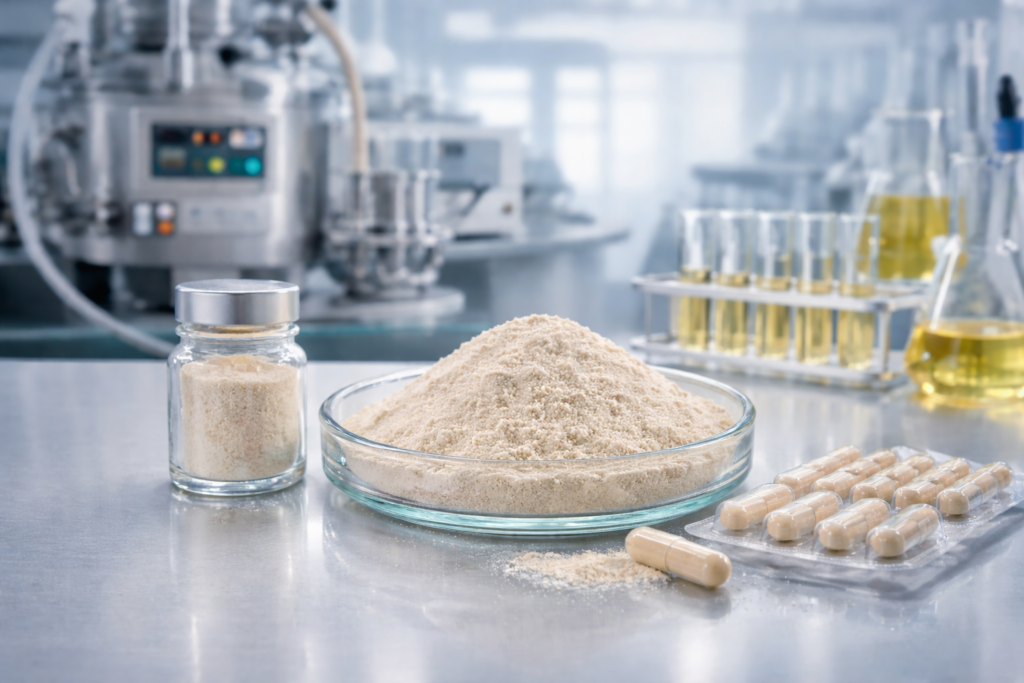
Lumbrokinase is one of those ingredients that looks simple on a spec sheet and turns complicated the second a real brand tries to buy it at scale. On paper, it is “just” an enzyme. In practice, it is a high-sensitivity, activity-driven fibrinolytic enzyme complex with sourcing, processing, stability, assay, and compliance details that can make or break a finished product. That’s exactly why leading brands tend to work with specialized lumbrokinase manufacturers instead of general ingredient traders.
Here’s the thing: when a product’s value depends on enzyme activity, raw material control, and batch consistency, experience stops being a nice extra. It becomes the whole game.
Lumbrokinase as a highly effective anticoagulant and thrombolytic earthworm enzyme, with activity linked to fibrin-specific action and reduced tendency toward hyperfibrinolysis-related bleeding concerns. Another source in your files also describes its dual mechanism as direct fibrin degradation plus plasminogen activation, which is a big part of why it is treated as a premium technical ingredient rather than a commodity powder.
It’s not just “buying powder”; it’s buying process control
A lot of buyers learn this the hard way.
They start with price. Then they compare activity numbers. Then the headaches begin: unclear assay methods, inconsistent activity after shipping, different raw material handling from batch to batch, and fuzzy answers when they ask about filtration, low-temperature drying, or retention of bioactivity.
That’s usually the moment when a procurement manager realizes lumbrokinase is closer to buying a precision component than a bulk commodity.
A specialized lumbrokinase manufacturer usually has tighter control over the variables that matter most:
- raw material selection and traceability
- enzyme extraction conditions
- centrifugation and filtration steps
- low-temperature drying
- microbial control
- batch testing for activity retention
- packaging that protects enzyme stability
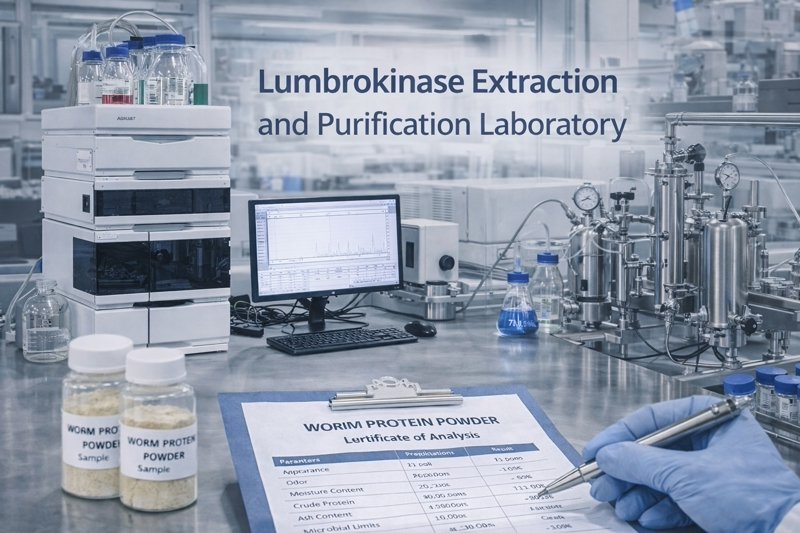
Our product material lays out this exact logic: raw material selection, enzymatic extraction, centrifugation and filtration, low-temperature drying, sterilization, and packaging are presented as critical parts of maintaining activity retention and purity.
That matters because leading brands are not only buying inventory. They’re buying predictability.
Why serious brands prefer specialists
1) Because activity is the real product
For many ingredients, appearance and purity carry the sale. For lumbrokinase, enzyme activity is central. If activity shifts, the finished formula shifts. If the formula shifts, label claims, dosage design, cost per serving, and customer trust all get shaky.
That is why experienced buyers look past a headline specification and ask sharper questions:
What assay method was used?
How is activity verified per batch?
How much variation is typical between lots?
What happens after international transit and storage?
What packaging system is used to protect activity?
Real sourcing pain points: activity loss after shipping, batch inconsistency, unclear assay standards, and delayed delivery. It also positions stable per-batch verified enzyme activity as a key selling point.
Honestly, that’s the conversation serious brands want to have. Not “Can you quote 25 kg?” but “Can you keep this ingredient behaving the same way every time we run production?”
2) Because the mechanism is specialized, so the manufacturing has to be too
Lumbrokinase is not a generic digestive enzyme tossed into a formula for label decoration. The material in your files describes it as a targeted fibrinolytic enzyme complex that directly degrades fibrin, activates plasminogen, and supports natural fibrinolytic pathways.
That specialized biological behavior changes how brands evaluate suppliers.
A brand formulating for circulation-focused products, cardiovascular support, or research-oriented applications does not want a loose manufacturing story. It wants a supplier that understands why handling conditions, drying temperature, microbial limits, storage, and moisture all matter together.
A specialized manufacturer tends to understand the ingredient as a system. A general trader often understands it as a line item.
That difference shows up fast when technical questions start flying.
3) Because regulatory and commercial pressure is real
Leading brands operate under more scrutiny. Their contract manufacturers ask more questions. Their QA teams ask for more records. Their distributors want steadier replenishment. Their own customers, especially in higher-value health categories, do not forgive inconsistency.
And lumbrokinase sits in a sensitive zone. It has strong interest across nutraceutical, pharmaceutical, and functional health product development in your product materials, while the review article in your files points to clinical translation interest and approved oral formulations in several countries.
That does not mean every market treats it the same way. Far from it. It means buyers need a supplier that understands documentation, specs, testing language, and application context clearly enough to support different business models without making a mess of compliance conversations.
That’s one reason specialist manufacturers keep winning. They speak both “factory” and “procurement.”
4) Because traceability starts upstream, not in the COA
A COA matters, sure. But brands with experience know the COA is the end of the story, not the beginning.
The beginning is upstream control:
Where did the raw material come from?
How consistent is the source material?
How is contamination risk reduced?
How are batches separated, logged, and tracked?
How much of the process is actually controlled by the supplier?
This is where specialized manufacturers usually have an edge. They’re built around the ingredient category, so their sourcing systems, processing flow, and QC checkpoints are shaped around enzyme-sensitive production rather than patched together afterward.
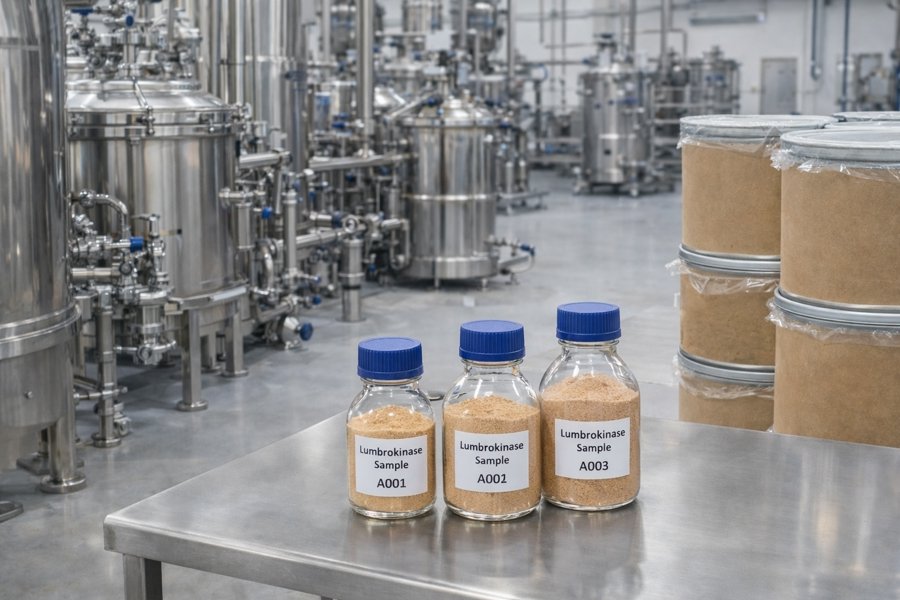
Controlled raw material sourcing, consistent manufacturing process, and stable, large-scale supply as core strengths.
That’s not fluff. That’s procurement language.
5) Because lead brands hate surprises more than they hate price
Price matters. Everybody says otherwise in public and argues about cents in private.
But leading brands usually hate surprises even more than they hate a higher quote.
A cheap batch that loses activity, ships late, or arrives with weak documentation can cost far more than the initial savings. It can delay production, trigger retesting, frustrate a contract manufacturer, or force a reformulation. And once you’re firefighting, that low price suddenly feels very expensive.
That is why many established buyers lean toward a specialized lumbrokinase manufacturer with a cleaner system:
stable supply chain
clear technical answers
repeatable activity
defined packaging
faster communication
better support when something goes sideways
You know what? That’s not glamorous. But it’s exactly what purchasing teams remember.
What specialized manufacturers usually do better
They understand activity range as a formulation question
Our product file lists activity ranges from 10,000 IU/mg to 200,000 IU/mg. That’s not just a sales detail. It tells you the supplier should be able to discuss formulation targets, not merely offer one standard grade to everyone.
A specialist can usually help buyers think through:
- desired activity level
- dosage format
- capsule or tablet loading pressure
- storage considerations
- shipping route sensitivity
- target market positioning
That consultative layer matters a lot more than people admit.
They treat drying and handling as part of product performance
Low-temperature drying sounds like a process note. It’s actually a performance note. When dealing with bioactive enzyme materials, temperature exposure can change what the customer receives at the end of the chain.
Your files directly connect controlled processing, including low-temperature drying, with enzyme stability and activity retention.
Brands that have already had one unstable batch tend to become very interested in “boring” process details. For good reason.
They support premium positioning better
Leading brands often want more than supply. They want a story they can defend.
A specialized manufacturer helps them say, with a straight face:
- the ingredient source is controlled
- activity is verified per batch
- the process is designed around enzyme protection
- specifications can be discussed intelligently
- documentation is ready when needed
That makes the finished brand look more serious too. Which, let’s be honest, is half the battle in crowded supplement and health ingredient markets.
There’s also an R&D angle buyers shouldn’t ignore
One subtle but important reason brands choose specialists is future product development.
Research shows a broader scientific context around earthworm-derived bioactives: fibrinolytic activity, ACE inhibitory peptides, antioxidant peptides, and immunomodulatory peptide research. That doesn’t mean every lumbrokinase buyer needs all those applications right now. But it does mean the ingredient category is supported by ongoing technical work rather than standing still.
Why does that matter commercially?
Because brands rarely stay with one SKU forever. A supplier with category depth can sometimes support line extension, ingredient education, formulation refinement, and content assets better than a simple reseller can. That becomes useful when a buyer wants to move from a basic circulation formula to a more refined premium product line.
What leading brands ask before choosing a lumbrokinase manufacturer
Not all buyers ask this upfront, but the smart ones do.
“How do you verify batch-to-batch activity consistency?”
A supplier should answer clearly. Not vaguely. Not with a brochure paragraph.
“What is your manufacturing flow from raw material to final packaging?”
The right answer should show process control, not hand-waving.
“How do you protect enzyme stability during drying, storage, and shipping?”
This question separates ingredient handlers from ingredient specialists fast.
“Can you explain your activity range and help match it to our formulation?”
That’s where technical support becomes a commercial asset.
“What documentation can you provide for QA and import review?”
Because no one enjoys chasing paperwork the week a shipment lands.
“How stable is your supply if our order volume grows?”
A brand may start small, but serious suppliers should be ready for growth without losing control of quality.
So, what’s the real reason leading brands choose specialized lumbrokinase manufacturers?
Because they are not only buying lumbrokinase.
They are buying confidence in activity. Confidence in traceability. Confidence in process. Confidence in delivery. Confidence that the same material will still behave like the same material next month, next quarter, and after scale-up.
That’s the difference.
When an ingredient is technically sensitive, commercially valuable, and closely tied to finished-product performance, specialization stops being a marketing word. It becomes risk management.
And for leading brands, risk management is rarely optional.
FAQs
1. Why should supplement brands work with a specialized lumbrokinase manufacturer?
A specialized lumbrokinase manufacturer is usually better equipped to control enzyme activity, raw material sourcing, low-temperature processing, and batch consistency. For supplement brands, that means lower formulation risk and more dependable finished-product performance.
2. What should buyers check when sourcing bulk lumbrokinase powder?
Buyers should check activity range, assay method, batch-to-batch consistency, microbial limits, moisture, packaging, shipping stability, and documentation support. These details matter far more than price alone when sourcing bulk lumbrokinase powder.
3. How do specialized lumbrokinase suppliers help with product quality?
Specialized lumbrokinase suppliers usually build their process around activity retention and purity. That includes controlled extraction, centrifugation, filtration, low-temperature drying, and per-batch verification, which helps protect product quality during storage and transit.
4. Is lumbrokinase suitable for nutraceutical and pharmaceutical development?
Lumbrokinase as a raw material used in nutraceutical, pharmaceutical, and functional health product development, especially where fibrinolytic activity and circulation-focused positioning matter.
5. What makes a reliable lumbrokinase manufacturer for long-term B2B supply?
A reliable lumbrokinase manufacturer offers stable supply, clear technical communication, repeatable activity, controlled production, and documentation that supports QA and commercial purchasing. For long-term B2B supply, those factors usually matter more than chasing the cheapest quote.

Upgrade Your Supplement Formulation Today
Talk to us about custom specifications