

For a dietary supplement formulator, selecting Lumbrokinase is not simply a matter of choosing an activity number. Ingredient identity, specification, assay context, formulation behavior, sample results, documentation and batch consistency should be considered together before the raw material advances to formula approval.
For an enzyme ingredient, a supplier result describes the raw material under a stated test system; it does not establish how a finished formula will perform. The formulation team must translate the specification into a project-specific evaluation plan.
1. Establish the Formulation Requirements Before Comparing Materials
Begin with the intended product and the decision the raw-material evaluation must support. Without an internal requirement, teams can collect supplier documents and samples without knowing what constitutes approval.
Define:
- the intended format and target market;
- the activity expression, laboratory method and acceptance logic;
- relevant quality requirements;
- anticipated manufacturing and storage conditions; and
- evidence required for the next development stage.
Do this before comparing headline activity values. Ingredient weight and measured activity answer different questions, and neither alone proves finished-product suitability.
For an overview of the available ingredient and its B2B documentation, start with the Allworms Lumbrokinase Product Page. Broader questions about products, samples, documentation and commercial support are addressed on the Allworms FAQ Page.
2. Review the Ingredient Specification in Assay Context
The activity specification is a central part of Lumbrokinase ingredient evaluation, but it must be read together with the assay method and reporting basis.
The current Allworms commercial expression is:
- Fibrinolytic Activity: ≥1,000,000 U/g
- Assay Method: Fibrin Plate Assay
The number, unit and method belong together. A formulator should not automatically convert this U/g result into IU/mg, FU/g, LKU or another activity system. Different methods, standards, substrates, test conditions and calculation approaches may produce results that are not directly interchangeable.
Confirm:
| Review Item | Formulation-Stage Question |
|---|---|
| Ingredient identity | Is the material clearly identified as the Lumbrokinase raw material being evaluated? |
| Activity specification | Is the minimum or agreed activity requirement stated clearly? |
| Reporting unit | Is the unit consistent across the specification, COA and technical discussion? |
| Assay method | Is the method stated, and does the buyer understand the context in which the result was generated? |
| Testing basis | Is the reported value tied to the powder and calculation basis described by the supplier? |
| Other quality parameters | Do the available limits support the buyer’s internal review for the intended market and product? |
If the buyer’s laboratory plans to use a different activity method, that difference should be identified before testing begins. The evaluation plan should explain how results will be interpreted rather than assuming that two unlike unit systems can be converted.
For the specialized unit discussion, see Lumbrokinase Activity Units: IU/mg, FU/g, LKU and U Explained.
3. Evaluate Compatibility With the Intended Formulation
Next, determine whether the material behaves acceptably in the proposed formulation and process. The activity specification alone cannot answer this.
The R&D team should evaluate the characteristics that matter to its actual product, which may include:
- appearance, odor and other relevant organoleptic observations;
- powder flow and handling during bench work;
- blend behavior and distribution within the intended formula;
- interaction with the proposed excipient system;
- suitability for the selected manufacturing steps;
- the effect of expected environmental exposure during development; and
- the ability to sample and test the blend or finished prototype meaningfully.
Tests depend on the dosage form, excipients, equipment, packaging and internal requirements. Allworms does not determine the customer’s finished formula, serving amount or regulatory conclusion.
Do not assume compatibility from another product or infer finished-product potency from raw-material activity and weight alone without a valid, verified basis.
4. Use a Representative Sample Before Formula Approval
A representative sample connects document review with formulation work and shows whether the material can proceed into laboratory and bench testing.
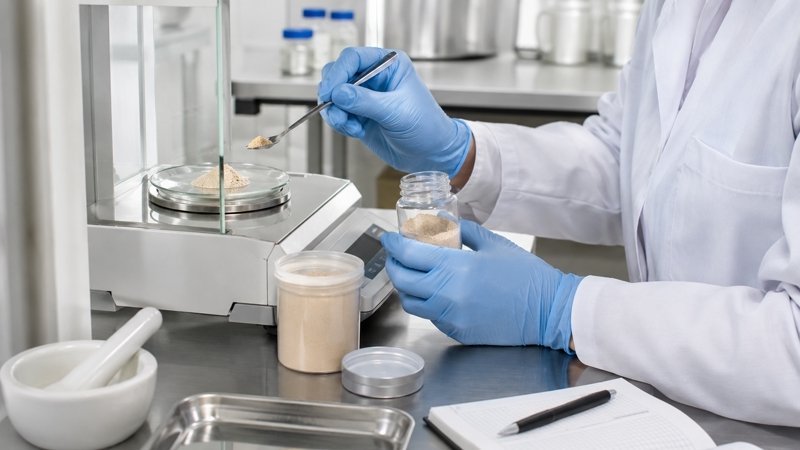
Before opening or testing the sample, record the package condition, label, batch number and storage information. Confirm that the accompanying COA refers to the sample batch. Then conduct the tests defined in the evaluation plan, using controlled procedures and documenting any deviations.
The sample stage can help answer three different questions:
- Document alignment: Does the sample identity and batch information match the supplied documents?
- Raw-material suitability: Does the sample meet the buyer’s agreed incoming or development criteria?
- Formulation behavior: Does it perform acceptably in the buyer’s proposed formula and process at the current development scale?
A sample may conform to the supplier specification yet still require reformulation or additional testing. A result generated with a different assay system should be investigated in method context before being treated as evidence of batch failure.
For the detailed sample-stage checklist, use Lumbrokinase Sample Evaluation: What B2B Buyers Should Check rather than expanding the full procedure on this pillar page.
5. Review Documentation Alongside the Physical Sample
The physical sample and technical documents should form one review package. A specification sheet defines the expected product requirements, while a COA reports results or conformity for a particular batch. Neither should be treated as a substitute for the other.
At the formulation stage, the team should check whether:
- the product name and ingredient identity are consistent across documents;
- the activity specification, unit and assay method align;
- the sample batch number matches the batch-specific COA;
- relevant physical, chemical, heavy-metal and microbiological information is available for review;
- storage, shelf-life and packaging information is clear enough to support development handling; and
- document versions and approval records are controlled internally.

Additional documentation depends on the customer’s quality system, market and product category. One document alone does not establish regulatory suitability.
For each document’s role, see Lumbrokinase COA vs Specification Sheet: What B2B Buyers Should Compare.
6. Define Handling, Storage and Development Conditions
Handle samples according to the supplier’s stated information and the buyer’s controlled procedures.
Practical controls include:
- recording receipt, opening and test dates;
- minimizing unnecessary exposure during weighing and bench work;
- keeping containers properly closed between uses;
- monitoring the development environment where relevant;
- preventing sample mix-ups or cross-contamination;
- defining hold times for intermediate blends; and
- retaining enough material, when practical, for investigation or repeat testing.
If the process involves moisture, heat, extended processing or prolonged storage, evaluate those conditions experimentally. The question is whether the material retains the required characteristics in the customer’s defined formula, process, package and shelf-life study.
7. Evaluate Batch Consistency Before Commercial Scale-Up
Formula approval based on one sample is incomplete unless the team defines what must remain consistent in future supply.
Before scale-up, discuss and document:
- which specification version will govern future supply;
- whether the sample represents an available batch or the intended commercial grade;
- which activity unit and assay method will remain in use;
- which batch documents will accompany or precede shipment;
- how changes in specification, method or manufacturing information will be communicated; and
- how the buyer will address results from a different internal or third-party method.
Batch consistency does not mean identical numerical results. Each batch should be evaluated against agreed requirements using an understood testing basis, with any required document review, confirmation testing or release step.

8. Build a Practical Formula-Approval Workflow
A useful workflow separates supplier information from customer verification.
| Stage | Required Output |
|---|---|
| Define requirements | Intended application, market, format, specification and acceptance plan |
| Review specification and assay context | Agreed raw-material criteria with a clear activity unit and method |
| Request technical documents | Controlled document package for internal review |
| Evaluate sample | Identity, document alignment and raw-material test results |
| Conduct formulation testing | Recorded observations and results for the proposed formula and process |
| Review results | Deviations, unresolved questions and approval rationale |
| Confirm batch and supply expectations | Agreed specification, batch documentation and change communication |
| Approve the next stage | Documented authorization for further development, pilot work or purchasing review |
The customer remains responsible for its finished formula, claims, legal status and final regulatory approval.
Conclusion
Effective lumbrokinase formulation begins before the first bench blend. The central question is not whether the ingredient has a high activity number, but whether the documented raw material meets project requirements, behaves acceptably in the proposed formula and provides a suitable basis for the next controlled development stage.
FAQ
1. What should a formulation team review first when evaluating Lumbrokinase?
Define the intended product, target market, dosage form, raw-material specification, activity-testing approach and internal approval criteria before comparing samples or activity numbers.
2. Is the highest activity value automatically the best choice for a formula?
No. Activity must be interpreted with its unit, assay method and reporting basis. The selected specification must also fit the team’s formulation, testing and quality requirements.
3. Can U/g be converted directly into IU/mg, FU/g or LKU?
It should not be converted automatically. These expressions may depend on different assay methods, standards and calculation systems and are not necessarily interchangeable.
4. Does a raw-material COA prove that a finished supplement will meet its target?
No. A COA reports results or conformity for a raw-material batch. Finished-product suitability and performance require customer-side formulation, process, testing, stability and regulatory review.
5. What should be checked during a Lumbrokinase formulation trial?
Use predefined criteria relevant to the project, such as powder handling, blend behavior, excipient compatibility, process suitability and the ability to verify required quality characteristics after relevant development stages.
6. Should the sample COA match the sample batch?
Yes. The sample label and batch-specific COA should refer to the same batch so the physical material and reported results can be reviewed together.
7. How should a team handle a third-party activity result that differs from the supplier COA?
First compare the methods, units, standards, sample preparation, test conditions and calculation basis. A numerical difference should not be interpreted without understanding whether the methods are comparable.
8. When is a Lumbrokinase raw material ready for formula approval?
It is ready to advance when the customer’s authorized team has reviewed the specification and documents, evaluated the representative sample, completed the required formulation testing, resolved material discrepancies and documented expectations for future batches.
Build Your Lumbrokinase Formulation Review On Clear Specifications And Relevant Test Results
Request the available specification, batch COA and sample information to begin your technical evaluation