
A lumbrokinase specification sheet is one of the most important technical documents for B2B buyers evaluating an earthworm-derived fibrinolytic enzyme ingredient. Before requesting a sample or approving a bulk order, buyers should understand what each specification item means, how the activity is measured, and whether the supplier can consistently meet the listed quality standard.
For supplement brands, nutraceutical companies, enzyme formulation developers, ingredient distributors, and OEM buyers, a specification sheet should not be treated as a simple product brochure. It is a quality reference document that helps buyers compare source, activity specification, assay method, moisture, ash, heavy metals, microbiology, storage, packaging, and batch consistency before moving forward with purchasing decisions.
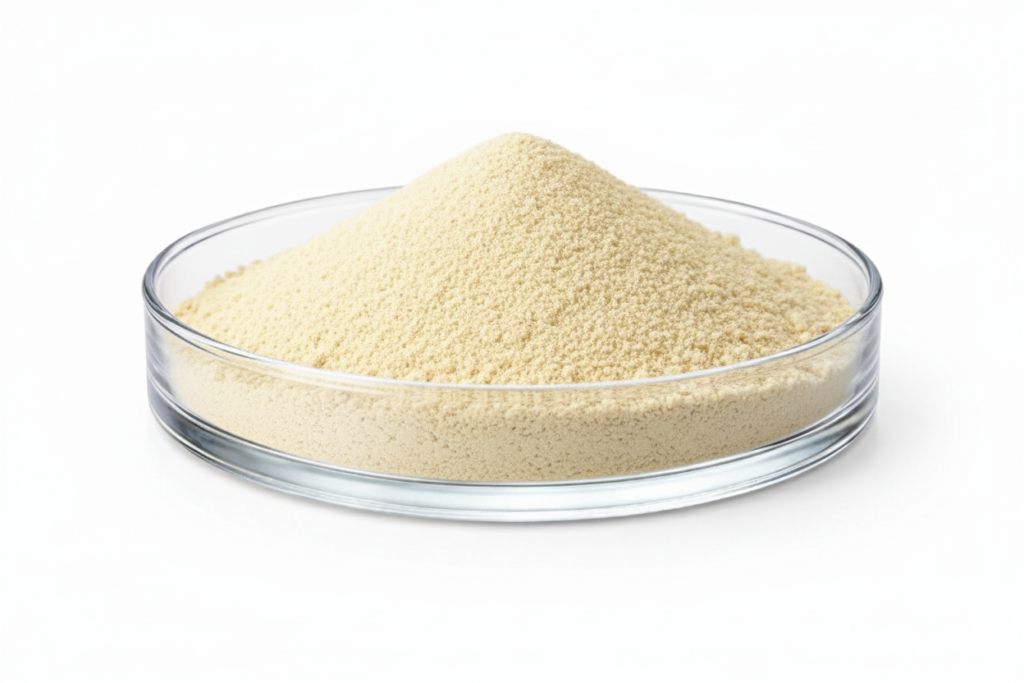
Quick Answer: What Is a Lumbrokinase Specification Sheet?
A lumbrokinase specification sheet defines the target quality standard or expected product requirements for lumbrokinase powder. It usually includes source, appearance, activity specification, assay method, moisture, ash, heavy metals, microbiology, packaging, storage, and shelf life.
A specification sheet is different from a COA. The specification sheet shows the expected standard, while a COA reports the actual test results for one specific batch. For a full comparison, buyers can review the related article Lumbrokinase COA vs Specification Sheet.
Why This Matters for B2B Buyers
A lumbrokinase specification sheet helps buyers answer practical sourcing questions before they invest time and cost in sample testing or bulk purchasing.
For B2B buyers, the key questions are not only “What is the activity?” but also:
Can the supplier explain the assay method?
Are activity units based on the same testing system?
Does the product meet heavy metal and microbiology requirements?
Can the supplier provide a batch COA?
Is the specification realistic for repeated bulk production?
Are packaging, storage, and lead time suitable for international supply?
This is especially important for lumbrokinase because it is an enzyme ingredient. Activity performance can be influenced by assay method, storage conditions, humidity, temperature, and handling during international shipping. A clear specification sheet helps both buyer and supplier reduce misunderstanding before sample evaluation or purchase approval.
Technical Explanation: How to Read Each Section of a Lumbrokinase Specification Sheet
A professional lumbrokinase specification sheet should help buyers understand both product identity and quality control requirements. The following sections are the most important.
1. Product Name and Ingredient Identity
The product name should clearly identify the material as Lumbrokinase or Lumbrokinase Powder. For B2B purchasing, avoid relying only on broad names such as “fibrinolytic enzyme” or “earthworm enzyme,” because these terms may not clearly define the ingredient system.
Buyers should confirm whether the product is:
Earthworm-derived lumbrokinase
A general fibrinolytic enzyme material
A blended enzyme product
A peptide or protein powder instead of an active enzyme ingredient
This distinction matters because Earthworm Protein Powder, Earthworm Peptide Powder, and Lumbrokinase are not the same product. Lumbrokinase is positioned as an earthworm-derived fibrinolytic enzyme ingredient. Earthworm Peptide Powder is produced through enzymatic hydrolysis but is not positioned as an active enzyme ingredient such as lumbrokinase.
For product-level information, buyers can review the Lumbrokinase product page.
2. Source and Raw Material
The source section should identify the material as earthworm-derived. Some specification sheets may list sources such as fresh earthworm, Eisenia fetida, Lumbricus rubellus, or other earthworm species.
For B2B buyers, source information helps evaluate traceability, consistency, and supplier reliability. A manufacturer with its own earthworm breeding base and production facility may have better control over raw material quality than a trader relying only on external sourcing.
Questions to ask:
What earthworm source is used?
Is the supplier a manufacturer or trader?
Can the supplier explain raw material control?
Is the source consistent between sample and bulk order?
Can batch records or traceability information be supported when required?
3. Appearance, Color, and Odor
Lumbrokinase powder is commonly described as a light yellow to brown powder with a special fishy odor. Appearance may seem simple, but it is useful for quick batch comparison.
Buyers should check whether the specification sheet defines:
Color range
Powder form
Odor description
Visible foreign matter requirement
Solubility description, if applicable
Appearance alone cannot confirm quality or activity, but obvious differences between sample and bulk batches should be reviewed with the supplier.
4. Activity Specification
Activity specification is one of the most critical sections of a lumbrokinase specification sheet. It indicates the target enzyme activity level, such as 10,000 IU/mg, 20,000 IU/mg, or another activity grade.
Buyers may also see units such as IU/mg, FU/g, LKU, or U on different supplier documents. These units are not always directly interchangeable because assay methods, substrates, incubation conditions, reference standards, and calculation methods may differ.
This article does not repeat the full activity unit explanation. For more detail, buyers can review Lumbrokinase Activity Units.
For purchasing decisions, buyers should not compare numbers only. They should compare activity specification together with the assay method.
5. Assay Method
The assay method explains how the activity is tested. For lumbrokinase, a fibrin plate assay is commonly used to evaluate fibrinolytic activity.
This section is very important because two products with similar activity numbers may not be directly comparable if they are tested under different methods. A buyer reviewing a lumbrokinase specification should ask:
Is the assay method clearly stated?
Is the method suitable for earthworm-derived lumbrokinase?
Is the same method used for both sample and bulk batch COA?
Can the supplier provide method details if needed?
Can the buyer’s own lab reproduce or understand the test basis?
For enzyme ingredients, the assay method often matters as much as the activity number.
6. Moisture
Moisture is important for enzyme stability and storage. High moisture may increase the risk of caking, microbial growth, reduced shelf life, or enzyme activity changes during storage.
A specification sheet may list a limit such as moisture ≤8% or another defined standard. Buyers should confirm whether the moisture result appears on the batch COA and whether packaging is suitable for moisture protection.
For international buyers, moisture control is especially relevant when shipping to humid or hot destinations.
7. Ash or Residue on Ignition
Ash or residue on ignition gives buyers a general indication of inorganic residue content in the powder. It does not directly measure enzyme activity, but it is still part of overall quality evaluation.
Buyers should compare the ash limit on the specification sheet with the actual batch COA result. If the ash value changes greatly between batches, it may be worth asking the supplier for clarification.
8. Heavy Metals
Heavy metal testing is essential for ingredient approval, especially for dietary supplement and nutraceutical applications. Common heavy metal items include:
Lead
Arsenic
Cadmium
Mercury
The specification sheet should list limits, while the COA should report batch-specific results. Buyers should check whether the limits match the regulatory expectations of the target market and finished product category.
Because final product requirements vary by country and application, the buyer should evaluate heavy metal limits according to the intended market and finished product use.
9. Microbiology
Microbiology specifications help buyers evaluate whether the ingredient is suitable for further processing or formulation. Common microbiology items may include:
Aerobic plate count
Yeasts and molds
Coliforms
Salmonella
Staphylococcus aureus
For supplement and nutraceutical buyers, microbiology results are often required before sample approval and bulk order confirmation. Buyers should confirm that the supplier can provide batch COA results for microbiology items.
10. Packaging
Packaging affects enzyme protection, handling, and logistics. A specification sheet may include bag size, carton size, drum packaging, or customized packaging options.
For lumbrokinase, buyers should consider:
Is the packaging moisture-resistant?
Is the package size suitable for the buyer’s production use?
Can the supplier support small trial orders and bulk orders?
Is the packaging consistent between sample and bulk supply?
Can export packaging support international shipping?
Packaging may seem like a commercial detail, but for enzyme ingredients it is also part of quality protection.
11. Storage Conditions
Lumbrokinase is an enzyme-sensitive ingredient. Specification sheets often recommend storage in a cool, dry place, tightly sealed, protected from moisture and light.
Buyers should confirm whether the storage condition is practical for their warehouse, contract manufacturer, or formulation facility. High temperature, humidity, and repeated opening may affect enzyme quality over time.
12. Shelf Life
Shelf life should be reviewed together with storage conditions and packaging. A typical shelf life may be listed as two years under proper storage conditions, but buyers should confirm the manufacturing date and expiry date on the batch COA before ordering.
For sample evaluation, buyers should also check whether the sample represents a current production batch or only a reference sample.
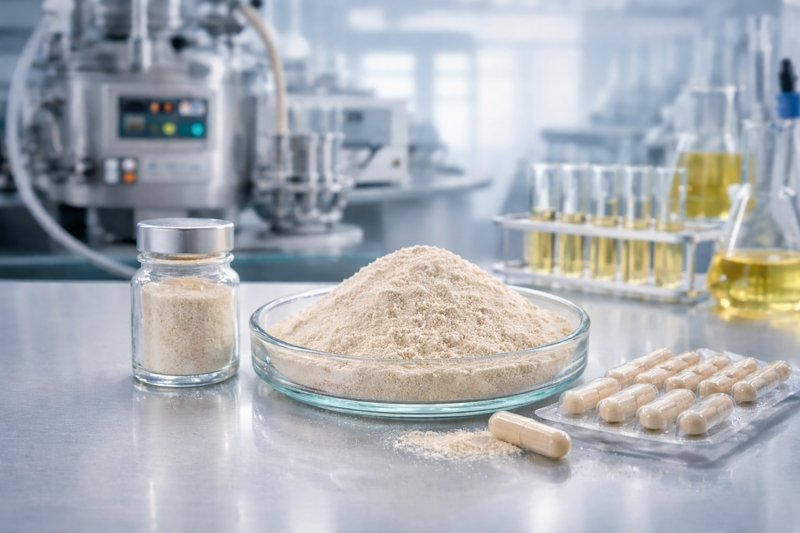
Common Lumbrokinase Specification Sheet Items
| Specification Item | What It Means | What B2B Buyers Should Check |
|---|---|---|
| Product Name | Identifies the ingredient | Confirm it is lumbrokinase, not peptide powder or general enzyme blend |
| Source | Shows raw material origin | Check whether it is earthworm-derived and whether traceability is available |
| Appearance | Describes color and powder form | Compare sample and bulk batch appearance |
| Activity | Defines target enzyme activity | Review activity level together with the assay method |
| Activity Unit | Shows how activity is expressed | IU/mg, FU/g, LKU, or U may not be directly interchangeable |
| Assay Method | Explains the testing basis | Confirm whether fibrin plate assay or another method is used |
| Moisture | Indicates water content limit | Important for stability, caking risk, and storage |
| Ash | Indicates inorganic residue level | Compare specification limit with batch COA result |
| Heavy Metals | Lists safety-related limits | Check lead, arsenic, cadmium, and mercury against market requirements |
| Microbiology | Shows microbial quality requirements | Review aerobic plate count, yeasts and molds, coliforms, Salmonella, and Staphylococcus aureus |
| Packaging | Defines standard pack format | Confirm suitability for sample, trial order, and bulk order |
| Storage | Gives handling conditions | Keep sealed, cool, dry, and protected from moisture |
| Shelf Life | Defines expected usable period | Confirm manufacturing date and expiry date on the COA |
| Supplier Notes | Gives purchasing or testing guidance | Ask whether the same specification can be met consistently |
Buyer Checklist for Reviewing a Lumbrokinase Specification Sheet
| Buyer Review Point | Why It Matters | Checked |
|---|---|---|
| Product is clearly identified as lumbrokinase | Avoids confusion with earthworm protein or peptide products | ☐ |
| Earthworm source is stated | Supports raw material traceability | ☐ |
| Activity specification is clearly listed | Helps define the target quality grade | ☐ |
| Assay method is provided | Activity values depend on testing method | ☐ |
| Activity unit is understood | IU/mg, FU/g, LKU, and U may differ by method | ☐ |
| Moisture limit is acceptable | Supports enzyme stability and shelf life | ☐ |
| Heavy metal limits are listed | Important for supplement and nutraceutical applications | ☐ |
| Microbiology requirements are included | Important for ingredient approval | ☐ |
| Packaging and storage conditions are practical | Helps protect quality during shipping and warehousing | ☐ |
| Shelf life is clearly stated | Helps purchasing and production planning | ☐ |
| Batch COA is available | Confirms actual test results for a specific batch | ☐ |
| Sample evaluation is available before bulk order | Reduces purchasing risk | ☐ |
| Supplier can support MOQ, lead time, and shipping | Important for commercial planning | ☐ |
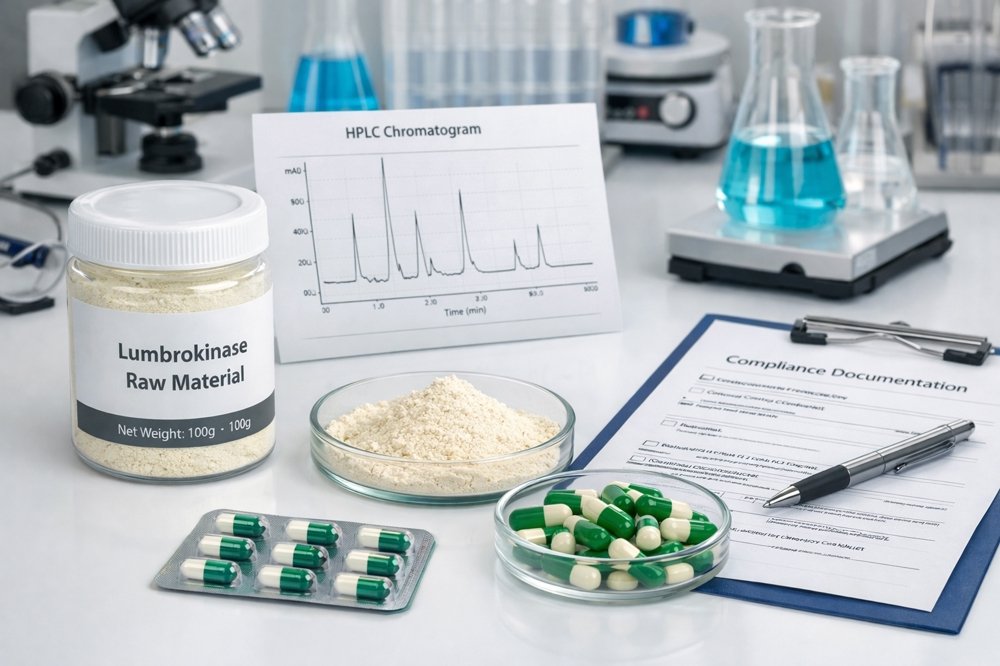
Common Mistakes or Misunderstandings
Mistake 1: Treating the Specification Sheet as a Batch Test Report
A specification sheet defines the expected quality standard. It does not prove that a specific batch has been tested. Buyers should request the batch COA when evaluating a sample or preparing for bulk purchase.
Mistake 2: Comparing Activity Numbers Without Checking Assay Method
A higher number does not always mean a better product if the assay method is different. Activity values should be compared only when the testing basis is clear.
Mistake 3: Ignoring Moisture and Storage Conditions
For enzyme ingredients, storage and moisture control are important. A product with good initial activity still needs suitable packaging and storage to maintain quality.
Mistake 4: Reviewing Heavy Metals Too Late
Heavy metal limits should be checked before sample approval, not after a bulk order is ready. Different markets may have different finished product requirements.
Mistake 5: Assuming Sample and Bulk Batch Are Always Identical
Buyers should confirm whether the sample represents the same specification and production standard as the future bulk order. Batch consistency should be discussed before purchase approval.
Allworms Supply Notes
Allworms Bio-Tech Co., Ltd supplies lumbrokinase as an earthworm-derived fibrinolytic enzyme ingredient for dietary supplement, nutraceutical, enzyme formulation, and research-related applications.
For B2B buyers reviewing a lumbrokinase specification sheet, Allworms can provide specification sheet and COA information for available batches. Buyers can request sample evaluation before moving to bulk orders.
Supply details may include:
100 g sample may be available for qualified B2B buyers
Standard MOQ is usually around 1.5 kg, depending on product specification
Standard lead time is usually 7–15 days after payment
DDP door-to-door shipping may be available for selected destinations
Sample, MOQ, pricing, lead time, and shipping options can be confirmed according to destination, activity specification, and order quantity.
For buyers still comparing source and product identity, the related article What Is Lumbrokinase? Source, Activity and B2B Supply Guide may be useful. For buyers preparing sample testing, review Lumbrokinase Sample Evaluation. For raw material background, see The Origin of Lumbrokinase.
This product is supplied as a B2B ingredient. Final formulation suitability, dosage, labeling, health claims, and regulatory compliance should be evaluated by the buyer according to the intended market and finished product use.
FAQ
1. What is a lumbrokinase specification sheet?
A lumbrokinase specification sheet is a technical document that defines the expected quality standard for lumbrokinase powder. It may include source, appearance, activity, assay method, moisture, ash, heavy metals, microbiology, packaging, storage, and shelf life.
2. Is a specification sheet the same as a COA?
No. A specification sheet defines the target standard, while a COA reports actual test results for a specific batch. Buyers should review both documents before approving a sample or bulk order.
3. Which item is most important on a lumbrokinase specification sheet?
Activity specification and assay method are usually the most important items because lumbrokinase is an enzyme ingredient. Heavy metals, microbiology, moisture, storage, and batch consistency are also critical for B2B purchasing.
4. Can different lumbrokinase activity units be directly compared?
Not always. IU/mg, FU/g, LKU, and U may be based on different assay systems or calculation methods. Buyers should compare activity values only after confirming the assay method and testing basis.
5. Should buyers request a sample before placing a bulk order?
Yes. Sample evaluation helps buyers confirm appearance, activity testing, formulation suitability, documentation, and supplier communication before bulk purchasing. Allworms may provide a 100 g sample for qualified B2B buyers, with details confirmed according to the inquiry.
Short B2B CTA
Review the lumbrokinase specification sheet with Allworms before sample evaluation or bulk order approval.
Contact Allworms to request COA, specification, sample, MOQ, pricing, lead time, and shipping details.
3 comments on “How to Read a Lumbrokinase Specification Sheet”
Comments are closed.