Why the profile matters
For most buyers, “high protein” is only the opening line. It sounds good on a spec sheet, sure, but it does not tell the whole story. What really gets attention is the amino acid profile—because that is where the nutritional value, formulation logic, and product positioning start to make sense.
Earthworm protein powder has been getting more attention as an alternative animal protein source, and not only because its crude protein level is strong. Research describes earthworm protein as a protein-rich ingredient, typically in the range of roughly 56–66% dry weight in one paper and 60% to more than 70% in another, depending on species, raw material handling, and measurement method. The same research also notes that earthworm proteins contain eight essential amino acids.
That’s the part many buyers pause on. Not just “protein,” but “what kind of protein are we really dealing with?”
And honestly, that’s the right question.
So, what is an amino acid profile, anyway?
An amino acid profile is the breakdown of the amino acids present in a protein. Think of it like the blueprint behind the ingredient. Two powders can both say “protein,” yet perform very differently in nutrition, digestion, product claims, and downstream hydrolysis work.
For ingredient buyers, the amino acid profile helps answer several practical questions:
- Is the protein nutritionally complete enough for the intended market?
- Does it contain strong levels of essential amino acids?
- Are certain amino acids especially abundant and useful for positioning?
- Is it better suited for general protein nutrition, peptide production, or bioactive research?
- Can it help a product stand out from soy, pea, fish, or collagen-based competition?
That last point matters more than people admit. In a crowded ingredient market, boring protein doesn’t move. Distinctive protein does.
What stands out in the amino acid pattern?
Here’s the thing: the most useful takeaway from the current source material is not a full laboratory table of all 20 amino acids. The strongest, clearly stated finding is qualitative rather than exhaustive.
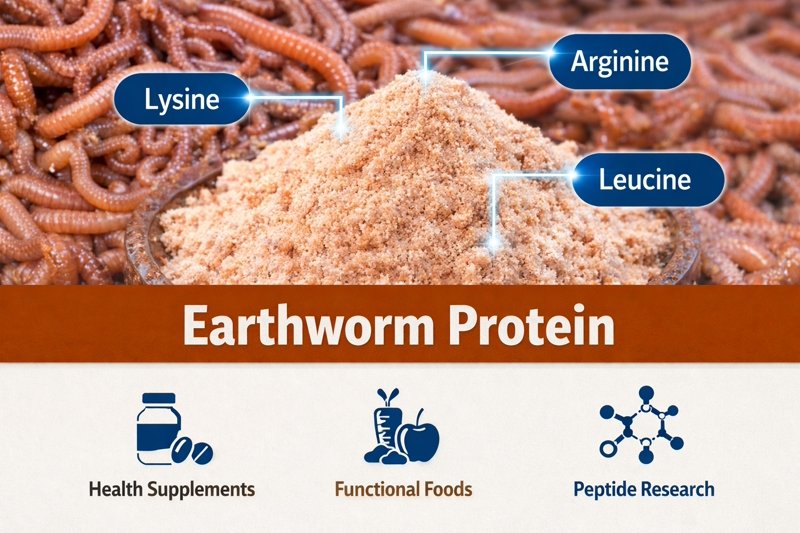
The research says earthworm protein contains eight essential amino acids, and the total essential amino acid composition is described as better than fish, milk, and soybean meal in the cited comparison. It also states that lysine, leucine, and arginine are the most abundant amino acids in earthworm protein. On top of that, the amino acid pattern is described as closer to human protein needs than general plant proteins, with a relatively high utilization rate in the body.
That gives us a pretty meaningful picture already.
1. Lysine is a big deal here
Lysine is often a limiting amino acid in cereal-based diets and in some plant-heavy formulations. When an ingredient is naturally rich in lysine, it becomes easier to position it as a complementary protein source in blends.
From a business angle, that matters in:
- protein blends paired with grains or botanicals
- senior nutrition concepts
- recovery-focused formulas
- specialized functional foods
A lysine-rich profile can also support premium messaging around “better amino acid balance,” though the exact wording has to match the target market’s regulatory rules.
2. Leucine adds serious formulation interest
Leucine gets attention because it is closely associated with muscle protein signaling and sports nutrition conversations. Now, the uploaded research does not claim earthworm protein powder is a sports supplement miracle. And that restraint matters. But it does state leucine is among the most abundant amino acids in earthworm protein.
That alone makes the ingredient more interesting for:
- protein powders
- recovery blends
- active-aging concepts
- protein-fortified functional foods
It also gives product developers a better story than “just another animal protein.”
3. Arginine helps the profile feel more functional
Arginine is one of those amino acids that tends to catch the eye of R&D teams because it fits into broader conversations around circulation, metabolism, and bioactive peptide potential. Again, we should not overstate it. But when arginine appears among the most abundant amino acids, it supports the idea that earthworm protein is not only nutritional—it may also be a useful substrate for generating targeted peptide fractions.
And that connects nicely with the peptide research, where gastrointestinal digestion of earthworm protein produced peptides with antioxidant, ACE-inhibitory, and immunomodulatory activity in lab or animal models.
Why buyers should care
This is where the conversation shifts from chemistry to commerce.
Amino acid profile matters because it shapes how the ingredient can be sold, blended, and explained.
For dietary supplement brands
A better amino acid balance gives brands more room to position the ingredient as a premium protein source rather than a novelty raw material. That is a huge difference. Novelty gets clicks. Nutritional logic gets repeat orders.
Earthworm protein’s reported essential amino acid content, plus its emphasis on lysine and leucine, makes it more interesting for:
- premium protein capsules or powders
- active-lifestyle formulas
- healthy aging products
- functional peptide-based concepts
For nutraceutical ingredient suppliers
Suppliers need stories that are technically grounded. “Contains protein” is weak. “Contains a complete essential amino acid set with notable lysine, leucine, and arginine abundance” is much more useful—provided it is backed by batch testing and framed carefully.
And there is a second advantage: earthworm protein is not only being discussed as nutrition. The source files also connect it to peptide generation after digestion or hydrolysis, which supports value-added ingredient development.
For pharmaceutical ingredient and research-oriented buyers
Here, the amino acid profile is not just about nutrition. It is also about substrate quality. A protein rich in certain amino acids may be more attractive for controlled enzymatic hydrolysis, especially when the downstream target is peptide discovery.
That’s not a small point. The studies identified antioxidant peptides from earthworm protein, novel ACE-inhibitory peptides from gastrointestinal digestion products, and immunomodulatory peptides from autolysates.
So the amino acid profile is part of the value story, but it is also part of the raw-material logic for peptide R&D.
For cosmetics suppliers
Now, this may seem like a side road, but stay with me. In cosmetic ingredient development, amino acid-rich protein hydrolysates and peptide fractions are often more commercially useful than intact proteins. Buyers in this space may be less interested in “dietary completeness” and more interested in hydrolysate potential, skin-conditioning concepts, and active fraction development.
Earthworm protein’s profile, combined with its ability to generate small peptides under digestion or enzymatic treatment, may support that conversation—though cosmetic claims must be developed from cosmetic-specific evidence, not borrowed from nutrition research. That distinction is important. Very important.
A mild contradiction worth clearing up
Earthworm protein powder is interesting because it is both straightforward and complicated.
Straightforward, because the top-line nutrition story is easy to understand: high protein, essential amino acids present, and notable lysine/leucine/arginine abundance.
Complicated, because “amino acid profile” is not one fixed, universal number set. It shifts with:
- earthworm species
- farming conditions
- freshness of raw material
- defatting or extraction method
- whether you are testing raw meal, isolated protein, or hydrolysate
- drying temperature and processing intensity
So yes, you can talk about the profile in general terms. But no, you should not treat one literature result as if it automatically defines every supplier’s batch. That’s where people get sloppy.
Protein powder vs peptides: same family, different business story
Earthworm protein powder is the broad nutritional ingredient. It is the base material.
Earthworm peptides are what you get after hydrolysis, digestion simulation, or other protein breakdown steps. They are smaller, often easier to formulate in certain applications, and much more likely to be linked with specific functional studies.
The papers show that earthworm protein can yield:
- antioxidant peptides, including AFWYGLPCKL, WPWQMSLY, and GCFRYACGAFY as standout sequences in one study
- ACE-inhibitory peptides such as SSPLWER and RFFGP in another study
- immunomodulatory peptides, with WNWLLPLMLG highlighted in the autolysate work
Why mention this in an article about amino acids? Because amino acid profile is the foundation, while peptide performance is often the commercial extension.
In plain English: the amino acids are the alphabet; the peptides are the message.
How to evaluate amino acid claims without getting sold a fairytale
Buyers hear a lot of enthusiastic language in this category. Some of it is fair. Some of it is, well, a bit much.
Here’s what to check:
Ask for a batch-specific amino acid test report
Do not rely on a generic marketing sheet. Ask whether the amino acid profile is based on the current production lot or an old reference sample.
Confirm whether the sample is raw powder, purified protein, or hydrolysate
Those are not the same material, and the profile presentation may differ accordingly.
Check if essential amino acids are reported individually
A supplier who only says “contains essential amino acids” without any analytical backing is giving you smoke, not data.
Ask about processing
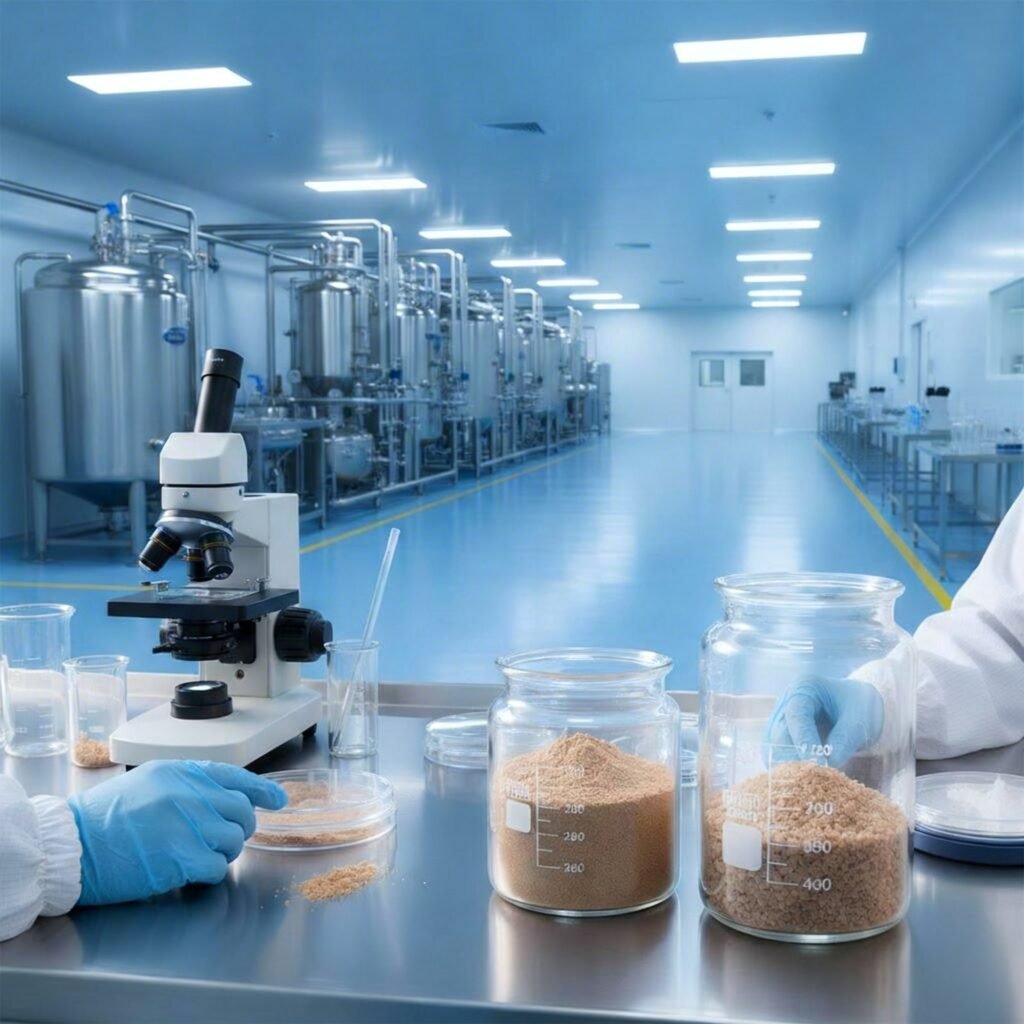
Extraction and drying matter. Earthworm protein production flow involving selection, cleaning, separation, filtration, low-temperature drying, pulverizing, sterilization, and packaging. That kind of process detail matters because protein quality is not only about biology; it is also about handling.
Keep functional claims separate from compositional facts
Amino acid profile supports the nutritional story. Bioactive peptide data supports a research story. Clinical benefit claims need their own evidence. Mixing those three levels together is where trouble starts.
What this means for market positioning
If you are a manufacturer, wholesaler, or ingredient dealer, the amino acid profile gives you three practical positioning lanes.
Lane 1: Premium alternative protein
Use the essential amino acid story and the lysine/leucine/arginine emphasis to position earthworm protein as a differentiated animal-derived protein source.
Lane 2: Functional peptide precursor
For R&D-driven customers, emphasize that earthworm protein is not only nutritious but also a promising substrate for hydrolysate and peptide development.
Lane 3: Niche innovation ingredient
For customers who want something beyond soy, whey, fish, or collagen, this ingredient brings a fresh narrative—provided quality control, traceability, and compliance are handled properly.
That last part may not be glamorous, but it is where deals are won. Fancy claims are easy. Stable supply and clean paperwork? That’s the real flex.
The bottom line
The amino acid profile of earthworm protein powder is one of its strongest selling points. The available research shows that earthworm protein contains eight essential amino acids, with lysine, leucine, and arginine reported as the most abundant. The same research also suggests the overall amino acid pattern compares favorably with common reference proteins and may be closer to human needs than general plant proteins.
For B2B buyers, that means earthworm protein powder is more than a curiosity. It can be discussed as:
- a serious protein ingredient
- a nutritionally interesting alternative protein
- a promising precursor for bioactive peptide development
Still, the smart move is not to oversell it. Ask for real amino acid data, confirm the processing route, and match the material to the end application. That’s how you separate a workable ingredient from a flashy brochure.
And really, that’s the whole game.
FAQs
1. What makes the amino acid profile of earthworm protein powder attractive for supplement brands?
Earthworm protein powder is attractive because research describes it as containing eight essential amino acids, with lysine, leucine, and arginine among the most abundant. That gives supplement brands a stronger nutritional story than a simple crude protein claim.
2. Is earthworm protein powder a complete protein source?
The research states that earthworm proteins contain eight essential amino acids, which supports positioning it as a nutritionally valuable protein source. Still, buyers should request a batch-specific amino acid analysis from the supplier before making formulation or marketing decisions.
3. Why do buyers care about lysine, leucine, and arginine in earthworm protein powder?
These amino acids matter because they help shape product positioning. Lysine supports balance in protein blends, leucine is relevant in active-nutrition discussions, and arginine adds interest for functional and peptide-oriented development. The research specifically names these three as the most abundant amino acids in earthworm protein.
4. Can earthworm protein powder be used to make bioactive peptides?
Yes. The studies show that earthworm protein can generate antioxidant peptides, ACE-inhibitory peptides, and immunomodulatory peptides after digestion or hydrolysis. That makes it a promising raw material for peptide-focused ingredient development.
5. How should importers and wholesalers verify an earthworm protein powder amino acid profile?
They should ask for a recent amino acid test report, confirm whether the tested material is raw powder, isolated protein, or hydrolysate, and review the production process and quality controls. A supplier claim without current analytical backing is not enough for serious sourcing.
Start Sourcing Premium Protein Today
Contact us for bulk earthworm protein supply