Choosing an Earthworm Peptide Powder Manufacturer vs Trading Company
When comparing an Earthworm Peptide Powder manufacturer vs trading company, the company label is only the starting point. A manufacturer may control production directly, while a trading company may coordinate material from an independent producer. However, neither structure proves that the supplier can meet a buyer’s technical, quality or documentation requirements.
Before qualification, buyers should first confirm that the offered material is the intended peptide ingredient. The Earthworm Peptide Powder product page provides the relevant product and supply context.

Quick Answer
Buying from a manufacturer can provide more direct production visibility, but manufacturer status alone does not guarantee reliable quality or support. A capable trading company or distributor may also be suitable if it can identify the producer, connect documents to the correct batch, obtain accurate technical answers and take clear responsibility when questions arise.
The better supplier model is the one that gives your team sufficient traceability, technical access, QC information, documentation control and problem-resolution support for its qualification requirements.
Manufacturer vs Trading Company: What Is the Practical Difference?
A manufacturer operates or controls the facility that produces the ingredient. A trading company purchases or represents material produced by another organization and may add export coordination, consolidated sourcing or commercial service. The relevant issue is whether the seller maintains a transparent, functional connection with the producer.
Some supply structures sit between these categories: a sales company may be linked to the manufacturing group, or a distributor may have formal technical access to its producer. Buyers should map the relationship rather than rely on labels such as “factory” or “manufacturer.”
Start by Identifying Who Actually Produces the Ingredient
Ask the commercial supplier to identify its role and the production organization. Confirm:
- Who produces the Earthworm Peptide Powder
- Whether the seller is part of the same group, an authorized distributor or an independent trader
- Which organization controls the specification and batch COA
- How technical and quality questions reach production or QC personnel
A supplier need not disclose confidential process details, but it should explain the material’s origin and the authority behind its documents.
Compare Raw-Material and Batch Traceability
Traceability is where the difference between a direct and intermediary supply model often becomes operationally important. A manufacturer may hold production records directly. A trading company must obtain relevant information through its producer. Either arrangement can work if the information chain is reliable.
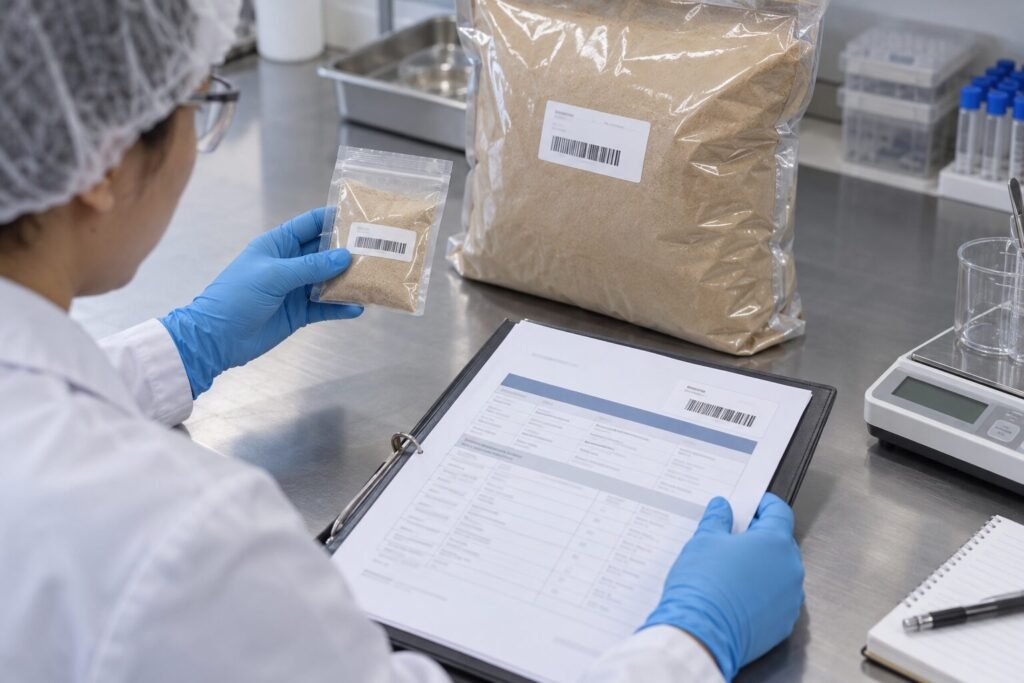
During qualification, determine whether the supplier can connect the material to:
- The identified production source
- A batch or lot number
- The corresponding COA and approved specification
- The evaluated sample and later commercial shipment
Sample approval is not automatic approval of every future batch. If the sample and commercial order use different batches, the supplier should identify both and review the commercial batch against the agreed specification. An intermediary should disclose any production-source change because it may alter the buyer’s qualification basis.
Evaluate Access to Technical Support
Fast sales replies are helpful, but they are not the same as technical support. Technical support means the supplier can obtain accurate information, communicate it without distortion and return to the appropriate production, R&D or QC contact when necessary.

Test that capability before approval. Ask the supplier to explain the current specification, clarify a test method and route an application-related question to qualified personnel. The quality of the answer matters more than the sender’s job title.
A manufacturer may answer internally; a trading company may coordinate with the producer. Both are acceptable if answers are specific, document-consistent and supported by a dependable escalation path.
Compare Quality-Control and Testing Information
The purpose of this comparison is not to assume that one supplier model performs better testing. It is to understand who controls the quality information and how it reaches the buyer.
Buyers should ask who defines the release requirements, who performs or coordinates testing, who approves the batch and who can explain an unusual result. The supplier should also distinguish Earthworm Peptide Powder from Earthworm Protein Powder and lumbrokinase; the peptide powder is not evaluated as an active enzyme ingredient.
For a broader explanation of what belongs in the product specification, use Key Specifications to Check When Sourcing Earthworm Peptide Powder. In this supplier-model review, focus on who controls that specification, whether the commercial contact can provide the current version and whether questions can reach the organization responsible for it.
Review Documentation Access and Accuracy
A document package is useful only when the supplier can show what each document describes. A generic COA template is not a substitute for a batch-specific record, and a product specification is not the same as a batch result.
Depending on the buyer’s requirements and available information, the review may cover the specification, batch COA, technical product information, storage and packaging guidance, and relevant test-method information. Confirm:
- The product name is consistent across documents
- The COA identifies the applicable batch
- The specification is current and recognizable by revision
- Technical statements are consistent across files
- The supplier can explain each document and obtain controlled corrections
A trading company can provide strong documentation support if it preserves the link to the producer and presents documents in the correct context.
Who Is Accountable When a Technical or Quality Issue Appears?
Accountability is the ability to coordinate a useful response when documentation is incomplete, results require clarification or delivered material needs investigation.
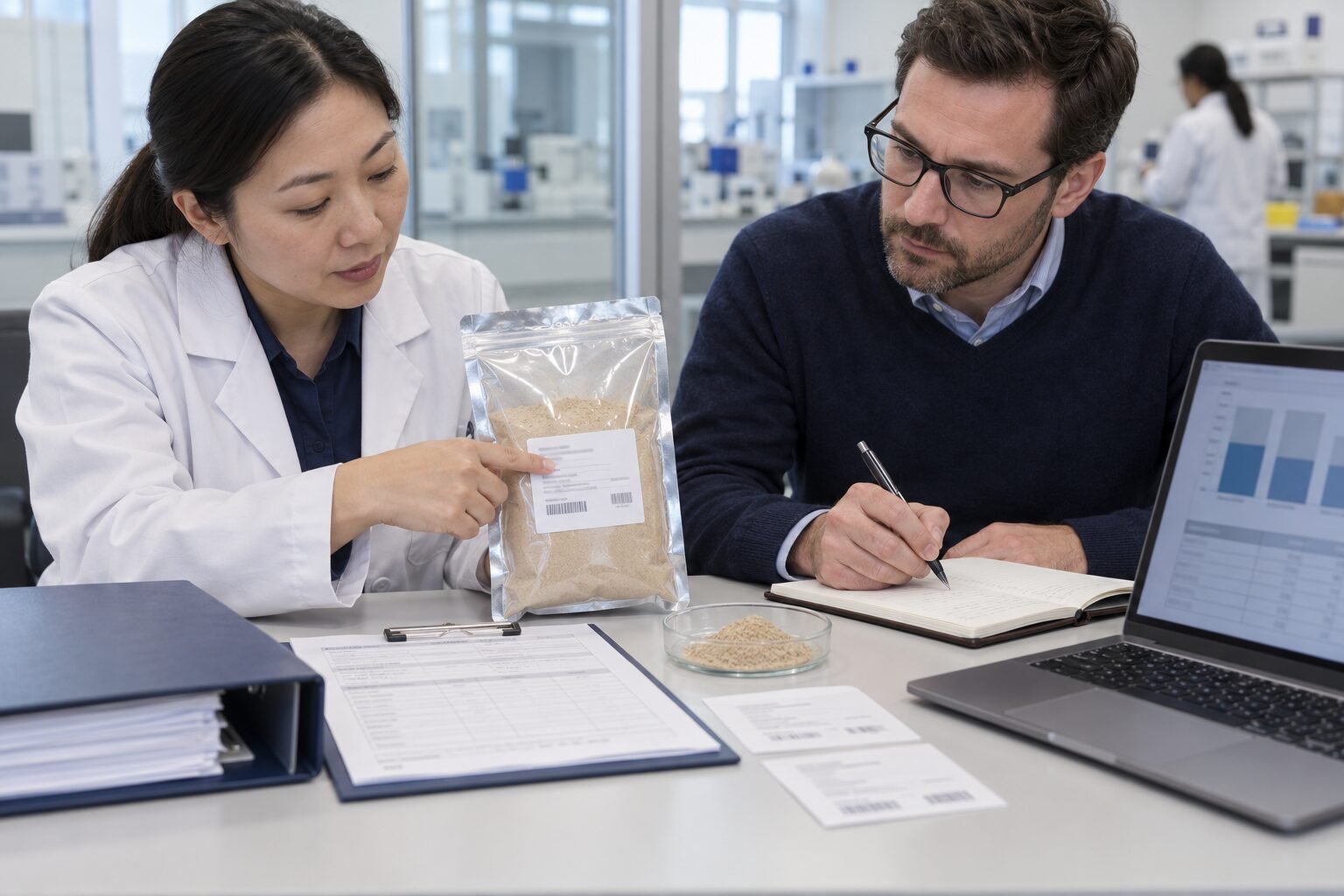
Before approval, ask what happens if a buyer result differs from the COA, a batch label is unclear or commercial material appears different from the sample. A workable path should identify:
- The buyer’s primary contact
- The organization that verifies batch identity and records
- The production or QC team that reviews evidence
- The party communicating findings and corrective actions
A manufacturer with poor communication may provide less practical accountability than a well-organized distributor with producer access. Qualification should test whether responsibility is functional, not merely promised.
Does Buying Directly From a Manufacturer Always Mean Better Supply?
No. Direct purchasing may shorten the information path, but it does not prove document accuracy, batch consistency, technical responsiveness or suitable controls. It also does not guarantee a lower price, smaller MOQ or faster shipment.
Likewise, an intermediary is not automatically a weak choice. A transparent trading company may offer effective coordination while maintaining dependable access to production and QC. The risk increases when the intermediary hides the source, changes producers without notice, cannot connect a COA to the supplied batch or has no defined route for technical investigation.
How to Evaluate a Manufacturer-Linked Supply Structure
Allworms illustrates why legal names may not describe the complete supply chain. Allworms Bio-Tech Co., Ltd. handles overseas market development, international sales and fresh-earthworm supply within the broader group system. Guangzhou Dinglong Biotechnology Co., Ltd. handles R&D and manufacturing.
For a buyer, the relevant point is the operating connection among the commercial contact, raw-material supply, manufacturing, R&D support and quality documentation. This type of linked structure should be assessed by the same evidence used for any other supplier model: traceability, document control, technical access and clear responsibility.
Buyers who want to examine how raw-material management, production support, testing and documentation connect can also review Research and Quality Control Behind Allworms Earthworm-Derived Ingredients.
Manufacturer vs Trading Company Comparison Table
| Evaluation Area | What Buyers Should Check | Why Supplier Model Matters |
|---|---|---|
| Manufacturing identity | Who actually produces the ingredient, and what is the seller’s relationship to that producer? | Determines whether production visibility is direct or depends on an intermediary |
| Traceability | Can the sample, commercial lot, COA and production source be connected? | Affects qualification, source-change control and investigation |
| Technical support | Can specification, test-method and application questions reach qualified personnel? | Shows whether the communication chain can support R&D and QA review |
| QC information | Who defines, performs or coordinates testing and batch release? | Helps buyers interpret results and identify the responsible quality organization |
| Documentation | Can current specifications and correct batch documents be obtained and explained? | Reveals whether the supplier controls document accuracy and version flow |
| Accountability | Who investigates discrepancies and communicates findings? | Clarifies whether responsibility remains effective when a problem appears |
Supplier-Model Qualification Workflow
Use this practical framework rather than treating it as a mandatory regulatory procedure:
- Identify the commercial supplier and its role.
- Identify the actual manufacturer and production source.
- Confirm the relationship between the organizations.
- Review raw-material, sample and batch traceability.
- Review the current specification and relevant COA.
- Test access to qualified technical personnel.
- Clarify control of testing and release information.
- Define discrepancy and document-correction handling.
- Evaluate the sample and documents against internal requirements.
- Approve only if the information and responsibility chain is adequate.
FAQ
Is buying directly from an Earthworm Peptide Powder manufacturer always better?
No. Direct access can simplify communication, but buyers must still verify traceability, document control, QC support and accountability.
Can a trading company provide reliable batch documentation?
Yes, if it has a transparent producer relationship, preserves batch identity, supplies current documents and obtains clarification from the responsible quality organization.
How can buyers verify who actually manufactures the ingredient?
Ask the supplier to identify its role, the production organization and their relationship. Cross-check the answer against specifications, COAs, labels and available production information.
Why does traceability matter when qualifying a peptide supplier?
It connects material to its source, batch and documents, supports discrepancy investigation and confirms whether commercial supply follows the approved structure.
What technical support should supplement formulators expect?
They should expect specification and method clarification, a route for application questions, and qualified production, R&D or QC input when needed.
Who should explain a supplier COA or specification?
The supplier should respond clearly and involve the organization controlling the document or test information when needed.
How should buyers handle a test-result discrepancy?
Identify the sample and batch, confirm the documents and methods, follow the buyer’s hold procedure where applicable, and request a documented review with the manufacturing or QC source.
What should buyers verify before approving a manufacturer-linked supplier?
Verify the operating relationship, production source, traceability, document flow, technical escalation path, QC responsibility and discrepancy process. The Allworms FAQ supports follow-up questions about available documents and B2B supply arrangements.
Conclusion
The decisive issue is whether the supplier model gives the buyer a reliable line of sight from commercial communication to production, batch records, quality information and accountable problem resolution. A direct manufacturer may provide the shortest route, but a trading company or manufacturer-linked sales organization can also qualify when its producer relationship is transparent and technically functional. Approve the structure your sourcing, R&D and QA teams can verify—not the title a supplier uses.

Evaluate the Manufacturing and Quality Support Behind Your Earthworm Peptide Powder Supply?
Contact Allworms to Discuss Specifications, Batch Documentation and Supplier-Qualification Requirements.