When buyers ask for an earthworm peptide powder quote, they often expect a simple answer: “What’s your bulk price per kilogram?” Fair question. But the real answer is a bit messier—and a lot more useful.
Wholesale pricing for earthworm peptide powder depends on how the material is made, how tightly the specs are controlled, how much testing is required, how the powder is packed, and how predictable the supply chain is. In other words, two suppliers can both offer “earthworm peptide powder,” yet the cost structure behind those offers may be very different.
That’s exactly why some quotations look surprisingly low at first glance, then start to wobble once you ask about peptide content, heavy metals, microbial limits, packaging, COA details, or delivery schedule. Honestly, this is where many buyers get stuck.
Earthworm peptide powder is usually positioned as a small-molecule peptide ingredient produced from earthworm protein through controlled enzymatic hydrolysis followed by spray drying, with no active enzyme remaining in the final powder. In your product materials, it is described as a stable, non-enzymatic ingredient with protein content above 65%, peptide content above 30%, and suitability for powders, capsules, and beverage-type formulations.
Why wholesale pricing varies more than buyers expect
A peptide ingredient is not priced like a basic commodity powder. It sits somewhere between a protein raw material and a functional formulation ingredient. That middle position matters.
On one side, the raw material still matters a lot: earthworm breeding quality, freshness, contamination control, species selection, and source consistency all affect the starting cost. On the other side, peptide production adds real processing expense—hydrolysis control, filtration, purification, drying, sterilization, and testing all add layers of cost.
And then there’s the commercial side. A 1.5 kg trial order, a 25 kg pilot batch, and a 500 kg annual contract will never carry the same unit economics. Same product name, different pricing logic.
So yes, price matters. But spec-matched price matters more.
1) Raw material quality sets the floor price
Here’s the thing: if the earthworm raw material is inconsistent, the peptide powder will be inconsistent too. That shows up in protein yield, odor profile, color, ash level, peptide distribution, and even how easy the material is to formulate later.
Earthworms are naturally high in protein. One study reported 70.05% protein in the earthworm sample used for peptide preparation, while another review notes earthworm meal commonly ranges around 54.6% to 71% protein on a dry basis.
That sounds great—and it is—but buyers should remember something important: high-protein biological raw materials are only commercially useful when the supply is stable. Breeding conditions, feed inputs, seasonal handling, and contamination control all affect the upstream cost.
This is why manufacturers with their own breeding base or tighter upstream control often quote differently from traders buying from the spot market. The quote may be higher, yes, but the batch-to-batch risk is usually lower. In B2B supply, that difference is not cosmetic. It affects your production schedule, QA pass rate, and customer complaints later on.
2) Hydrolysis technology changes both cost and value
Not all earthworm peptide powder is processed the same way. Some products are sold mainly as “hydrolyzed protein,” while others are positioned more carefully around molecular profile, stability, and formulation performance.
That distinction matters because controlled enzymatic hydrolysis is not cheap. It needs the right enzyme system, process timing, temperature control, pH control, and downstream handling. If the hydrolysis is too light, the product may not reach the desired small-molecule profile. If it is too aggressive, flavor, stability, or yield can suffer.
Earthworm peptide powder as a controlled hydrolysis product followed by spray drying, specifically emphasizing stable peptide composition, no active enzyme content, and customizable low molecular weight.
The academic material backs up why this matters. In one study, simulated gastrointestinal digestion increased the share of low-molecular-weight fractions below 1 kDa from 44.80% to 80.19%, while material above 5 kDa dropped from 29.17% to 1.52%. The same work also found TCA-soluble peptides at 98.24%, indicating peptides were the main component of the hydrolysate.
From a pricing angle, tighter control over peptide size distribution usually means more process control, more yield loss management, and more testing. That tends to push price upward. But it also tends to produce a powder that behaves better in real formulations.
And for buyers in nutraceuticals or functional beverages, that “behaves better” part is where the money is.
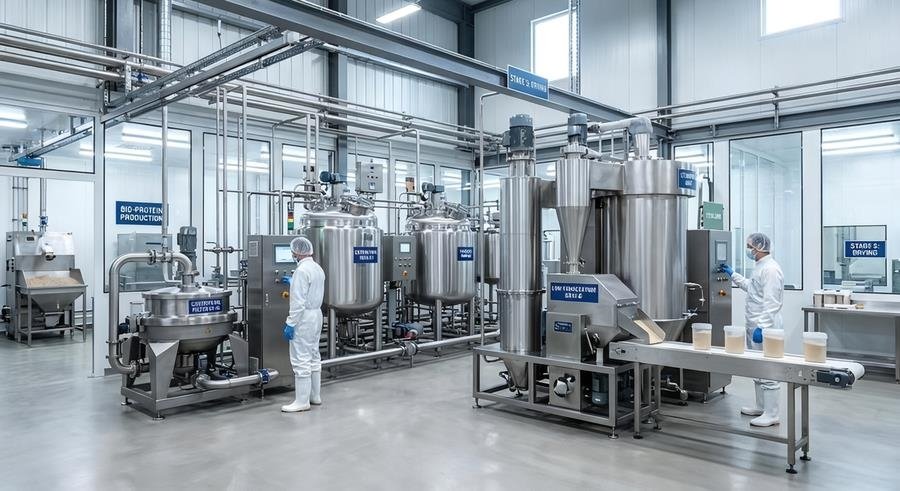
3) Purification and drying are major cost drivers
A cheap quote often hides a shortcut somewhere. Very often, that shortcut sits in purification or drying.
Spray drying is especially worth watching. Buyers sometimes focus only on active content and forget stability. But for a peptide ingredient, drying method affects moisture, handling, shelf life, flowability, and storage performance. A stable powder with no active enzyme content is easier to use in beverages, powders, and capsules precisely because it is less likely to keep changing after production.
This is one of those boring details that stops being boring the moment a batch cakes in storage, picks up odor, or performs badly in blending.
So yes, a better drying process costs more. But it often saves money later—fewer returns, fewer formulation headaches, fewer shelf-life surprises.
4) Specification level can change the quote fast
Two earthworm peptide powders can look similar on paper until you read the spec line by line.
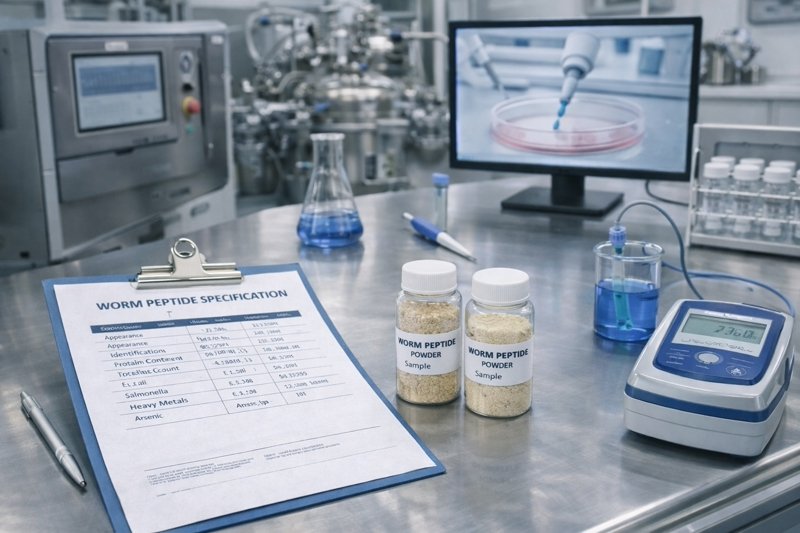
Our current product positioning includes:
- Protein: ≥65
- Peptide content: >30
- Moisture: 7.18
- Ash: 5.6
- Arsenic: ≤0.5
- Cadmium: ≤2 mg/kg
- Mercury: ND
- Salmonella: ND
- Coliforms: <0.3
- Aerobic plate count: <10
That’s already a more serious spec conversation than just “brown powder, peptide product.”
Why does this affect price so much? Because every tighter spec usually adds one of three things: better raw material selection, more controlled processing, or more lab testing. Sometimes all three.
For example, buyers targeting dietary supplements may accept one baseline. Buyers targeting stricter nutraceutical, pharmaceutical-adjacent, or sensitive export channels may ask for more detailed microbial testing, heavy metal verification, or custom limits. Each extra requirement adds cost—not because the supplier is being difficult, but because real compliance work costs money.
And this is where low quotes can get slippery. If a supplier prices generously low but gives only a minimal COA, you may end up paying later through third-party testing, rejected lots, or delays in customs clearance.
5) MOQ and order scale matter more than most people admit
A lot of buyers ask for a “bulk price,” but bulk means different things to different sellers.
A sample, pilot lot, first commercial order, and rolling wholesale contract are priced differently because production planning is different. Small orders often carry higher per-kilo cost due to setup, handling, documentation, and packaging overhead. Larger orders spread those fixed costs across more units.
That’s why MOQ is not just a sales term. It is a pricing mechanism.
Our past product terms have consistently used a low starting MOQ for inquiry purposes, but for real wholesale cooperation, suppliers usually become more flexible once the buyer’s forecast is clearer. That’s normal. A factory can quote more aggressively when it can plan raw material use, production runs, and shipment schedules with less uncertainty.
So if you want better pricing, the best lever is not always “Can you reduce the price?” Sometimes it is “Here is our quarterly demand plan.”
That changes the conversation immediately.
6) Packaging format affects cost more than it should—but it does
Packaging feels minor. It isn’t.
Earthworm peptide powder is usually packed for moisture control, odor management, and transport safety. Inner bags, foil liners, carton strength, palletization, and labeling all affect final cost. So do language requirements, batch coding, and private label requests.
Our standard packaging formats is 1.5kg per bag and 9kg per carton, with storage in a cool, dry place and a 2-year shelf life under proper conditions.
Now, for some buyers, that standard pack works fine. For others, it does not. Maybe they want 5 kg foil bags for easier production handling. Maybe they need private labels, outer carton marks, barcodes, or export-specific labeling. Maybe they want double-layer moisture protection because the product is heading into a humid market.
All of that adds cost. Not dramatic cost, usually—but enough to change a quote.
7) Testing, COA detail, and third-party verification are never free
This one gets overlooked all the time.
The more detailed the documentation package, the more work sits behind it. A basic internal COA is one thing. A fuller document set with batch testing, microbiology, heavy metals, and sometimes third-party support is another thing entirely.
For buyers selling into regulated or semi-regulated channels, documentation quality can be almost as important as the powder itself. A slightly higher price with clearer paperwork may be the cheaper option in practice.
Especially for cross-border trade.
Because when customs, QA teams, or downstream brand owners start asking questions, a vague spec sheet becomes very expensive very quickly.
8) Supply stability is part of the price, even if it’s not listed
Here’s a mild contradiction: the cheapest quote is often not the lowest-cost option.
Why? Because unstable supply creates hidden expenses—production gaps, reformulation, emergency sourcing, delayed launches, and damaged customer trust. None of those appear on the quotation sheet, but they absolutely show up in your margins.
And repeatability is one of the hardest things to fake in specialty ingredients.
9) Customization usually raises price, but sometimes lowers total cost
Custom specs nearly always lift the unit price. That part is obvious.
What’s less obvious is that custom work may still lower your total project cost. For example:
- A tighter molecular profile may improve beverage compatibility
- Lower moisture may improve storage stability
- Custom pack size may reduce production waste
- More precise spec matching may reduce overbuying or rework
So yes, customization often means a higher quote. But it may also mean fewer problems downstream. That’s the sort of trade-off experienced buyers look for.
How buyers should compare earthworm peptide powder quotes
When you compare offers, don’t compare price alone. Compare price against the full technical and commercial package.
Look at:
- protein content
- peptide content
- molecular weight positioning
- drying method
- whether active enzyme remains
- heavy metal limits
- microbiological standards
- packaging format
- MOQ
- lead time
- COA depth
- customization support
- supply stability
You know what? The supplier with the cleanest explanation is often the safer choice.
A good quote should make it easy to understand what you are paying for. A weak quote hides behind a low number and hopes you won’t ask too many questions.
A practical closing thought
Earthworm peptide powder wholesale pricing is shaped by upstream raw material control, hydrolysis and purification technology, molecular profile targets, testing standards, packaging details, MOQ, and supply reliability. That’s the real picture.
So when a buyer asks, “Why is your price different from another supplier’s?” the honest answer is usually this: because the product behind the price is different too.
And in this category, those differences are not small. They affect formulation performance, document readiness, consistency, and long-term cooperation.
For serious B2B buyers, the best question is not “Who is cheapest?” It is “Which quote gives us the best balance of spec, stability, compliance, and commercial predictability?”
That’s where the smart buying happens.
FAQs
What affects earthworm peptide powder wholesale price the most?
The biggest factors are raw material quality, peptide production method, protein and peptide content targets, molecular weight control, testing requirements, and order volume. Buyers looking for stable earthworm peptide powder bulk supply usually see price changes when specs become tighter.
Does lower molecular weight earthworm peptide powder cost more?
Often, yes. A lower molecular weight earthworm peptide powder usually needs tighter hydrolysis control, more precise filtration, and more verification. That extra process work can raise the unit price, especially for formulation-focused buyers.
Why do MOQ and packaging change the bulk quote?
MOQ affects production efficiency, while packaging affects moisture protection, handling, labeling, and shipping cost. Even when the powder itself stays the same, earthworm peptide powder wholesale pricing can shift based on pack size and export packaging requirements.
Is a cheaper earthworm peptide powder quote always a better deal?
Not necessarily. A lower quote may come with weaker testing, looser specs, inconsistent batch quality, or limited documentation. For B2B buyers, the better comparison is price versus spec, COA detail, and delivery reliability.
What should buyers ask before accepting an earthworm peptide powder wholesale offer?
Ask for protein content, peptide content, molecular weight information, heavy metal and microbial limits, active enzyme status, packaging format, MOQ, lead time, and COA support. Those points give a clearer picture of real earthworm peptide powder wholesale value.

Partner With A Trusted Peptide Manufacturer
5.Start your peptide sourcing with confidence