
A quick outline
- Earthworm protein powder is drawing interest because it is protein-dense and can generate bioactive peptides after digestion.
- Its potential value in beverages and protein blends is less about hype and more about formulation logic: dosage flexibility, story, and functional positioning.
- The opportunity is real, but so are the hurdles—taste, consumer education, and compliance matter a lot.
- The smartest use case is usually not a standalone “protein hero,” but a targeted ingredient inside premium blends.
Why this ingredient is getting attention
Let’s be honest: the name alone makes people pause. Earthworm protein is not a mainstream ingredient, and that’s exactly why some B2B buyers are looking at it more closely. In crowded supplement and functional food markets, “different” has value—but only when different also has science behind it.
The research in your source materials points to a pretty interesting profile. Earthworm protein has been described as a high-protein resource, often in the roughly 60% to 70% range on a dry basis, with a useful essential amino acid pattern and potential as a functional food protein. It has also been recognized in China as a new food resource since 2009.
Another point matters just as much for formulators: earthworm proteins do not stop at basic nutrition. After gastrointestinal digestion or controlled hydrolysis, they can release smaller peptides with studied antioxidant, ACE-inhibitory, and immunomodulatory activities. That matters because buyers in nutraceuticals and health foods are rarely shopping for “just protein.” They are shopping for protein plus a story, protein plus bioactivity, protein plus product distinction.
So the market conversation shifts. It is not only, “Can this replace whey or soy?” Usually, it should not be framed that way. The better question is, “Can this help create a more differentiated functional beverage or a smarter multi-protein blend?” That is where things get interesting.
What makes earthworm protein different
First, the nutrition angle. One study in your materials reports proteins as the main components of earthworms at 56% to 66% dry weight, with eight essential amino acids present, and notes that lysine, leucine, and arginine are among the more abundant amino acids. The same paper also states that earthworm protein can be used as a high-quality animal-derived protein source.
A separate study on ACE-inhibitory peptides states that earthworm contains a large amount of protein, generally 60% to more than 70%, and describes it as rich in vitamins, minerals, and other functional components. It also highlights lower greenhouse gas production and higher protein conversion efficiency compared with traditional animal husbandry.
Then there is the peptide side, and this is where formulation teams tend to lean forward.
In the ACE-inhibition work, simulated gastrointestinal digestion increased the fraction of low-molecular-weight material substantially, with <1 kDa components rising from 44.80% to 80.19%. Seven novel ACE-inhibitory peptides were identified, and the two most active were SSPLWER and RFFGP.
In the antioxidant work, researchers identified 6030 peptide sequences after separation and found three standout antioxidant peptides: AFWYGLPCKL, WPWQMSLY, and GCFRYACGAFY. The paper frames these findings as support for using earthworm proteins as antioxidants in health foods.
And in the immunomodulation study, earthworm protein autolysates showed a degree of hydrolysis of 22.38% and soluble peptide content of 77.92%, with activity observed in a cyclophosphamide-induced immunosuppressed mouse model.
That combination is unusual. You have a protein ingredient that can be discussed on three levels at once:
- as a protein source,
- as a hydrolysate or peptide source,
- as a function-forward ingredient with early research around cardiovascular, antioxidant, and immune-related applications.
That does not mean every product should shout all three. In fact, that would be messy. But for a manufacturer, it gives room to build sharper product concepts.
Why beverages and blends are a practical fit
Here’s the thing: beverages and protein blends are not identical jobs.
A functional beverage has tight sensory limits, short decision windows at shelf or online, and usually a clean benefit message. A protein blend, on the other hand, gives a formulator more room to balance taste, cost, solubility, texture, amino profile, and dosage. Earthworm protein powder can fit both, but not in exactly the same way.
In functional beverages
For beverages, the best role is often as a specialty protein or peptide fraction rather than the only protein source. Why? Because beverages are unforgiving. If solubility is off, if the aroma drifts, if sediment shows up after a few weeks, the product starts losing the room. Fast.
That said, the science does support beverage-style thinking. The antioxidant study explicitly connects earthworm protein digestion products to application in functional foods, and the food application materials you uploaded also discuss use in functional drinks, nutrition bars, and other health-oriented formats.
A practical beverage strategy might use earthworm protein powder or hydrolysate in:
- healthy aging drink mixes
- active nutrition sachets
- cardiovascular support beverages
- protein-plus-antioxidant ready-to-mix powders
- specialist recovery blends with a broader bioactive story
Notice the wording there. I’m not saying every one of these is already validated at finished-product level. I’m saying these are logical formulation lanes based on the ingredient profile and the research direction in your files.
In protein blends
Honestly, this may be the easier first win.
Protein blends are like a band, not a solo singer. One protein brings amino density, another helps mouthfeel, another helps cost control, another adds a functional or premium narrative. Earthworm protein powder can be the “specialist player” in that mix.
For example, it may be paired with:
- plant proteins for a more distinctive premium story
- collagen-focused blends where the brand wants a broader active-protein platform
- peptide-forward formulations for capsules, powders, or stick packs
- specialized wellness formulas rather than general sports mass-market SKUs
That’s why the title topic matters. “In functional beverages and protein blends” is not just catchy. It reflects the actual commercial logic. This ingredient may be too novel for broad commodity protein positioning, but it can work very well where brands are selling formulation intelligence, not just grams of protein.
Formulation points product teams should think through
This is where the lab coat meets the sales deck.
1) Decide whether you are selling protein, peptides, or both
A plain earthworm protein powder and a hydrolyzed or peptide-rich version are not the same commercial object. Not even close.
The antioxidant and ACE studies both show that digestion or hydrolysis is what reveals much of the interesting peptide activity. So if the brand story is centered on active peptide science, then a peptide-oriented material may fit better than a basic protein powder.
If the goal is broader nutritional positioning, then a protein powder can still work—especially in blends.
2) Keep dosage strategy realistic
Some buyers get carried away here. They see promising peptide data and jump straight to bold finished-product claims. That is risky.
The right move is to build a dosage framework around:
- ingredient specification
- intended market
- finished format
- regulatory pathway
- substantiation level
In other words, don’t let the marketing team outrun the dossier.
3) Taste and aroma will matter more than the white paper
You can have elegant peptide data and still lose the customer on the first sip. That’s the brutal truth of beverages.
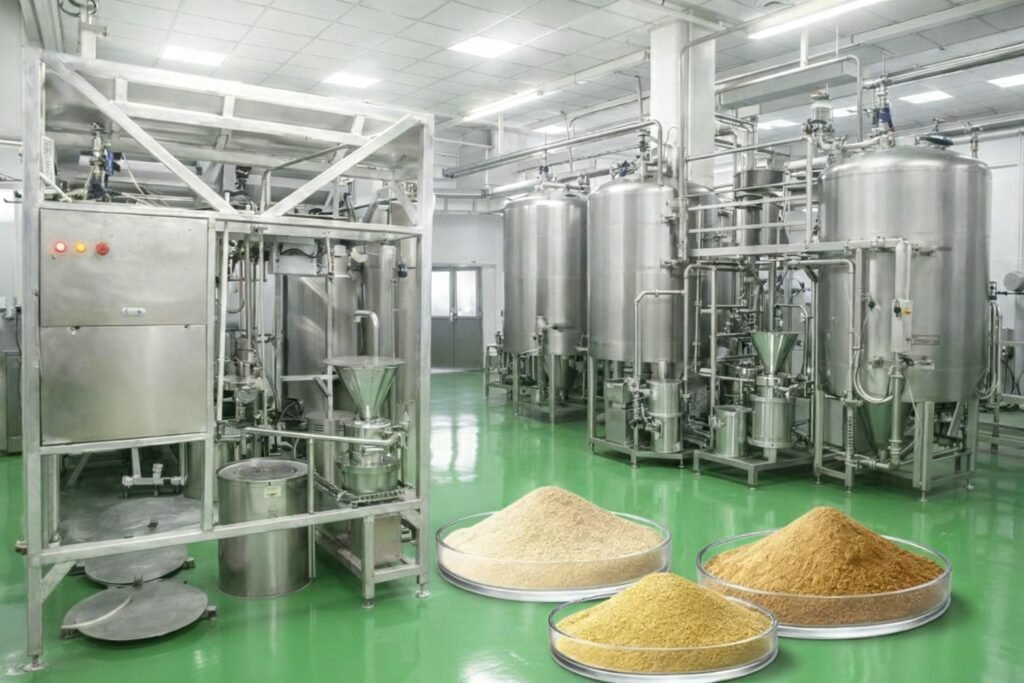
The uploaded production process describes mechanical separation, cleaning, hydrolysis, centrifugation/filtration, low-temperature drying, pulverizing, sterilization, and packaging. That suggests process control is already a major part of making the material fit for downstream use.
For beverage use, you would usually want to assess:
- color impact
- flavor carryover
- foaming
- sedimentation
- dispersion speed
- interaction with sweeteners, acids, and flavor systems
A protein can be biologically interesting and still be commercially awkward. So sensory optimization is not the side quest. It is the main quest.
4) Blend for function, not just label decoration
A lot of brands add trendy ingredients at pixie-dust levels. Buyers are getting tired of that.
If earthworm protein powder is included in a blend, it should have a clear role:
- support a peptide narrative
- improve protein story
- help a cardiovascular or antioxidant platform
- contribute to premium differentiation
Otherwise, it becomes an expensive label ornament. Nobody needs that.
5) Choose format carefully
Not every market needs a bottled drink. Sometimes a sachet, stick pack, powder tub, or capsule-adjacent blend makes far more sense. Powder systems are often kinder to novel proteins during early commercialization because they simplify stability, shipping, and formulation iteration.
And honestly, that matters. The first commercial format should make adoption easier, not harder.
Where brands can position it
This ingredient is not likely to win by pretending it is ordinary. It wins by being credible and distinct.
Here are the strongest positioning lanes based on your materials:
Premium cardiovascular support concepts
The ACE-inhibitory peptide data makes this one pretty obvious. The identified peptides and enzyme inhibition findings support a cardiovascular-health-oriented R&D direction, especially in premium functional foods and supplement-adjacent blends.
Antioxidant wellness beverages
The antioxidant peptide study gives a solid technical rationale for positioning around oxidative stress support, healthy aging concepts, or general cellular protection narratives—subject, of course, to local compliance and claim rules.
Immune-support blend systems
The autolysate study suggests another possible route: multi-ingredient powders positioned around resilience, recovery, or immune wellness. Not hard claims—measured, support-oriented positioning.
Advanced protein blends for niche buyers
This is the quiet opportunity. Not flashy, but smart. Suppliers, manufacturers, and private-label formulators can use earthworm protein powder in small but meaningful inclusion rates inside more complex blends, where it adds novelty, science depth, and a premium B2B conversation.
That is often how unusual ingredients enter the market anyway. Not through mass retail first, but through specialist channels, OEM development, and targeted buyer education.
A realistic note on commercialization
Now for the mild contradiction: earthworm protein powder is both promising and not simple.
Promising, because the research base in your materials points to meaningful protein content, bioactive peptide release after digestion or hydrolysis, and plausible use in functional foods.
Not simple, because successful commercialization will still depend on:
- regulatory acceptance in the target market
- clean, consistent supply
- sensory performance
- contaminant and spec control
- customer education
- claim discipline
That last one is easy to underestimate. A strong ingredient story can tempt brands into saying too much, too fast. Better to build this category the careful way: specification first, applications second, claims last.
You know what? That slower route often sells better in the long run. B2B buyers trust ingredients that feel engineered, documented, and honest.
So, where does it fit best?
If I were framing this for a supplier or manufacturer, I would say it like this:
Earthworm protein powder is not trying to be the next commodity protein. It is better positioned as a specialty functional protein or peptide ingredient for premium beverages, powder blends, and health-forward formulations where bioactive storytelling and product distinction matter.
That is a much stronger place to stand.
Used well, it can help a beverage line feel more advanced. It can help a protein blend feel less generic. It can give a private-label project a sharper edge in a market full of copycat formulas.
And that, really, is the point.
FAQs
1) Can earthworm protein powder be used in functional beverage formulation?
Yes, earthworm protein powder can be used in functional beverage formulation, especially in powdered drink mixes or specialty wellness beverages. In practice, it is often more suitable as part of a broader formula rather than the sole protein source, because developers still need to manage taste, solubility, color, and stability.
2) Is earthworm protein powder better as a standalone protein or in protein blends?
For most commercial applications, earthworm protein powder works better in protein blends. Blends give formulators more room to balance sensory performance, dosage, cost, and positioning while still benefiting from the ingredient’s distinctive protein and peptide story.
3) What health-focused product concepts fit earthworm protein powder best?
The strongest product concepts are usually cardiovascular support formulas, antioxidant wellness drinks, immune-support powder blends, and premium functional nutrition products. That direction matches the peptide research in your source materials, though finished-product claims still need market-specific review.
4) What are the main formulation challenges with earthworm protein powder in beverages?
The main formulation challenges with earthworm protein powder in beverages are flavor masking, dispersion, foaming, sedimentation, color control, and long-term stability. Those issues are manageable, but they should be tested early, especially for ready-to-mix or ready-to-drink concepts.
5) Why are B2B buyers interested in earthworm protein powder for functional food development?
B2B buyers are interested in earthworm protein powder for functional food development because it offers more than protein content alone. It brings novelty, peptide-based research value, and a stronger differentiation story for nutraceutical, dietary supplement, and specialty health food products.