Outline
- Why “safe enough” is not enough for buyers
- What safety really means for earthworm protein powder
- The five control areas buyers should check first
- Why regulatory status can make or break a deal
- The documents that separate serious suppliers from risky ones
- A practical buyer checklist
- FAQ
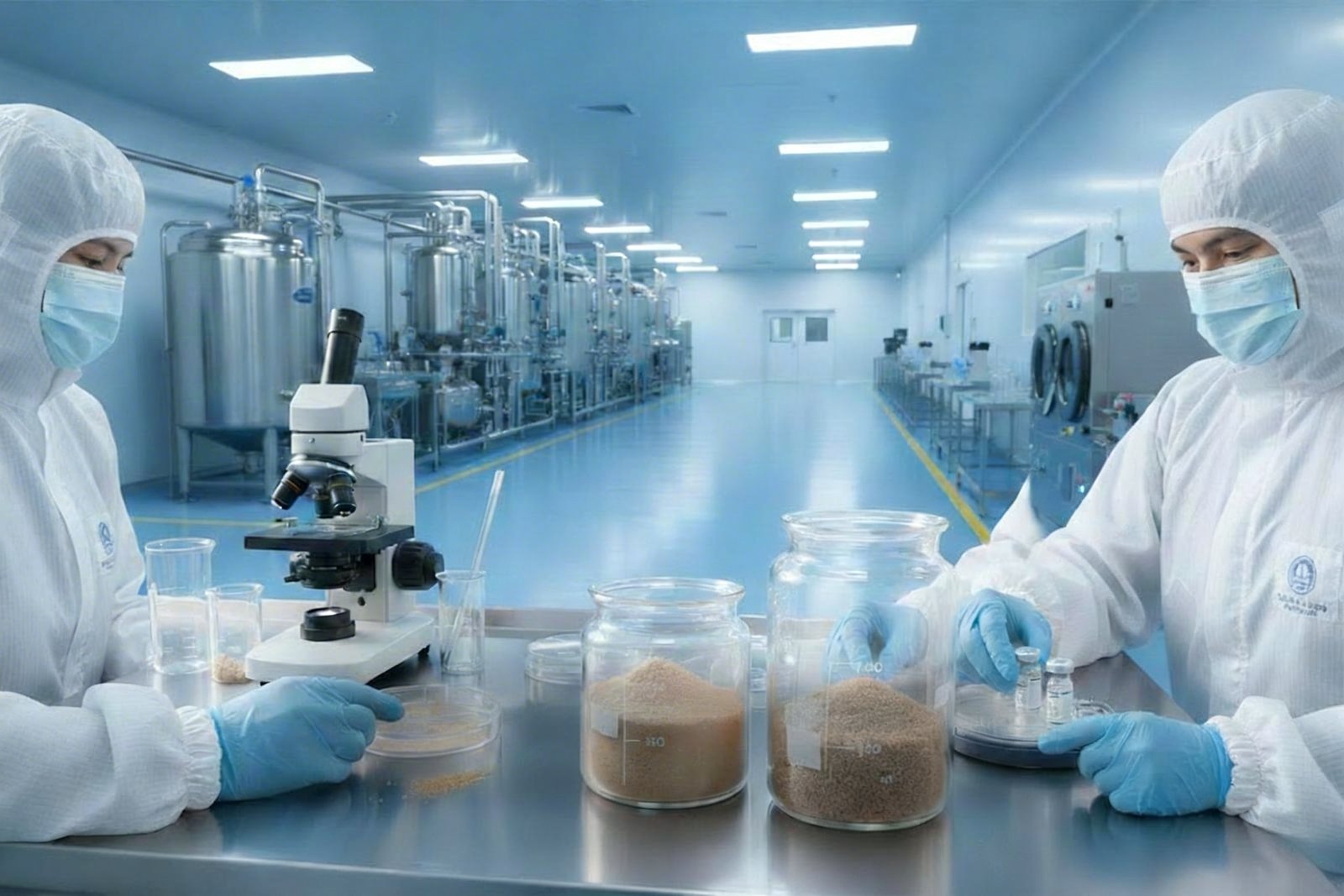
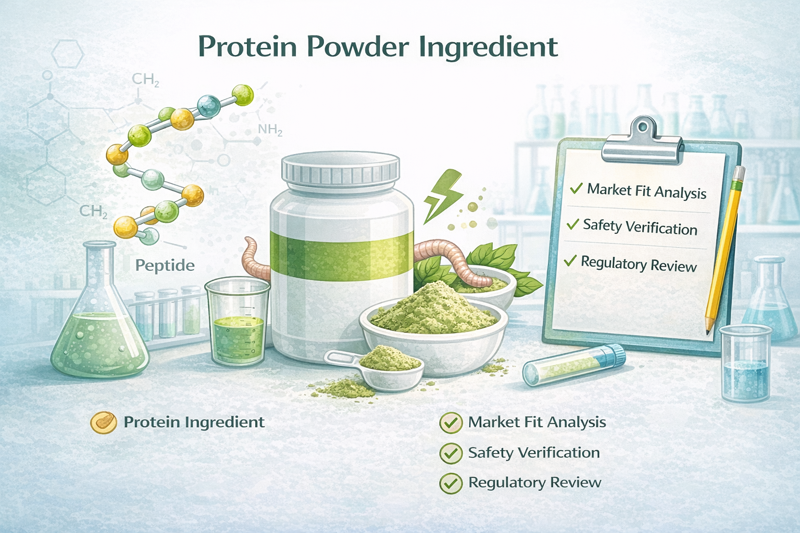
If you buy ingredients for supplements, functional foods, pharma-adjacent products, or even cosmetic actives, you already know the pattern. An ingredient can look impressive on paper—high protein, interesting bioactivity, strong product story—and still become a compliance headache the moment QA, regulatory, or a customs broker gets involved.
Earthworm protein powder sits right in that zone.
It is commercially developed in some markets, studied for bioactive potential, and processed into powders, hydrolysates, and peptide-rich fractions. Research and supplier materials also show that earthworm protein can be made into relatively high-purity fractions and used in further peptide preparation, while production flow documents emphasize sorting, washing, separation, drying, sterilization, and packaging as key steps.
But here’s the thing: buyers do not win by being impressed. Buyers win by being boring in the best possible way—methodical, skeptical, and very clear about what “safe” must mean before an ingredient is approved.
And with earthworm protein powder, that standard has to be high.
Safety is not one test report. It’s a system
In the U.S. dietary supplement framework, “quality” is not treated as a vague marketing word. The rules tie quality to established specifications for identity, purity, strength, composition, and contaminant limits. Manufacturers also need specifications for components, in-process controls, packaging, and finished product checks.
That matters because some buyers still ask the wrong first question: “Do you have a COA?”
A COA matters, sure. But on its own, it tells you almost nothing about whether the supplier actually controls the material. A strong supplier should be able to show that the raw material, process, test methods, contamination controls, and release criteria all line up. In other words, safety is not a snapshot. It is a chain of evidence.
For earthworm protein powder, that chain usually starts with species identity and ends with finished-lot release. Miss one link, and the whole thing gets shaky.
So what should buyers worry about first?
Let me explain. For this ingredient, five areas usually decide whether a supplier looks credible or risky.
1) Species identity and raw material traceability
Earthworm-derived ingredients are not a single, uniform commodity. Different species are used in research, traditional medicine, and commercial production. The scientific literature and review material point to several named species and note that earthworm extracts include a wide range of proteins, peptides, enzymes, and inorganic elements.
That means a buyer should never accept a vague raw material description like “earthworm extract” or “dilong protein” without clarification.
You want to know:
- the exact species
- the production source
- whether the raw material is farmed or wild collected
- what substrate or feed environment it came from
- how the supplier prevents cross-mixing with other species or environmental debris
Why be strict here? Because hazard profiles depend heavily on source material and production conditions. EFSA has made the same general point for alternative animal proteins: biological hazards, chemical hazards, and allergenicity can depend on species, feed substrate, harvest stage, and processing method.
That logic fits earthworm protein perfectly. Same ingredient name, different source conditions, very different risk picture.
2) Contaminants—especially heavy metals, microbes, and environmental carryover
This is the part that buyers should not gloss over.
Earthworms interact closely with soil and organic substrates. So when you assess safety, you should assume environmental carryover is possible until the data show otherwise. The broad earthworm review you shared lists inorganic elements among earthworm constituents, including mercury, lead, cadmium, nickel, barium, manganese, and aluminum.
That does not mean every earthworm protein powder is unsafe. Not at all. It means contaminant testing is non-negotiable.
A serious specification should at minimum address:
- lead
- cadmium
- arsenic
- mercury
- total plate count / yeast and mold, as appropriate
- pathogen absence where required
- pesticide residues, when source risk suggests it
- mycotoxins, where substrate or storage risk suggests it
- foreign matter and physical contamination
USP materials on dietary supplements focus elemental contaminant control on arsenic, cadmium, lead, and mercury. FDA’s supplement CGMP framework also explicitly ties quality to limits on contamination, and examples of product complaints include bacteria, pesticides, mycotoxins, glass, and lead.
On the microbiology side, USP notes that major contamination sources include fecal exposure, contaminated irrigation or process water, and poor hygiene or sanitation during harvesting, sorting, processing, packaging, and transport. That should ring a bell for any animal-derived powder, especially one sourced from soil-associated organisms.
Honestly, this is where weak suppliers often reveal themselves. They may hand over a clean-looking generic COA, but when you ask for method references, detection limits, lot-specific results, sampling plans, or trend data, things get fuzzy fast.
And fuzzy is expensive.
3) Process control: how the powder is actually made
Not every safety problem is a raw-material problem. Sometimes the trouble starts in the plant.
The production process you uploaded describes a sequence of selecting worms, removing soil and debris, secondary cleaning, washing and hydrolysis, centrifugal filtration and separation, low-temperature drying, milling, sterilization, and packaging.
That sounds sensible. But buyers should go one step further and ask:
- Which step is the kill step?
- What is the validated sterilization approach?
- Is drying temperature controlled to limit microbial survival without wrecking the protein?
- How is cross-contamination prevented between lots?
- What water quality standard is used?
- Is there environmental monitoring in the factory?
- Are there hold-time limits between wet processing and drying?
Under FDA’s preventive controls rule, facilities need a written food safety plan with hazard analysis and risk-based preventive controls. Hazard analysis must consider biological, chemical, and physical hazards, including microbiological hazards, pesticide and drug residues, natural toxins, allergens, and physical hazards such as stones or similar matter.
So a good buyer should expect the supplier’s process map to connect clearly to the hazard analysis. If a supplier can describe the line but cannot explain the critical controls, that is a red flag.
4) Regulatory status: safe in one market does not mean saleable in another
This part is where many promising ingredients get stuck.
A material may be technically manufacturable, analytically testable, and even commercially popular in one region, yet still face major barriers in another because the legal pathway is different.
In the EU, the current Novel Food Regulation explicitly treats whole insects as novel foods requiring authorization, and insect-containing foods are subject to labeling requirements. While earthworms are not insects, the practical lesson for buyers is obvious: unconventional animal protein ingredients should never be assumed to have straightforward market access in Europe. Legal status must be confirmed for the exact species, form, intended use, and labeling position before launch.
In the U.S., importers have their own burden too. Under FSVP, importers must verify that foreign suppliers meet applicable FDA food safety requirements and use processes providing the same level of public-health protection as relevant preventive controls rules, while also ensuring the food is not adulterated and is properly labeled for allergens where applicable.
So no, a supplier’s “export experience” is not enough. You need to know export to where, under what product category, with what claims, and with what legal basis.
That sounds picky. It is picky. It also saves launches.
5) Allergenicity and safety signaling after launch
Protein ingredients always bring allergy questions with them. That is just part of the job.
EFSA’s insect-allergenicity work notes that protein-rich alternative ingredients can raise allergy questions through direct sensitivity, cross-reactivity with other allergens, or residual allergens from feed.
Now, earthworm protein is not the same as insect protein, so buyers should avoid lazy copy-paste conclusions. But the risk-management principle still holds: if you are commercializing a novel animal protein, you need an allergen position, not silence.
That position should address:
- known allergy concerns, if any
- cross-reactivity risk assessment, if available
- labeling approach
- medical caution language, when justified
- complaint handling and post-market review
In the U.S., serious adverse event reporting obligations apply to dietary supplements, and FDA guidance lays out how manufacturers, packers, and distributors must submit serious reports and keep related records.
That means a buyer should not just ask, “Has anyone complained?” Ask instead, “What is your pharmacovigilance or complaint-handling workflow, and how do you escalate medically relevant events?”
A good supplier will have an answer ready. A weak one will pivot back to marketing slides.

What documents should buyers ask for?
Here’s the practical stack. Not glamorous, but very useful.
Ask for:
- species identification file
- manufacturing flow chart
- HACCP or food safety plan summary
- GMP certificate or equivalent quality certification
- lot-specific COA
- test methods and method references
- heavy metal report
- microbiological report
- pesticide or mycotoxin report, if relevant to source risk
- allergen statement
- residual solvent statement, if solvents are used
- stability data
- packaging compatibility statement
- adverse event / complaint handling SOP
- regulatory position summary for each target market
And yes, ask for recent reports, not just beautiful ones.
A clean report from three years ago is basically décor.
A small contradiction worth clearing up
Earthworm protein powder can be both promising and high-risk to buy.
That sounds contradictory, but it really isn’t.
It is promising because the ingredient has genuine protein value, growing technical interest, and multiple research angles around peptides, enzymes, and functional applications. Research papers in your files describe earthworm proteins as a significant component of the organism, report protein-rich fractions produced by defined extraction methods, and apply recognized analytical methods such as AOAC procedures in composition work.
It is higher-risk to buy because the ingredient category still depends heavily on source control, contaminant management, regulatory interpretation, and supplier discipline.
So the opportunity is real. The shortcut is the problem.
The buyer’s rule of thumb
If you remember one thing, make it this:
Do not buy earthworm protein powder as a story. Buy it as a controlled material.
That means the supplier should be able to prove:
- what the material is
- where it came from
- how it was processed
- what hazards were considered
- which specifications apply
- how each lot is released
- whether the ingredient is legally usable in your target market
If any of those answers are mushy, the deal is not ready—no matter how attractive the price looks.
And you know what? In this category, the cheapest quote can become the most expensive line item on your desk.
FAQs
1) What safety tests should buyers request for earthworm protein powder?
Buyers should at least request species identification, heavy metals, microbiological testing, contaminant limits, lot-specific COAs, and evidence of process controls. For many programs, arsenic, cadmium, lead, and mercury are core checks, alongside microbiological quality and pathogen control.
2) Is earthworm protein powder automatically allowed in every market?
No. A material can be acceptable in one market and still face barriers in another. Buyers should confirm the legal status of the exact species, form, and intended use in each destination country before launch.
3) Why are heavy metals a key issue for earthworm-derived ingredients?
Earthworms are closely tied to soil and substrate conditions, so environmental carryover has to be assessed carefully. That is why heavy-metal testing is a baseline requirement, not an optional extra, for earthworm protein powder supplier qualification.
4) What documents show that an earthworm protein powder supplier is reliable?
The most useful documents are a manufacturing flow chart, food safety plan or hazard analysis summary, lot-specific COAs, validated test methods, contaminant reports, allergen statements, and market-specific regulatory summaries. These documents show whether the supplier controls the ingredient instead of merely selling it.
5) Can earthworm protein powder be used in dietary supplements safely?
It can be considered for supplement use only when the ingredient is legally positioned for the target market and supported by robust specifications for identity, purity, composition, and contaminant control, plus complaint and adverse-event handling after launch.