
In B2B trade, price gets attention first. That is true. But price alone rarely keeps a partnership alive.
What keeps cooperation going for years is reliability.
For buyers in dietary supplements, nutraceutical ingredients, and functional health products, supplier reliability is not some soft idea. It is operational. It affects inventory planning, formulation stability, customer complaints, regulatory paperwork, and even whether a launch happens on time. One weak shipment can throw off months of work. One missing document can stall customs clearance. One batch variation can force a reformulation nobody wanted.
That is why reliable suppliers do far more than “provide goods.” They protect continuity. They reduce friction. They make growth less chaotic.
And honestly, that matters more than many teams admit at the start.
What buyers really mean when they say “reliable”
A reliable supplier is not simply one that replies quickly or offers a neat quotation sheet. Those things help, sure. But long-term B2B cooperation depends on a deeper kind of reliability.
It usually comes down to five things:
- consistent product quality
- stable raw material sourcing
- clear documentation and compliance support
- predictable lead times
- transparent communication when something changes
That sounds basic. It is basic. But basic does not mean easy.
In bioactive ingredients such as earthworm-derived proteins, peptides, and lumbrokinase, consistency is especially important because the finished product often depends on measurable technical characteristics—protein level, moisture, microbiological status, heavy metals, activity, purity, and batch-to-batch performance. Earthworm-derived ingredients are also closely tied to upstream breeding, raw material selection, extraction conditions, and downstream drying or purification controls. In other words, supply reliability starts long before packing day. The production side has to be controlled from the beginning.
Long-term cooperation is built on consistency, not promises
A supplier can say all the right things in the first month. The real test comes in month six, then month twelve, then during peak season, then when freight costs rise, then when one raw material lot does not behave as expected.
That is when buyers find out whether a supplier is reliable or merely enthusiastic.
For long-term B2B cooperation, consistency usually shows up in practical ways:
Consistent specifications keep your product stable
If you are buying a functional ingredient for capsules, tablets, powders, or beverages, your formula depends on stable input. A small shift in odor, color, moisture, solubility, or activity can create headaches all the way down the line.
Take earthworm protein and lumbrokinase as examples. Product materials often rely on controlled processing steps such as raw material selection, cleaning, filtration, low-temperature drying, sterilization, and packaging. Those steps are not just factory talk. They directly affect stability and repeatability.
A reliable supplier keeps these variables under control, documents them, and maintains them over time. That gives buyers something very valuable: fewer surprises.
Stable batches reduce internal cost
People often focus on product price per kilogram. But unstable supply creates hidden costs—extra QC checks, delayed production, rework, wasted packaging, customer support pressure, and more internal meetings than anyone enjoys.
A dependable supplier helps reduce those hidden costs by keeping batch quality steady. That can be just as important as negotiating a better unit price. Maybe more.
Predictable timelines protect your sales cycle
No buyer likes guessing whether an order will leave on time.
In long-term cooperation, delivery predictability is huge. Brands need to plan launch schedules. Distributors need arrival windows. Manufacturers need materials ready when production slots open. A delay at ingredient level can ripple through the whole chain like a loose bolt in a machine.
Reliable suppliers understand that timing is part of the product.
Good suppliers help buyers manage compliance pressure
Here is the thing: procurement is no longer only about buying material. It is also about buying documentation, traceability, and audit confidence.
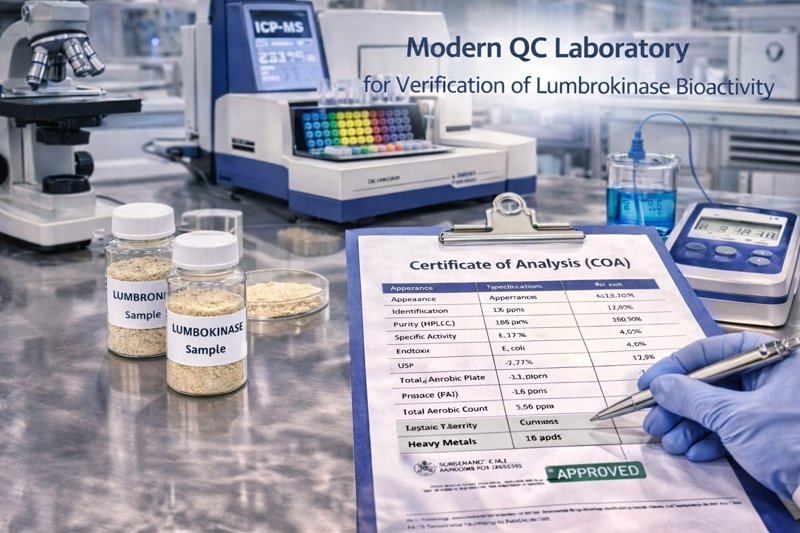
For global B2B buyers, compliance support matters more every year. Depending on the market, buyers may need COAs, microbiology results, heavy metal reports, specification sheets, ingredient statements, storage guidance, and support files for registration or customer review.
Reliable suppliers make this easier in three ways.
They keep documentation organized
A good supplier does not scramble every time you request a COA or test report. They already have a system. They know which documents buyers commonly ask for, and they can provide them clearly and consistently.
For example, standard product information for earthworm protein and lumbrokinase often includes appearance, source species, moisture, ash, heavy metal limits, microbiological indicators, packaging, storage, and shelf life. That type of structured documentation helps buyers move faster in internal approvals.
They understand that compliance differs by market
What works in one country may not work in another. A reliable supplier does not assume every customer has the same regulatory pathway. Instead, they help the buyer assess what is needed for that region, application, and product type.
That does not mean making claims they cannot support. It means being realistic, responsive, and document-ready.
And yes, that difference matters. A lot.
They support traceability from source to shipment
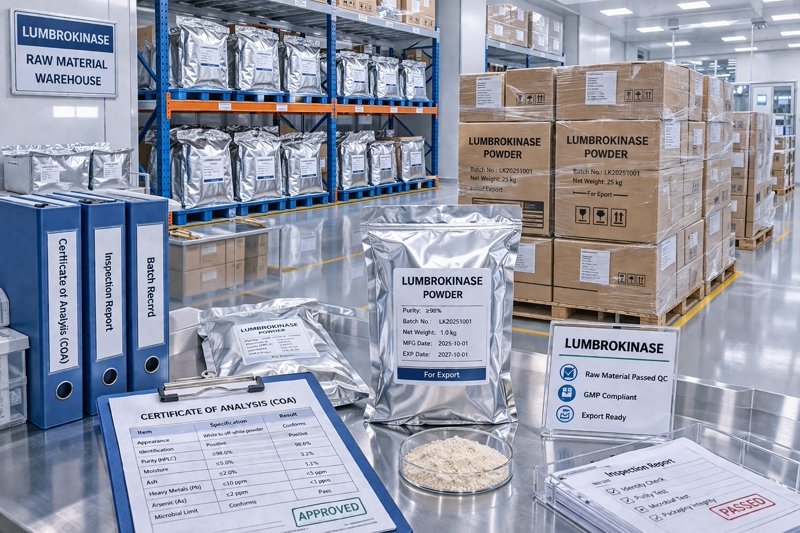
When a supplier controls upstream raw materials and production flow, traceability gets stronger. That matters for audits, customer trust, and risk management.
If the raw material source is stable and the process is controlled, it becomes easier to explain how a batch was made, tested, packed, and released. That helps buyers feel safer committing to a longer partnership.
Communication is not a side issue. It is the partnership.
Sometimes people treat communication as a “nice extra.” In B2B supply, it is part of the infrastructure.
A reliable supplier communicates early, clearly, and without playing games.
That includes:
- confirming realistic lead times
- flagging production changes before they become problems
- answering technical questions with usable detail
- being honest about what they can and cannot customize
- keeping the buyer updated during shipping and documentation stages
It sounds obvious. Yet poor communication still damages otherwise decent supply relationships all the time.
A long-term partner should not go silent when you ask difficult questions. They should not become vague when lead times stretch. And they definitely should not wait until the last minute to mention that a spec adjustment is needed.
Good communication builds confidence. Confidence leads to repeat orders. Repeat orders create long-term cooperation.
That is the cycle.
Strong suppliers do more than sell—they help buyers plan
This is where the relationship gets interesting.
A supplier stops being “just a vendor” when they help the buyer make better decisions.
For example, an experienced ingredient supplier can often support with:
- suitable specification ranges for different applications
- packaging and storage suggestions
- MOQ and scale-up planning
- sample evaluation support
- production feasibility for customized requirements
- realistic expectations for activity, purity, or processing stability
In lumbrokinase, this matters because the ingredient is not used like an ordinary commodity powder. Product performance can be influenced by enzymatic activity, processing conditions, and storage discipline. Lumbrokinase is described in the supplied product material as a fibrinolytic enzyme complex with direct fibrin-degrading activity and plasminogen-activating function, while controlled low-temperature processing is highlighted as important for maintaining enzyme stability. The broader literature in the uploaded review also notes lumbrokinase’s fibrinolytic and antithrombotic relevance, along with interest in oral formulations and clinical translation.
That means buyers often need a partner who understands both the ingredient and the supply chain behind it.
Reliability also comes from technical depth
Let me explain.
A supplier that understands only sales may still be able to close the first order. But long-term cooperation usually needs technical depth too. Buyers ask harder questions over time. They want to know why one spec is better than another. They want evidence behind process choices. They want support when a formulation team or quality team pushes back.
This is where R&D capability and process knowledge help.
Earthworm proteins shows active work on gastrointestinal digestion products, peptide purification, antioxidant peptides, ACE inhibitory peptides, and immunomodulatory peptides. Those studies identify specific peptide sequences and describe how processing and hydrolysis produce smaller, function-relevant fractions.
Why mention this in a supplier article?
Because buyers notice when a supplier actually understands the ingredient category—not just the marketing line. A technically grounded supplier can explain production logic, quality variables, and application fit more convincingly. That makes cooperation smoother, especially when the buyer’s QA, R&D, or regulatory teams get involved.
Trust grows when suppliers stay realistic
Oddly enough, one sign of a reliable supplier is that they do not promise everything.
They do not promise impossible lead times just to win the PO.
They do not say every market is easy.
They do not claim every application is suitable.
They do not hide limitations behind polished brochures.
That kind of realism builds trust faster than hype.
In specialized ingredients, buyers usually prefer clarity over exaggeration. They want to know the real MOQ, the normal delivery window, the available specifications, and the documents that can be supplied now—not “later,” not “soon,” not “after payment,” unless that timing is genuinely unavoidable.
A supplier who stays grounded is easier to work with for the long haul.
What reliable suppliers actually make easier for B2B buyers
When the partnership works well, buyers usually notice these benefits:
Fewer disruptions
Stable supply and clearer planning reduce emergency changes.
Faster internal approvals
Better documentation helps procurement, QA, and regulatory teams move with less friction.
Better inventory control
Predictable production and shipping make purchasing plans more accurate.
Easier product development
Technical support helps buyers match the right ingredient format and specification to the intended application.
Stronger customer confidence
If you are a distributor or brand owner, consistent upstream quality strengthens your downstream reputation too.
That is the quiet power of a good supplier. They make the whole business feel less fragile.
How buyers can evaluate a supplier for long-term cooperation
Before locking into a long-term relationship, buyers should look past the quotation and ask a few deeper questions:
Can they keep the spec consistent?
Ask about batch control, key test items, and how they handle deviations.
Can they support your market documentation needs?
See how clearly they provide COAs, specs, and testing data.
Do they control their upstream supply?
The more stable the source, the more stable the production tends to be.
Do they communicate clearly under pressure?
Fast replies are nice, but honest replies are better.
Do they understand the ingredient technically?
A supplier with real process and product knowledge is much more useful after the first order.
You can also strengthen your internal content flow by linking this topic with related pages such as Quality Control Systems in Lumbrokinase Production, International Shipping and Storage of Lumbrokinase, and Key Questions to Ask a Lumbrokinase Supplier. Those internal links help buyers move from general trust signals to more specific procurement concerns.
A quick word on partnership mindset
Long-term B2B cooperation is not built in one order. It is built through repetition.
Order after order.
Batch after batch.
Email after email.
Problem after problem—handled well.
That is why reliable suppliers matter so much. They do not just deliver material. They help buyers build stable product lines, safer planning systems, and stronger commercial relationships over time.
And really, that is what most serious B2B buyers want.
Not drama.
Not guesswork.
Not constant firefighting.
Just a partner who does the job well, keeps the standard steady, and grows with them.
FAQs
1. Why is supplier reliability important for long-term B2B cooperation?
Supplier reliability helps buyers maintain consistent product quality, avoid delivery delays, reduce compliance risk, and plan inventory more accurately. For long-term B2B cooperation, that stability is often more important than getting the lowest initial price.
2. What should I ask a raw material supplier before starting a long-term partnership?
Ask about batch consistency, raw material traceability, COA availability, lead time stability, customization options, and export documentation support. These points reveal whether the supplier can support long-term ingredient procurement, not just a trial order.
3. How do reliable suppliers reduce risk for nutraceutical and supplement brands?
Reliable suppliers reduce risk by keeping specifications stable, providing organized documentation, communicating clearly about timing, and maintaining controlled production processes. That helps nutraceutical brands avoid reformulation issues, delayed launches, and customer complaints.
4. What makes a supplier suitable for global B2B ingredient supply?
A supplier suited for global B2B ingredient supply usually offers stable production, export-ready packaging, shelf-life guidance, microbiological and heavy metal testing data, and responsive communication. Market-specific compliance awareness is also a big plus.
5. Can a reliable supplier help improve product development efficiency?
Yes. A reliable supplier can support specification selection, application matching, storage guidance, and scale-up planning. That kind of technical and operational support often shortens the time needed for product evaluation and commercial launch.
Let’s Build Your Lumbrokinase Supply Together
Contact us for immediate availability