
Quick outline
- What “stability” really means in industrial use
- Where earthworm protein powder holds up well
- Where the weak spots show up
- Processing factors that shape performance
- Formulation fit across supplements, nutraceuticals, pharma-adjacent, and functional foods
- Practical advice for brands and manufacturers
- FAQs
Stability sounds simple—until you have to ship, blend, heat, and sell it
Earthworm protein powder sounds like a niche ingredient. And, honestly, it still is in many markets. But for product developers, contract manufacturers, and ingredient buyers, the bigger question is not whether it is interesting. It is whether it is stable enough to survive real industrial handling.
That is the question that matters.
Not just “Does the powder sit on a shelf?” but also: Can it tolerate drying? Does it keep its protein quality through processing? What happens when it is heated, mixed, granulated, tableted, encapsulated, or turned into hydrolysates? And maybe most important of all—does the intended bioactivity still make sense after those steps?
Here’s the thing: earthworm protein powder appears reasonably stable as a dry industrial raw material, especially when it is processed into a low-moisture powder and handled under controlled conditions. Research in the uploaded materials shows earthworm-derived material can be dried, pulverized, extracted, freeze-dried, stored cold, and further processed into protein-rich fractions and peptide preparations for functional use.
But there is a catch. Actually, a few of them.
The closer your product concept gets to specific bioactive claims or enzyme-sensitive functions, the more careful you need to be. Intact protein powder is one thing. Peptide-rich or enzyme-linked functionality is another.
So, is it stable? Yes—but not in every form, and not for every job
From an industrial point of view, earthworm protein powder has several signs of workable stability.
First, the source material itself is protein-dense. One study in the uploaded files reports dried earthworm raw material at about 60.34% protein, while purified earthworm protein reached 96.03% protein after extraction, with fat reduced to 0.98%. That kind of composition is not fragile by default; it suggests a material that can be standardized into a concentrated powder ingredient.
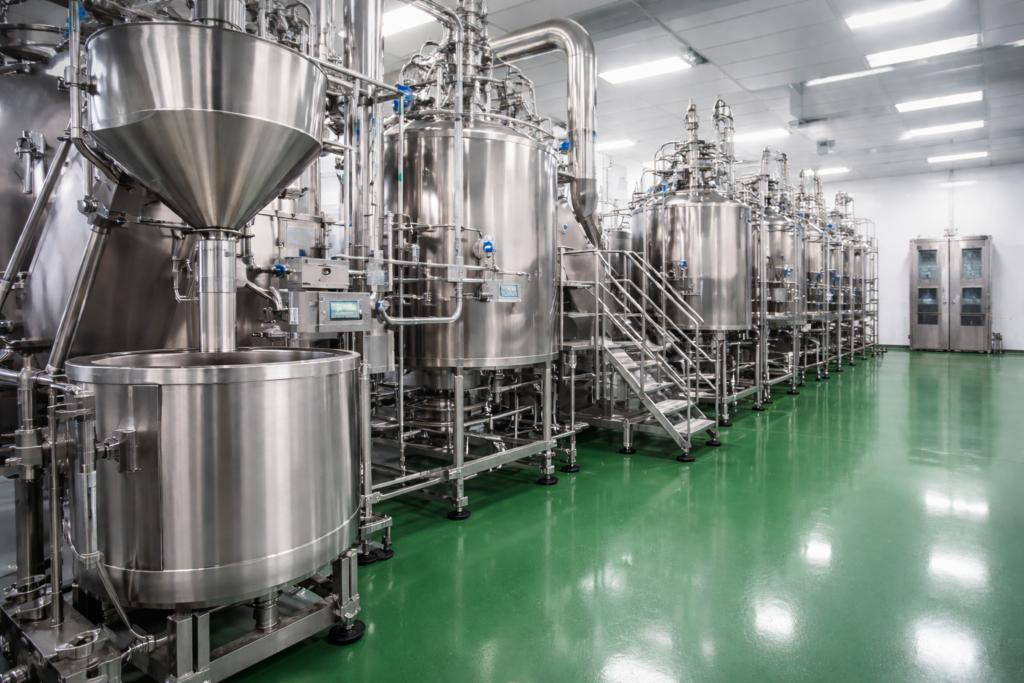
Second, the production notes you uploaded describe a fairly conventional powder route: selection, cleaning, hydrolysis, centrifugation/filtration, low-temperature drying, pulverizing, sterilization, and packaging. That matters because low-temperature drying is exactly the sort of process choice manufacturers use when they want to protect sensitive protein fractions better than aggressive thermal treatment would.
Third, the research files repeatedly show that earthworm protein can move through several processing stages—heat treatment, simulated digestion, fractionation, ultrafiltration, chromatography, freeze-drying, and peptide identification—while still yielding useful downstream fractions. In other words, the material is not collapsing under standard food-science or ingredient-processing steps.
That is the good news.
The more nuanced answer is that stability depends on what you are trying to preserve:
- Nutritional protein value
- Powder flow and storage quality
- Peptide functionality after hydrolysis
- Specific enzyme activity
- Sensory acceptability in the final product
Those are not the same thing. Not even close.
The dry powder itself is usually the easy part
For bulk handling, earthworm protein powder should be thought of like other animal-derived specialty proteins: moisture-sensitive, oxidation-sensitive to a point, and highly dependent on packaging discipline.
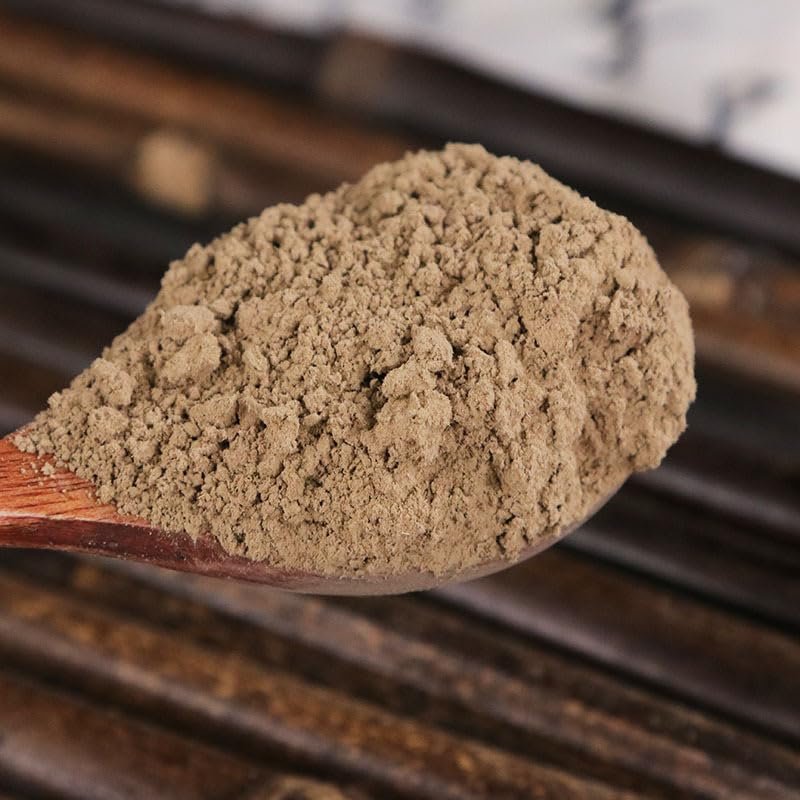
A dry powder format already gives it a big head start. Lower water activity generally means better physical shelf behavior and less microbial trouble. The files also show researchers and processors repeatedly working with freeze-dried or dried powder systems, which supports the idea that powdering is a practical and durable form for transport and secondary manufacturing.
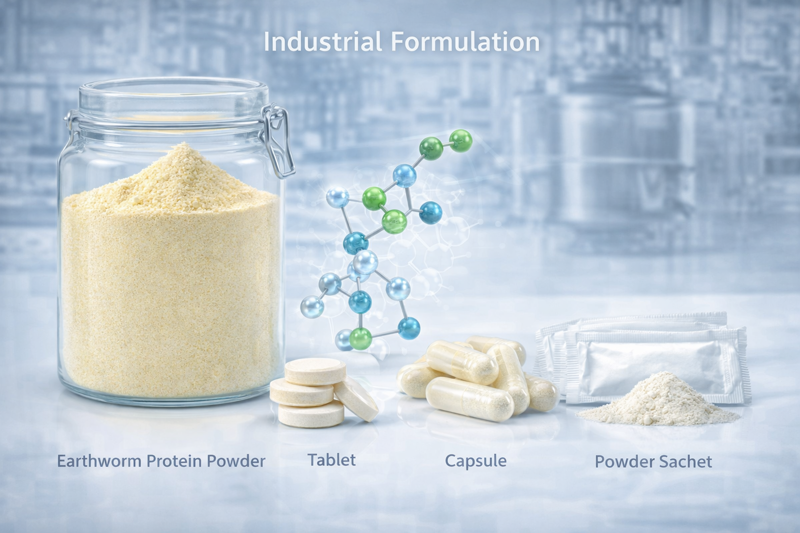
That makes earthworm protein powder quite suitable for applications like:
Capsule and tablet blends
This is probably one of the better fits. Powders used in encapsulation or tableting face less thermal stress than beverage or baked systems. If the formula is dry, protected from humidity, and processed under ordinary GMP controls, the ingredient is much more likely to maintain its baseline protein integrity.
Sachets and powdered nutraceutical mixes
Again, a solid fit. Dry systems are friendly to specialty proteins. You avoid a lot of the headaches that come with liquid dispersion, pH stress, and long-term aqueous storage.
Functional powder blends
Protein blends, cardiovascular-support blends, and peptide-forward health products are all easier to manage when the ingredient stays in powdered form until end use.
Honestly, that is why dry delivery systems keep winning. They are just less dramatic.
Heat is where the conversation gets more interesting
One of the uploaded studies notes that earthworm protein was first heat treated before digestion because heat treatment can make proteins more digestible by proteases. That is useful—but it also tells us something important. Earthworm protein is process-responsive. Its structure changes in ways that matter.
That does not mean heat always ruins it. It means heat changes what kind of ingredient you are working with.
If your product goal is simply to include earthworm protein as a proteinaceous raw material, moderate processing may be acceptable. But if your commercial value rests on specific biological fractions, then temperature history becomes a much bigger deal.
Let me explain.
There are really two industrial paths here:
1. Intact or mostly intact earthworm protein powder
This route is more about protein content, amino acid profile, and broad positioning as a specialty functional protein ingredient. Stability is mainly about moisture control, oxidation management, microbial safety, and physical handling.
2. Hydrolyzed, peptide-rich, or bioactivity-centered material
This route is more delicate. The uploaded research shows gastrointestinal digestion and autolysis can generate peptide-rich fractions with measurable activity, including antioxidant, ACE-inhibitory, and immunomodulatory effects. In these systems, stability is not only “does the powder remain powder?” but “do the relevant peptide patterns remain meaningful?”
That is a different standard altogether.
Peptides can be a strength, not just a weakness
Now here is the slightly surprising part.
Earthworm protein does not only survive processing. In some cases, processing is the point.
The uploaded papers show hydrolysis produced soluble peptide content around 77.92% to 79.19% in certain preparations, and those hydrolysates were linked to antioxidant, ACE-inhibitory, or immunomodulatory potential. That suggests earthworm protein may actually become more commercially useful after controlled enzymatic breakdown, depending on the end market.
So when someone asks, “Is earthworm protein powder stable?” the honest B2B answer is:
Yes, as a powder ingredient, it can be stable enough for industrial use.
And yes, as a processed protein system, it can also be intentionally transformed into more active peptide fractions.
That sounds contradictory, but it really is not. It just means the ingredient has two industrial identities:
one as a powder protein, and one as a peptide platform.
Where stability risk actually shows up
This is where brands sometimes get a bit too optimistic.
Liquid systems
Once you move into ready-to-drink formats, emulsified shots, or water-based suspensions, stability gets harder. Proteins can sediment, interact with minerals, shift flavor, or respond poorly to extended liquid storage. The files you uploaded support earthworm protein as a food resource and functional ingredient, but they do not give strong evidence for long-term commercial liquid stability in finished beverages. So any RTD concept would need real bench and accelerated stability work—not wishful thinking.
High-heat processing
Extrusion, retorting, high-temperature baking, or harsh sterilization steps may be acceptable for simple nutrition positioning, but they are riskier when a brand is trying to preserve sensitive bioactivity. The more specific the functional story, the less comfortable you should be with aggressive heat.
Sensory drift
This one gets overlooked. A technically stable protein can still be a commercial headache if taste, odor, or color shift in a blend. That is especially true in flavored powders, gummies, bars, or beverages. Stability is not only chemical. It is sensory, too.
Humidity and storage abuse
Like many protein powders, earthworm protein will likely perform best when protected from moisture ingress. Clumping, odor change, and micro risk all get worse when packaging barriers are weak. Boring point, yes. Important point, also yes.
Industrial fit by category
Dietary supplements
A strong fit. Capsules, tablets, and stick packs are probably among the most realistic applications. Low moisture, less heat, and straightforward dosing all help.
Nutraceutical ingredients
Also a strong fit, especially where the ingredient is sold as part of cardiovascular, circulation, peptide, or general wellness concepts. Hydrolyzed versions may offer more formulation flexibility than raw powder.
Pharmaceutical-adjacent development
Possible, but it needs tighter standardization. Once the conversation shifts from “functional ingredient” to “pharma-grade active,” stability expectations rise sharply—assay consistency, impurity profile, activity retention, and batch reproducibility all become non-negotiable.
Functional foods
Selective fit. Powders, bars, tablets, compressed snacks, and dry mixes make more sense than hot-fill drinks or heavily processed bakery systems. Not impossible—just less forgiving.
What manufacturers should actually test
If you are evaluating earthworm protein powder for industrial use, the smart move is not to ask whether it is “stable” in the abstract. Ask stable for what.
You would want to verify:
- moisture behavior and caking tendency
- protein or peptide retention over time
- microbiological stability
- thermal tolerance under your actual process
- flavor and odor movement in the intended matrix
- compatibility with sweeteners, acids, minerals, and excipients
- dissolution or dispersibility, where relevant
You know what? This is where many launches go sideways. Not because the ingredient is bad, but because the wrong stability question was asked too early.
The practical verdict
Earthworm protein powder is stable enough for many industrial applications, especially in dry systems such as capsules, tablets, sachets, and powder blends. The uploaded materials support its use as a concentrated protein ingredient and as a starting point for peptide-rich fractions with functional potential. Low-temperature drying, filtration, drying, and powder handling all point to decent manufacturability.
But it is not a “throw it anywhere” ingredient.
Its industrial success depends on whether you are selling:
- a dry specialty protein,
- a hydrolyzed peptide ingredient,
- or a bioactivity-led formulation that must survive harsher processing.
That distinction changes everything.
So the right conclusion is not “earthworm protein powder is stable” or “earthworm protein powder is unstable.” Both are too blunt.
A better conclusion is this: earthworm protein powder is industrially workable and reasonably stable in controlled dry formats, while higher-value peptide or enzyme-linked positioning demands tighter process design, gentler thermal exposure, and real stability validation in the final dosage form.
That is the version a serious buyer can use.
FAQs
Is earthworm protein powder stable in capsule and tablet manufacturing?
Yes, earthworm protein powder is generally more stable in dry delivery systems like capsules and tablets because these formats limit water exposure and usually avoid harsh heat. That makes them one of the better industrial applications for earthworm protein powder.
Does heat affect the functional value of earthworm protein powder?
It can. Moderate heat may be manageable for basic protein use, but high heat can change protein structure and may reduce the value of bioactivity-focused earthworm protein ingredients, especially when peptide functionality is part of the product story.
Can earthworm protein powder be used in functional foods?
Yes, but some formats are better than others. Dry functional foods, powder blends, and compressed nutrition products are usually a better fit than ready-to-drink beverages or heavily heat-processed foods that put more stress on the ingredient.
Is hydrolyzed earthworm protein more stable than intact earthworm protein powder?
Not always more stable in every sense, but hydrolyzed earthworm protein can be more practical for certain formulations because peptide-rich fractions may dissolve more easily and support targeted product concepts. The trade-off is that peptide-focused products need tighter quality control.
What should buyers test before launching products with earthworm protein powder?
Buyers should test moisture stability, microbial quality, flavor impact, dispersibility, thermal tolerance, and retention of relevant protein or peptide markers in the final formula. For industrial applications, finished-product stability matters more than raw material specs alone.