A quick outline before we get into it
- Why supplier quality matters more than a pretty brochure
- What “good” earthworm protein powder really means
- The raw material questions smart buyers ask first
- How to check manufacturing control, not just marketing claims
- Which lab tests and documents actually matter
- Red flags that quietly ruin a sourcing project
- A practical supplier scorecard for buyers
- FAQs for importers, formulators, and brand owners
If you source earthworm protein powder for dietary supplements, nutraceuticals, functional food, pharma-related development, or even cosmetic applications, you already know this market can feel a bit uneven. Some suppliers sound polished. Some send a spec sheet that looks fine at first glance. Some even talk a big game about peptide activity, amino acid richness, and premium raw materials.
And yet, once samples land on the bench, things get real.
That’s the moment buyers start asking the right question: not “Who is cheapest?” but “Who can supply stable, verifiable, repeatable quality?”
That shift matters. A lot.
Earthworm protein is not a simple commodity. It’s a biologically complex ingredient, and supplier quality depends on far more than protein percentage alone. The stronger suppliers show control over species selection, raw material cleaning, process consistency, drying conditions, testing methods, and documentation. The weaker ones? They often hide behind vague claims.
Let me explain.
What does “quality” mean for earthworm protein powder, really?
Quality in earthworm protein powder is a mix of four things:
- Nutritional value
- Process consistency
- Safety and compliance
- Fit for your application
That last one gets overlooked. A powder that works for a basic health-food tablet may not be right for a premium capsule line, a peptide-focused formula, or a pharma-adjacent project.
Research in the uploaded technical materials shows earthworm proteins are a high-protein resource, typically around 56–66% of dry weight in general literature, while specific samples in the cited studies were reported around 60.34% and, in another composition analysis, 60% to more than 70% depending on material and processing. The same literature also notes that lysine, leucine, and arginine are among the more abundant amino acids, which is one reason buyers pay attention to this ingredient category in the first place.
So yes, protein matters. Amino acid balance matters. But for supplier evaluation, those are only the start.
First things first: ask about the raw material, not just the finished powder
Honestly, many sourcing problems begin before processing even starts.
A capable supplier should be able to tell you, clearly, what raw material they use. In one uploaded production-flow document, the raw material is identified specifically as “Taiping No. 2” Eisenia fetida for earthworm protein powder production. That kind of specificity is useful. It suggests the supplier has at least thought through source consistency instead of buying whatever is available that week.
Here’s what you should ask:
Species and origin
Ask the supplier which earthworm species they use, where it is farmed, and whether the source is stable year-round. In the research files, one study identified raw earthworms as Pheretima aspergillum from Guangxi, China, while another production note refers to Eisenia foetida material. That matters because species differences can affect composition, downstream functionality, and product positioning.
Farming environment
Earthworms live close to the substrate, so buyers should ask what feed or growth medium is used and how contamination risks are controlled. A sloppy upstream system can create headaches later with heavy metals, microbial load, odor, ash, or inconsistent protein content.
Freshness and pre-processing handling
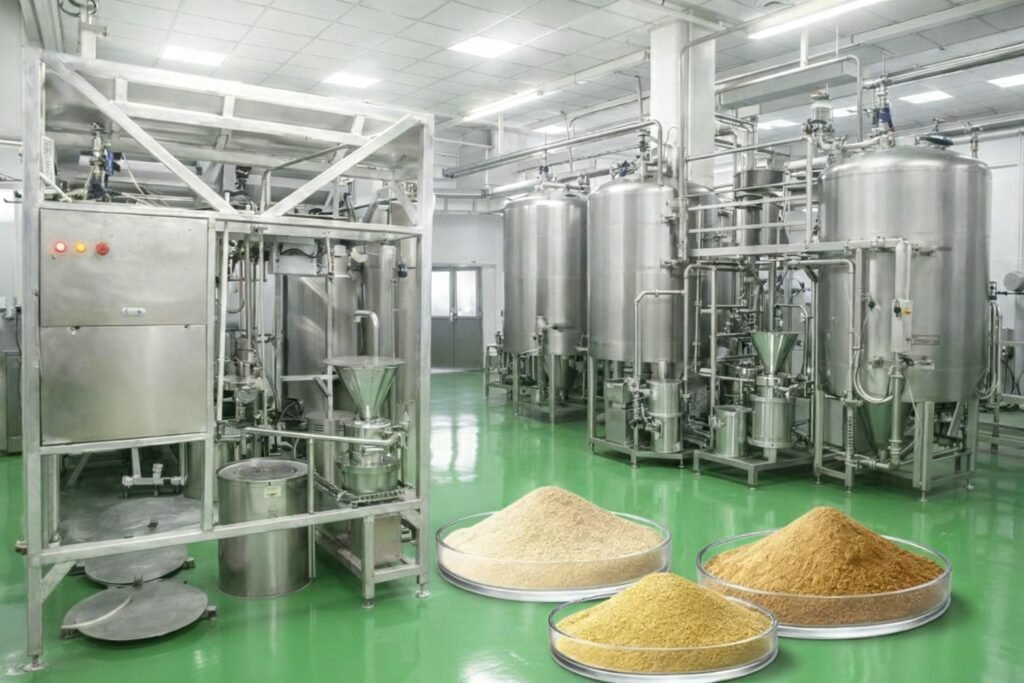
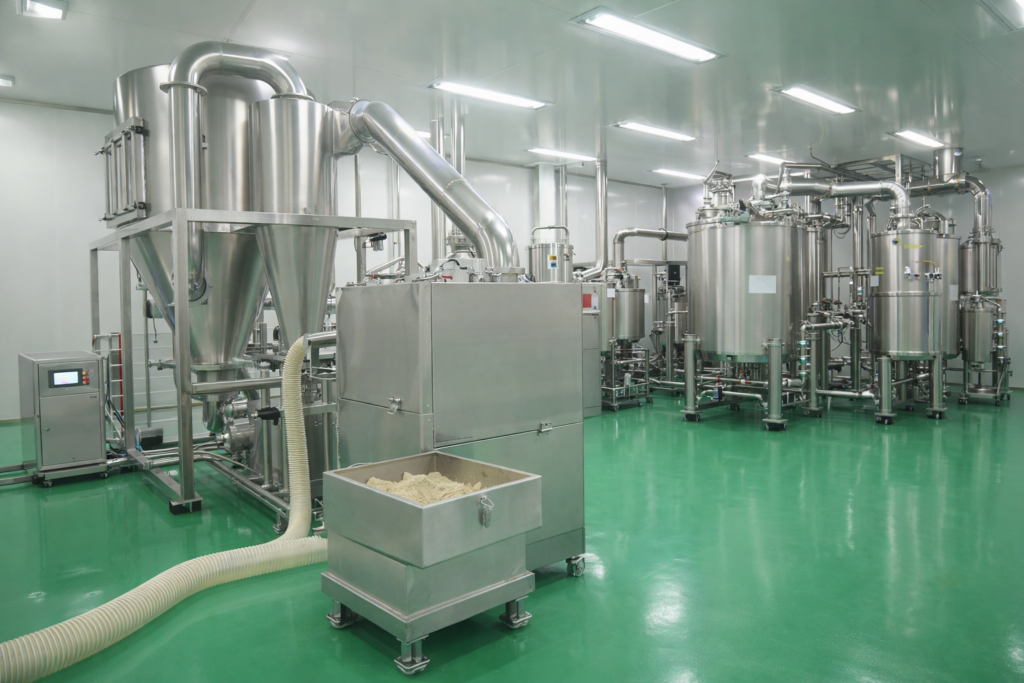
If the supplier can’t explain how worms are cleaned, separated from soil and debris, and moved into processing, that’s a problem. One uploaded production flow explicitly describes mechanical separation of earthworms from soil and impurities, secondary sorting/cleaning, mechanical washing, centrifugation/filtration, low-temperature drying, pulverizing, sterilization, and packaging. That’s the level of process visibility you want.
A supplier that can describe the upstream chain well is usually a supplier that can manage risk well. Usually.
Then check the manufacturing process—because process is where quality is won or lost
This is where experienced buyers separate from first-time buyers.
A good earthworm protein supplier should be able to explain not only what they make, but how they make it. And the answer should sound like manufacturing, not mythology.
In the research materials, earthworm protein preparation included drying, crushing, controlled extraction, centrifugation, pH adjustment, precipitation, desalting, and freeze-drying, followed by standard composition analysis. That tells you something important: serious earthworm protein production is a controlled technical process, not just “dry and grind.”
What to look for in the process story
Cleaning and impurity removal
This sounds basic, but it isn’t. Since earthworms come from soil-rich environments, removal of mud, foreign matter, and non-target solids is critical.
Controlled extraction or hydrolysis
Some suppliers sell plain earthworm protein powder. Others position hydrolyzed or peptide-rich variants. If hydrolysis is involved, ask which enzymes are used, what the conditions are, and how they monitor the degree of hydrolysis. In the uploaded studies, simulated digestion and peptide production were measured using methods like TNBS for degree of hydrolysis and chromatographic tools for molecular-weight distribution.
Drying method
Drying can make or break quality. Harsh heat may reduce functionality or change the profile of sensitive components. One production-flow document specifically mentions low-temperature drying, which is generally a better sign than vague “high-efficiency drying” language.
Sterilization step
You want to hear that the supplier has a defined kill step or microbial control step, and that it doesn’t wreck the ingredient.
Batch traceability
Can they trace a finished lot back to raw-material intake, processing date, internal QC record, and retained sample? If not, don’t kid yourself—this is not a mature supplier.
Don’t stop at protein percentage: evaluate the specification sheet properly
A spec sheet is useful, but it’s also where weak suppliers learn to look strong.
A decent specification should cover at least:
- Appearance
- Protein content
- Moisture
- Ash
- Fat, if relevant
- Microbiology
- Heavy metals
- Particle size or mesh, where relevant
- Solubility or dispersibility, if the application needs it
- Storage conditions
- Shelf life
The research files show composition analysis of earthworm materials commonly includes protein, lipid/fat, ash, and moisture, using established analytical methods. One cited paper explicitly states AOAC methods were used for protein, fat, ash, and moisture determination. That’s good news for buyers, because it gives you a benchmark for what professional testing should look like.
And here’s the thing: if a supplier can tell you a powder is “high protein” but cannot tell you the method used to measure it, that number is doing more sales work than science work.
For related reading on spec review, a natural internal companion piece would be How to Read an Earthworm Protein Specification Sheet.
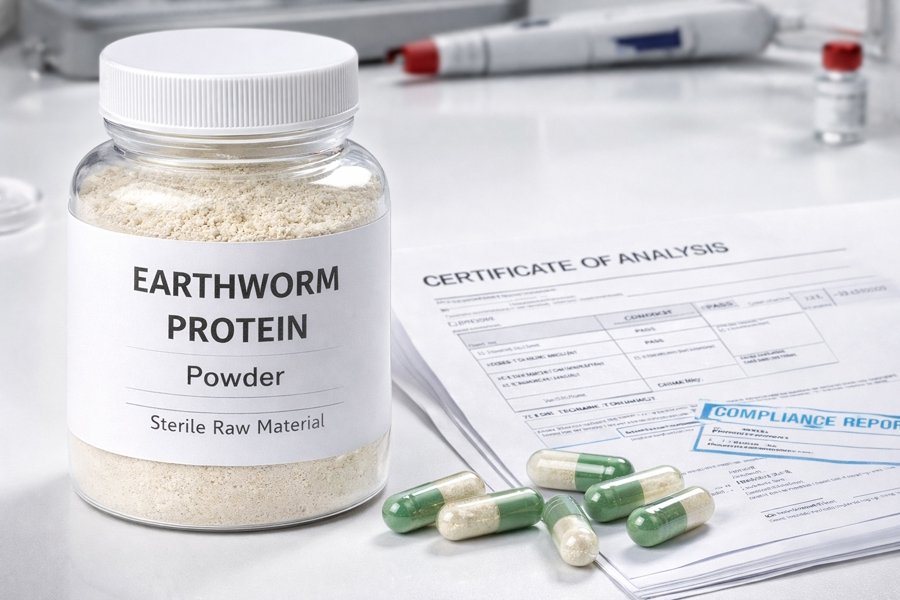
Ask for COA, but also ask how the COA is built
A Certificate of Analysis is not magic. It’s only as credible as the testing system behind it.
When you review a COA, ask:
- Is it batch-specific?
- Is the date recent?
- Are the results consistent with the agreed spec?
- Were tests done in-house, third-party, or both?
- What methods were used?
- Are limits clearly stated, not just “Pass”?
This is especially important for microbiology and contaminants. Earthworm-derived ingredients need strong hygiene and contamination control. Even promotional material in the uploaded files points out concern around mineral and trace-element content, including mention that lead and other heavy metals should remain low. That’s exactly why buyers need actual data, not comforting adjectives.
Amino acid profile matters—but only if the data is real
Buyers often get excited about the amino acid story. Fair enough. The uploaded literature notes that earthworm proteins contain eight essential amino acids, and that lysine, leucine, and arginine are especially notable. Another paper also describes earthworm protein as a promising alternative protein with a good essential amino acid composition.
That’s commercially helpful for positioning. But don’t accept vague claims like:
- “Rich in amino acids”
- “Closer to human protein”
- “Superior nutrition”
- “High absorption”
Those may be directionally true in literature, but they are not batch data.
Ask for:
- Amino acid profile report
- Test method
- Reporting basis: as-is or dry basis
- Typical values versus guaranteed minimums
If a supplier talks endlessly about amino acids but won’t provide a report, that’s telling you something.
Functional claims? Ask for evidence, not excitement
This category gets messy fast.
The uploaded materials do show real scientific work around antioxidant peptides, ACE-inhibitory peptides, and immunomodulatory hydrolysates derived from earthworm proteins. Researchers identified bioactive peptide sequences and measured activities through chromatography, in vitro assays, and controlled models.
That’s meaningful.
But it does not mean every commercial earthworm protein powder on the market has the same activity, the same peptide profile, or the same application fit.
So when a supplier claims “antioxidant,” “antihypertensive,” or “immunity-support” potential, ask three plain questions:
- Is this claim based on your exact commercial material or on general literature?
- Is the product plain protein powder, hydrolysate, or peptide fraction?
- Do you have batch-level functional testing, or only academic references?
That’s not being difficult. That’s being awake.
Audit the supplier’s documents like a buyer, not a fan
A trustworthy supplier should be able to supply a documentation pack without drama.
That usually includes:
- Product specification
- COA
- TDS
- SDS
- Allergen statement, if relevant
- Non-GMO statement, if relevant
- Microbiology report
- Heavy metals report
- Origin statement
- Manufacturing flow or process summary
- Packaging and storage details
And one more thing—make sure the documents agree with each other. You’d be surprised how often the protein range on the spec sheet doesn’t match the COA format, or the product name changes across documents, or the raw material description is fuzzy.
That kind of paperwork mismatch is not small. It often hints at weak internal control.
A few red flags buyers should not ignore
Let’s keep this simple.
Red flag 1: The supplier cannot explain the process
If they only say “advanced biotechnology” or “proprietary low-temp technique” without detail, be careful.
Red flag 2: No clear raw-material identity
If species, origin, or farming source is vague, consistency may be poor.
Red flag 3: Claims are louder than reports
When the brochure is stronger than the COA, walk slower.
Red flag 4: No contaminant testing
For an ingredient tied closely to environmental substrate, this is a serious issue.
Red flag 5: Sample and production batch behave differently
This happens more than people admit. Ask whether the sample is pilot-scale or actual production-scale material.
Red flag 6: Overpromising on medical effects
Earthworm-derived materials are interesting, yes. The literature is promising, yes. But suppliers that talk like finished-drug advertisers are often trouble.
A practical scorecard for evaluating earthworm protein powder suppliers
You know what? A simple internal scorecard often works better than endless email threads.
Rate each supplier from 1 to 5 on:
Raw material control
Species, origin, farming system, cleaning
Manufacturing control
Process flow, drying control, sterilization, traceability
Analytical credibility
Protein method, amino acid report, microbiology, heavy metals
Documentation quality
Complete, consistent, current, batch-specific
Application fit
Capsules, tablets, sachets, beverage blends, peptide-focused use
Commercial reliability
MOQ, lead time, packaging, response speed, sample consistency
Regulatory readiness
Can they support your target market with the documents you actually need?
A supplier with a flashy price but weak scores in these areas usually becomes expensive later—through delays, reformulation, failed testing, or customer complaints.
So, what does a strong supplier look like?
A strong earthworm protein powder supplier usually has these traits:
They know their raw material.
They can show a real process flow.
They test core composition with recognized methods.
They provide contaminant data without being chased.
They understand the difference between protein powder and peptide-rich material.
They speak carefully about function.
And their documents line up.
That’s the real picture.
Because in sourcing, quality is rarely one dramatic failure. It’s usually a pile of small inconsistencies that add up. A little ambiguity in species. A little fuzziness in drying. A missing heavy-metal panel. A recycled COA template. A sample that looks better than the bulk lot.
Bit by bit, that’s how sourcing trouble starts.
For a related buyer-focused read, another strong internal companion topic would be Key Specifications to Look for When Sourcing Earthworm Protein Powder.
Final thought
Evaluating earthworm protein powder suppliers is not about chasing the fanciest story. It’s about finding a partner whose ingredient can survive real-world scrutiny—QC review, formulation work, market positioning, and repeat purchasing.
That sounds less exciting than a miracle-ingredient pitch. True.
But for serious brands, importers, and manufacturers, it’s the only thing that really counts.
FAQs
1. What is the most important factor when choosing an earthworm protein powder supplier?
The most important factor is overall process control, not just headline protein content. A good earthworm protein powder supplier should show stable raw material sourcing, controlled manufacturing, batch-specific COAs, and contaminant testing.
2. How can buyers verify the amino acid quality of earthworm protein powder?
Ask for a full amino acid profile report with method details and reporting basis. Since literature describes earthworm protein as rich in essential amino acids like lysine, leucine, and arginine, buyers should confirm that the commercial batch reflects the supplier’s claim rather than relying on generic marketing language.
3. Should I ask an earthworm protein powder supplier for heavy metals and microbiology reports?
Yes, absolutely. Because earthworms are closely linked to their growth substrate, heavy metals and microbiological safety are core quality checkpoints for any earthworm protein powder supplier evaluation.
4. What documents should a professional earthworm protein powder supplier provide?
At minimum, ask for a specification sheet, batch COA, TDS, SDS, microbiology report, heavy metals report, origin statement, and a manufacturing process summary. Better suppliers can usually provide these quickly and consistently.
5. Is earthworm protein powder the same as earthworm peptide powder?
No. Earthworm protein powder is the broader protein ingredient, while earthworm peptide powder is usually hydrolyzed into smaller peptide fractions. If your product concept depends on absorption, solubility, or bioactive positioning, you should confirm which form the supplier is actually offering.