
Earthworm peptide powder and collagen peptides are both made by hydrolyzing protein, but they start with different materials. Earthworm peptide powder is made from earthworm-derived protein. Collagen peptides are made from collagen-rich animal tissues, with commercial grades available from sources such as bovine, porcine, and fish tissues. A buyer comparing the two should first confirm the required ingredient identity, then check whether the suppliers’ peptide content and molecular-weight data describe comparable measurements. [1]
For supplement brands and contract manufacturers, the practical decision is whether either offered grade can meet the same procurement brief, or whether the brief needs to change. A collagen-specific product requires a documented collagen ingredient. A development brief that accepts different protein hydrolysates can compare their specifications and test the candidates in the intended formulation. The result applies to the grades and lots evaluated.
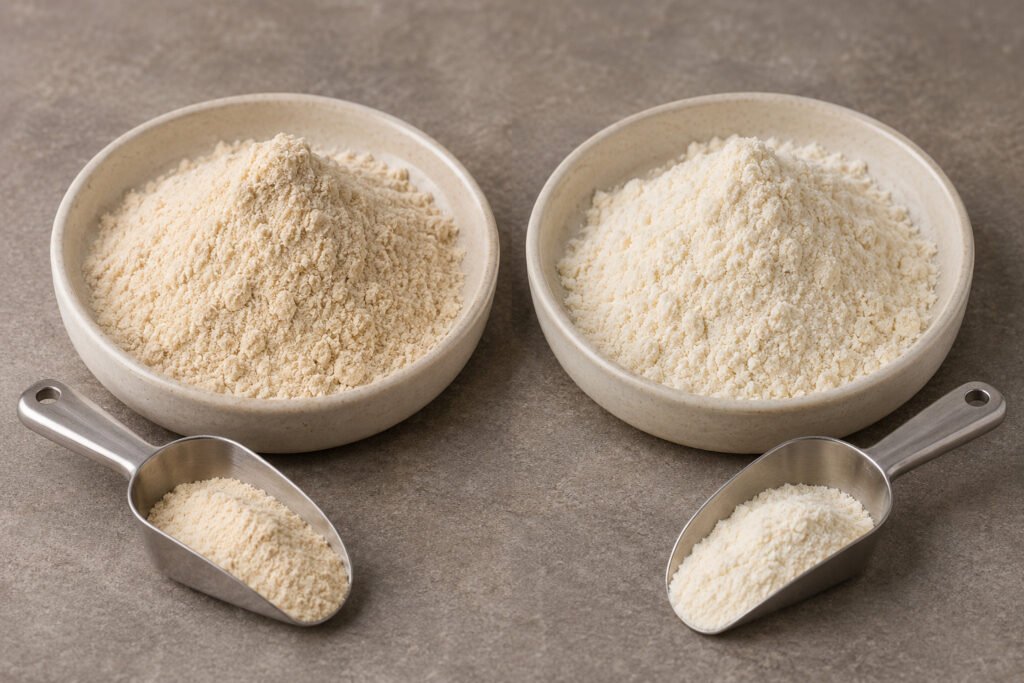
Define the Source Before Comparing the Specifications
For Earthworm Peptide Powder, ask the supplier to identify the starting material and describe the processing steps used for the grade on offer. Allworms’ standard Earthworm Peptide Powder is produced through enzymatic hydrolysis and spray drying. Here, enzymatic hydrolysis describes how the peptides are prepared. If a project requires retained enzyme activity, ask for a separate specification and an activity test for the relevant grade. Treat lumbrokinase as a separate ingredient category with its own activity-based evaluation.
For collagen peptides, ask for the species and tissue, the stated ingredient name, and confirmation that the product is hydrolyzed collagen. This comparison concerns collagen peptides. Gelatin and undenatured collagen are outside its scope. Source details can affect which products satisfy a customer’s purchasing specification and which source or allergen documentation the brand needs to review. Request documents for the exact material being evaluated. [1]
Before comparing prices, ask both suppliers to identify any carriers or other ingredients in the powder and state whether their reported values apply to the supplied powder or to a fraction of it. A source statement identifies where the protein came from. The composition statement explains what is in the bag. Together, they establish which material the rest of the technical comparison should cover.
Put Peptide Content and Protein Content on the Same Basis
Peptide content and total protein content answer different questions. A total protein value characterizes the protein content under a stated method. A peptide result must be read with the supplier’s definition of what it measured. Ask the supplier to identify the test method, the unit, the sample basis, and any inclusion or exclusion criteria that affect the reported value. For example, ask whether the result includes free amino acids and whether the method applies a size cutoff.
If one supplier gives a peptide percentage and the other gives a protein percentage, keep them as separate entries. Even two peptide percentages may be unsuitable for direct comparison if one is reported on a dry basis and the other on an as-supplied basis, or if the underlying tests measure different fractions. Ask the suppliers to reconcile the methods and reporting bases before setting a common acceptance limit. If the project specifies an amount per serving, calculate it only from a value that actually measures the required constituent in the supplied grade.
A collagen source may also be supported by composition data such as a characteristic amino-acid profile that includes hydroxyproline. Read that evidence in the context of the material and test method. An amino-acid profile describes composition after the applicable sample preparation. Molecular-weight data describe the sizes of compounds measured in the tested preparation. For example, a report showing hydroxyproline provides no information about how much of the supplied material falls within a specified peptide mass range. [1]
The Earthworm Peptide Powder quality evaluation guide covers the broader specification review, including other physical and quality attributes.
Compare Molecular-Weight Reports Only When Their Metrics Align
A molecular-weight report can give an average, a range, or the percentage assigned to defined size fractions. These outputs are useful for different decisions. An average helps describe a preparation in one number. A distribution helps answer how much of the reported material or signal falls above or below a threshold. Ask the laboratory what metric it used and how it defined the reported percentages.
For example, consider a quote that lists an average of 1 kDa and a second quote that reports 80% below 1 kDa. These are hypothetical values. They cannot establish which ingredient has a larger share of peptides below 1 kDa. To answer that question, request a distribution for both products using comparable thresholds and methods. Ask whether the percentage represents a mass fraction, a chromatographic area fraction, or another calculation. Where methods differ, document the limitation or agree on a common test before making the comparison an acceptance requirement.

Check whether each report applies to the exact grade, to the sample lot, or to a representative material. If peptide size matters to the project and only one supplier offers a representative profile, ask whether a result for the proposed commercial lot is available. The Earthworm Peptide Powder molecular-weight guide provides more detail on how to interpret size reports. A size distribution can support a technical specification. Any claim about absorption or physiological effects requires separate evidence.
A useful purchasing record preserves the supplier’s original wording next to the buyer’s requirement. For example, if the requirement is a minimum fraction below a stated cutoff, record that cutoff and the required basis. A supplier’s descriptive terms such as “small peptides” or “low molecular weight” can help identify a candidate for review. Ask for the underlying report before accepting either description as meeting the purchasing limit.
Find Out Whether the Candidate Fits the Intended Formula
Give both samples the same screening conditions and record the differences that matter to the project. For a drink mix, use the intended base and planned mixing conditions. Observe wetting, clumping, visible particles, sediment, and appearance at set times. A powder may disperse visibly at first and settle during the intended holding period. If clarity matters, define the criterion before the trial. The Earthworm Peptide Powder solubility and dispersibility guide explains the difference between these observations and a measured solubility result.
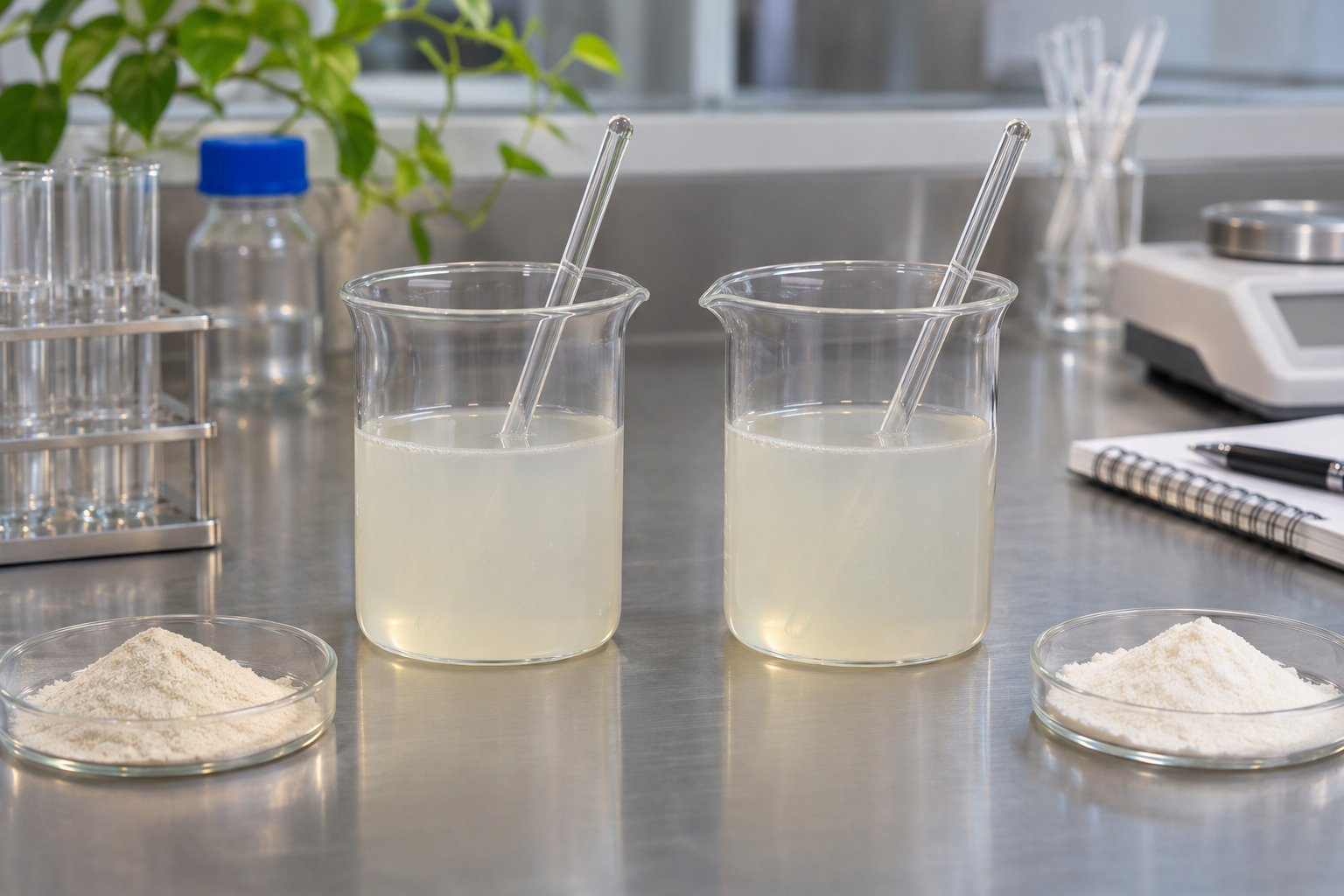
For a dry blend or capsule concept, screen flow, mixing behavior, and fill volume at the planned inclusion. Compare color, odor, and taste where relevant in the intended base. If you run a first trial at equal powder weights, record that choice. A second trial may need different inclusion levels if the brief requires equivalent documented protein or peptide contribution. Compare formula performance again at those levels because the change in powder quantity may affect handling and sensory results.
If collagen is named in the current formula, customer specification, or product description, changing to earthworm peptides changes ingredient identity. Have the responsible team review whether the revised concept fits the original brief and which documents or label changes it would require. If the project allows either identity, advance the grade whose documentation and prototype results satisfy the criteria agreed before the trial.
Tie the Specification Comparison to the Sample and Commercial Lot
Request the current specification, the certificate of analysis for the sample lot where available, and any separate molecular-weight report. Compare the grade name, lot identifier, and test methods before combining results in one decision record. A specification defines the supplier’s acceptance criteria. The COA reports results for a particular lot. A separate report can provide extra characterization when its connection to the grade or batch is clear.
Check the same purchasing requirements for both candidates. These can include moisture, ash, microbiology, contaminants, packaging, and storage. Record which items are confirmed for the sample and which must be reconfirmed for the commercial lot. For attributes that decide between the two candidates, ask how the supplier will document a subsequent lot and what would trigger a new review. The Earthworm Peptide Powder sample evaluation guide helps organize the sample-to-order decision.
FAQ
Are earthworm peptides a type of collagen peptide?
Earthworm Peptide Powder is supplied as an earthworm-derived protein hydrolysate. Collagen peptides are identified by their collagen starting material. If the product brief requires collagen peptides, check the source and ingredient identity in the specification before evaluating the formula.
Can two peptide powders with the same average molecular weight be treated as equivalent?
The same reported average can describe different size distributions, especially when testing and calculations differ. Compare the distribution thresholds and methods, then confirm which data apply to the exact grades or lots under review. Use physical testing to assess how the candidates perform in the intended formula.
Which documents should buyers request first?
Ask for the current specification, source and composition information, and the COA for the offered sample where available. If peptide content or size is a deciding criterion, request the relevant test method and any report that identifies the material covered.
Request the Current Earthworm Peptide Powder Specification
Visit the Allworms Earthworm Peptide Powder product page to request available specification and sample documents. Share your intended format and the peptide-content or molecular-weight criteria that guide your comparison.