Quality sounds simple until you’re the one buying bulk ingredients.
A finished supplement brand may only see a light yellow or brown powder in a sealed bag. But behind that powder, there’s a whole chain of decisions: earthworm sourcing, cleaning, hydrolysis control, filtration, drying, testing, packaging, documentation, and yes, the slightly boring—but very important—habit of doing the same thing well every single time.
For earthworm peptide powder manufacturers, consistent quality isn’t a slogan. It’s the difference between a product that formulators trust and one that creates headaches in capsules, drinks, powders, or private-label health products.
And let’s be honest, B2B buyers don’t just want “good quality.” They want repeatable quality. They want a batch this month to behave like the batch they approved three months ago.
That’s the real game.
First Things First: Quality Starts Before the Factory Door
A reliable earthworm peptide powder supplier doesn’t begin quality control at the hydrolysis tank. That’s too late.
The process starts with raw material selection.
Earthworms are protein-rich biological materials, and research has shown that earthworm protein can contain a high level of protein and valuable amino acids, making it a promising source for bioactive peptides and functional ingredients. Studies on earthworm protein digestion have also identified antioxidant peptides and ACE inhibitory peptides after controlled digestion and purification.
But raw material variation is real. Species, breeding conditions, feed source, harvesting time, cleaning method, and storage conditions can all affect the final peptide powder.
So professional manufacturers usually control:
- Earthworm species and origin
- Breeding base management
- Cleaning and impurity removal
- Moisture and freshness before processing
- Storage temperature before production
- Supplier or farm traceability records
You know what? This part may not sound exciting. But it’s like making a good soup: if the base material is poor, no fancy cooking trick will save it.
For buyers, this means one simple thing: ask your supplier where the raw material comes from and how it is controlled. A vague answer is not a great sign.
For related product sourcing, see Earthworm Peptide Powder, Earthworm Protein Powder, and Lumbrokinase Powder.
Controlled Hydrolysis: The Heart of Peptide Quality
Earthworm peptide powder is usually produced through controlled enzymatic hydrolysis. In plain English, that means larger earthworm proteins are broken down into smaller peptide chains using enzymes under defined conditions.
Sounds easy. It isn’t.
Hydrolysis is where many quality differences begin. If the hydrolysis is too weak, the product may contain too many large protein fragments. If it goes too far, the peptide profile may shift, taste may worsen, and the functional character may change.
Professional manufacturers control key parameters such as:
- Enzyme type
- Enzyme-to-substrate ratio
- pH
- Temperature
- Hydrolysis time
- Stirring speed
- Termination method
- Filtration standard
Research on earthworm protein digestion shows that peptide activity can be closely related to digestion conditions, peptide sequence, and molecular size. In one study, earthworm protein gastrointestinal digestion products were separated and identified, and specific antioxidant peptide sequences were found to show strong antioxidant activity.
Another study on earthworm protein digestion identified novel ACE inhibitory peptides and showed that purified low-molecular-weight fractions had stronger activity, especially fractions below 3 kDa.
That’s why “peptide content” alone doesn’t tell the full story. A buyer should also care about molecular weight distribution, solubility, and batch-to-batch peptide profile.
Small details. Big consequences.
Molecular Weight Control: Small Peptides, Big Buyer Questions
For earthworm peptide powder buyers, molecular weight is one of the most practical quality markers.
Why? Because molecular weight affects solubility, absorption behavior, taste, formulation feel, and sometimes functional performance.
Low molecular weight peptides are often preferred in functional beverages, capsules, and advanced nutrition systems because they tend to be easier to absorb and easier to formulate. In the uploaded product information, earthworm peptide powder is positioned as a small-molecule bioactive peptide produced by enzymatic hydrolysis and spray drying, with stable non-enzymatic properties for formulation use.
A serious manufacturer may test molecular weight distribution by methods such as HPLC or size exclusion chromatography. They may also offer customized molecular weight ranges when the buyer has a specific formulation need.
For example:
- Capsules may focus more on purity, stability, and bulk density.
- Beverage powders may need better solubility and less sediment.
- Cosmetic or beauty-from-within formulas may request smaller peptide ranges.
- Functional foods may care about taste, dispersibility, and processing tolerance.
Here’s the thing: “low molecular weight” should not just be a marketing phrase. It should be supported by test data.
Filtration and Purification: Where Rough Material Becomes Formulation-Ready
After hydrolysis, the product isn’t automatically ready for drying.
There may still be insoluble residues, larger molecules, odor-related components, excess minerals, and process residues. Filtration and purification help refine the material into a more stable ingredient.
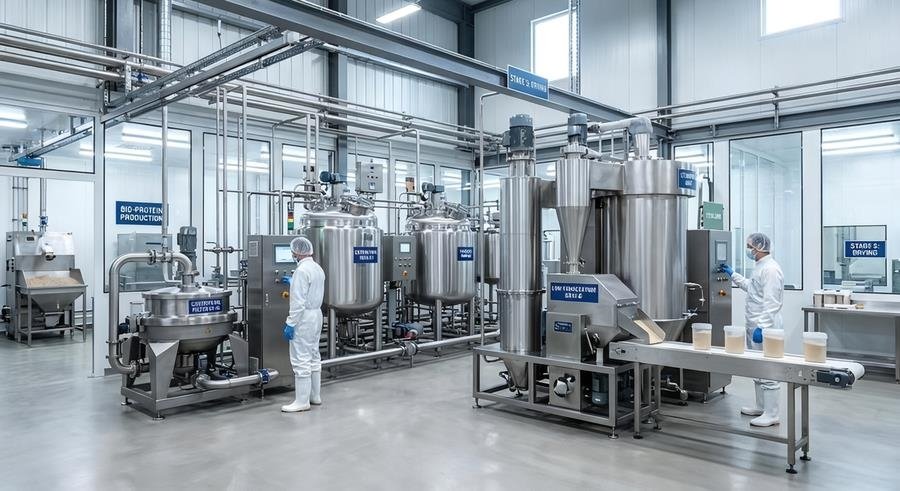
A typical controlled process may include raw material selection, enzymatic hydrolysis, filtration and purification, spray drying, sterilization, and packaging. The uploaded product details also describe this type of manufacturing flow for earthworm peptide powder.
Good filtration affects:
- Solubility
- Appearance
- Microbial control
- Impurity reduction
- Sensory profile
- Batch stability
And yes, sensory profile matters. Earthworm-derived products may naturally carry a special fishy smell. That doesn’t mean the product is bad, but manufacturers still need to keep odor within an acceptable and consistent range.
A buyer may not reject a raw material because it has a natural odor. But they will reject it if one batch smells mild and the next smells like a fishing dock in July.
Consistency, consistency, consistency.
Spray Drying: Stability Is Made, Not Hoped For
Drying is one of the most important steps in earthworm peptide powder production.
Spray drying is commonly used because it helps convert liquid peptide solution into a stable powder with better handling, storage, and formulation performance. It also helps ensure the product is non-enzymatic, meaning it does not contain active enzymes that keep breaking down the ingredient after production.
That point matters a lot.
Unlike lumbrokinase, which is valued for enzyme activity, earthworm peptide powder is usually positioned as a stable peptide ingredient, not an active enzyme ingredient. The uploaded product page clearly states that earthworm peptide powder is a non-enzymatic peptide product with no active enzyme content, and that spray drying supports stability and shelf life.
Why does this matter for brands?
Because active enzymes can be sensitive. They may lose activity during heat, moisture exposure, shipping, or processing. Peptides, when properly dried and packaged, are usually easier to handle in powders, capsules, beverages, and blends.
So for earthworm peptide powder, quality consistency often means:
- No active enzyme degradation issues
- Stable moisture control
- Stable powder flow
- Stable peptide content
- Better shelf-life behavior
Not flashy. Very useful.
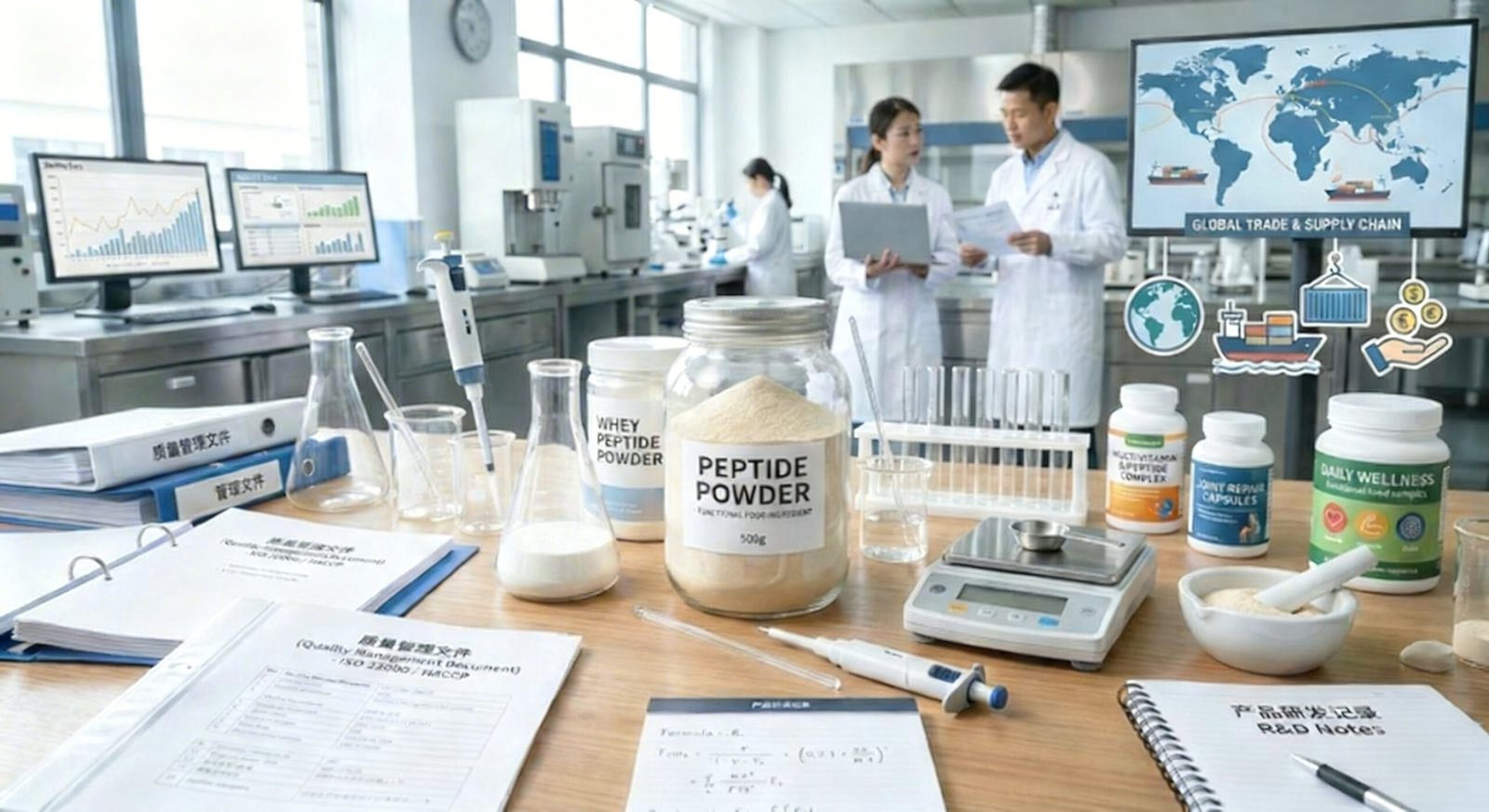
Testing Every Batch: The COA Is Not Just Paper
A Certificate of Analysis, or COA, is often the first document a buyer asks for. But a COA should not be treated like a decoration attached to an email.
It is the batch identity card.
For earthworm peptide powder, common test items may include:
- Appearance
- Odor
- Protein content
- Peptide content
- Moisture
- Ash
- Heavy metals such as lead, arsenic, cadmium, and mercury
- Aerobic plate count
- Yeasts and molds
- Coliforms
- Salmonella
- Staphylococcus aureus
- Molecular weight distribution, when required
The uploaded product information lists earthworm peptide powder specifications such as protein ≥65%, peptide content >30%, moisture, ash, selenium, heavy metals, microbial indicators, shelf life, storage, and packaging details.
For B2B buyers, these values are not just “nice to know.” They affect import review, formulation design, label planning, safety evaluation, and repeat purchasing.
A practical tip: compare COAs from different batches. If the numbers jump wildly, ask why.
Some natural variation is normal. Wild variation is not.

Microbial and Heavy Metal Control: The Quiet Side of Quality
Functional ingredients can have exciting stories—bioactive peptides, antioxidant research, absorption advantages, all that good stuff.
But buyers also need the quiet side of quality.
Microbial safety and heavy metal control are non-negotiable.
Earthworms live in soil-related environments, so raw material cleaning, source control, sterilization, and final testing matter. A professional earthworm peptide powder manufacturer should have defined controls for microbial contamination and heavy metals.
This is especially important for buyers in:
- Dietary supplements
- Nutraceutical ingredients
- Functional foods
- Pharmaceutical ingredient supply chains
- Cosmetic raw materials
- Bulk wholesale distribution
Different markets may have different regulatory limits. The United States, EU, Southeast Asia, and Middle East markets may all review safety documents differently. So the supplier should provide clear COA data, and when needed, third-party testing.
Honestly, this is where many serious buyers separate real manufacturers from casual traders.
Traceability: Can You Follow the Batch Backward?
Traceability is one of those words people use a lot, but what does it mean in practice?
It means a manufacturer can answer:
- Which raw material batch was used?
- When was it processed?
- Which equipment line was used?
- Who approved the batch?
- What were the in-process test results?
- What packaging materials were used?
- Where are the retained samples?
- Which customers received the batch?
If something goes wrong, traceability turns panic into a controlled investigation.
Without traceability, everyone starts guessing. And guessing is expensive.
For long-term buyers, traceability also builds trust. It shows the supplier has a system, not just a warehouse and a sales brochure.
In-Process Control: Don’t Wait Until the Final Test
Final product testing is important, but smart manufacturers don’t wait until the end to discover problems.
They check quality during production.
In-process control may include:
- Raw material inspection
- Cleaning verification
- Hydrolysis pH monitoring
- Temperature recording
- Enzyme reaction timing
- Filtration clarity check
- Drying temperature control
- Moisture monitoring
- Packaging inspection
Think of it like driving on a mountain road. You don’t only check whether the car survived after reaching the bottom. You check brakes, speed, curves, weather, and road signs along the way.
Same idea.
Quality is not inspected into the product at the end. It is built into the process step by step.
Documentation: Boring, But Beautiful
Some buyers get impatient with documents. That’s understandable. Nobody wakes up thrilled to read a specification sheet.
But in B2B ingredient sourcing, documents protect everyone.
A qualified earthworm peptide powder supplier should be able to provide:
- Product specification
- COA
- Manufacturing flow chart
- Ingredient statement
- Shelf life statement
- Storage recommendation
- Packaging details
- Allergen statement, if applicable
- Heavy metal and microbial test results
- Third-party testing, when requested
- Sample batch information
- Export documents for shipment
If the supplier can provide a 100g sample, COA, and clear specification before bulk cooperation, the buyer can test solubility, odor, taste impact, formulation compatibility, and lab results before committing to a larger order.
That saves time. It saves money. It saves awkward emails later.
Packaging and Storage: Quality Can Still Be Lost After Production
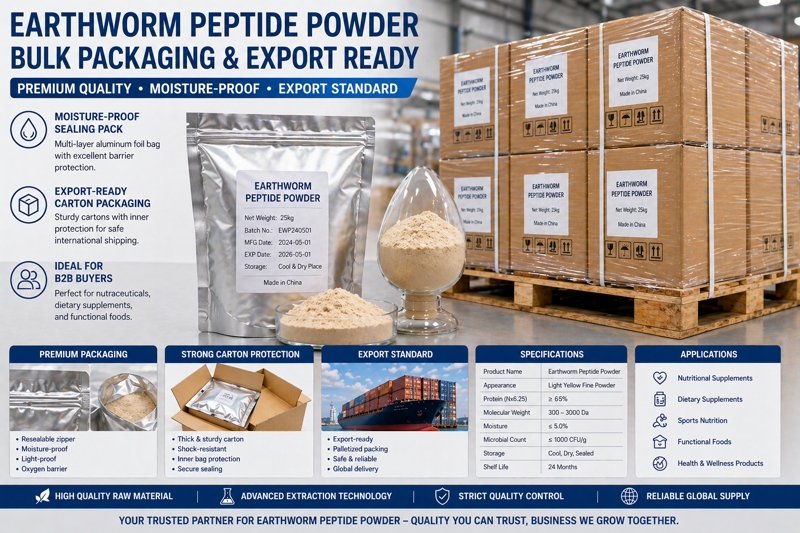
Even a well-made earthworm peptide powder can lose quality if it is poorly packed or stored.
Moisture is the main enemy. Heat is another. Oxygen and light may also affect long-term stability.
Good packaging usually includes sealed inner bags, moisture-resistant materials, and export cartons. Our’s cool, dry storage, two-year shelf life, and packaging such as 1.5kg per bag and 9 kg per carton.
For bulk buyers, it’s smart to ask:
- Is the inner bag sealed properly?
- Is the carton strong enough for export?
- Is there a batch label?
- Is the product protected from moisture?
- Are storage conditions clearly stated?
- Does the supplier provide photos before shipment?
It may feel small, but a damaged carton or poorly sealed bag can ruin a buyer’s first impression fast.
Why Batch Consistency Matters for Finished Product Brands
A supplement brand doesn’t sell “raw material variation.” It sells a finished product that customers expect to feel, taste, smell, and consume the same way every time.
If the peptide powder changes too much, problems may appear in finished products:
- Powder clumping
- Poor solubility
- Stronger odor
- Color differences
- Sediment in beverages
- Capsule filling issues
- Formula instability
- Label claim problems
- Customer complaints
This is why manufacturers must control not just the big things, but also the small repeatable things.
A buyer may forgive a slightly longer lead time. They won’t forgive repeated quality surprises.
What Buyers Should Ask Before Choosing a Manufacturer
Before working with an earthworm peptide powder manufacturer, buyers should ask direct, practical questions.
Not aggressive questions. Clear questions.
For example:
- What is your raw material source?
- Can you provide batch COA?
- What is the protein and peptide content?
- Is the product enzymatic or non-enzymatic?
- Do you test molecular weight distribution?
- What are your microbial limits?
- Do you test heavy metals?
- Can you provide samples for formulation testing?
- What is your MOQ?
- What is your lead time?
- Can you support repeat bulk orders?
- Can specifications be customized?
A good supplier won’t be scared by these questions. They’ll welcome them.
Because serious questions usually come from serious buyers.
Red Flags: When Quality May Not Be Stable
Not every supplier is equal. Some may have attractive pricing but weak control.
Watch for these warning signs:
- No COA available
- No clear production process
- No batch number
- No sample testing support
- No heavy metal or microbial data
- Unclear protein or peptide content
- Overpromised health claims
- Product described as both enzyme and peptide without explanation
- Price changes with no technical reason
- Different documents showing conflicting specs
That last one matters. If a supplier cannot explain its own product category clearly, the buyer may face trouble later.
Earthworm peptide powder and lumbrokinase are not the same thing. Earthworm peptide powder is generally a stable peptide ingredient. Lumbrokinase is an active fibrinolytic enzyme. Mixing the two in communication can confuse buyers and regulators.
Long-Term Quality Is Really a Relationship
Here’s the slightly human part of ingredient sourcing.
Quality systems matter. Testing matters. Documents matter. But long-term cooperation also depends on communication.
Good manufacturers tell buyers when something changes. Better manufacturers explain why. The best ones help buyers plan around it.
For example, if a buyer needs a specific molecular weight range for a beverage product, the supplier should not simply ship the nearest available batch. They should confirm the requirement, check production feasibility, and keep the buyer updated.
That’s how trust grows.
Not in one order. Not in one email. Over time.
Consistent quality is technical, yes. But it is also relational. A manufacturer that cares about repeat business will protect the buyer’s formulation, timeline, and brand reputation.
Final Thoughts: Consistency Is the Real Premium
In the ingredient business, premium quality doesn’t only mean high protein content or a nice-looking powder.
It means the buyer can reorder with confidence.
A dependable earthworm peptide powder manufacturer controls raw materials, hydrolysis, molecular weight, filtration, drying, microbial safety, heavy metals, packaging, documentation, and traceability. More importantly, they keep these controls stable from batch to batch.
That’s what B2B buyers need.
Because when a supplement brand, nutraceutical company, cosmetic formulator, pharmaceutical ingredient buyer, wholesaler, or dealer chooses a supplier, they’re not only buying powder.
They’re buying predictability.
And predictability is worth a lot.
FAQs
1. How do earthworm peptide powder manufacturers control batch consistency?
Earthworm peptide powder manufacturers control batch consistency by managing raw material sourcing, enzymatic hydrolysis conditions, filtration, spray drying, moisture levels, microbial testing, heavy metal testing, and batch documentation. A reliable supplier should provide COA and specification sheets for every batch.
2. What quality tests should buyers request for bulk earthworm peptide powder?
Buyers should request protein content, peptide content, moisture, ash, molecular weight distribution, heavy metals, microbial limits, appearance, odor, and solubility data. For international orders, third-party test reports may also be useful.
3. Is earthworm peptide powder the same as lumbrokinase?
No. Earthworm peptide powder is usually a stable non-enzymatic peptide ingredient, while lumbrokinase is an active fibrinolytic enzyme. This difference matters for formulation, storage, testing, and product positioning.
4. Why is molecular weight important in earthworm peptide powder quality?
Molecular weight affects absorption behavior, solubility, formulation compatibility, taste, and product stability. Many B2B buyers prefer low molecular weight earthworm peptides for beverages, capsules, powders, and functional nutrition products.
5. How can I choose a reliable earthworm peptide powder supplier for long-term cooperation?
Choose a supplier that offers clear specifications, batch COA, raw material traceability, stable production capacity, sample testing, technical support, and honest communication. Long-term quality depends on both manufacturing control and supplier reliability.