How Is Earthworm Protein Used in the Health Industry?
Earthworm protein has sometimes been discussed in terms of broad health effects or traditional uses. For commercial product developers, however, the more useful question is different: where can Earthworm Protein Powder realistically fit as a formulation ingredient, and what must be evaluated before it is approved?
Earthworm Protein Powder is a protein-rich, earthworm-derived ingredient that may be considered for dietary supplements, nutraceutical products, powder blends and other functional ingredient systems. These are potential application directions—not guarantees that the material will work in every product.
Suitability depends on the actual ingredient specification, intended dosage form, sensory profile, powder behavior, supporting documents and finished-product requirements. Buyers can begin with the Earthworm Protein Powder product page before deciding whether to request documents or a representative sample.
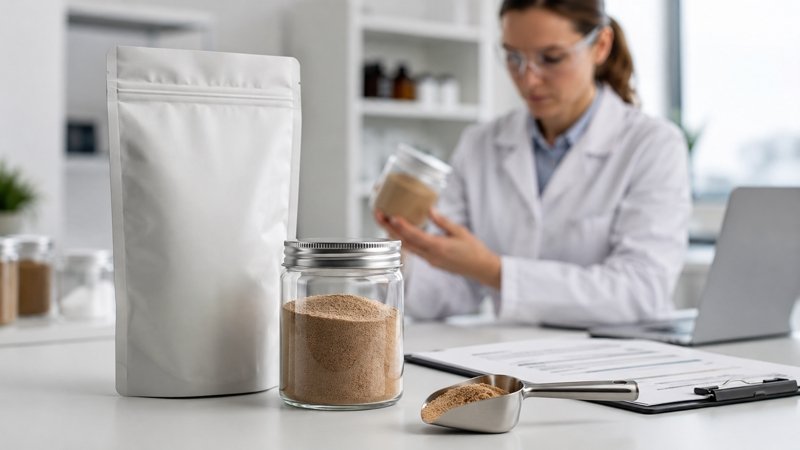
Quick Answer: Where Can Earthworm Protein Powder Fit in B2B Product Development?
Potential earthworm protein powder applications include:
- Dietary supplement capsules or tablets
- Nutraceutical product concepts
- Multi-ingredient powder blends
- Functional ingredient systems
- R&D prototypes and pilot formulations
- Specialized products developed by brands or distributors
Its presence on this list does not establish suitability for a specific formulation. A capsule developer may prioritize fill weight, density and odor, while a powder-blend developer may focus more heavily on dispersibility, flavor compatibility and visible uniformity.
Therefore, application selection should begin with a defined product brief. The formulator must understand what the ingredient is expected to contribute, how it will be delivered and which technical or regulatory requirements the finished product must meet.
Why Application Context Matters When Evaluating Earthworm Protein Powder
“Health industry” covers many products with very different technical requirements. A raw material that can be filled into a capsule may not automatically perform well in a flavored powder. A powder that passes compositional and microbiological specifications may still create sensory or processing problems in the intended product.
Before evaluating the ingredient, buyers should define:
- Intended dosage form
- Target market and regulatory category
- Other ingredients in the formulation
- Processing steps and environmental conditions
- Packaging format
- Desired shelf life
- Sensory limitations
- Required label and claim support
- Commercial batch size
This context determines which specification fields and formulation tests matter most. It also prevents teams from approving a material based only on a product description or one analytical value.
Earthworm Protein Powder should not automatically be evaluated as interchangeable with whey, egg, soy, pea or other established protein ingredients. Its origin, composition, appearance, odor and powder characteristics require assessment within the actual product system.
Dietary Supplement Formulations
Dietary supplements are one of the clearest potential application areas. Earthworm Protein Powder may be explored as a protein-rich ingredient in capsules, tablets or other supplement formats, subject to formulation and market requirements.
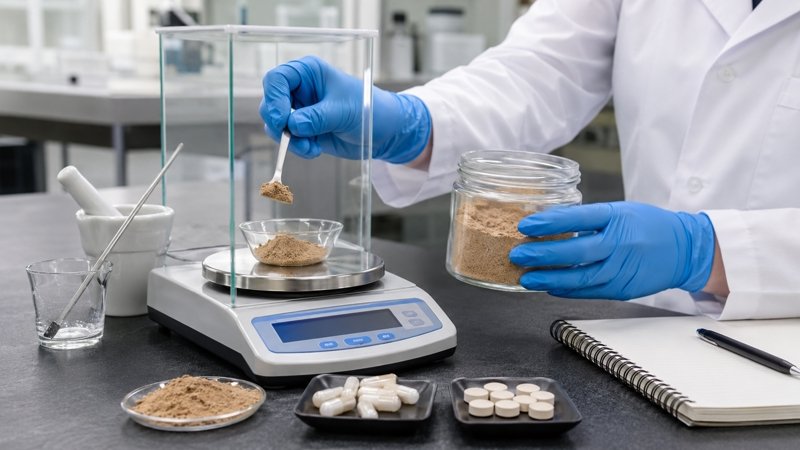
For capsules, initial questions may include whether the planned amount can fit within the selected capsule size, whether the powder flows consistently and whether it can be blended uniformly with other ingredients. Tablet development may introduce additional considerations such as compression behavior, binding, lubricant compatibility and tablet appearance.
These points should be investigated during formulation development. The supplier should not invent a universal inclusion level or recommend a consumer dosage without a product-specific basis.
Product developers must also distinguish Earthworm Protein Powder from lumbrokinase. Lumbrokinase is evaluated as an active enzyme ingredient using a defined activity specification and assay method. Earthworm Protein Powder is a broader protein-rich ingredient and should not be marketed as though it provides a standardized lumbrokinase activity.
Nutraceutical Product Development
In nutraceutical development, Earthworm Protein Powder may be considered when a company is researching differentiated animal-derived ingredients or creating a specialized formulation concept.
Possible development settings include:
- Single-ingredient prototypes
- Multi-ingredient nutraceutical formulas
- Products built around an earthworm-derived ingredient concept
- Formulas requiring a documented protein-rich raw material
- Market-specific product development projects
The ingredient’s unusual source may support differentiation, but novelty alone does not establish product value. Development teams must still ask whether the ingredient fits the intended dosage form, quality standard, regulatory category and consumer experience.
Any proposed structure-function, nutrition or other label claim must be evaluated separately by the finished-product company. Research concerning earthworm proteins or peptides should not automatically be converted into a claim for a particular commercial powder, batch or finished product.
Powder Blends and Functional Ingredient Systems
Earthworm Protein Powder may also be evaluated in multi-ingredient powder systems. These might include sachets, premixes or other dry blends developed for further processing.
Powder applications can make sensory and physical characteristics more visible than encapsulated formats. Developers may need to examine:
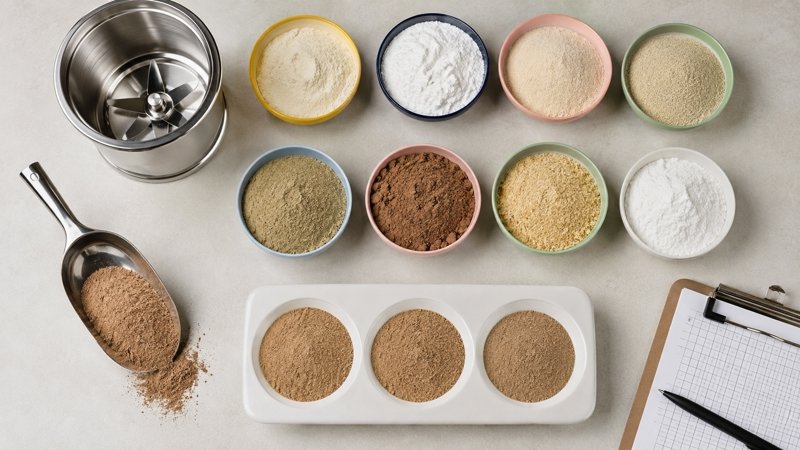
- Color and appearance in the finished blend
- Odor and flavor compatibility
- Distribution among other ingredients
- Tendency to cake or form agglomerates
- Dispersibility in the intended preparation
- Behavior during filling and packaging
- Stability under the planned storage conditions
A powder’s performance cannot be confirmed from protein content alone. Bench testing is needed because other components—including flavors, minerals, extracts, sweeteners and processing aids—may change how the complete system behaves.
The correct objective at the application-overview stage is to identify the required tests. Detailed blending procedures, processing parameters and corrective techniques should be developed in a dosage-form-specific formulation project.
R&D and Pilot Formulation Evaluation
For an unfamiliar ingredient, an R&D or pilot project is often the bridge between supplier information and commercial approval. It allows the buyer to determine whether the powder is technically workable before committing to scale-up.
A pilot evaluation can answer practical questions:
- Can the material be weighed and transferred consistently?
- Does it blend uniformly with the proposed ingredients?
- Does its appearance or odor affect the prototype?
- Does the selected processing route change its behavior?
- Can the prototype meet the desired packaging and shelf-life plan?
- Are additional excipients or process adjustments needed?
The sample should represent the material being offered as closely as possible. Buyers should record its batch number, document status, packaging and storage history. A structured Earthworm Protein Powder Sample Evaluation: What B2B Buyers Should Check can help connect physical inspection with formulation testing and later bulk approval.
A successful small-scale trial is encouraging, but it does not complete qualification. Before commercial production, the buyer should confirm how the approved sample relates to the available or planned bulk batch.
What Technical Factors Determine Application Suitability?
Application suitability is a combination of analytical, physical, sensory and commercial factors.
| Evaluation factor | Why it matters |
|---|---|
| Protein content | Helps confirm the material’s compositional positioning and whether it meets the agreed specification |
| Amino acid information | May support nutritional or formulation assessment when relevant, available and properly documented |
| Appearance and odor | Can affect capsule appearance, exposed powder systems and consumer acceptance |
| Moisture | May influence storage, caking, handling and overall specification compliance |
| Powder behavior | Affects transfer, mixing, filling and manufacturing consistency |
| Formulation compatibility | Determines whether the ingredient performs acceptably with other components and processes |
| COA and specification | Establish the agreed limits and report results for a particular batch |
| Batch consistency | Helps determine whether performance observed during development can be reproduced commercially |
Analytical documents should be reviewed in context. A specification defines agreed requirements, while a COA reports results associated with a particular batch. The Earthworm Protein Powder COA Review: What B2B Buyers Should Check provides more detailed guidance without duplicating that review here.
Buyers should request only information relevant to the intended application. If amino acid data, particle-size information or particular laboratory tests are important, availability and test basis should be confirmed rather than assumed.
What Buyers Should Avoid Assuming
Several assumptions can create avoidable development risk.
First, analytical compliance does not guarantee suitability for every dosage form. A batch can meet its specification while still being unsuitable for a particular flavor system, capsule configuration or manufacturing process.
Second, “protein ingredient” does not mean that Earthworm Protein Powder behaves like a conventional sports-nutrition protein. Developers should not assume identical solubility, flavor, bulk density, nutritional positioning or consumer familiarity.
Third, research on earthworm proteins, extracts or isolated peptides does not automatically describe the supplied commercial ingredient. Study materials, preparation methods and test conditions may differ significantly.
Fourth, approval of an early sample does not guarantee that every future batch will behave identically. Sample identity, agreed specification and bulk-batch documents should remain connected throughout procurement.
Finally, broad health claims should never replace technical evaluation. A credible product-development decision begins with ingredient identity, documentation, testing and regulatory review—not promotional promises.
How Buyers Can Evaluate a Potential Application

A practical evaluation sequence is:
- Define the application. Identify the dosage form, target market, processing route, sensory limits and product objectives.
- Review the specification. Determine whether the stated parameters address the requirements of the project.
- Review the COA. Confirm the batch identity, reported results, dates and relationship to the proposed sample or supply.
- Test a representative sample. Inspect appearance, odor, powder condition and other agreed characteristics.
- Run a formulation trial. Evaluate the material with the actual ingredients, process and packaging concept.
- Confirm supplier and batch requirements. Establish which documents, controls and batch-consistency checks are needed before purchase.
Teams preparing their first supplier request can use the Earthworm Protein Powder Technical Inquiry Guide to organize application details, document requests and sample requirements. General questions concerning samples, MOQ, packaging, documentation and supply can also be reviewed on the Allworms FAQ Page.
FAQs
1. What are the main B2B applications of Earthworm Protein Powder?
It may be evaluated for dietary supplements, nutraceutical formulas, capsules, tablets, powder blends and other functional ingredient systems. Suitability must be confirmed for the intended formulation.
2. Can Earthworm Protein Powder be used in capsules?
Capsule development is a possible application. Buyers should evaluate fill requirements, bulk density, flow, blending uniformity, odor and compatibility with the other ingredients before approval.
3. Is it suitable for powder blends?
It may be considered for powder blends, but developers should test appearance, odor, dispersibility, caking tendency and compatibility with the complete formula. Suitability should not be assumed from compositional data alone.
4. Is Earthworm Protein Powder the same as lumbrokinase?
No. Earthworm Protein Powder is a broader protein-rich ingredient. Lumbrokinase is an active enzyme ingredient evaluated using a defined fibrinolytic activity specification and assay method.
5. What documents should a buyer review first?
A current specification sheet and relevant batch COA are appropriate starting points. Additional information should be requested according to the intended application and the buyer’s quality system.
6. Does a passing COA prove formulation suitability?
No. A COA helps determine whether a batch meets stated analytical requirements, but it does not prove sensory, processing or formulation performance in every product.
7. Should buyers test a sample before placing a bulk order?
Yes. A representative sample allows the buyer to conduct physical, sensory and formulation assessment before progressing to pilot or commercial quantities.
8. Can research findings be used directly as finished-product claims?
Not automatically. Buyers must determine whether the research applies to the commercial ingredient and whether any proposed claim is adequately supported and permitted in the intended market.
Conclusion
Earthworm Protein Powder may have a place in supplement, nutraceutical and functional ingredient development, but the appropriate application cannot be selected from a product description alone.
The strongest development process connects a clearly defined application with specification and COA review, representative sample testing, formulation trials and bulk-batch confirmation. This approach helps buyers evaluate the ingredient on practical technical evidence while avoiding unsupported assumptions about health outcomes or finished-product performance.
Request Specifications And Batch Documents?
Discuss your sample and formulation requirements