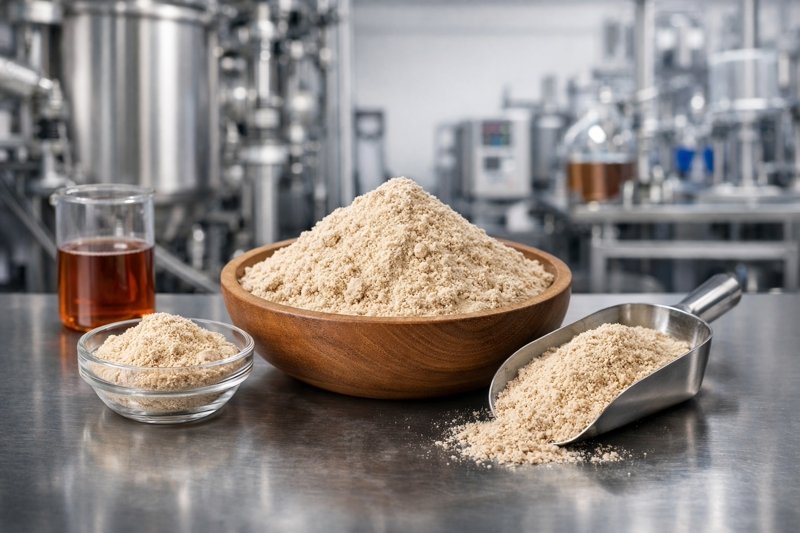
When buyers first ask about earthworm protein powder, they often start with one simple question: “What spec can you offer?”
Fair question. But here’s the thing—specification is rarely just one number on a COA. For serious B2B buyers, especially in dietary supplements, nutraceuticals, pharmaceutical raw materials, and functional health products, the real question is closer to this:
Can the supplier shape the material to fit my formula, my market, and my compliance needs?
That’s where custom specification options matter.
Earthworm protein powder is already positioned as a protein-rich functional ingredient with broad use potential in supplements, functional foods, and related health formulations . Research in the files you shared also shows why buyers pay attention to this category at all: earthworm-derived protein materials are rich in protein, contain essential amino acids, and have been studied for antioxidant, ACE-inhibitory, and immunomodulatory activity after processing or digestion .
So no, custom specification is not a side issue. It is the buying issue.
Why buyers ask for custom specs in the first place
Not every buyer needs the same material. A brand developing capsules for the supplement market does not think like a beverage developer. A dealer needs a spec that is easy to resell. A manufacturer needs consistency in processing. A pharmaceutical ingredient buyer usually cares more about tighter documentation, traceability, and repeatability.
That’s why custom spec requests tend to show up early in negotiations.
Some buyers want a certain protein range. Others want tighter moisture control, a different mesh size, or specific microbiological limits. Some want light yellow powder for one market; others accept a darker natural tone as long as the batch performs well in production. And then there are buyers who care more about bulk density, smell, and flowability than they do about fancy marketing language. Honestly, that’s usually a good sign. It means they know what they’re doing.
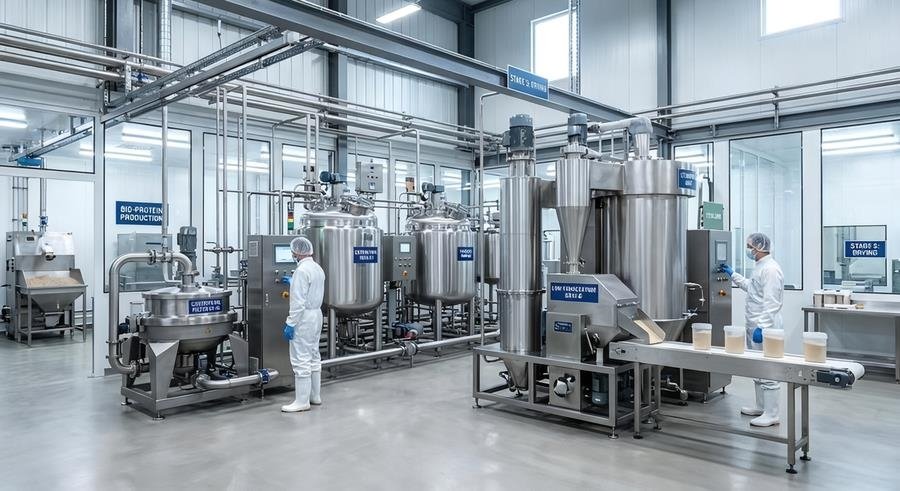
Earthworm protein powder is manufactured through controlled steps such as raw material selection, cleaning, hydrolysis, centrifugal filtration, low-temperature drying, milling, sterilization, and packaging . That process flow matters because it creates room for specification control, not just generic output.
So, what can actually be customized?
Let me explain. When buyers ask for “custom specifications,” they usually mean one or more of the following.
Protein content and composition—yes, the obvious one
Protein percentage is often the headline spec. The product sheet in your files lists earthworm protein powder at protein ≥65% as a standard direction . But in practice, buyers may ask for a target range, not just a minimum.
Why? Because a product developer may be balancing protein level against cost, taste, color, or formulation behavior.
A high-protein target sounds great on paper, but sometimes a buyer wants a more practical commercial grade for tablet compression, premix blending, or cost-sensitive wholesale distribution. Other times, the buyer wants to push the protein number because the marketing team wants a cleaner headline.
And yes, that tension is common. Sales wants the shiny number; production wants the stable batch. Both matter.
Research also supports the nutritional value story behind the ingredient. One study describes earthworm protein as a high-purity protein ingredient after extraction, with protein content reaching over 96% in the prepared earthworm protein fraction used for peptide research . Another file notes that earthworm raw material can contain protein above 60% and is rich in essential amino acids .
Moisture, ash, and physical powder properties
This part gets less attention in marketing copy, but buyers who have suffered through clumping, poor flow, or storage complaints never forget it.
Custom specification options often include:
- moisture target
- ash range
- mesh size or particle fineness
- bulk density
- powder color tone
- odor acceptance range
For example, a wholesaler may want a general bulk material that packs efficiently. A capsule factory may care more about flow and fill consistency. A beverage system developer may care about dispersibility and sediment behavior. Same ingredient family, very different expectations.
Microbiological and heavy metal targets
This is where the conversation gets serious.
The standard product details include limits or reference figures for aerobic plate count, yeast and mold, coliforms, Salmonella, Staphylococcus aureus, arsenic, cadmium, lead, and mercury . For many buyers, especially export buyers, these are non-negotiable review points.
Custom specification support may include tighter internal control targets or market-specific test panels depending on destination and use case. That does not mean inventing a new standard from thin air. It means matching the material and documentation package to the buyer’s regulatory or customer-facing requirement.
A dealer selling into multiple countries may need a broadly acceptable base spec. A manufacturer supplying one defined market may want a sharper, narrower internal standard. That difference matters.
Raw material source and process style
Some buyers care deeply about species, raw material origin, or process description. And frankly, that makes sense.
The source as fresh earthworm raw material and outlines a production route that includes selection, separation from impurities, cleaning, hydrolysis, centrifugal filtration, low-temperature drying, milling, sterilization, and packaging . The English product sheet similarly emphasizes controlled production and stable supply .
For buyers, custom specification at this level can involve:
- preferred source declaration
- production process description for files and dossiers
- storage and packaging format
- batch traceability expectations
- requested labeling format
This may sound administrative, but it often decides whether the material is easy to approve internally.

Packaging and trade specification—don’t overlook this
A surprising number of deals slow down not because of the ingredient itself, but because the trade specification is vague.
Our standard packaging is 1.5kg/bag and 9kg/carton, along with cool, dry storage and a two-year shelf life under proper conditions . That’s a good starting point. But many B2B buyers want more.
They may need:
- inner foil bag plus export carton
- private label or neutral label packing
- bulk drum or carton preference
- palletization details
- sample-plus-commercial batch matching
- shipping mark customization
This is where experienced suppliers stand out. A neat spec sheet is helpful. A supplier who can sync packaging, batch coding, and shipping documents with the buyer’s workflow is much more helpful.
Different applications, different ideal specs
This is where buyers sometimes trip themselves up. They ask for the “best” specification without defining the intended application.
But there is no universal best. There is only best for purpose.
For dietary supplements
Supplement brands usually look for a balanced combination of protein content, microbiological safety, batch consistency, and documentation support. The material needs to be stable enough for capsules, tablets, sachets, or powder blends. They also care about story—natural origin, functional positioning, and supply stability.
The product files position earthworm protein powder for dietary supplements and functional nutrition systems, which fits this use case directly .
For nutraceutical ingredient distributors
Distributors often prefer a broad, commercially practical spec. Why? Because they need to sell the same material to several customer types. They usually care about re-sale clarity, standard documentation, and repeat order consistency more than ultra-niche customization.
That said, they also value flexible spec options, because one downstream client may ask for tighter micro limits while another focuses on pricing.
For pharmaceutical or higher-control projects
This segment usually asks harder questions. Not more questions—harder questions.
They may request tighter traceability, process summaries, more detailed COA support, or added validation logic around the material. That fits the broader research direction in the uploaded literature, where earthworm-derived materials are discussed as sources of bioactive agents and functional compounds with pharmacological relevance .
Of course, formulation use and market access always depend on local rules, intended use, and compliance review. Still, buyers in this segment rarely buy on headline price alone.
For functional food or beverage development
Here the conversation shifts toward taste, smell, color, and solubility behavior. A material can be technically strong yet difficult in a finished drink or flavored powder. That is why some buyers request customized particle size, dispersion behavior, or sensory control targets.
And yes, this is where lab sample performance matters a lot. A COA cannot tell the whole story.
Why the production process matters to custom specs
Buyers sometimes separate “specification” from “manufacturing,” but in real life they are tied together.
The process described in your materials—selection, cleaning, hydrolysis, filtration, low-temperature drying, sterilization, and packaging—shows how quality is built upstream, not just tested at the end .
That matters because customization is only credible when the process can support it.
A supplier may promise a tighter moisture range. Fine. Can the drying and packing system hold it?
A supplier may promise stable batch appearance. Good. Is the raw material handling consistent enough?
A supplier may promise export-ready microbiological control. Great. Is the sterilization and release workflow reliable?
That’s the real test.
Questions smart buyers should ask before placing an order
Here’s a practical checkpoint. Before confirming a bulk order, buyers should ask:
- Can you provide a standard specification sheet and indicate which items are customizable?
- What is your normal protein range and what tolerance do you control batch to batch?
- Which microbiological and heavy metal items are included in your standard COA?
- Can the packaging format be adjusted for our production or distribution model?
- Will the commercial batch match the evaluation sample in process and appearance?
- What is the lead time for standard spec versus customized spec?
- Can you support documentation needed for our market and product type?
Simple questions, but they save a lot of trouble.
A good custom spec is not just “flexible” — it is usable
There’s a small contradiction here. Buyers often want flexibility, but they also want stability. It sounds like those ideas clash. They don’t, not really.
A good supplier does not customize everything randomly. That would be chaos. A good supplier offers controlled customization within a stable production framework.
That’s the sweet spot.
Earthworm protein powder has real appeal for B2B buyers because it combines protein value, functional positioning, and room for application-driven specification design. The uploaded product and research files support that broader positioning, from standard commercial specs to studies on antioxidant, ACE-inhibitory, and immunomodulatory activity in earthworm-derived protein systems .
And for buyers, that’s the point.
Not just buying powder. Buying a material that fits the job.
FAQs
1. Can earthworm protein powder be produced with custom protein specifications?
Yes. Many B2B buyers request earthworm protein powder with a target protein range based on their formulation, pricing, and market needs. Custom protein specifications should be discussed together with moisture, ash, and batch consistency requirements.
2. What custom specification items do bulk earthworm protein powder buyers usually ask for?
The most common requests include protein content, moisture, ash, particle size, microbiological limits, heavy metal limits, appearance, packaging format, and COA format. For export projects, buyers may also ask for market-specific testing documents.
3. Is custom packaging available for earthworm protein powder wholesale orders?
Usually yes. Bulk buyers often request different inner bag, carton, label, or pallet formats depending on whether the product is for manufacturing, redistribution, or private label use. Packaging should match both storage needs and shipping plans.
4. How do I know whether a custom earthworm protein powder specification is realistic?
A realistic custom specification is one the supplier can support through actual process control, not just final testing. Buyers should review the manufacturing process, standard spec sheet, and sample consistency before confirming a bulk order.
5. What should nutraceutical and pharmaceutical ingredient buyers check before ordering earthworm protein powder?
They should check protein range, microbiological control, heavy metal data, process summary, packaging format, batch traceability, sample-to-bulk consistency, and documentation support for the destination market. Those points matter more than price alone in long-term supply.