
Earthworm protein powder and collagen powder serve different formulation briefs. Earthworm protein powder is a protein-rich material derived from earthworms. In this comparison, collagen powder means hydrolyzed collagen peptides, an ingredient made from collagen-rich animal tissues. If a product brief calls specifically for collagen peptides, keep collagen identity as a requirement. If the brief calls for a measured protein contribution, compare the two documented grades on amino-acid composition, protein delivered per serving, and performance in the intended format.
A usable earthworm protein vs collagen comparison begins with samples and reports for the grades you can actually purchase. Decide what the powder needs to contribute to the finished product, then compare the two ingredients against the same development criteria. For a wider view of protein categories, see Earthworm Protein Powder vs Traditional Animal Proteins.
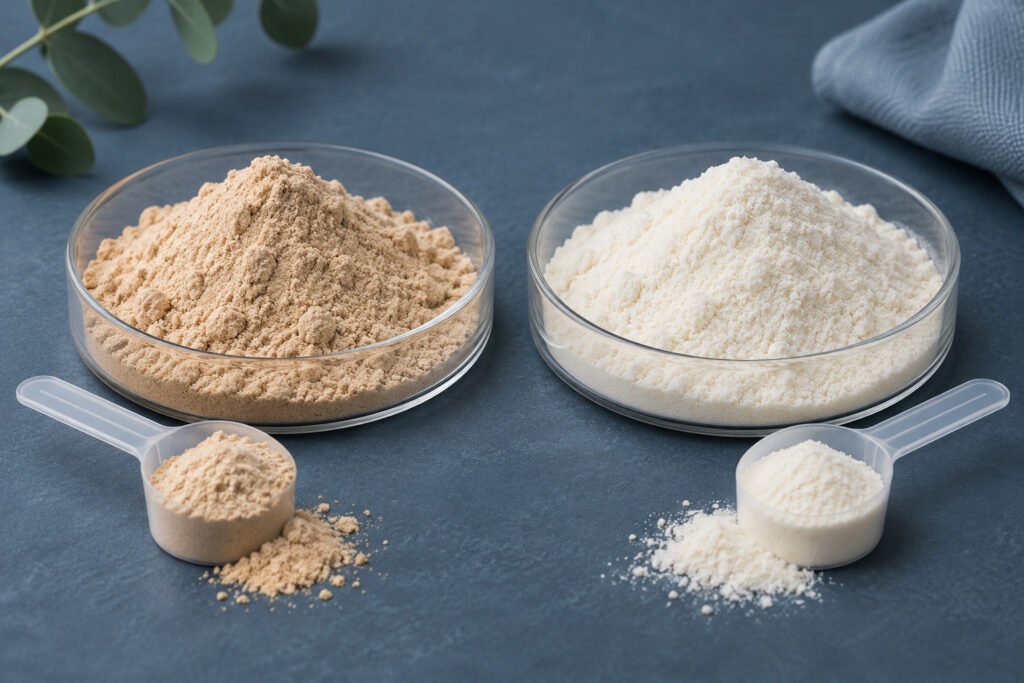
Confirm Which Two Ingredients You Are Comparing
Start by recording the full supplier name for each grade, its biological source, and how it was prepared. Hydrolyzed collagen can be made from sources such as bovine, porcine, or fish tissues. Ask the supplier to identify the species and tissue for the offered grade, state that the material is hydrolyzed, and provide any peptide-size data relevant to your brief. Keep gelatin and native or undenatured collagen outside this comparison. If either appears on a quote, confirm the intended collagen form before ordering.
Allworms Earthworm Protein Powder is manufactured through raw-material selection, cleaning, hydrolysis, centrifugal filtration, low-temperature drying, milling, and packaging. Hydrolysis describes a processing step. The supplier’s specification and supporting data establish the identity, protein content, and other measured characteristics of the powder. If a project requires a particular peptide size or enzyme activity, ask for evidence specific to that attribute and the offered grade.
Record whether the samples contain carriers, flavors, or other added ingredients. An unflavored raw material and a flavored collagen drink mix give different information about taste, dispersibility, and actual protein contribution. For a raw-material comparison, request unflavored samples where possible and record the composition of each as received.
Compare Amino-Acid Profiles on the Same Basis
Glycine, proline, and hydroxyproline are characteristic of collagen. This profile helps explain why formulators ask for those values when evaluating collagen peptides. The direction of the pattern is useful for understanding the ingredient category. For formulation calculations, use the composition reported for the offered grade and check whether hydroxyproline is included in the panel. [1]
For Earthworm Protein Powder, ask for the measured amino-acid profile of the offered grade and check which essential amino acids appear in the reported panel. Record whether each value is a batch result, a representative analysis, or reference information, and whether the panel measures total or free amino acids. A blank row can mean an analyte was outside the panel. If tryptophan matters to the brief, ask whether the laboratory evaluated it with a suitable method and how it reports results below its reporting limit.
Put the reports on the same basis before comparing numbers. Grams per 100 grams of powder describe the supplied material. Grams per 100 grams of protein describe the amino-acid composition relative to protein content. Dry-basis results exclude moisture, while as-supplied results apply to the powder in its delivered condition. Ask the supplier or laboratory for the information needed to reconcile the units and bases before using either profile in a formulation calculation. The Earthworm Protein Powder amino-acid profile guide explains how to read these fields.
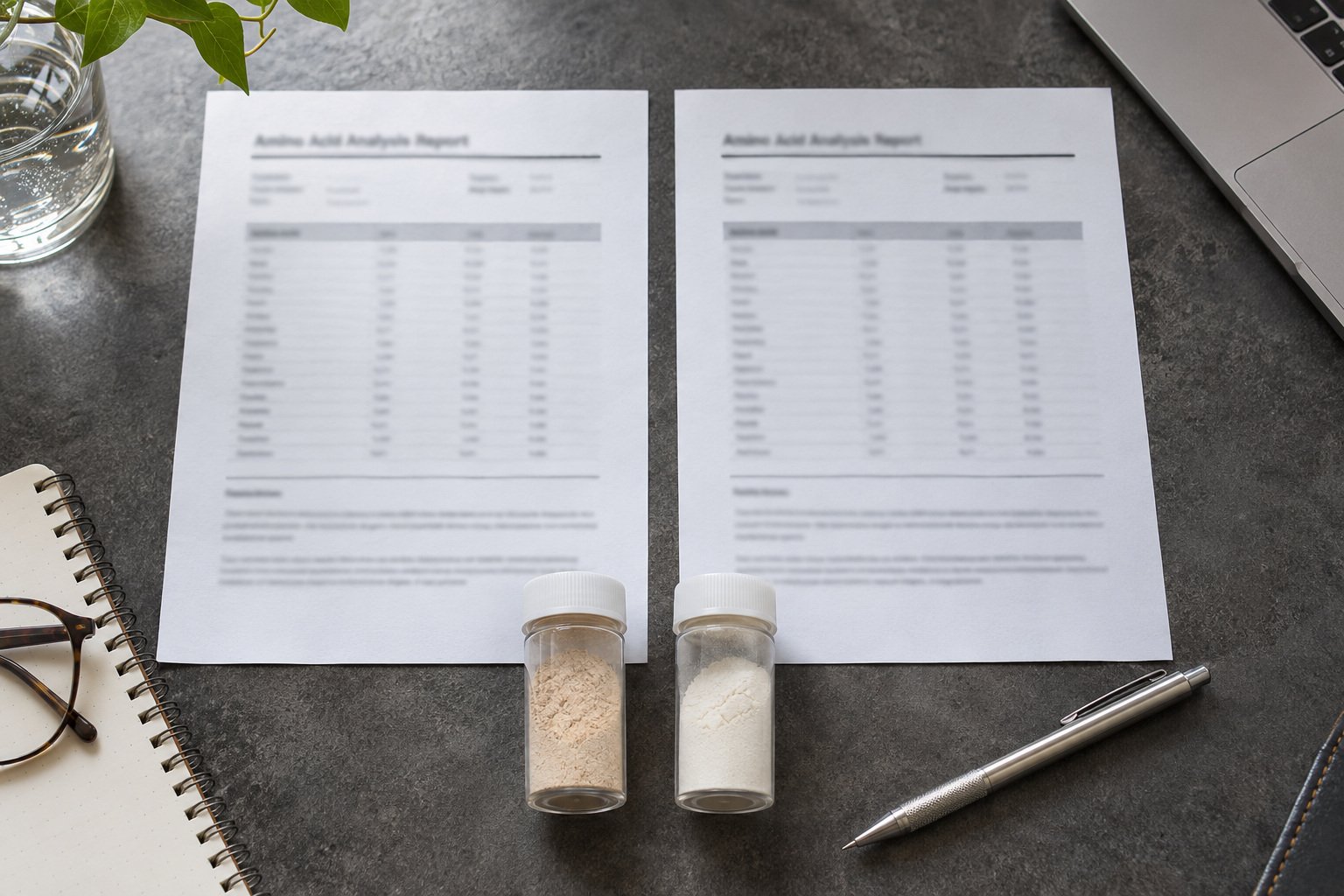
For example, when the product brief specifies protein per serving, compare how much of each powder would be needed to reach the same target using confirmed as-supplied protein values. If the brief instead specifies a fixed amount of collagen peptides, compare the identity and amount of collagen the formula will contain. Amino-acid composition and total protein help describe the formula. Protein quality, digestibility, and absorption would require separate evidence suitable for the claim.
Test Each Powder in the Intended Formulation
Write the comparison around the decisions the team needs to make. A beverage developer may care about appearance after mixing and sediment during the intended holding period. A capsule developer may care about fill capacity and weight variation. Set these criteria before the trial so each team can interpret the same samples against the same brief.
Dry Mixes and Reconstituted Drinks
For a scoopable or sachet product, run each sample at the planned use level in the intended liquid. Hold liquid volume, temperature, mixing method, and observation times constant. Evaluate wetting, clumping, foam, visible particles, sediment, color, and odor. Include a sample of the formula base so the team can identify what the protein ingredient changes in the full mix.
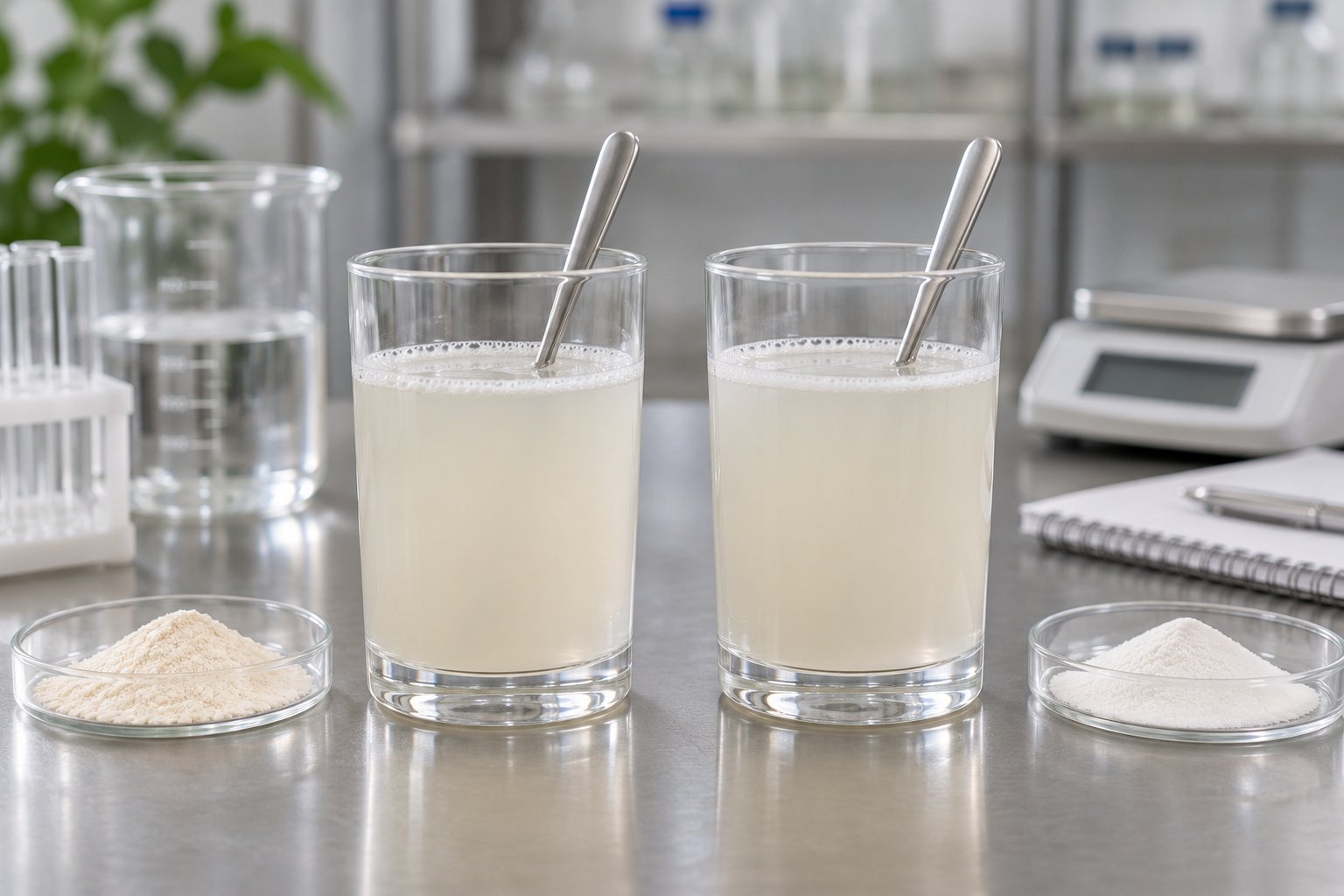
A visually smooth mix can still leave a detectable odor or aftertaste. Check sensory acceptance in the same base formula before changing the flavor system. If the project aims for a clear drink, define what clarity means for the product and evaluate it again after the expected holding period. Published examples of collagen in beverage applications can inform the trial design. The bench result for the selected grade and formula will guide the decision. [1]
Capsules and Tablets
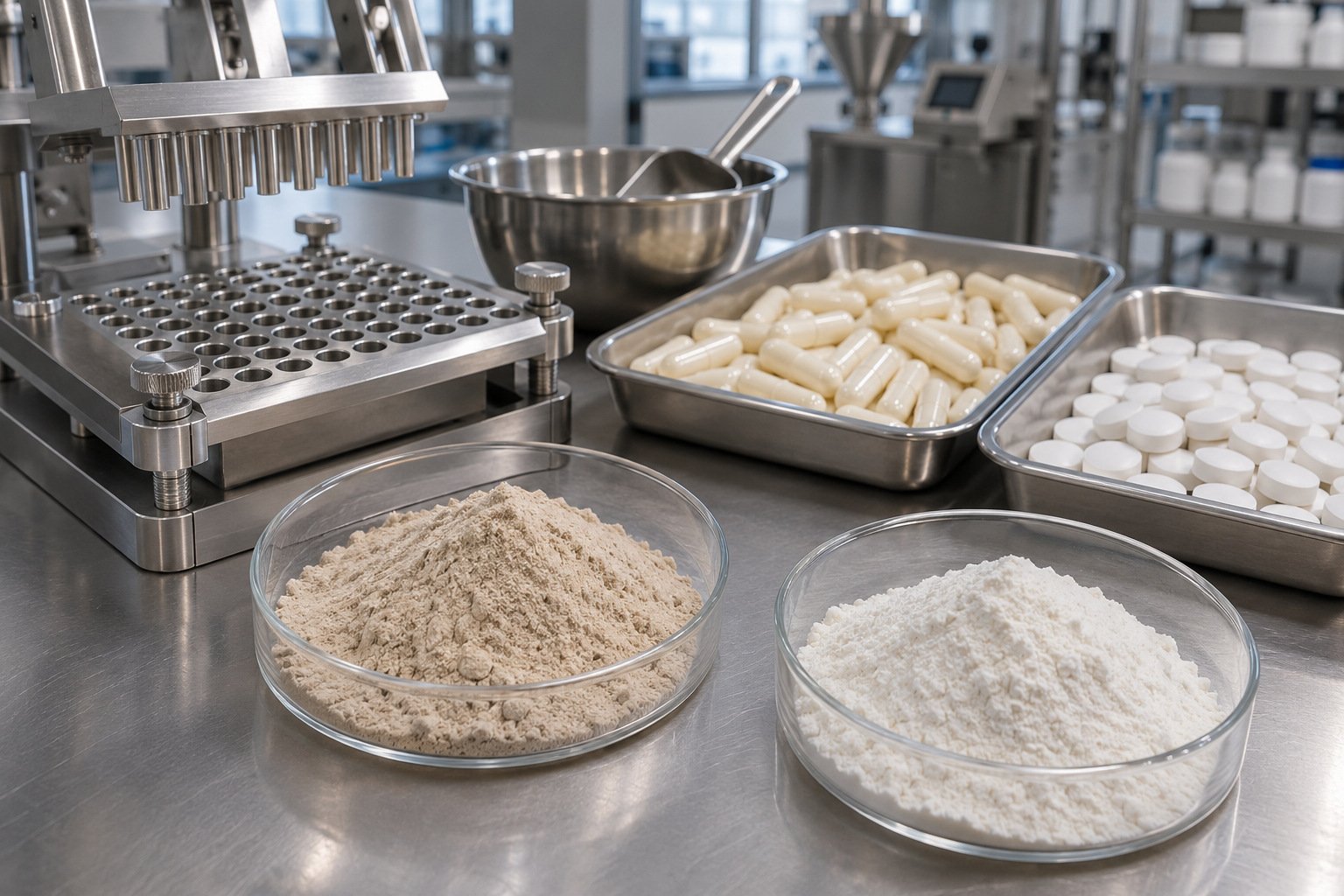
At the target ingredient inclusion, compare the volume each powder occupies and how it behaves with the intended excipients. Check bulk density, flow into the filling equipment, and fill-weight consistency. For tablets, include the relevant compression and physical quality checks during development. An equal powder mass can occupy different volumes, so matching the weight on paper can still leave a fill problem. See the Earthworm Protein Powder capsule and tablet formulation guide for the next stage of evaluation.
Decide Whether the Project Calls for Replacement or Reformulation
If collagen peptide identity is already in the product name, formula brief, or agreed customer specification, an earthworm protein concept changes the ingredient identity. Review the proposed formula, label wording, and relevant customer commitments before replacing any material. Likewise, a collagen study can inform a review of the preparation it evaluated. Evidence for the proposed earthworm protein formula should address that formula and its intended positioning.
If both powders are being considered for a new protein blend, conduct two comparisons where useful. Use equal powder inclusion to see what changes when the same amount of material is added to the formula. Use matched protein contribution to see what changes when both prototypes deliver the same amount of protein. For that second test, the powder masses may differ. Record which basis applies to each batch so the sensory and handling results can be interpreted correctly.
For example, a sachet may meet its protein target with either ingredient. The prototype using the larger powder mass might have less room for flavor or other components. A capsule project may show a similar trade-off in fill volume. If both prototypes meet the composition brief, use the predefined physical and sensory criteria to decide which warrants a pilot. These decisions are specific to the product design and the grades tested.
Keep failures in the comparison record as well. If an ingredient meets the protein target but leaves unacceptable sediment, note whether the issue appears in the ingredient by itself or only in the full blend. That distinction helps the team decide whether to change the grade or adjust the formula.
Match Each Prototype to Its Supporting Documents
Request the specification, a lot-linked certificate of analysis, and the amino-acid data available for each sample. Confirm the protein method and reporting basis. Ask each supplier what source, composition, and allergen information it can document for the exact grade. Check relevant moisture, microbiology, and contaminant criteria against the project specification. Keep the sample lot and the tested formula version together in the development record.
Review the intended use and target market before commercial approval. The same ingredient can raise different labeling and documentation questions in different formats or markets. Where an ingredient is new to the product line, record who will confirm that the documentation supports the proposed use and wording. The Earthworm Protein Powder sample evaluation guide provides a workflow from sample receipt through the purchasing decision.
FAQ
Can earthworm protein powder replace collagen peptides gram for gram?
An equal powder weight is a useful first bench comparison. It can produce different protein contributions, amino-acid totals, fill volumes, or sensory results. If collagen peptide identity is required, keep that requirement in the brief. If protein delivery is the goal, match the documented contribution and test the resulting formula.
Does a higher protein percentage settle the comparison?
Protein percentage helps calculate how much powder is needed to meet a specified protein target. The choice also depends on whether the ingredient meets the intended identity, amino-acid, sensory, and handling requirements. Check whether the reported percentage applies to the powder as supplied or on a dry basis.
What should developers compare before requesting a pilot lot?
Confirm the grade and sample lot, review comparable composition data, and test the powders under the intended use conditions. Set pass criteria for the attributes that matter in the chosen format, then record any issue that procurement or QA must resolve before a larger order.
Request Earthworm Protein Powder for Evaluation
Visit the Allworms Earthworm Protein Powder product page to request the current specification and available sample documentation. Share your intended format and the protein or amino-acid criteria you want to compare.