How Extraction Technology Impacts Earthworm Protein Powder Quality
When product developers compare Earthworm Protein Powder suppliers, knowing that each supplier offers a “protein powder” is not enough. Differences in starting-material preparation, controlled processing, separation, drying, and powder finishing may influence the characteristics that buyers later observe, test, and handle.
The important question is therefore not simply, “How is Earthworm Protein Powder manufactured?” It is, “How might the manufacturing approach affect the material our team receives and evaluates?”
That distinction keeps extraction technology grounded in measurable evidence. Buyers should connect process information to protein content, appearance, odor, moisture, ash, microbiology, physical powder characteristics, and batch consistency—not rely on terms such as “advanced” or “proprietary.”
The current product identity, commonly available protein level, documentation, and purchasing information can be reviewed on the Earthworm Protein Powder product page.
Quick Answer: Why Does Processing Matter for Earthworm Protein Powder?
Earthworm protein powder extraction technology can influence the composition and physical condition of the resulting ingredient. Raw-material preparation may affect starting consistency; separation can influence the condition of the recovered material; drying may affect moisture and powder behavior; and milling or sieving may influence physical uniformity.
However, a process description does not prove that a finished batch meets a buyer’s requirements. Claims about manufacturing should be checked against the product specification, batch COA, physical sample, and application-specific test results.
The correct evaluation sequence is:
Process factor → Possible material effect → Buyer verification
From Manufacturing Process to Finished Ingredient Characteristics
Manufacturing information is useful when it helps explain a characteristic that the buyer can evaluate. A process name alone provides limited purchasing value.
For example, knowing that a supplier uses a drying stage is less useful than knowing why drying is controlled, which finished-powder parameters are monitored, and whether the current batch meets the applicable moisture requirement.
The same principle applies throughout production:
- Identify the relevant process stage.
- Determine which material characteristics it may influence.
- Review the finished-product evidence.
- Test the sample in the intended application where necessary.
Not every finished characteristic is determined solely by extraction technology. Raw-material variation, test methods, packaging, storage, transportation, and post-production handling may also contribute.
Starting-Material Preparation Sets the Foundation
Manufacturing quality begins before the main extraction or processing stage. Selection, cleaning, preparation, and pre-processing handling help establish a more controlled starting material.
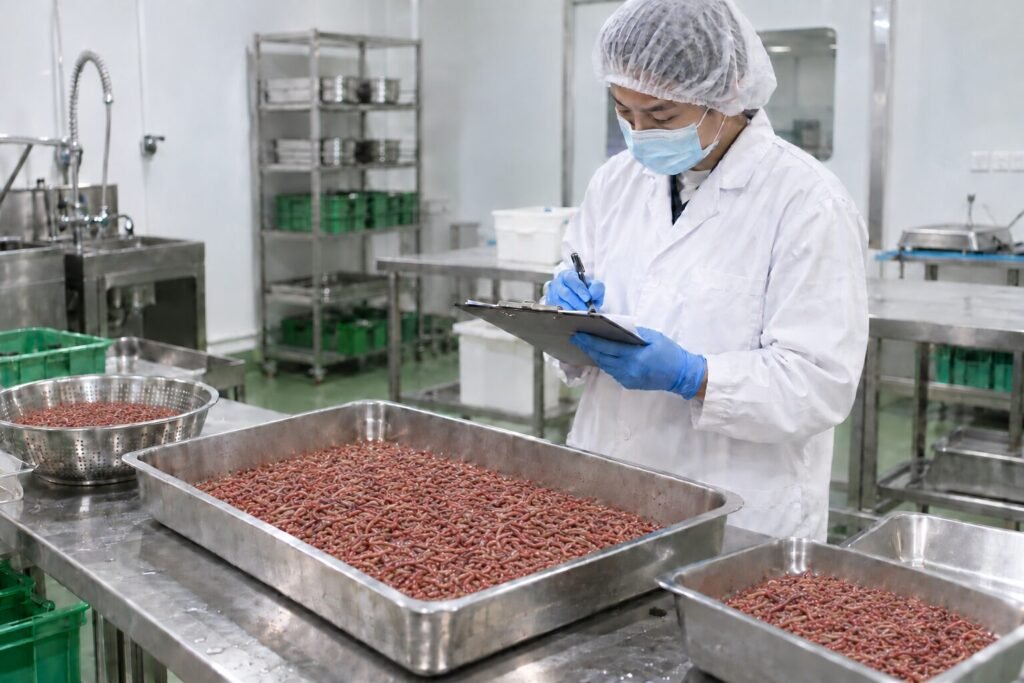
Variability at this stage can continue into subsequent processing. Inconsistent cleaning or preparation may make it more difficult to produce material with repeatable appearance, odor, composition, or physical condition.
Buyers do not need a factory-level operating procedure, but they should understand how the supplier controls the starting material and identifies material entering production. Questions about raw-material origin, preparation, traceability, and upstream control belong within the wider Earthworm Protein Powder supply-chain review.
Finished-batch information remains necessary. A well-described starting-material system does not independently establish the protein content, moisture, microbiological condition, or suitability of the supplied powder.
How Controlled Processing Can Influence the Resulting Protein Ingredient
Earthworm Protein Powder may undergo controlled processing or hydrolysis as part of production. Conditions during this stage can influence the resulting protein-containing material, but buyers should avoid assuming that any process label automatically produces a superior ingredient.
Terms such as “enzymatically processed,” “advanced extraction,” or “proprietary hydrolysis” do not disclose the resulting product characteristics. They also should not be used to infer a particular hydrolysis degree, molecular-weight profile, recovery rate, purity, or physiological effect unless relevant data are available.
A more useful evaluation asks:
- How is the process kept consistent between production batches?
- Which finished-product characteristics are monitored?
- Does the specification match the intended ingredient category?
- Does the current batch meet the agreed requirements?
- Does the actual sample perform acceptably in the buyer’s application?
Earthworm Protein Powder should remain clearly distinguished from Earthworm Peptide Powder and lumbrokinase. Processing does not make the finished protein powder an active enzyme ingredient.
Why Separation and Filtration Matter
Separation and filtration stages help divide the desired processed material from unwanted or unsuitable fractions before drying. Their effectiveness may influence the physical cleanliness, appearance, uniformity, and general condition of the resulting material.
These stages should not be presented as proof of a particular purity percentage. Buyers should instead review the finished powder and the applicable analytical data.
Relevant checks may include:
- Appearance and visible uniformity
- Protein content
- Ash
- Odor
- Relevant contaminant results
- Microbiological information
- Unusual sediment, agglomeration, or foreign material
When a characteristic is critical to the intended formulation, the supplier’s process description should be supplemented by a defined specification or an appropriate test.
Drying and Moisture Control
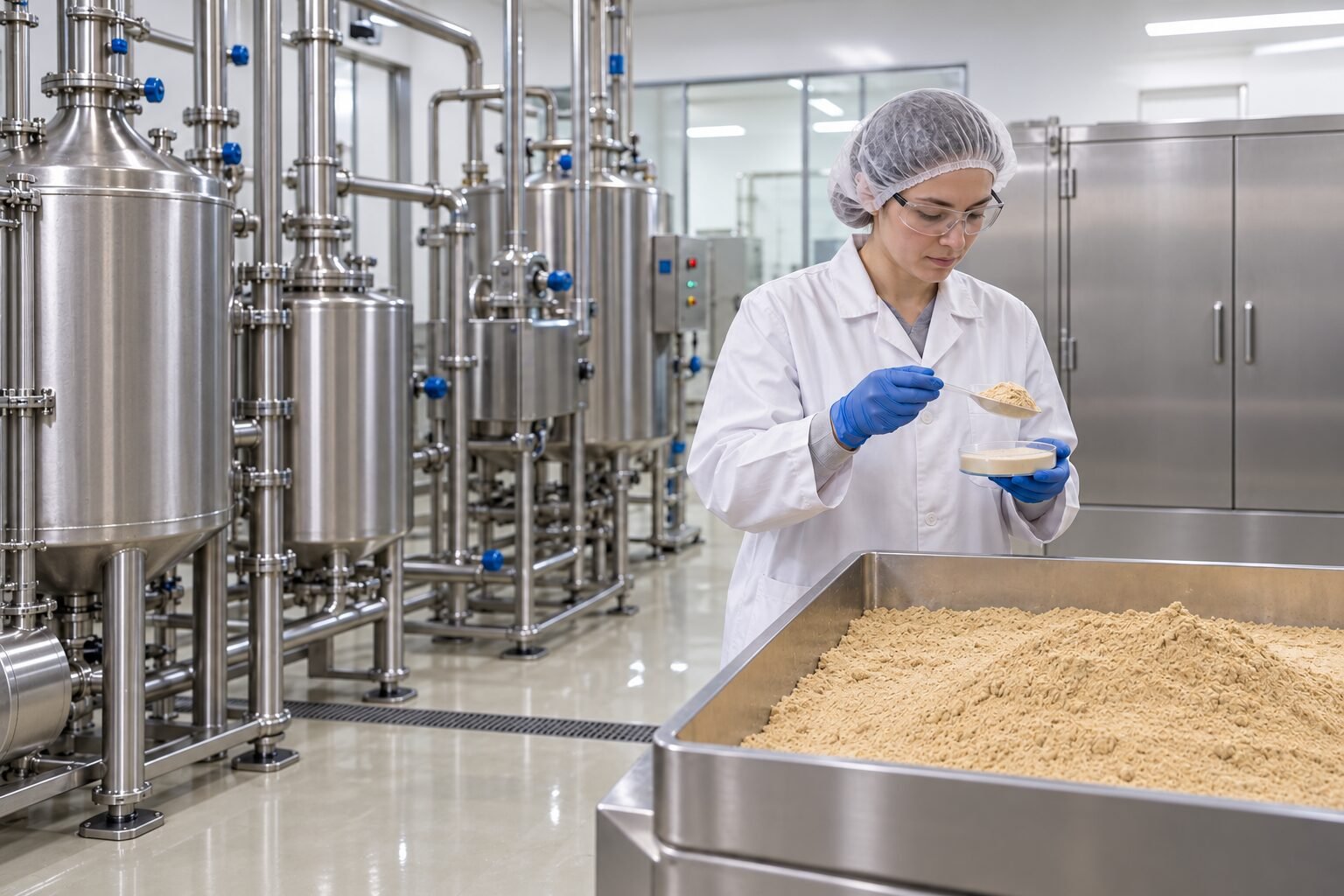
Drying is one of the clearest examples of the process-to-quality relationship. It converts the processed material into a more practical powder form and helps establish its condition for packaging and storage.
Drying conditions may influence:
- Finished moisture
- Powder texture and cohesion
- Color and odor
- Tendency to cake or form agglomerates
- Handling during weighing or transfer
- Behavior during subsequent storage
Nevertheless, drying should not be described as automatically preserving bioactivity, nutrition, or superior functionality. Those outcomes would require suitable supporting evidence.
Buyers should review the stated moisture requirement, current batch result, sample condition, packaging integrity, and storage instructions. If the powder shows caking or an unexpected physical condition, the review should also consider packaging, transport, warehouse humidity, and handling after opening rather than attributing the issue to extraction alone.
Milling, Sieving, and Physical Powder Characteristics
Milling and sieving help convert dried material into a more uniform finished powder. These stages may affect particle characteristics, visible uniformity, handling, blending, and processing behavior.
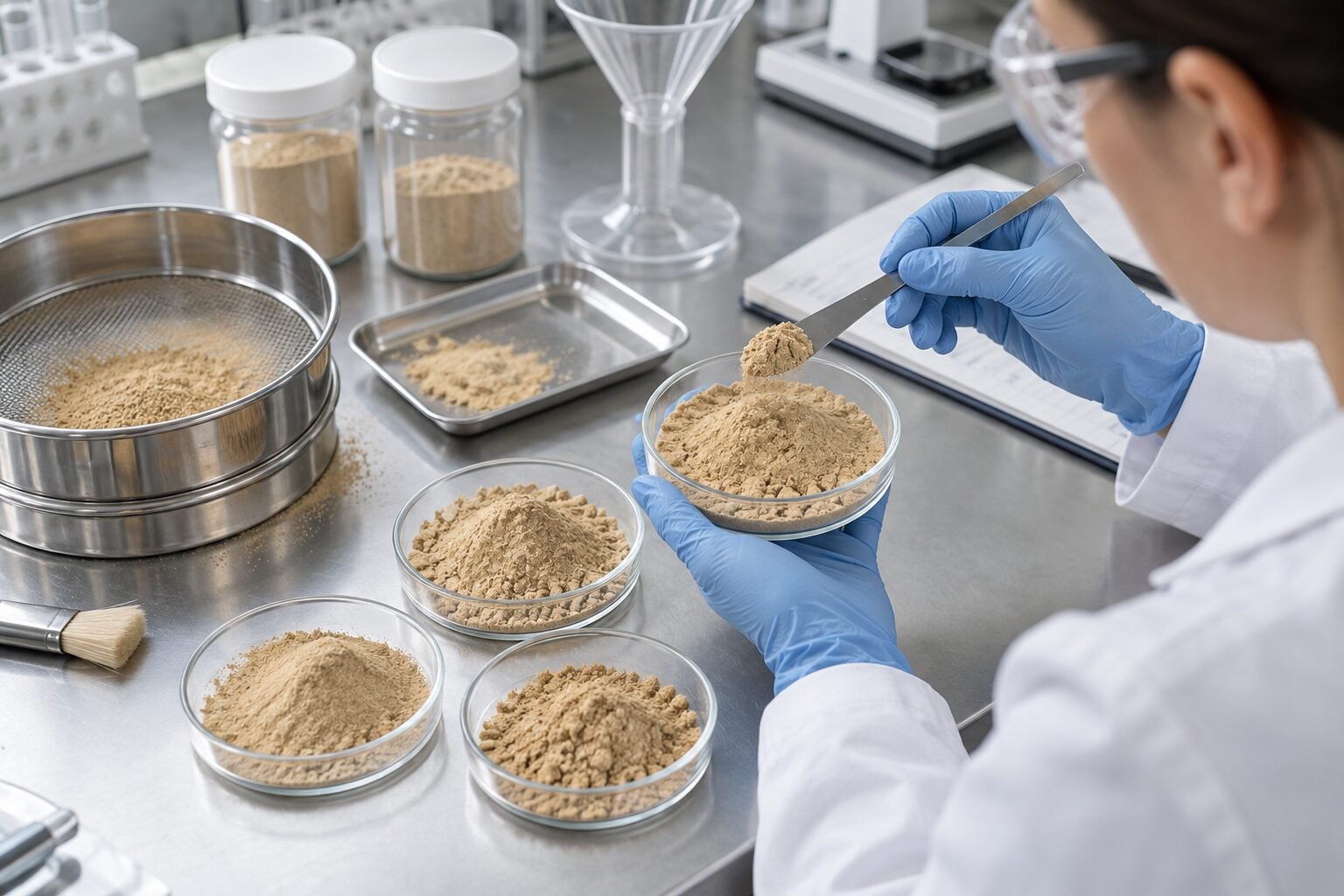
However, the presence of these stages does not establish a specific mesh size, particle-size distribution, density, or flowability. If those properties matter, buyers should request verified data or measure them using a representative sample.
The most relevant checks depend on the planned application. A capsule project may require evaluation of bulk density, flow, blend behavior, and fill consistency. A tablet project may also require compression testing. These application-level questions are addressed separately in the Earthworm Protein Powder capsule and tablet formulation guide.
Packaging and Post-Process Handling
The material’s produced condition must be maintained after processing. Packaging should help limit moisture exposure, contamination, physical damage, and unintended mixing during storage and transportation.
Buyers should confirm the packaging format, seal condition, label and batch identity, storage requirements, and handling expectations after opening. These controls preserve the material; they do not compensate for a batch that failed to meet its specification before packaging.
Process Consistency and Batch Consistency Are Related—but Not Identical
A repeatable manufacturing process supports the goal of producing consistent material, but it does not guarantee identical results for every batch.
Earthworm Protein Powder is derived from biological raw material. Some variation may occur even when production procedures are controlled. The practical question is whether each supplied batch remains within the agreed specification and is suitable for the established application.
Depending on the specification and project, buyers may compare:
- Protein content
- Appearance and odor
- Moisture
- Ash
- Heavy metals
- Microbiology
- Manufacturing and testing dates
- Packaging condition
- Application-relevant physical characteristics
A detailed sample-to-bulk and repeat-order comparison belongs in the Earthworm Protein Powder batch-consistency guide. For this process-focused review, the key point is that process consistency supports batch consistency, while finished-batch evidence verifies it.
Process Claims Should Be Checked Against Finished-Product Data
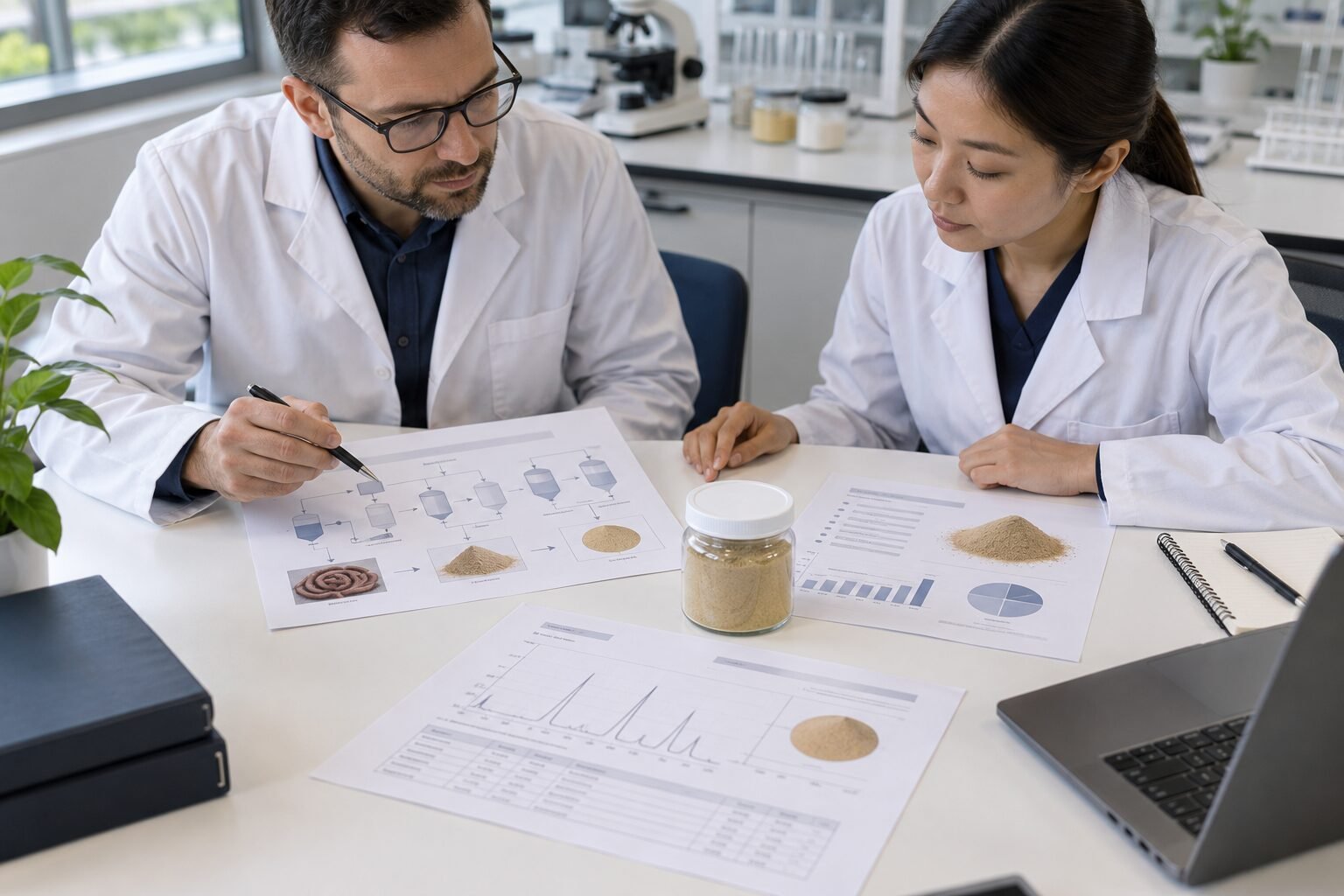
A manufacturing description and finished-product data answer different questions.
The process description explains how the material is generally produced and which stages the supplier considers important. The specification defines the intended requirements. The COA reports results or conformity information for an identified batch. The sample allows the buyer to observe and test the actual material.
None of these sources should be used alone:
- A detailed process description does not prove batch conformity.
- A COA does not explain every manufacturing variable.
- A specification does not report actual results for every batch.
- A sample does not establish the consistency of future production.
Professional evaluation combines these sources. If a supplier claims that a process improves uniformity, moisture control, or powder handling, buyers should ask which finished-product information supports that statement.
A Process-to-Quality Evaluation Table
| Manufacturing stage | Potential ingredient characteristic | What the buyer should verify |
|---|---|---|
| Raw-material preparation | Starting-material consistency, appearance, odor, cleanliness | Supplier controls, traceability, and finished-batch observations |
| Controlled processing or hydrolysis | Characteristics of the resulting protein-containing material | Product identity, specification, protein data, and batch information |
| Separation and filtration | Physical cleanliness, appearance, and material uniformity | Sample condition and relevant analytical results |
| Drying | Moisture, powder condition, caking tendency, and handling | Moisture requirement, batch result, sample condition, and storage guidance |
| Milling and sieving | Physical uniformity, particle characteristics, and processing behavior | Representative sample and application-relevant measurements |
| Packaging and storage | Preservation of the produced material’s condition | Seal integrity, label, batch identity, packaging, and storage conditions |
Questions Product Developers Should Ask a Supplier
A concise process-focused review may include:
- How is the starting material selected, cleaned, and prepared?
- Which production stages are considered critical to finished-product consistency?
- Which finished characteristics are routinely monitored?
- How are drying and moisture controlled?
- How are physical powder characteristics managed?
- How is batch consistency assessed?
- Can a current specification and representative or current-batch COA be provided?
- Can a representative sample be evaluated before approval?
General information about documents, samples, products, and purchasing support is available on the Allworms FAQ page.
FAQ
1. Does extraction technology affect Earthworm Protein Powder quality?
It can influence composition, moisture, appearance, odor, and physical powder characteristics. Buyers should verify the finished result through specifications, batch data, and sample evaluation.
2. Which manufacturing stages can influence the finished powder?
Starting-material preparation, controlled processing, separation, drying, milling, sieving, packaging, and storage may all contribute to the material’s final condition.
3. Does an “advanced extraction process” automatically mean higher quality?
No. “Advanced” is a marketing description unless it is connected to defined process controls and finished-product evidence relevant to the buyer’s requirements.
4. Can manufacturing information replace a COA?
No. Manufacturing information describes the process, while a COA reports results or conformity information for an identified batch. Buyers normally need both process context and finished-batch evidence.
5. Why does drying matter?
Drying may influence moisture, caking, powder texture, handling, and storage behavior. Buyers should review the moisture requirement, batch result, sample condition, packaging, and storage guidance.
6. Can processing affect formulation behavior?
Processing and powder finishing may affect physical characteristics, but formulation performance also depends on the complete formula, equipment, environmental conditions, and dosage form. It should be tested rather than assumed.
7. How should buyers compare manufacturing methods between suppliers?
Compare which stages are controlled, which finished characteristics are monitored, what documentation is available, and whether representative samples meet the same application-specific evaluation criteria.
8. Should buyers evaluate a sample after reviewing the production process?
Yes. A process description cannot show exactly how the supplied powder will look, handle, blend, or perform in the intended formulation.
Conclusion
Earthworm protein powder extraction technology becomes commercially useful information only when manufacturing stages can be connected to characteristics that buyers can evaluate.
Starting-material preparation, controlled processing, filtration, drying, powder finishing, and packaging may influence the finished ingredient, but none should be treated as an automatic quality guarantee. Product developers should combine process information with the applicable specification, current batch documentation, physical observations, and application-specific sample testing.
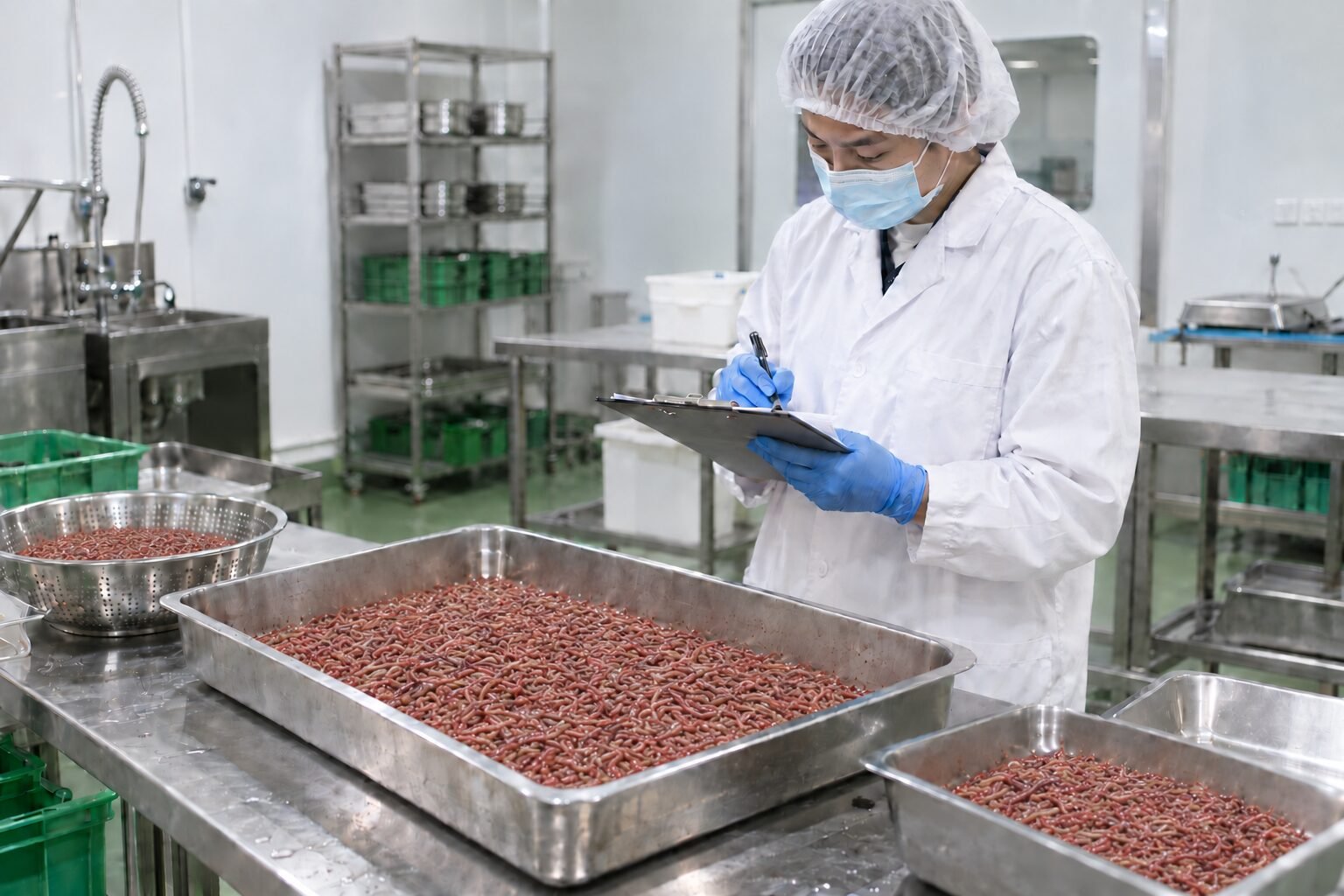
Review The Earthworm Protein Powder Specification And Batch Documentation?
Discuss your sample and technical evaluation requirements with Allworms.
One comment on “How Extraction Technology Impacts Earthworm Protein Powder Quality”
Comments are closed.